"Operation Winston"
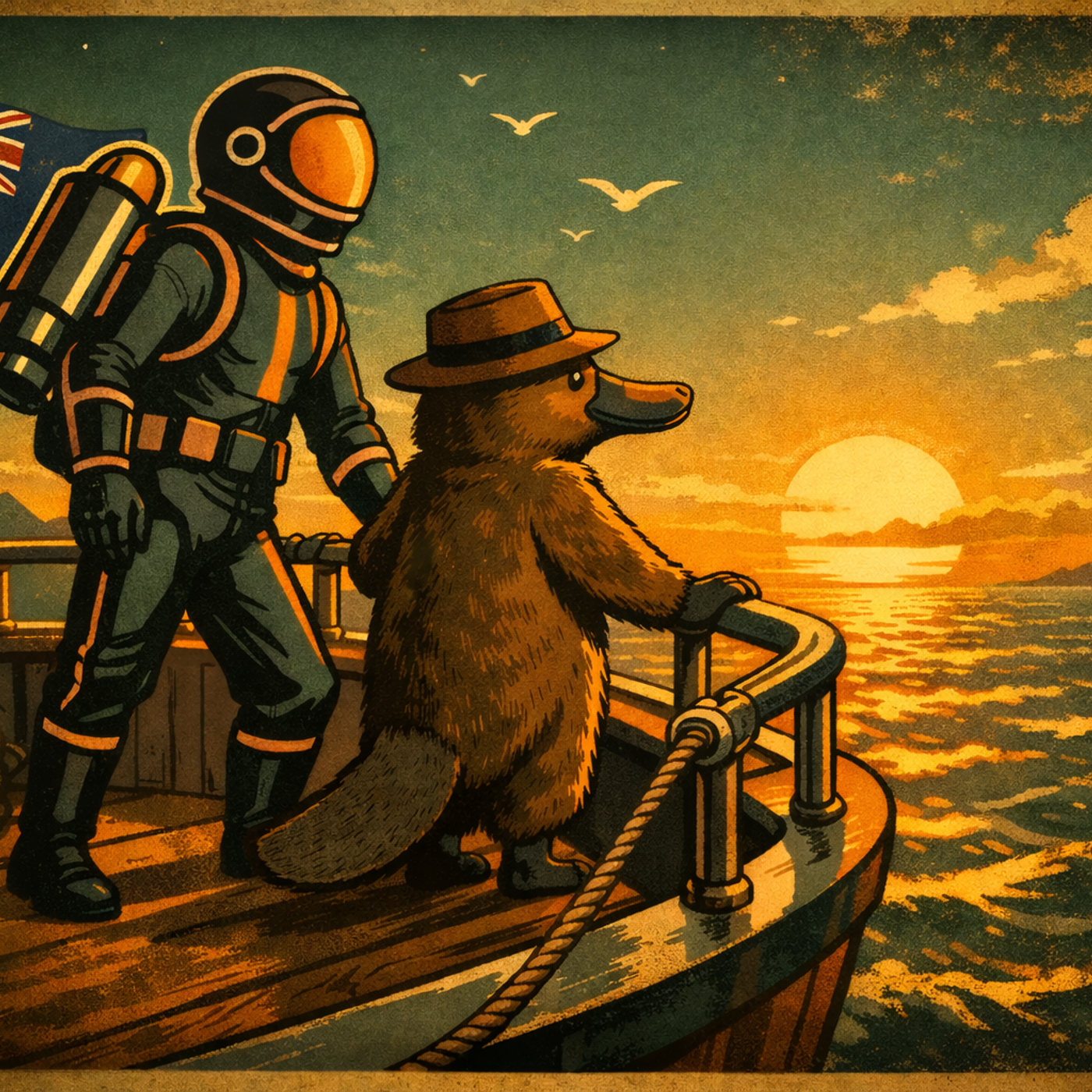
1943. The British Prime Minister, Winston Churchill, is dealing with the greatest threat to his nation since the Spanish Armada. But somehow, he makes it known that he wishes Australia to send him some live platypuses. Incredible, but true. This is a bonus addition to our most recent episode, "Where Are We At With Platypuses?".


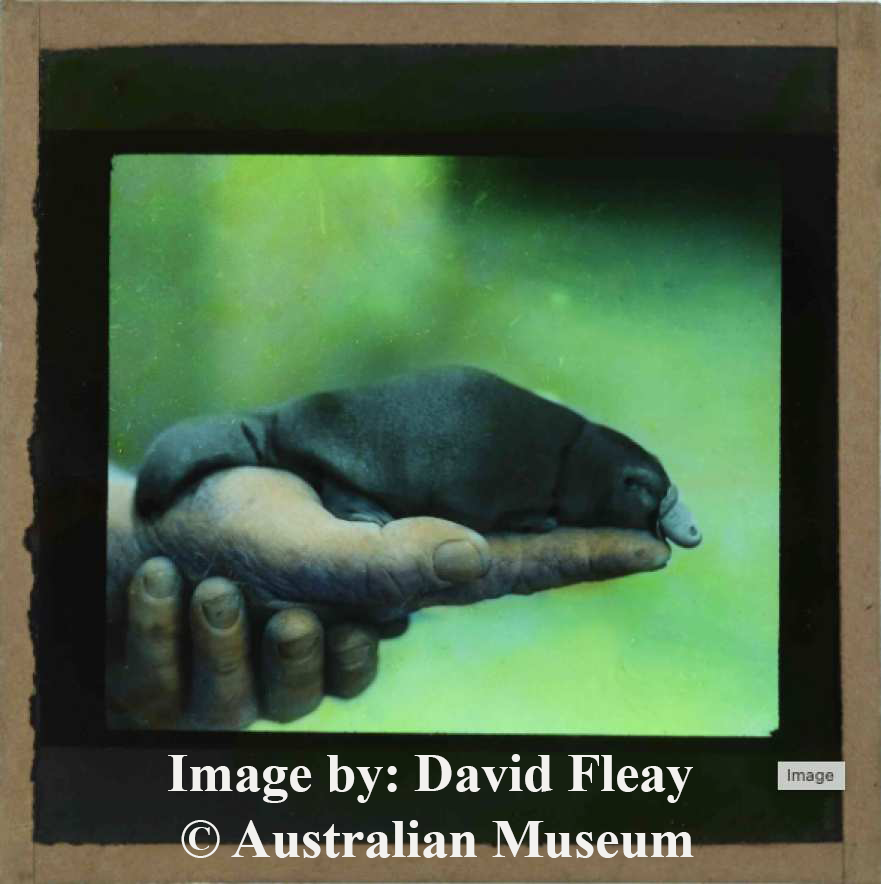
"Corrie" The first platypus bred in captivity, 1944.
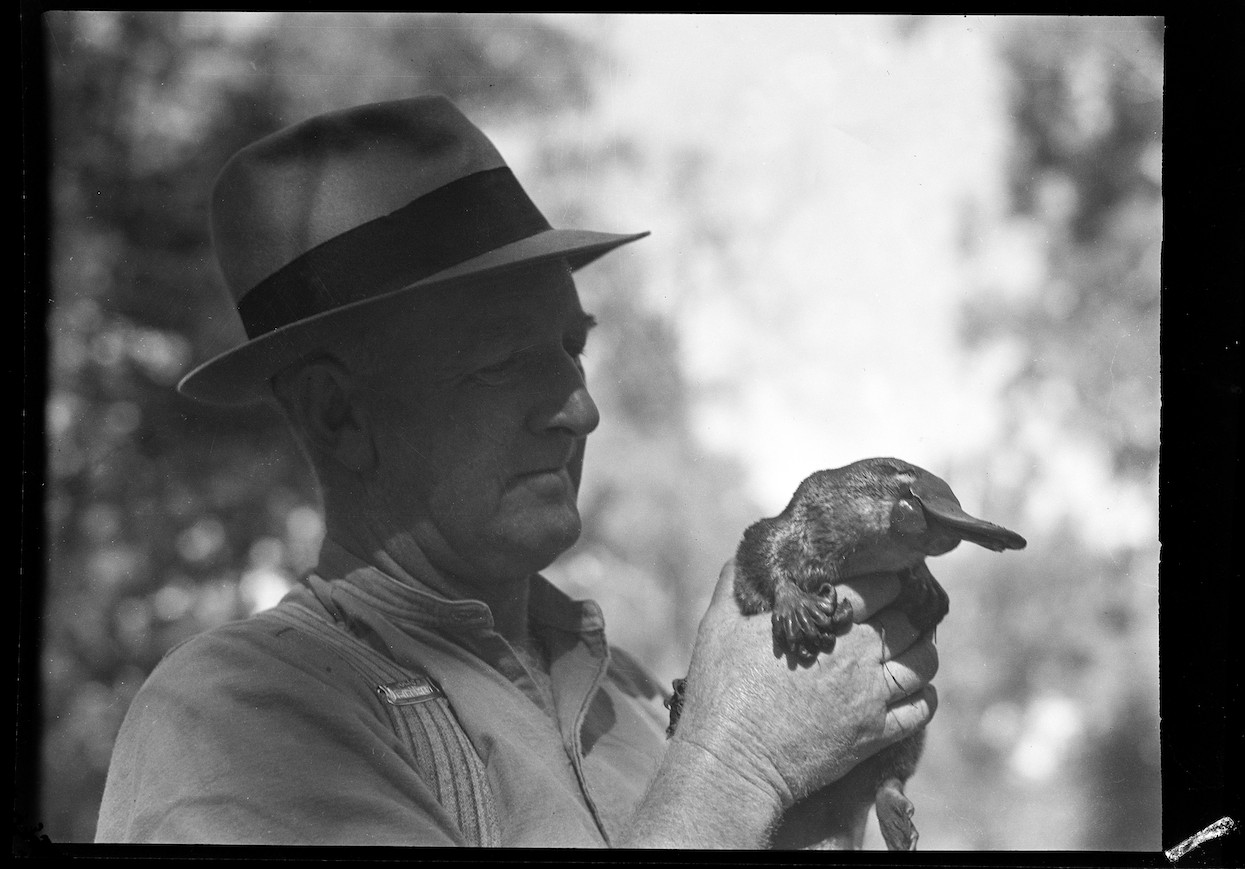
David Fleay
David (00:09)
1943, London, England. Winston Churchill, the British Prime Minister, is tasked with the defence of an empire. He attends vital meetings in Turkey and Canada, and addresses the United States Congress.
British Pathé clip
Sensational scenes at Mr Churchill makes his fighting speech to the United States' Congress.
"By these, and only by these, can we discharge our duty to the future of the world and the destiny of man"
Herbert "Doc" Evatt, Australia's external affairs minister, is in London to seek aid for his country. But Churchill has an urgent request of his own. More men? More weapons? A strategic approach to the recently fallen Singapore? How about half a dozen platypuses?
Hello, I'm David Curnow Welcome to our bonus episode of Where Are We At With Platypuses. This story is bizarre. Possibly too bizarre. It can't possibly be true, can it?
Well, obviously it is, and no doubt many of you have heard bits of it before. Much of the information about the saga comes from Winston Churchill's own personal correspondence, of which, unsurprisingly, there's a lot. And I mean a lot. Some of the information, though, is hard to fact check. Some of it surprisingly easy. So here goes.
Harry Croft (01:30)
Yeah, seems that actually Winston Churchill was a collector of all kinds of exotic animals.
David (01:37)
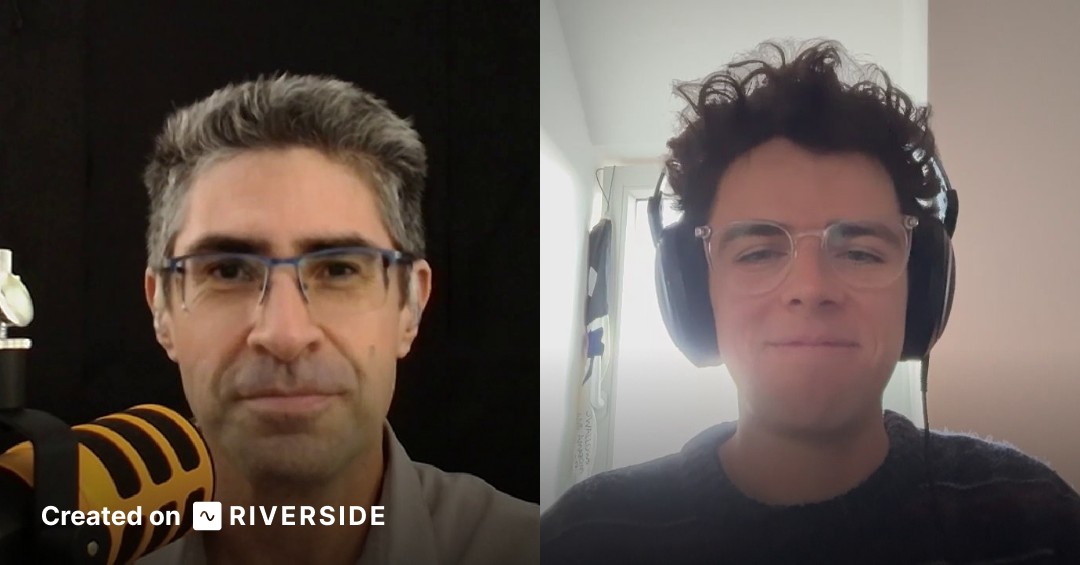
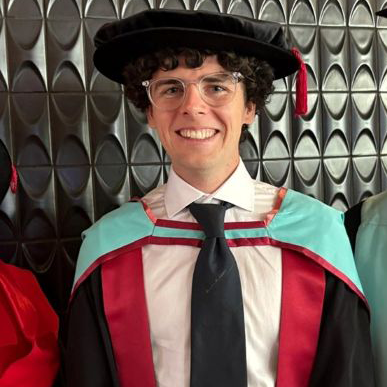
That's Dr Harrison Croft, who's PhD on Birrarung or the Yarra River and various interactions with it included a section on this story because the platypus at the heart came from that river.
Harry Croft (01:49)
He had a lion and a pair of black swans and quite a few other animals from around the empire. And so the platypus appealed to him. I believe he already had a taxidermied one sent some years earlier. Doc Evatt was Australia's attorney general and he caught wind of this interest and sent a memo back to Australia just to test the waters to see if there was any possibility, I think in the beginning, Winston was hoping to get multiple.
David (02:23)
Herb "Doc" Evatt was actually in London several times in 1942 and 1943. He was responsible for giving Churchill the taxidermied one Dr Croft mentioned earlier. That animal, known as Splash, was itself famous in Australia and around the world for being tamed by Robert Eadie, who built the so-called platypusary at Healesville in Victoria. Splash was widely viewed and witnesses described his apparent delight in playing with Eadie and being gently handled by him. Don't ever try that yourself, by the way. Once he died though, Splash was taxidermied and sent to the exotic animal-loving Churchill. But a live one? Yeah, that's a strange request. Especially in the middle of a world war. Perhaps now we know who inspired Monty Python's absurdist "Knights Who Say Ni" to make their own strange requests.
Clip from Monty Python and the Holy Grail
We demand a shrubbery! A what?
David (03:20)
So we think that Winston Churchill, do we think he made a actual request? Was this a case of, "Doc Evatt, see here, I demand six platypuses." Or was it more of a "What I really would like is a brace of platypuses for my collection. I wonder if that could ever happen?" And then Herbert Evatt took it from there. Do we know anything about that?
Harry Croft (03:32)
Churchill, is that you? Back from the dead. I couldn't find any direct evidence of a one-on-one conversation between the two in the archive. I suspect it may have been passed down the food chain from one to the next to the next.
David (04:01)
That's right. A discussion in the corridors of power of 10 Downing Street is certainly not going to appear anywhere in the archives here in Australia. Let's tell me then about what you do find and what is the information you can actually lay hands on as part of your investigation of this.
Harry Croft (04:17)
Yeah, my interest was foremost in the life and death of the platypus himself. And so that can be found quite well documented in the National Archives in Canberra. As I mentioned, there was a platypus attendant on board the ship and he kept a quite meticulous log, a copy of which is available in the archive in Canberra.
David (04:42)
Okay, so a key part of this story is someone we haven't mentioned yet. David Fleay one of the leading platypus experts of the 20th century. He was the director of the Healesville Sanctuary in the 1940s. He also established what is now the David Fleay Wildlife Sanctuary on the Gold Coast. He's also responsible for the first ever breeding of a platypus in captivity. Corrie, born to Jack and Jill, who rarely trouble themselves with hills, but their story was shouted from rooftops around the world. Here's a section of a series of education films featuring Fleay just after the war.
Clip from 1950 documentary "The Platypus"
And then Mr Fleay explained how the female platypus made her nest.
David (05:21)
Incidentally, David Fleay is the man responsible for filming the last known Tasmanian tiger. You've probably seen the footage before. Held by the National Film and Sound Archives.
David (05:32)
So Fleay was in charge of sourcing the living present to Churchill and all the important transportation methods. A large purpose-built platypusery, where the captured young male dubbed Winston of course, was kept for several months to get used to his surroundings. He and his new home were packed on board the MV Port Philip to sail from Melbourne through the Panama Canal across to the United Kingdom. But to keep a platypus alive, you need to keep its food alive. In this case, 50,000 worms. A naval cadet, especially trained for the job, was on hand at all times to feed and monitor the special cargo. In England, the story was kept secret, but preparations were made for Winston's arrival, including drafting press releases, calling on school children to gather and store earthworms for his meals. It wasn't until September 1943 that the Port Philip set sail for England. Winston's personal assistant kept regular notes on his progress notes that are stored in Australia's National Archives.
Harry Croft (06:32)
Platypus attendant logbook includes water and air temperature. I think they were also logging the temperature of the food as well that they were eating, that he was eating. The platypus's Winston was eating around seven, between 700 and 800 worms and grubs per day. So of course they left Melbourne with thousands of these, but when they made it all the way to Panama before they actually had to pull over in Panama to collect, to go digging for more grubs. So yes, this was, this is quite serious business to actually have to delay the voyage to go get more food to supplement.
David (07:19)
Imagine you've signed up to His Majesty's navy and suddenly having to stop to dig up earthworms for a glorified water rat. From there things get little hazy. It seems the cadet attendant had also been forced to cut Winston's rations for extended periods due to the declining worm population. That may have weakened the creature. We do know that the unfortunate Ornithorhynchus never set webbed foot in England.
Harry Croft (07:43)
The story put forth in the beginning by David Fleay the director of the Sir Colin Mackenzie Sanctuary in Healesville. Actually, he put it that an explosion from a weapon fired by a German U-boat caused the platypus's death. But there was an attendant on board the ship at the time. And in his testimony, when the platypus died, in fact, he was quite certain that there was no explosion.
David (08:14)
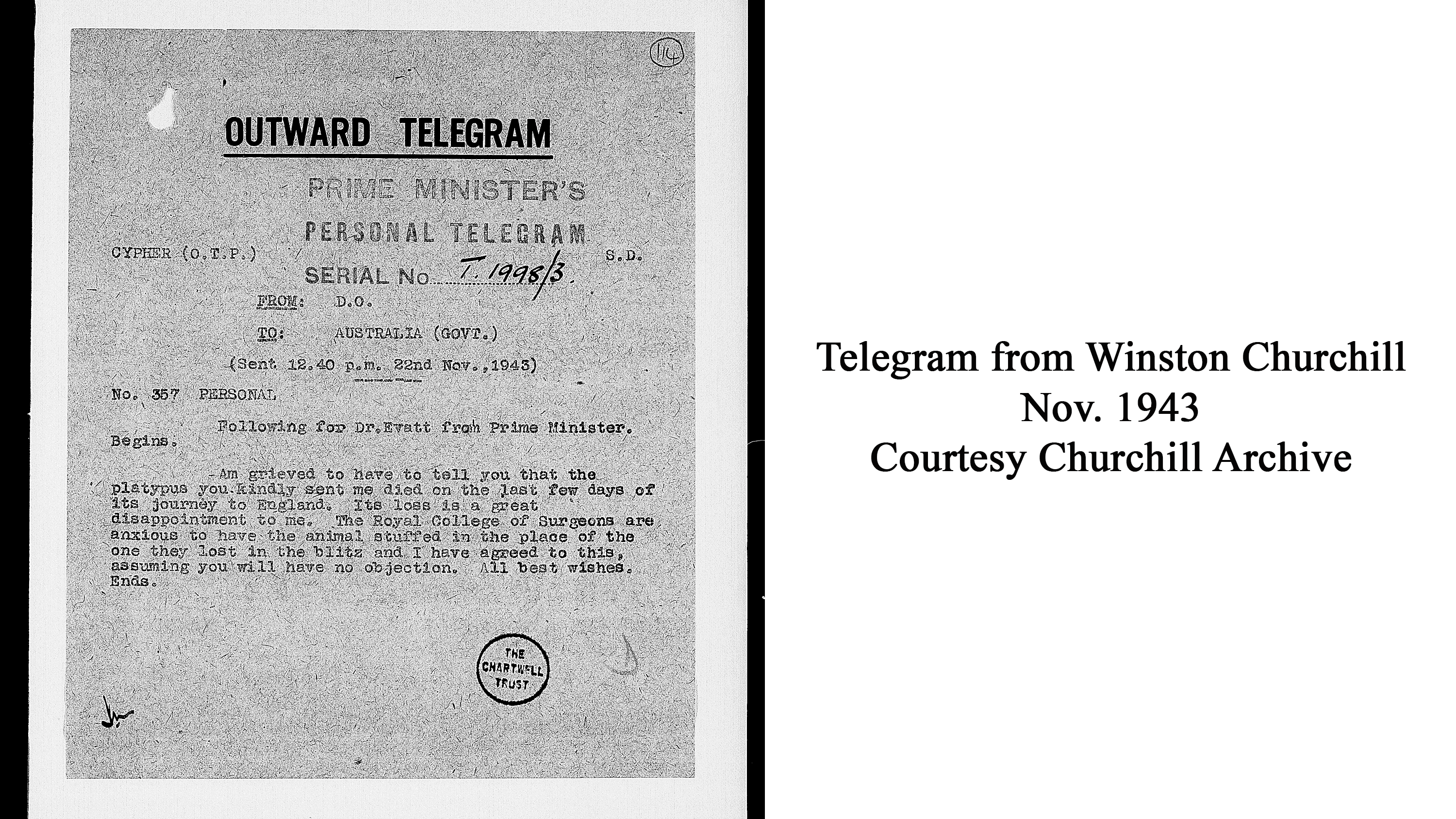
This is wartime and while the story was kept quiet until the end of hostilities, the best and most emotionally compelling story was that poor Winston was killed by those nasty Nazis and their devastating submarines. Regardless of the cause of death though, the body was quickly preserved. It was sent to the Royal College of Surgeons in London. Their previous specimen had been destroyed in the Blitz. And the platypus's namesake wrote to Australia, telling them the package had been lost in the mail, so to speak.
"Message to Australia. Government. I am grieved to tell you the platypus you kindly sent me died in the last few days of its journey to England. Its loss is a great disappointment to me. All best wishes, ends."
Dr Harry Croft's research examined the attendance notes as well as other documents kept in the UK. He now believes that it was actually unstable water temperatures combined with the uncertain diet that left Winston, well, completely stuffed.
Harry Croft (09:11)
Evidence from the archive seems to indicate that there was rationing taking place, that the platypus wasn't being fed a high quality or high enough quantity of food, that the fluctuation of temperatures and other climatic conditions on board the ship, that they were so unstable that it seems that missile or not already, the platypus was quite doomed
David (09:35)
As to why Churchill wanted another Winston, several historians have actually argued it wasn't just imperial exoticism but also a bit of a PR stunt, trying to woo a nation that was beginning to grow apart from the so-called mother country.
Singapore had fallen and Australia's requests for serious military support against Japan were denied. So Australia was beginning its pivot to seeking help from the United States. People like Natalie Lawrence writing at Cambridge in 2011 argued that a successful translocation of such an iconic species under the noses of the German Navy in particular was symbolically re-staking British claim over Australia while also creating a debt to Australia that it could use for its own gain. Which indeed occurred almost immediately, with the agreement to send British warships down under, as well as the latest tropical versions of the renowned Spitfire planes. Platypus diplomacy. Better than tariffs any day. Although not for the platypus. We'll be back with a regular episode of Where Are We At With next time. And a big thank you to Dr Harry Croft. He's currently based in Augsburg University in Germany. It's part of a prestigious two-year Humboldt Fellowship writing more about environmental history. I'm David Curnow. Goodbye.
Humboldt Research Fellow, Universität Augsburg
Augsburg University, Germany 2025-11-01 to present | Humboldt Research Fellow (Centre for Global Environmental History and Environmental Humanities)
Monash University, Australia 2023-01 to 2025-06 | Assistant Lecturer (School of Philosophical, Historical, and Indigenous Studies)