Where Are We At With Vaccinations?
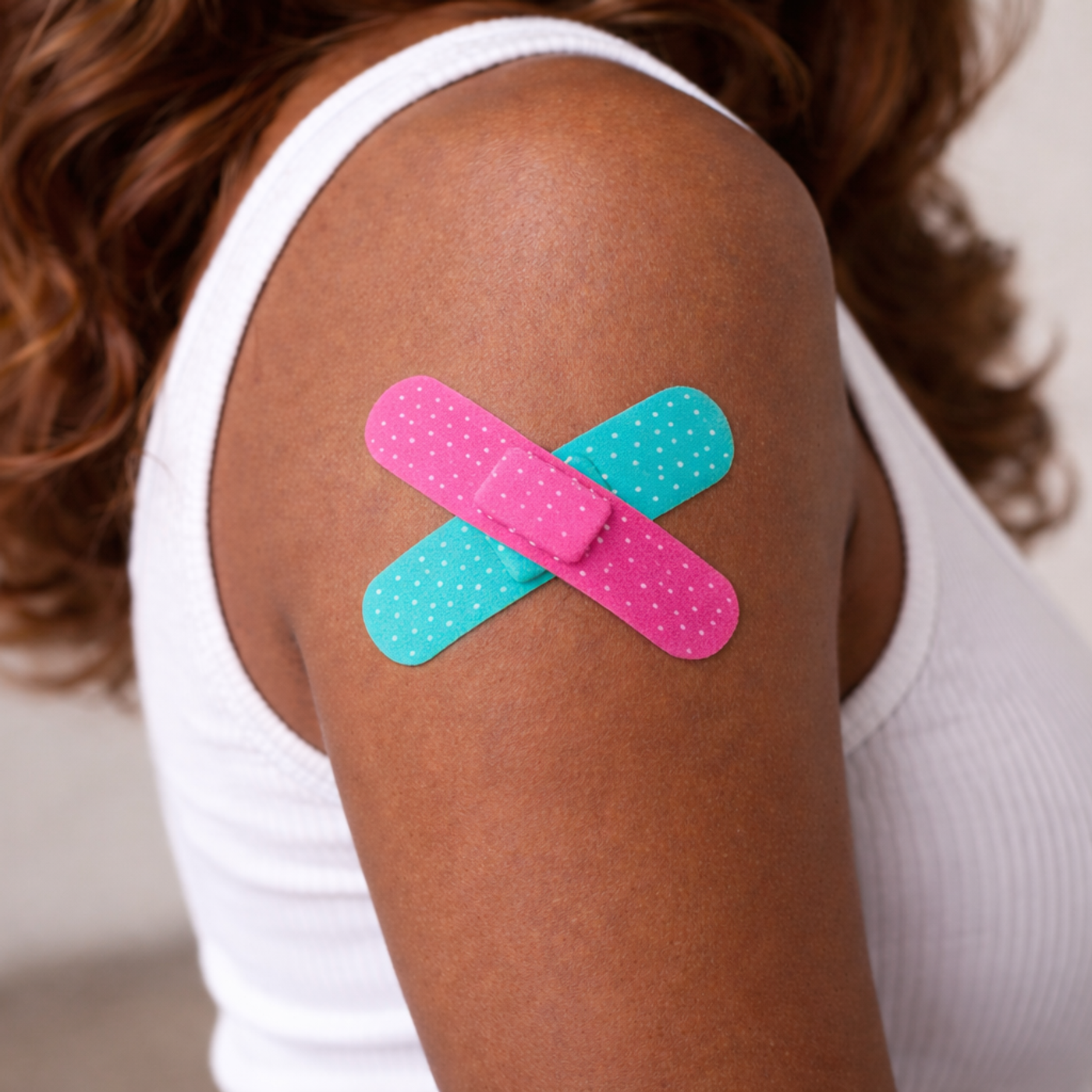
Vaccines work. The science has repeatedly shown what an incredible impact they have had on diseases, especially those mostly caught in childhood. But some people continue to hold out, due to either the fear-mongering of a few, health-system mistakes by governments, or the potential conflict of corporate interests.
Professor Julie Leask AO from the University of Sydney has spent decades finding out how to change their minds.


We want to point out that in our interview, Professor Leask was in an office next to some quite intrusive drilling work, that was quite off-putting to her. She contacted us immediately afterwards to note two, tiny numerical facts that weren't quite right. We managed to fix one in editing, but for the other we had to insert a side-note you heard towards the end. A very big thank you to Professor Leask for her attention to detail and promptness for pointing out the correct information.
Social And Behavioural Insights in Immunisation
The ABC recently published an article covering very similar ground to this interview and is worth checking out if you have time. If of course features our guest, Professor Julie Leask, as well as a number of other researchers in this field.
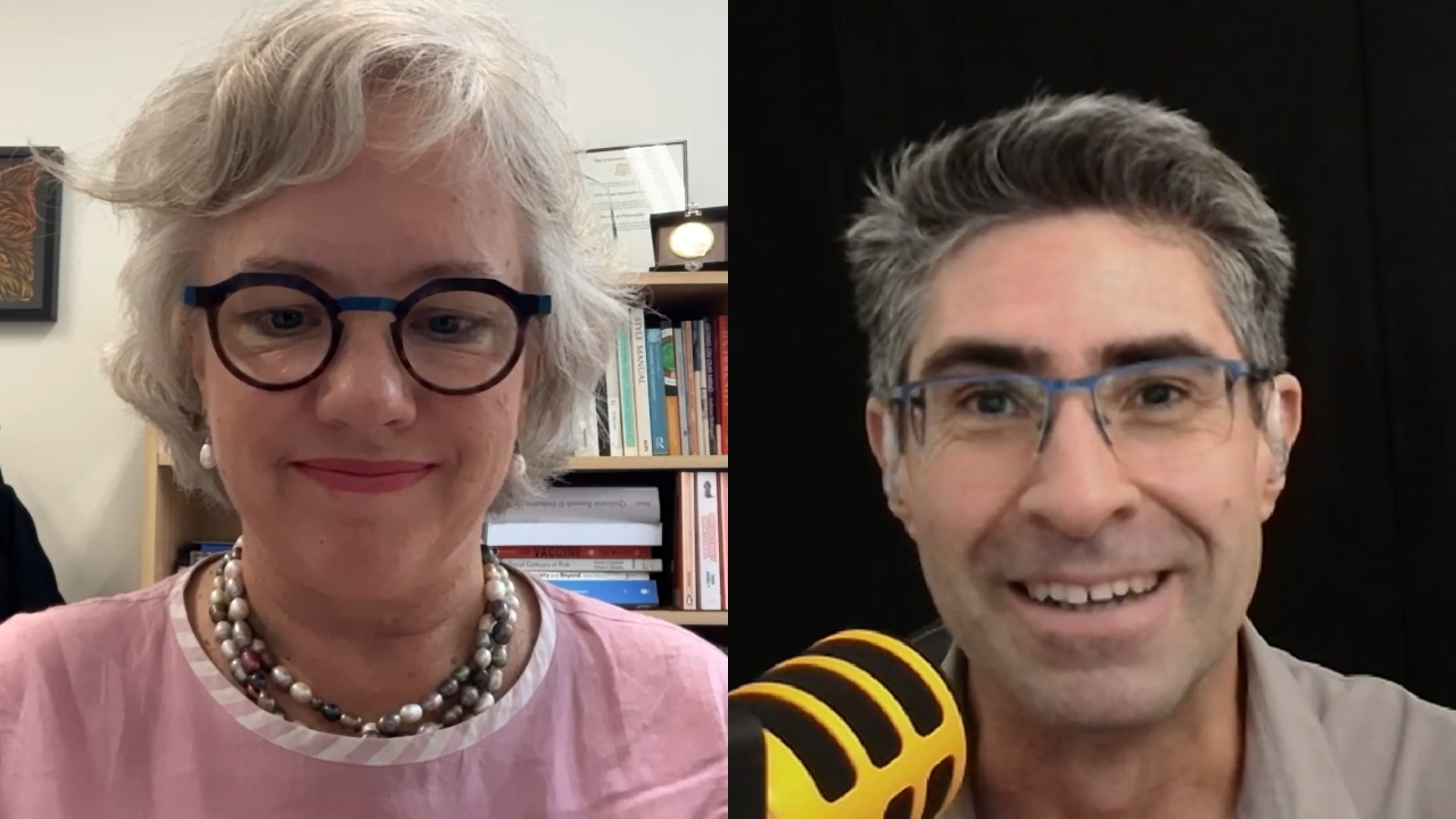
David (00:10)
Hello and welcome to Where Are We At With, the podcast bringing you up to date with the promises of the future made in the past. I'm David Curnow.
Before we begin today's episode, I'd like to remind you that you can find links to all our episodes, well as transcripts, details about our incredibly accomplished guests, as well as links to the works that they do, or relevant organisations, all on our newly renovated, much shinier and easier to use website www.wawawpod.com. That's www.wawawpod.com.
One of the marvels of modern medicine is the ability to show your body what a disease looks like and then prepare its defences for if, and when, it encounters it later on in life. Vaccinations have radically improved life expectancy and even nearly eradicated entire types of illnesses. But sometimes very stable geniuses who know all the words say ridiculous things, such as this a few months ago.
Clip Donald Trump press conference
Okay, so you'd think no one in their right mind would listen after all to that man. Is he a doctor or not a doctor?
clip from Goor Productions
"Not a doctor"
Despite that, sometimes even ignorant or misleading words like that can make people pause. Australia's vaccination rate has dropped in recent years, only a little to be sure, but any drop is a concern. And the instinct is to judge or even criticise those who don't vaccinate their children based on disinformation, but that often makes the problem worse.
Our guest today has dedicated her life to understanding what stops people from choosing to protect themselves or their children from preventable illnesses, as well as how to make access to immunisation as easy as possible around the world. Professor Julie Leask from the University of Sydney's School of Public Health was the overall winner of the 2019 Australian Financial Review's 100 Women of Influence and awarded an Order of Australia in 2024 for distinguished service to health and medical research, policy advice and enhancing community understanding of immunisation. She's advised governments around the world as well as the World Health Organisation and UNICEF. Where are we at with vaccinations? With Professor Julie Leask.
David (02:54)
Professor Julie Leask thank you so much for joining me.
Julie Leask (02:57)
It's a pleasure, David.
David (03:00)
How are you with needles?
Julie Leask (03:03)
I'm fine, especially when their given by a well-trained registered nurse, because they re the best at giving needles. I know some people are not, but their fine with me and I really appreciate what they re doing as well, particularly when it's a vaccine.
avid (03:09)
It had to be that answer. What is a vaccine? I mean, we have an idea in our minds, I suppose, but at its fundamentals, what is it?
Julie Leask (03:26)
It's basically a medicine that you give to people to prevent diseases rather than treat them. And the medicine usually comes in the form of a needle, sometimes a drop. And it has a few things that teach the body to recognize the actual germ when it sees it in the future in real life and be all ready to mount a response to it. So it basically stimulates the body's defence mechanisms against the infection, and it's really cool because the way it does it is by taking a tiny fragment of the germ itself. It either weakens it or kills it. Sometimes it takes the toxin from the germ and then it gives it to the person in a really safe way. And the vaccines include a few other things like, so that part of the germ is called the antigen and then there's also adjuvants, preservatives, stabilisers, diluents. So there's a few things in them to make sure that their given as safely as possible.
David (04:28)
What were the first vaccines? When did we discover the ability to prevent some illnesses other than not getting too close to others?
Julie Leask (04:36)
So the first vaccine was the smallpox vaccine. The smallpox was this terrible disease, had a terribly high death rate. People would get these pock marks all over their body. They'd be terribly sick. It was a respiratory infection, but it was systemic. And the person credited as inventing that vaccine, if you like, was Edward Jenner, who was a physician in England ? in the late 18th century. And Jenner had ? noticed that milkmaids didn't get smallpox. And you could usually be able to tell someone who'd had smallpox because they had the pockmark scars over their body. They didn't. And it was thought at the time, other people had discovered this as well, that it could well have been because they got infected by cowpox virus which was kind of like smallpox. So he took this idea of taking a little bit of the cowpox material from a particular milkmaid called Sarah Nelms. He took her pustule material. He gave it to a young lad called James Phipps and James Phipps became immune to smallpox. But before Jenner people were using this thing called variolation or inoculation where they took actual smallpox material from someone infected with it, the pustule, and scraped it into the skin of another person. So it gave them a mini smallpox infection, which was not enough to kill them usually, but it was enough to give them immunity, it preceded Jenner by centuries and women were also sharing this technology. Lady Mary Montagu brought it to the UK from Turkey.
David (06:37)
It must be a hard sell some times to say, I'm just going to burst the pustule. This is literally pus. This is the blister of the smallpox. I'm going to take some of that pus. Don't worry. I'm going to put on you and I'm going to rub it on you. But it's okay. ? It's everything's going to be okay. It must be the hard sell for some people.
Julie Leask (06:53)
Yeah, like vaccination is giving a healthy person a needle. In that case, it was a little lance that would create openings in the surface of the skin and could itself bring them the risk of smallpox. Two to 3 % of people got full smallpox. It could spread smallpox doing this, but there were a whole bunch of people who were also getting immune to this terrible disease. And the early vaccine scientists of this were comparing populations who got the inoculation versus not and finding that the people who got it were better protected, were less likely to get smallpox. So it was an amazing thing. And then it went on.
David (07:43)
Yeah. It was pretty clear pretty soon when you looked at populations, wasn't it, that you could see the clear difference in those who had had this inoculation and those who hadn't. What?
Julie Leask (07:56)
Yeah, exactly. And not without risk, of course. And depending on the vaccine, the risk varies. But the benefits far outweigh, way into that risk. You had to convince people though, as you say, because you were giving this thing to healthy, often sceptical people. And some people were very against it and mounted strong opposition to it in the form of lobby groups.
David (08:21)
And it's a long way from rubbing the pus of a smallpox victim onto a cut on somebody to the modern vaccines. The development that was required to understand the science of it must have been a challenge. When do we first start, I suppose, pumping out proper big high-quantity vaccines for variety of illnesses?
Julie Leask (08:43)
Well, smallpox was one of them. So eventually that innovation, that technology took hold and was given to many, many people. And there were other vaccines like next came the rabies immunisation. And then we had the diphtheria vaccine, which was one of those vaccines that come from the toxin of the germ diphtheria is a bacteria. And then by 1918, we had the flu vaccine that was developed because we had a massive flu pandemic then. And then we had ? other vaccines coming along last century, which were ? against things like whooping cough, measles. And now we have a whole bunch of new vaccines. Of course, I've missed them, the polio vaccine, which was so welcome. We had big epidemics of polio in Australia, in the US in the 1940s and early 50s. And then we had the vaccine against that two vaccines, one initially an injected one, and then another one was an oral one, which stayed with us for decades, which has helped eliminate polio from Australia. We don't have any, you know, we haven't had a case of polio come to our country for a long time, at least wild polio.
David (10:08)
And it says a lot that illnesses such as smallpox and polio can be, if not eradicated, close to. Are there other illnesses that can be eradicated or close to if enough immunisation is done?
Julie Leask (10:21)
Yeah, so smallpox was eradicated in 1977. The declaration was 1980. There's a wonderful headline on the WHO magazine that describes that. WHO had such a huge role in that as well. Polio has not yet been eradicated from the planet. It's been eliminated from particular regions such that it doesn't have ongoing transmission. There's hope that we'll be able to eventually eradicate polio, but we've got some real hurdles to get through in the meantime. And then there's diseases where you've got to be question mark whether we can eradicate them like measles. And some people think definitely not. It's too infectious. It's too hard to get the really high immunisation rates you need to eradicate it. And then there's the hope of eradicating human papilloma virus with the one of the newer vaccines, the HPV vaccine, which is given to adolescents, which is a wonderful thing because that prevents cervical cancer and other cancers. And to be able to eventually rid the world of cervical cancer would be just an incredible achievement.
David (11:35)
And great work done by Professor Ian Frazer and his team on bringing some of that to the world. Let's talk about you briefly. You started off doing nursing and midwifery, is that right?
Julie Leask (11:48)
Yes, I did. When I was in high school, I loved studying biology and I loved this subject we called home science, which a lot of people think is cooking, but it's actually kind of social science and it was very well taught by Mrs. Robinson. And I thought nursing would be a good combination of bringing those two subjects together. And I also had a passion for working in other countries where people were less fortunate. So I did nursing and then I thought to be useful in other countries, you really need midwifery under your belt as well. So I did nursing in the university system and then I did midwifery, which is still in that old sort of apprenticeship hospital-based system. So I experienced those two systems of training then in the late 80s, early 90s. And then I worked in, ended up working in, from neonatal intensive care through to community health and worked with pregnant teens ? and got a feeling for the challenges of promoting health and wellbeing and how you do that so that people, the outcomes for these young mums and their babies were the best possible ones amidst quite a bit of disadvantage they experienced.
David (13:08)
I guess that's the next question is moving from midwifery into something like studying vaccines and the promotion of them, it makes a lot of sense when you consider the idea of effectively, well, this baby has been born. How can we make sure it stays safe? How important is it for the shots of some of these vaccines in the various forms to happen quite early?
Julie Leask (13:31)
It's really important, the timing of vaccines is very crucial. For example, if you can give a pregnant woman a whooping cough vaccine, we call it the pertussis vaccine, that's the technical term for it. ? The pregnant person can get protection for themselves and their baby. The baby gets those maternal antibodies their born with so that when they encounter, if they encounter whooping cough, in those early weeks before they can have their own vaccine, they will have protection against it. And in fact, pregnancy whooping cough vaccination has markedly reduced deaths from whooping cough for very young babies. So it's been ? a really good thing to do. And then there are vaccines which are important at birth, like the hepatitis B vaccine, which crucially must be given at birth if that child is at risk of hepatitis B from their mum, whether the mum knows they've got it or not. And then there are others that are important from about six weeks onwards. ? Timing is really important. But you know, David, I got a real passion for prevention through a couple of things, through working in the health care system, looking after sick patients and knowing that some of those people didn't have to be there if there'd been some simple prevention like injury prevention or infectious disease prevention. I remember caring for a woman who had post polio syndrome, which really affected me. And also, you know, I had a friend many years ago who had been driving through his suburb and he'd hit in the rain a massive pothole in the road, had a terrible accident. He wasn't expected to survive, but he did and he ended up with several disabilities, which affected his whole life. And it really struck me at the time that if only the council had done what they'd been asked many times to do, which was to repair that pothole in the road, he wouldn't have had this huge impact on his life. And I'd also around that time lost a friend in a car accident. So I was pretty passionate about the notion of prevention. And that sort of gave me a fire in the belly for public health, which is what I love and which is really about preventing disease and promoting people's health and also managing diseases well so that they don't pass to other people.
David (16:13)
As you moved into that field. Australia was changing in many ways. Obviously, vaccinations, immunisations had been around for a while. We know their successful, but perhaps the communication around it was flawed at times. Perhaps the uptake wasn't as good as it should be. What were some of the challenges you faced early on?
Julie Leask (16:33)
Yeah, my first foray into vaccination was when Simon Chapman, my PhD supervisor, sorry, he was one of my teachers when I was doing a master's in public health at Sydney Uni. And ? I'd say to him, look, I'd love to do this little research project with you, looking at how the media represents pregnant teens because I'd worked with them and I was frustrated with the way they were kind of stereotyped and put in a box. And he said, look, I don't have those articles, but I've got a whole collection of immunisation articles from the last five years, I think from the nineties when we didn't have social media, we just had print media. So I analysed this foot tall, you know, set of newspaper articles And I was particularly interested in the ones that expressed opposition to vaccination. We called it anti-vaccination rhetoric in the Australian print media in the 90s and analysed that. So that kind of got me into this studying this fascinating area of first of all opposition to vaccination.
David (17:46)
What are some of the barriers there to vaccinating? What are the reasons people give for either not having their children vaccinated or they themselves not opting to take up immunisation?
Julie Leask (17:59)
When you were looking at the media rhetoric, a lot of the blame was being put on parents, their ignorance, their, you know, focussed on other things, their anti-vax. In fact, when you looked into it, a lot of the problem was that services weren't easy to access. So if you were a parent in the early 90s and the 80s in Australia, you may have had to go to a pharmacy to buy the vaccines, get bring them back to the GP. Having got that appointment, the GP gives the vaccines or you'd line up at a council clinic. And the delivery of the service is really fragmented and variable. And there was shifting political responsibilities between the states and territories and the federal government. So it's all these sort of boring systemic things that were the source of the problem largely. Yeah, there was a bit of opposition to vaccination. was what I was studying, actually. But there were bigger, more systemic problems. And also, there's this really common barrier that's still around, which is that if a child is sick when their vaccines are due, the parent or even the health professional who's meant to give the vaccines wrongly thinks they should delay. And that means those kids can end up getting really late and there's also parents who are just struggling with a lot of other responsibilities and struggling to get to the services. And I experienced this when I was working with these pregnant teens, because they were in an accommodation service in Sydney. And I was the nurse, the midwife, sort of supporting them. And we'd try to get to the health appointment and we'd have to get their kids on the bus with the pram. And it was just a real struggle.
So when you've got that, you don't have a lot of money, you've got a lot of other things going on in your life. Vaccination can just fall down that list of priorities. And so if you make the services really convenient and easy to get to, drop in, you name it, you can really improve vaccination rates, which is what we did. We had around 53 % of kids fully recorded as being vaccinated fully in ? the late 90s. And that jumped to 90, 90 % and above by the early 2000s.
David (20:27)
Wow, that's an incredible leap. Was it purely by education? What sort of role did governments and regulation apply to that?
Julie Leask (20:37)
Was mostly not education. Education alone is not enough because as you hear, you need those services to be really convenient. So it was largely through the work the Labor government had done in the 90s developing a good foundation for a good plan that the Liberal coalition government brought in under Michael Wooldridge in 97 where they really the federal government really took ownership of purchase of vaccines of they also incentivised health professionals to record vaccinations well so we had a good sense of how we were actually going with the vaccination rates. We incentivised parents to vaccinate by linking family assistance payments to vaccination status. We had this new register as I said we had school entry requirements and a big measles campaign and we also had monitoring and evaluation and we established the National Centre for Immunisation Research and Surveillance which is where I ended up working in the the 2000s right through to 2013.
David (21:50)
So a lot of that is a top-down approach effectively to make it easier. And as you say, if it's going to be a palaver, it makes it harder. It's not just a case of, don't want my baby to cry. It's also just physically getting to do the things. We're changing that. There are other people, there are other reasons for not being vaccinated. We started to see them obviously pretty much straight away with smallpox, as you said. The people who are sceptical or downright unhappy with the concept of vaccination. Tell me a little bit about that.
Julie Leask (22:26)
Yeah, this is something that affects probably about two to 3 % of all parents, which makes them not vaccinate with some or even all vaccines. And there's three major reasons. So one is that the parent might just have an existing belief system about what's natural parenting. And, you know, people will say in our research, parents will say to us, look, you know, I have, I give them organic food only and we have chickens, we drink filtered water. Why would I put those chemicals in their system? Right. So it's a belief about parenting and health. Some people are really vigilant and they want to look into vaccination before going ahead. And they end up going down this rabbit hole of anti-vax material online and find networks of people who sort of bring them in, welcome them in and give them their views and then there are other people who've had a bad experience with the healthcare system and they lose trust. So they might've come into vaccination without much engagement or even quite positive about it. Their child might've had something go wrong with them after a vaccine was given. think the vaccine was the cause or there was a real reaction that wasn't dealt with well by in the GP surgery, for example, and they get disillusioned and they lose trust. And they then often go down that internet rabbit hole and learn a whole lot of stuff, scary stuff about vaccines, as you will if you do that. ? They're the main reasons. And you know, the core concerns here for parents are, I don't want to give my beautiful, fresh young baby all of these needles. Not because they're painful necessarily, people overcome that concern, but because they do strange things to their immune system.
And we don't know whether that might be causing some of these chronic diseases we're seeing nowadays. The big one is autism, right? So that's been around since the late nineties. When I started looking at this, there were ideas that vaccines could cause autism. They don't. But this idea is really, really interacting with parents' intuitive concerns for their kids. Or what's in the vaccines? Do those ingredients do funny things to the body or? Will my particular child be vulnerable to a reaction because of the way their body is made up?
David (24:52)
And how hard is that when you come to the fact that there are occasional side effects, there are occasional adverse reactions and the, I suppose, being completely honest, full disclosure sometimes can make people nervous in itself.
Julie Leask (25:10)
Yeah, it can be tricky because you're not talking about something that's completely safe. Vaccines like any medicine have minor side effects and sometimes rarely serious reactions that go with them. And then there are things that people think vaccines cause which they don't by the best available evidence we have. and so it's this area where you're talking, you're acknowledging real issues. You're drawing a dividing line between those and purported side effects that people say are there. And then you're also creating a boundary around what anti-vax activists are trying to do to people's confidence in vaccination. You're communicating risk, you're communicating uncertainty in some cases and it is a real communication challenge. We've done a lot of research in that area. And what we've seen is that people can handle that. People, we underestimate people to some degree. If you tell people what to expect, why they're having this vaccine, what the disease is, what it's likely to do, what the risks actually are, the rate of those common and rare side effects, then they're more likely to be confident in you as a source of information and trust your recommendations and trust is so vital. But also we want people to be healthy. We don't want them to be harmed by vaccines and the people who work in vaccination largely have that goal. So, you know, I also am impressed by my colleagues who are the vaccine safety scientists who care about getting this right and that gives me trust in the system as well.
David (27:06)
Professor Julie Leask is our guest today on Where Are We At With ? , we are looking at where are we at with vaccines, specifically the delivery and uptake of them. So we're not necessarily looking at immunology here, we're looking at psychology, the process of convincing people that it is the right thing to do. You mentioned trust, trust is such an important part of this. It's difficult when quite often the messaging around vaccination comes from a government and that same government is fallible. They can mishandle things like health outbreaks, some mad cow disease, things like that. Does that make it harder for people to retain that trust in vaccines when even though it's not the government who's developing the vaccine, they're the ones telling us to get it?
Julie Leask (27:48)
Absolutely. Trusting government is pretty central to people's ability to accept vaccination to some degree. know, some people, Amy Crichton, one of my previous students, she's a Gomeroi-Murri woman, very strong Aboriginal woman who had this sticker on her social media profile during the pandemic, which was, I have a healthy mistrust of government and I vaccinate because she saw the value of vaccines beyond government. But yes, I think that's one of the challenges we have today that in the pandemic, governments were taking away a lot of liberties from people in most, by the most part necessarily to stem the transmission of COVID-19. But because in the name of public health, would, using various measures to get people to stay at home and to vaccinate. People now have this critical retrospective scope and some people feel less trusting of government as a result of that and also less trusting of vaccination. Now, trust in government is really important, but there are other things that can kinda count. If you don't trust government, that mistrust can be counteracted by a good experience with vaccination services or strong community support for vaccination that's around you.
David (29:19)
One of the challenges of course is that every person is different. There are people who quite literally when you tell them to do something say well you can't make me you're not the boss of me. Does that make it hard when you have things like the register, no jab, no play, those sorts of policies that that will automatically trigger some people?
Julie Leask (29:36)
Yeah, it will, because one of the things that really drives people's attitudes to vaccination is their values. And so people vaccinate because they have a strong value around protecting their kids, you know, protecting communities. But also some people have really strong values around their freedom of choice, their liberty. And if the government are using very strong levers to get people to vaccinate and for some people the experience will be very coercive. Then they can be, ? they can end up kind of throwing out the baby with the bathwater and get so upset with the mandates around vaccination that they lose trust in vaccination itself. And it's one of the unintended consequences of mandates which do increase vaccination rates to varying degrees but also come with these knock-on effects as well.
David (30:36)
I do want to get to COVID both pre-COVID and after COVID periods as it were because it is like many industries marking a big difference in the way things are delivered when it comes to vaccinations and communication learnings. I wanted to step back and look a little bit at anti-vaccination as a movement because we've spoken a lot about individuals, the fact that people will be sceptical for a number of reasons, bad experience, mistrust, all that sort of thing. But the fact that there is in a sense an organised anti-vaccination movement, what's behind that what's driving it?
Julie Leask (31:09)
Yeah, there's several different motivators and therefore several different kinds of groups. I mean, there's the radical groups and there's the radical groups who will even say the disease itself is your friend, know, measles is fine to get because it'll strengthen your immune system. And then there's the reformist groups who want change in a particular vaccine program because of a perceived vaccine injury. So there are, it's quite a heterogeneous set of groups around the world. They're in most countries, I'd probably say all countries, this organised opposition to vaccination. We've had it in Australia for decades. And it was one of the things that I was studying in my ? PhD. And they come from either people who have had a very, for them, disillusioning experience with the medical system, the healthcare system, or often vaccines where they believe something bad that's happened to their child was caused by the vaccine and they go on what ends up being this kind of, we call it a big biographical disruption because it can completely change their story and the way they think about the system and vaccines. And then some of them want to warn others. So they organised these groups and I was studying them in the late 90s and they had listservs and they had stalls at fairs and they had visits to MPs and they were quite active. And then you have these, now in the US, these very well funded, very sophisticated groups who have become even mainstream through Robert F Kennedy Jr's tenure as the lead of Health and Human Services.
David (33:05)
I would like to get to what's happening in the US as well. So many things we need to get back to, but I wanted to look very quickly at the media and the role it plays. You mentioned, and I read your report from the 90s looking at that media coverage of vaccinations, both positive and negative. And the fact that a lot of media for a long time perceived balance as giving equal time to both sides, whether that other side be a little bit nutty or not. Do the media have a role in disseminating information and choosing people to speak to that are indeed credible?
Julie Leask (33:39)
The media have a hugely important role in the way that vaccination is reported because for many young parents, that's their introduction to vaccination. Now, of course, know, news is much more disseminated through social media channels these days, but the mass media still do agenda setting for some of the major messages that come out about vaccines, and so what I've learned over the years, both through, I've done a lot of work with journalists through being interviewed by them, but also giving them some background and supporting them to find the right people to talk to and find that a really important part of the work that we do in public health, because it's making sure that the best quality story comes out that is most closely aligned with what the truth the evidence says as best as we can determine the truth. And journalists, particularly health and medical and science reporters have a hugely important role to play with reporting vaccination. So if you have a headline, and we used to have these sort of headlines, it was actually really challenging in the 90s when we had headlines like, vaccination, is it the right choice or not, let's look at two sides of the vaccination debate and figure out what's the right way to go. And they brought as you call it that false equivalence, like the false balance of we need to give 50 % to the anti-vax side and 50 % to the pro-vax side when actually 90 % of the science says that vaccines are safe and yes, there's uncertainty and yes, there can be issues with vaccines, but by and large those anti-vax voices are wrong. And so giving, putting the frame around a story, around a headline, a lead sentence, choosing the right people to be interviewed, making the right cuts and edits to that interview is such a crucial thing that journalists are doing because they're shaping the agenda for how the public think about vaccination. It's not the only thing, but it is pretty crucial.
David (36:06)
And it struck me reading your report as well as other material on this, how similar some of the approaches by certain anti-vaccination groups were to things like tobacco, fossil fuel and the industries and the playbook there when it comes to effectively muddying the waters. We don't need to convince people of our truth. All we need to do is convince them that there's a doubt and our work is done.
Julie Leask (36:30)
Yeah, we leverage uncertainty. We go for the areas where it's harder to explain the science. We capitalise on people's fears for their children. And now, you know, coming out of the US, those strategies are really quite sophisticated.
David (36:54)
Let's talk then about COVID because the world generally is different post 2020 to what it was beforehand. The messaging, the creation and the development of COVID-19 as it occurred changed a lot of people's views on a lot of health-related matters. What was your take on it when you first started hearing about this illness? Do you remember your impressions at the time?
Julie Leask (37:19)
We'd had a few scares. We'd had like MERS, this virus, was a coronavirus that came from camels. That was concerning. People were keeping an eye on that. And then actually in January 2020, I was in Samoa helping WHO and that country with the recovery from their big measles outbreak that they had there. And I remember sitting at the table in their emergency operations centre, listening to the health leaders of that country talk about this new coronavirus and try to figure out whether they should close the borders or make sure that people are screened at the airport. They just had this terrible experience with measles. And so they were quite attuned to it and ready to respond quickly. They did end up closing their borders. So I came home and I was alert to what was happening and we all were hoping that this would be something that would be able to be controlled. It would not be our next pandemic, which we'd been ready for, but unfortunately it was our next pandemic and they weren't able to get a lid on it in time and it was very infectious. And so by the time that COVID, you know, was clearly going to come to Australia, we're seeing people initially in crowding intensive cares and dying, physicians making terribly difficult decisions about who to prioritise. We're pretty, people are pretty scared and yet our government wasn't proactively communicating. So at that time as a risk communication researcher, I was quite frustrated with the lack of proactive, honest, dilemma sharing communication that you need early in a health emergency, and remember writing to my colleagues, you know, who had a direct line to our health leaders to say, we need to do a better job with this communication. Well, it was ended up being forced on the prime minister, I think.
David (39:26)
It's interesting because someone like you is someone who should be called upon when it comes to let's talk about what we need to do from communication perspective. One of the things I noticed you wrote about or mentioned in some of your work was Covello's Seven Cardinal Rules of Risk Communication, which was a fascinating little rabbit hole that I enjoyed. Tell me about that.
Julie Leask (39:46)
Yeah, if you've got a health emergency of any kind, whether it be a pandemic or a measles outbreak or that's really big or vaccine safety scare, whether it's real or perceived, and you need to communicate with people quickly and there's new information evolving, you're dealing with scientific uncertainty, what do you do? Well, these, as you call them, the Covello rules, the cardinal rules of risk communication of health emergency communication are these just these general things that are a wonderful guide. I mean, he developed, he was a US public health expert who wrote them in the eighties and they stood the test of time and I kept trotting that out in my talk and they are, accept and involve the public. And when you communicate, communicate early and often, be honest, frank and transparent, give people things to do. Keep communicating, even if you're bothered by the lack of certainty that you're dealing with, and a whole lot of other things. Meet the needs of the media and work with credible spokespeople. Plan and evaluate your efforts, right? The communication planning doesn't happen when you've got the emergency, it's too late. It has to happen beforehand. And some of that had been done in Australia, but some of it was really wanting and had been neglected.
David (41:15)
It's interesting because you mentioned the idea of the planning and I noticed that that indeed was one of the reasons we ended up with a vaccine sooner than expected was that in fact scientists had been developing vaccines effectively as a blank vaccine for a potential pandemic, whether it be a coronavirus or a swine flu or bird flu or something like that. And the very fact that they'd started that work meant that the procedure was much quicker than we expected. That in itself led into people thinking, well gee, that was too quick. It can't be trusted.
Julie Leask (41:45)
That mRNA technology that people were particularly worried about had been decades in its development and testing. Yes, the vaccines themselves were relatively new, but the technology wasn't that new. But yeah, new things do concern people. And there's a bit of cultural rationality in that, right? We sometimes have to be a bit careful with things that are new, because they can bring us unknown harms. But actually, when you were able, we did a lot of education of community groups around this vaccine testing process and showed them why it was done pretty quickly and why we were reasonably confident that these vaccines were safe enough to be given to whole populations quickly. We were looking closely at the clinical trials. ? We knew that I'd done work with WHO who had listed a whole lot of potential serious reactions to vaccines that they were developing that they needed to go and look for really carefully in the trials and afterwards in the post licensure surveillance, as they call it. And they called adverse events a special interest. like people cared about getting this right and not harming people en-masse. And so a lot of the challenge in that time, in that 2021 period when the vaccine was being rolled out, was communicating with people what was known, what was not known, what the risks might've been from the vaccines, what they were, because there were some but also the benefits and how much careful testing had gone into it in this condensed timeframe. When you can overcome bureaucracy, funding limitations, you can fast track things so that you're still doing the testing. Some of the processes are in parallel rather than sequential. You can actually achieve a huge amount if globally you put the collective minds to it. And that's what we did. And I think in many ways, we've forgotten how fortunate we were to have those vaccines because without them, we were pretty stuffed. We were going to have a lot more people getting sick and dying from COVID than we ended up having.
David (43:55)
Bringing in another topic I said we'd get back to. This is where we started to see quite a disparate approach when it comes to international leaders. 2020 President Donald Trump elected for the first time and presiding over a crisis and the messaging around COVID and who to trust became a lot more difficult as a result of how he acted and again now we're seeing similar things with the new administration as well. Tell me a little bit about how hard it is for health workers, health administrators, people such as yourself looking at the risks and barriers. What role does that leadership play?
Julie Leask (44:35)
You know, last year, David, we were talking with nurses in ? rural Western Australia who talk with parents every day about vaccines. give vaccines. ? They address their concerns. And what really was coming up was that some of these ideas that have now been mainstreamed in the US are reaching Australia already. So Robert F. Kennedy Jr. has often said, and Trump echoes this, that there are too many vaccines given to kids. We need to stretch them out, space them out. ? And parents are going to their healthcare providers and saying, I want to space out the vaccines or I want to delay certain ones or not have certain ones. I want to adopt this alternative schedule. So we're already seeing some of these concerns playing out in Australia. They've always been there, but people are hearing more and more of it at the front and it is going to probably get worse, unfortunately, which is why we need to do a lot of work now to shore up our community confidence and readiness for some of this misinformation to not communicate in a really sort of unnuanced way, which says, they're there, dear, don't worry, but to give people the information they need for their concern at that point in time. And health professionals have such a huge role to like it.
David (46:06)
Author Terry Pratchett wrote in one of his books that a lie can run around the world before the truth gets its boots on. When we look at platforms like your TikToks, like your Facebook, some of the algorithms where they can target particularly susceptible people with some of these situations, there is a fairly strong push, there has been a fairly strong push to effectively censor some of those views to not let them disseminate. What's your approach when it comes to censoring misinformation and disinformation?
Julie Leask (46:34)
It's a little bit counterintuitive because the idea would be that if we could just close off or reduce that misinformation out there on social media, then people would have fewer sources of concern about vaccines and therefore they'd vaccinate more. So it's this kind of flow of logic, if you like. It's a, an idea that if this, if you do this, it'll lead to this, then that, then that. Unfortunately, it's not really well supported, right? So, and I don't say this is an easy thing to talk about because I'm misinformation, yes, it's out there. Yes, people are getting exposed to it, but we have to remember that it's as much about the audience as it is about the information itself, and as somebody who was studying the effects of misinformation on parents for my PhD, I had focus groups of new mums I showed bits of misinformation to them from a TV documentary and looked at their responses and debriefed with them a few days later. And I looked at how, what sort of things made them immune to that misinformation. They have their own critical faculties. They can discern good from bad misinformation. They also have a strong sense of why they value vaccination, why they might not wanna take on those points of view. They might see some of these people as radical, as not part of their social group. So there's the audience, you've gotta think, know, it's often said it's not what messages do to people, it's what people do with message in the context of their beliefs, values and experiences. And so there's things making people resilient against misinformation. If it had had its impacts, because there's so much of it around, why aren't we seeing a massive drop in a vaccination coverage? Yes, it's dropped. It's still above 90%. So it's about that. It's also about, so it's about people being better at discerning missing, you know, good information from bad information, which they already can, but improving that. And it in one of the problems with met with overactive censorship in immunisation room, I'm here I'm talking here about my topic of immunisation, I'm not extending it to other areas, is that if you if you're too proactive with your censorship, you play into one of the most popular framings of anti vax activists, which is that the government want to silence you, take away your voice and control you. And it unfortunately inadvertently plays into that discourse. And in fact, if you listen to, for example, Mark Zuckerberg of Facebook talk with Joe Rogan, you'll hear him now very angry about the perceived level of censorship he was getting from the US White House, the Biden White House during the pandemic, where they were expected to censor probably too much, you people's claims about vaccine side effects. And now he's really reacted against that. And so he's now not, you know, not putting in probably enough safeguards there on Metta. So there's these unintended consequences from too much aggressive regulation around vaccination.
David (50:20)
Is there a difference in geography when it comes to things like health systems and the way that I suppose medicines and healthcare is provided? I guess I'm saying when you look at the US and the way that healthcare is provided there, you can see why "Big Pharma" as it's so called has the agenda, why there would be a push to sell more oxycodone sell more various medicines, and that may include vaccines. Is that different in countries like Australia or England where perhaps you don't tend to think about the pharmaceutical company itself as much?
Julie Leask (50:53)
I think it is because for one thing, we have some tighter controls in the way companies can advertise medicines to the public. They can't do it directly. And also the vaccine policy development and recommendation processes is as well protected against big pharma interests as it needs to and should be. ? Because there's no doubt that companies will, you know, main goal is profit. Although, you know, having talked with, I don't receive direct funding from industry, but when I talk with people who are in vaccine manufacturing companies, several different ones, the people that are attracted to those jobs within industry, you know, they really care about public health as well. They have medical training, nursing training. They want to get it right, they wanna make sure that their product isn't gonna be harmful because eventually that's really bad for the product.
David (51:57)
Yeah. I mean, when you're talking about profits, the best profit is from a successful vaccine that doesn't hurt people. That's the way you make the most money.
Julie Leask (52:04)
Yes, but you do have to have those safeguards so that our policies are coming from good evidence around the burden of the disease, the safety of the vaccine and its impact on that disease, and also on the best price you can get for that vaccine as well. And negotiating that is important. Now, there's no doubt that industry can have influence on policy in countries but we want to minimise that direct influence so that our policies are sound and are about benefiting the public health, not the pocket of companies.
David (52:44)
We'll get on to what's happening at the moment in a moment. What I would like to finally ask about when it comes to anti-vaccination is a lot of people tend to lump anti-vaccination, those with sceptics, those with doubts, sorry, in the same category as a flat earth, moon landing conspiracy, those sorts of things. Is it a danger to treat people who have doubts as either ignorant or even potentially dangerous?
Julie Leask (53:09)
It is a problem because if you're just imagine you're a parent or someone thinking about vaccination for yourself, your elderly relative, and you have some questions as a parent, you might've heard this stuff from the US, know, Trump going on about autism or too many vaccines, why they should only have certain vaccines recommended and others are as optional. And you're kind of wondering, well, there's something going on with vaccines and you go to your GP and they're not comfortable with you asking those questions and they think in their mind, no, not another anti-vaxxer, I don't have time for this and shut them down. That's a harsh environment for the hesitant, which is why this nuanced discernment of who is gonna be dead against vaccination and who is gonna be on the fence and not sure is really important. And they're just parents, right? Then you're thinking about anti-vax activist groups who are separate, and our research with quite a lot of parents who don't or hadn't vaccinated their children might've changed their minds, might've not. They say repeatedly, I am not anti-vax because that term is now quite stigmatizing. And it's also stigmatizing for them as a family and their kids because it's, you know, in some communities, it's, you know, this very reviled group and some of our, you know, news organisations have turned it into a bit of a culture war in the past. So it is very important to discern anti-vax activism from people who are not vaccinating for a whole bunch of reasons.
David (54:50)
And you can understand, I suppose, and possible reaction from other parents who perhaps perceive those people as, well, you're endangering my child. So you can understand there's passion and fear on both sides there.
Julie Leask (55:06)
Exactly. ? through the years, you know, commenting on this publicly, I've learned a lot about walking a very careful line in the language you use around this and where you put your focus. So you, you know, you don't want to be seen as an apologist for anti-vaxxers. And equally, you want to represent people truly as you've heard from them in your research, because it's part of your ethical obligations. But you also don't want to see people who have lost children from vaccine preventable diseases because it was passed to them before they could have their vaccine feel like their needs are ignored. And you also want to talk about what you represent, which is support for good, solid, ethically sound vaccination programs, right? I'm strong on supporting vaccination. So walking that line,
David (55:58)
Hmm.
Julie Leask (56:05)
It has been, I've learned quite a lot about ? how you do that in your rhetoric publicly. And for me, it's about finding your true north right? I'm a former nurse and a midwife. I care about families, kids. I care about prevention. Vaccines are designed to prevent disease and improve human health and wellbeing. And if I can contribute to that through encouraging good process, good vaccine uptake where the vaccines are recommended and also positive public discussions in this often quite fraught area, then that's what I'm on about doing.
David (56:44)
And have you personally received, I suppose, abuse, threat, response, feedback? You do exist in a public space and your voice is called upon as somebody who is one of the leading experts around. Do you get that sort of messaging?
Julie Leask (56:59)
Absolutely, over the years, you get caught in the crossfire if you like. And it is an emotive topic because of what it represents for people. ? At the one end it represents potential harm and the other end it represents protection and people can get very emotional about it and they can get upset with you if you're not talking about it in the way they want you to talk about it or if you're talking about the nuance around it, because some people see it in very black and white terms. And so, yes, I've ? had lots of correspondence over the years that some of it has been, yeah, that's just going, you know, that's going in the ignore it file. doesn't bother me. Some of it's bothered me, you know, it's hurt because it's misrepresented what I'm on about, but I've learned a lot about how to manage that. It's been a personal journey of growth for me. at the end of the pandemic, well, sorry, the end of the first two years of the pandemic, I remember saying to a journalist ? on "The Drum" on the ABC's "Drum at the end of that program, you know, I feel like a lot of what I've been doing in this sort of you know, commentator space around COVID is holding a space for upset, stressed and sometimes angry people. You got to hold a space because it's not about you personally, usually. It's about the topic and what it represents and helping people, you know, helping a public conversation about this being one that's constructive is going to be consonant with what vaccination is aiming to do, which is to be constructive about the public's health.
David (59:01)
Professor Julie Leask is our guest on Where Are We At With? We're looking at where we are at with vaccines, vaccination, the rollout, the uptake, people's approach to them. Obviously challenging, particularly in a media environment that includes people willingly and deliberately misleading. Let's talk then about Australia right now and where we are at with, because in recent years we have seen an incremental tick down in some of our rates. What's behind that and what can we do?
Julie Leask (59:28)
Yeah, we've had a nearly three percentage point drop in our childhood vaccination rates, which represents a lot of kids. Timely vaccination has gone down even more, like by about 11 percentage points. So people aren't getting vaccinated, their kids vaccinated on time as much. And then if you look at school-based vaccination, like the HPV vaccine, for example, it's given in school, that has also declined to worrying levels of vaccination rates for adults against flu, COVID, they have declined to varying degrees and for particular population groups or people who live in particular areas. So Aboriginal and Torres Strait Islander people, their vaccination rates have declined as well, which is a concern because ? generally speaking, Aboriginal people suffer diseases, they suffer the burden from diseases more because for various reasons they can be more at risk of those diseases. So it is a really concerning thing. And part of our research with the National Vaccination Insights Project is to try to find out what's happening and why. Why are vaccination rates declining in particularly in our case currently around children and adults with flu vaccine, but children for all of the vaccines. And then what can we do about it to try and arrest that decline?
David (1:00:59)
And do we have any early findings? I know you've got a report that's scheduled to effectively finish this year. Is there anything we can see early days? We're not looking to break any embargoes. Just if you've got any clues that perhaps you're seeing in the data or from talking to those involved, some of the issues.
Julie Leask (1:01:10)
So we're leading the flu vaccination arm of the project and that's showing that, you ? know, people just, there's a whole bunch of barriers, like people not getting a reminder, not thinking flu is serious, worrying about the vaccine, giving them flu, which it can't, but they worry about that. And those barriers are kind of like pretty stable. They haven't changed that much in the last two years. The childhood vaccination findings are a bit different and those will be sharing those findings publicly in the next few weeks. But I think it's safe to say that there is a whole communication environment out there, particularly emanating from the US, that is augmenting existing worries about vaccines, which we are very likely to see impacts from into the future. So, you know, it is really concerning what's happening, but broadly speaking, David, the main reason why people aren't vaccinating still, this hasn't changed since the 90s, is because either it's not easy to get the services or people don't want to get a vaccine or all of them for some reason. So there are access, we call them access barriers and acceptance barriers. And they're the two broad reasons and the access barriers to primary care have become bigger in the last few years as well because there's fewer general practices available. It's expensive for GPs so they're bulk billing less often. So people have to pay for the appointments. They can't get an appointment in a country town. The council clinics we used to have, you know, there's not as many of those now. You could easily drop in. So there are real service barriers that people are encountering as well.
David (1:03:11)
It's work that will continue no matter what happens, I suppose. Very quickly, as we develop technology, things like the number of needles we need or even whether it's a needle at all may change. How important or what sort of role can that play in maybe changing some people's fears when it comes to vaccination?
Julie Leask (1:03:32)
Yeah, so this really exciting part of vaccine science where they're testing out things like these little patches that you can put on your arm for 10 seconds, for example. And they have these tiny, tiny little scratchy needle things that are microscopic, but they scratch the vaccine antigen into the skin and set off a response. Now they're still in big trials, but there's some promising findings from them. And we may in the future be able to give vaccines without a needle, but with a little patch. And that'd be great for several reasons, not just because it'll be nicer for people to receive that and not have to see their kids or themselves have that pain from the needle and the stress of it, but also because you can more easily manage the cold chain, which is where you don't have to keep it at this strict temperature range from factory to where you can deliver vaccines globally to remote locations. Islands in the Pacific where you have to take a boat for two days to get the vaccines to people, maybe in the future you can deliver those patches through drones. So there's some really exciting prospects along with the fact that if you still have a needle vaccine, which we'll have for some time, you could combine multiple antigens into the one vaccine. So you're actually protecting someone against many different diseases like a combined flu and COVID vaccine, for example.
David (1:05:13)
And of course, we've done that already in a number of the childhood immunisation jabs. And that's been a fantastic development for things like the MMR and those sorts of things, hasn't it?
Julie Leask (1:05:22)
It has, it's been being able to give instead of give three needles at once, give one and it protects those kids against measles, mumps, and rubella, MMR. That's incredible. And now we have seven valent vaccines where one needle delivers seven, know, protection against seven different diseases in kids.
SIDE NOTE
David (1:05:45)
Okay, quick side note here at the moment, it's a six in one dose, not seven in one, known as a hexavalent. It protects against diphtheria, tetanus, pertussis, that's whooping cough, polio, haemophilus, influenzae type B, and hepatitis B.
Julie Leask (1:06:00)
We're so fortunate in Australia to be able to afford these technologies, and also to mean that kids don't have to get multiple, as many needles at the one visit. I've got a PhD student right now who's looking at hesitancy about multiple needles at the one visit in Indonesia. He's from Indonesia and he's studying this phenomenon, which is a real one. People, including health professionals, don't like giving three, sometimes even four needles to a kid at the single visit because it's distressing for everybody.
David (1:06:38)
Absolutely and I certainly could remember with our children some of the times where you go left, right, left and the administration of the number of needles, the fact that then they changed over their lifetimes meant the younger ones didn't have to have it. There's a lot of work to be done. I don't think we'll ever reach a position where 100 % of the population receives 100 % of the vaccinations that they need but until then there are people like you and your colleagues working to help us. Professor Leask, thank you so much for your time today.
Julie Leask (1:07:06)
David, it's a pleasure and I just want to give a shout out to the team of people I work with because it's not just about me, it's also about all the work that they're doing to create and develop this knowledge and make things better. So thank you very much for the opportunity.
David (1:07:29)
And a big thank you to the wonderful and obviously quite patient Professor Julie Leask. A reminder that our website has a small sample of her extensive range of awards and publications as well as links to the University of Sydney's Social and Behavioural Insights in Immunisation Research Group, which she co-leads. Just enter www.wawawpod.com. That's www.wawawpod.com. You can also see transcripts of all our episodes and maybe even leave a review on our new page of the overhauled web design. Music for the show is by Michael Willimott, production assistance this week from Grace Curnow. The show is recorded and edited on Riverside podcast software. I'm David Curnow. Thanks for listening.
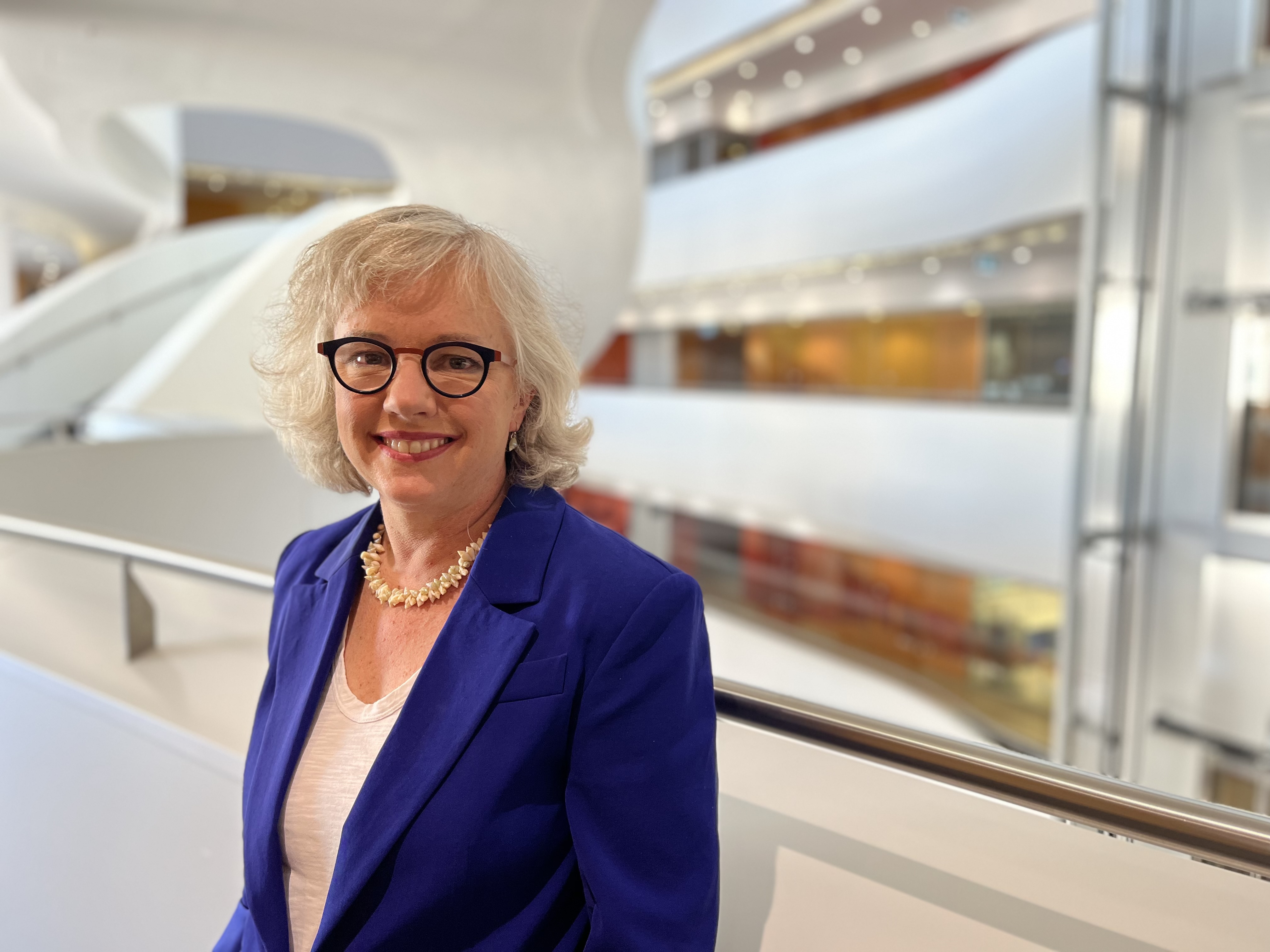
Co-lead Social and Behavioural Insights into Immunisation Research Group, Faculty of Medicine and Health, UniSydney
Julie Leask AO is a social scientist and professor in the Sydney School of Public Health, Faculty of Medicine and Health, University of Sydney, where she co-leads the Social and Behavioural Insights in Immunisation (SABII) research group. Her research focuses on social and behavioural aspects of vaccination and prevention of infectious diseases. She is a member of Sydney Infectious Diseases Institute (Sydney ID), affiliate of the School of Nursing and Midwifery and visiting professorial fellow at the National Centre for Immunisation Research and Surveillance. She currently holds an NHMRC Investigator Leadership Fellowship.
Her research focuses on vaccine uptake, communication, strengthening vaccination programs and policy. She has qualifications in nursing and midwifery, a Master of Public Health (USYD, 1998) and PhD in public health (USYD, 2002). She was the overall and global category winner of the Australian Financial Review 100 Women of Influence Awards in 2019 and was made Officer of the Order of Australia (AO) in the General Division in 2024.