Where Are We At With Consciousness?
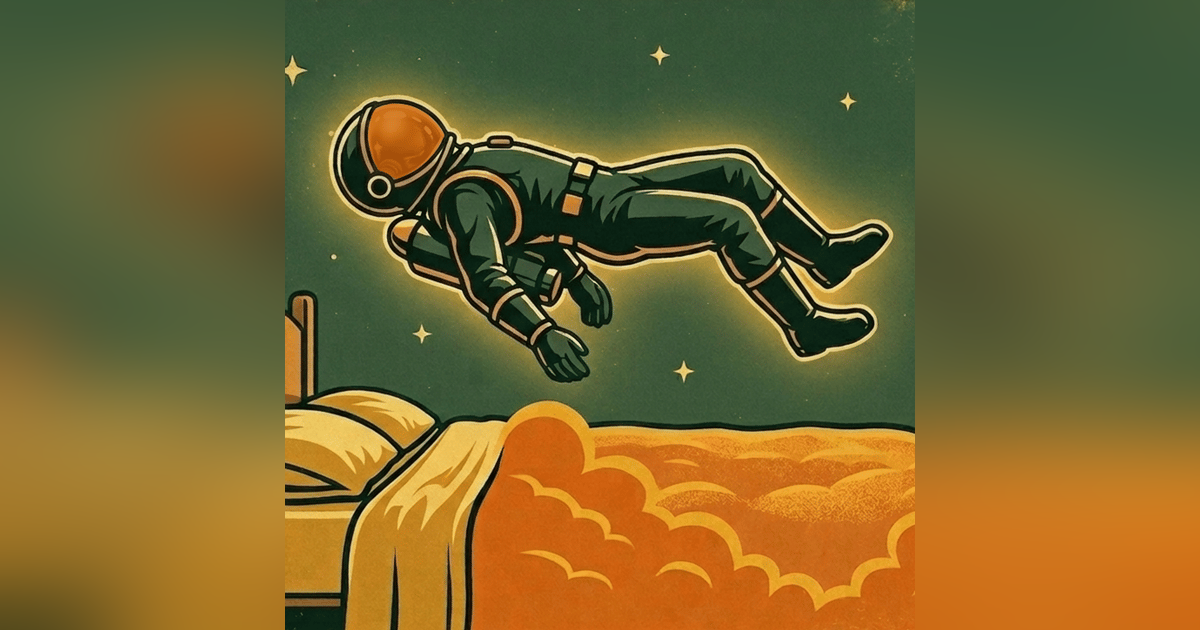
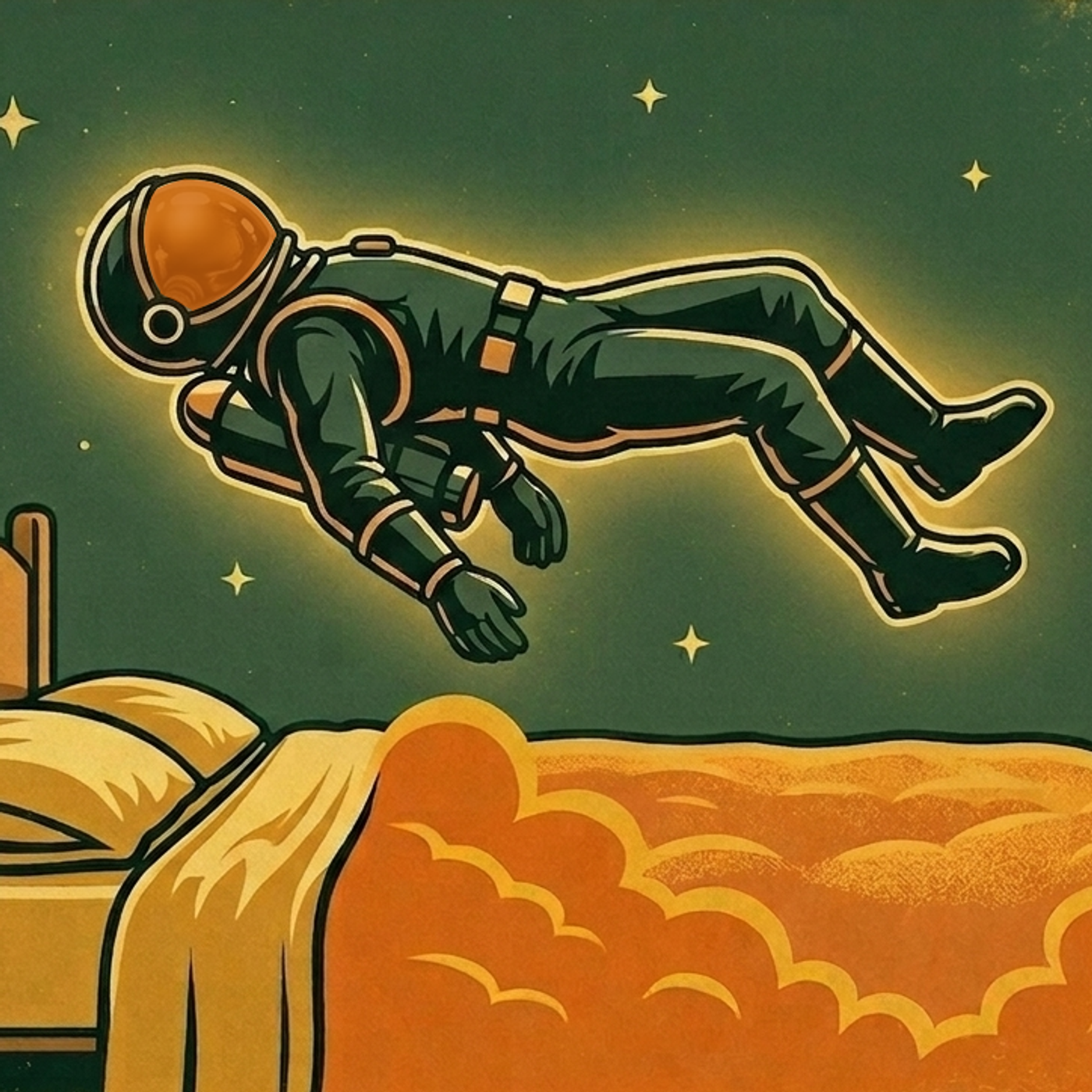


What does our brain do when we dream? Can we tell if someone is dreaming just by scanning their brainwaves? What do we mean by conscious? Does ADHD make the brain act like it's dreaming during the day? How many people are actually aware during hospital operations?
Just some of the deep and challenging questions that people like Professor Nao Tsuchiya from Monash University are trying to answer, using science, philosophy, psychology and maths.
David: I think, therefore I am. Or as my family says, Dad thinks, therefore he often forgets to do. But in the 17th century, philosophers like René Descartes theorised that the act of thinking proves our existence. Hello, welcome to Are We At With? â Professor Nao Tsuchiya thank you so much for joining me today. The podcast exploring the promises of the future made in the past. I'm David Curnow I think. To extrapolate further from Descartes, consciousness more recently is often described as thinking about the fact that you are thinking. Awareness of a self and that others are also aware of themselves. With me so far? Well, hold on to your hats. Things are about to get a little bumpy.
Nao: Great to meet you.
David: We will start by asking a bit of a personal question. Do you dream? Do you remember your dreams?
Nao: â yeah, sure. every â day.
David: Do you know people who don't?
Nao: seems to be the case that is actually but â the proportion of people who do not remember is substantial. you can wake up people at the right timing and also ask them to report it right after â dreaming.
David: Defining consciousness is a lot trickier than we initially imagined because while the binary awake vs not awake concept seems relatively neat, things as usual are a lot more complicated. Take dreams, brains creating and playing out a scenario without most of the usual external stimulation.
Nao: then that allows them to realise â actually I'm dreaming, but I'm just forgetting it. Yeah.
David: when tell that you are looking at things like dreams, when it comes to the study of consciousness, do they tell you their dreams? Do they ask you to interpret them? Nearly all of us dream, although many don't remember doing so when we wake. Some of us are aware that we're dreaming while we're dreaming.
Nao: I mean, I actually do not the experiment on the dream, per se but collaborating with these people who are studying the dreams. And we are specialized in a sense more theoretical side of it â data analysis side of it. And so, â yeah, but I'm very interested in dream itself. â I myself also dream as well.
David: And what about the fact that many people report being aware of sounds â or feelings while under general anesthetic? That in itself is bit of a nightmare. So what is going on in our squishy grey reality interpretation blob that's protected by our skull? People like Professor Nao Tsuchiya are trying to find out. He works with the Turner Institute for Brain and Mental Health at Monash University, asking simple questions like why and how does our subjective conscious experience emerge from physical electrochemical activity? Okay. Well, let's ask about that then. What got you interested in this particular field? Was there a â time where you were aware of your own consciousness? Was it a dream where you were at school in your pajamas? What you interested?
Nao: That's an interesting question. So I recall at least two specific events that made me very interested, made me realise that I have a very strong and deep interest in this fundamental kind of question. One time was when I was a kindergarten, when my dear friend actually died. And then I...
David: Do other animals experience subjectivity? If so, how can we know? Will there be conscious machines or robots? Or if they're already here, â how can we tell?
Nao: didn't really understand the concept of death, right? But then the kind of the story that I heard from the parents or parents' friends or â adults didn't just make sense to me. They that, my friend went into the sky or he became a star or something like that because as I watch in the night sky, the number of the sky doesn't increase whereas... â
David: Time to put down the second screen and concentrate because there some big brain topics here. In addition, Professor Tsuchiya is originally from Japan. Now, he speaks English a lot better than any of us speaks Japanese. However, some people will have to listen extra carefully as our brains work extra hard to interpret the sounds he creates.
Nao: Many people should be dying all the time, right? And so on. And then â that was probably the beginning of â asking the fundamental question of the life and also consciousness in fact. And then the second time, which is still continuing to the current interest is the time when I was in the junior high school to discuss whether I'm experiencing the same kind of redness as friend.
David: into meanings that we understand. Yeah, good luck with that last part. Where are we at with consciousness with Professor Nao Tsuchiya Okay, first side note here, and there'll be a few in this episode. As someone who failed grade 11 maths, I'm probably not the best to explain the mathematical category theory, but I'm all you've got. Very basically, very basically, it's about organizing and explaining various large groups through each single object's relationship with every other single object. Illustrations always tend to involve a lot of arrows going back and forth. To quote Georgia universities, D. Zach Garza,
Nao: was experienced the redness. And then we discussed a lot about this. But now we are coming to the kind of scientific underpinnings of this type of the question. that's the second, most one of the two fundamental time of the
David: It serves as simplification through abstraction. So you can move from studying individual trees to studying the forest as a whole. also it allows someone to reason about the entire collection of forests and transport those findings from one forest to another. It's maths, it's complicated, and it's helping people like Nao Tsuchiya take all the different structures of consciousness and try to make sense of it. that of is this the same for me as it is for everybody else is of course part of what effectively develops us and our sense self, but the awareness of it â and the ability discern differences that might be there, that's a whole different state of being. Let's talk about consciousness then. Is consciousness even real? Are we imagining it? What do we know about consciousness? Okay, next side note here, and this one I understand a little better. Binocular rivalry is when our two eyes are presented with different images simultaneously. Now, our brain doesn't actually process the images at the same time, depending on the person and possibly their brain's pathways. It will always see and interpret one image first and then the other. On the other hand, continuous flash suppression is when one eye is subjected to rapid flashes of changing high contrast shapes or colours
Nao: Mm. Mm. So my perspective is that we know is actually only through consciousness, actually. And the dream is actually super important to realise this, in fact. Maybe I'll just start with a contrasting kind of a through questioning to you. â Sometimes I do this in the class, actually. So what do you think â in following situation? So there is a tree in the woods.
David: And that actually stops the brain from seeing or interpreting what's in front of the other eye. And if you look it up on Wikipedia, part of the explanation quotes Professor Tsuchiya.
Nao: And then that tree just fell. But in the woods, there was nobody. Was there a sound or not?
David: Okay, side note here on phenomenology. This is about each of us experiencing the same inputs slightly differently and the reasons for those experiences. That flower that you see, well, I see it too, but it's different in my brain because it reminds me of the flower my date wore to the school formal or something like that. Perhaps that music is different in your brain because you're a trained musician and you can hear the slightly out of key bass guitar. Or perhaps you hear a dog bark and you don't like dogs. once again, when gets asked a question and is made to look silly, I'm going to go with there is a sound there, but it only becomes sound as we know it. â the waves and ripples that cause the sound â only become sound we know it. If something, not necessarily someone, but something can be aware of If it hits an eardrum, I suppose, in a sense that you can physically feel the sound. So that exists. It will cause minute. phenomenology, each person interpreting the same incoming information â slightly differently. another word you will hear later is "qualia" not koala, qualia. â That's the same but different. That's more to do with the actual sensation we experience, the taste of the first sip of coffee, the coziness of that fluffy blanket. Qualitative perceptions of an experience that can't be explained purely of disruptions in leaf, in the air, that sort of thing. But as â auditory version, it becomes sound when we perceive it or something perceives it.
Nao: In fact, this is the kind of the more or less the default answer that even when I ask it to the first year or second year psychology student, like 90 % of the students actually start with this kind of thinking. But then â underlying kind of probably assumption that you have â that there is a world out there first. And then you participate into that world.
David: objectively. Qualia raises what was called the hard problem of consciousness by a bloke called David Chalmers in the 1990s. That is why and how physical brain processes produce subjective first-person experiences. Okay, now here's a babbling brook to cool your overheated thinking sponge.
Nao: And then somehow your consciousness, what you call as consciousness, is in a sense sort of mirroring what's out there into your experience. Is that more or less correct? What do you think?
David: I that is. And I suppose projecting that on not just me as a human, but also any living being in the vicinity, it has to have some awareness of it as well, wouldn't it?
Nao: Right, right, right. So, yeah, so many of the different kind of animals will have different ways to mirror the world, but, you know, basically it is the mirroring what's existing sort of objectively into their internal experience. That's the kind of idea, right? But, you know, if you think about the dream, does it actually make sense?
David: Okay, this isn't an explanation as much as a reiteration. Dreaming is like a little waking island in the middle of the sleep ocean, while mind blanking or daydreaming is a little sleeping island in the middle of being awake. Cool, right? Mm. Yes. Yeah. That's Professor Nao Tsuchiya from Monash University. He's also the head of the Laboratory of Qualia Structure at the Advanced Telecommunications Research Institute in Japan. Well done to you for making it this far unless you've skipped ahead to find the Good luck with that. For answers, more information, explanations, or possibly just a transcript to figure it all out, head to our website shown in your podcast app. Our theme music is by Michael Willimott. I'm David Curnow Goodbye. It doesn't make sense at all. Trust me. I've looked at my dreams. My dreams make no sense.
Nao: It doesn't make sense. Right. And why it doesn't make sense is because first of all, empirically and also theoretically, kind of consideration is actually true, but can't really by default notice whether are in the dream or not. And when you can become aware that I am in the dream, â but not in usual real life or usual kind of everyday life. It is called lucid dreaming. And there is a way to become aware that you are in the lucid dreaming or But if it's a non-lucid dreaming, you just can't distinguish whether it is in everyday life or in the dream. So that means that the dreaming experience is at least highly â And for that, You don't need to see the world or don't need to hear the world or you don't need to touch the world or anything. Right?
David: It's amazing when it comes to dreams like that, some of the dreams can be so â and unreal that any normal examination of them, you would say, well, no, the floor of my local supermarket isn't water. â you don't have to swim to each object, but yet in that dream, it's perfectly rational and normal. we suspend some understanding of reality while reflecting another type.
Nao: Yeah, so is a really good kind of starting point to doubt about whether the consciousness is the first kind of starting point or the â so-called reality or outside world is a starting point. And I claim that you yourself are in a sense sort of generated by internal big bang-like thing throughout your life. And then at some moment you realise that I am actually kind of participating in the objective world, but it is internal you, yourself, that is through this internal experience talking to other people, you started to kind of infer what's out there. And then building a lot of kind of knowledge, mostly it is a belief about... the â outside, which is constructed through science and the story and also many kind of credible people's saying. And then to some extent, you accept what it is in the outside world. you do not, for example, have a normal sense, for example, if you are â deaf people or â blind people, they are painfully aware that what other people are talking about doesn't make sense. But this also happens a lot, even non-deaf people or non-blind people as well. So in the case of the male population, example, roughly 9 % of the people are colourblind in terms of red, green, deficiency. But none of them will say â they don't experience colour, actually. And in fact, their colour structure is a or as complicated as other people, but you know, it is very different in terms of qualitative shape and so on. you know, everything, my take is that what we are experiencing â or supported by the brain. And dream also like that. And the primary, you know, experience is always constructed by the brain. â And is also the case for the usual in everyday life. So in â words, you can consider that everything is dream.
David: was going to be one of my questions. Are we dreaming? Is this matrix? Are we dreaming? And there a way of determining that? That's a whole lot of metaphysical stuff that we might get into in moment. Firstly though, when we about approaching thoughts like this, is consciousness philosophy? Is it psychology? Or is it neuroscience?
Nao: That's a very very good question. And I would say that this has to be tackled in interdisciplinary manner.
David: So all of them and others. Yeah.
Nao: all of them. also more than that, yeah, more than that we need, for example, what I'm also advocating these days is that really truly interdisciplinary work and particularly important things are mathematics, actually.
David: Mathematics. How do we use mathematics when it comes to determining or studying states of consciousness?
Nao: So the is that I think â conscious experience cannot be just a single number or the degree the complexity or anything like that. What you are experiencing is, in essence, it is a quality, which you cannot really verbalise If you see redness or this background tree or something like that, or the blackness of this mic, you have some kind of quality in some shape whatever. And then that has some kind of compositional kind of shape or very complicated kind of composition. And that is not to just represent as a single number or single word or anything like that. But what I think is possible is to characterise it as a structure. So colour has some kind of structure, vision has structure, audition has a structure, and our conscious experience also has a structure. And this structure is a very complicated and subtle kind of entity, but that can be mathematized using the type of mathematical theory called category theory, which is invented in roughly like 1940s and then that is specifically invented to study the structure. application of this structure, onto the consciousness is we need right And then that will probably or seamlessly connect philosophical ideas about consciousness in a more quantitative and also psychological or neuroscientific way of characterising the behaviours or internal feeling in psychology or neuroscience to characterize the brain or neurons. are you know, it is gigantic structure, right? The number of neurons in the brain, â do know how many there are in humans?
David: Look, I don't know. I know that I have fewer than you. â
Nao: Yeah, it's really amazing, but it's 10 to the 11 neurons, 86 billions. And then each of these tiny neurons is connected to other neurons in roughly like 1000 to 10,000. And roughly you can think of this as almost like people in the, I think the world right now is 80 billion or something like that, right? If I remember correctly.
David: I'm gonna go with lots. Whoa. Eight billion, around eight billion people in the world.
Nao: Yeah, so 8 billion. If it's 8 billion, and then there can be like 10 times more people in this world. And then each of us â talking to 10,000 or 1,000 people almost â second by saying ping or pang or whatever. And then connect it to everywhere, to everywhere. It's super complicated kind of structure, but somehow from that, we have a single unified experience like this, combining the vision and smell and also sound and touch. And you remember before and you can think about future. That's the kind of thing what we have.
David: Well, you've just blown 80 billion of mine just by that particular piece of information. Let's then talk about how hard is it to study that if we have so many. And if everybody has so many neurons and they're all interacting in certain ways, how hard is it to study it to get the same conditions, to get the same lab results when it comes to things like this?
Nao: It is difficult, but here comes the interesting thing about the category theory as well. So when you say same, what do you mean by same? This is kind of the question that I'm going to talk about tomorrow in my lecture in the consciousness class to the student. But. I was also, you know, â unsure when my fellow mathematician and philosopher actually asked me, what do you mean by same and what do you mean by different? Right? And usually, you know, same and difference usually comes from you know, two kinds of, you know, concepts. One is that, you know, degree of sameness and difference â be represented as a distance, right? Like something is close to you â is some of entity that is very close to you. But somebody, something that is very different to you is things that are far from you. Let's say babies are very far from you, but your friend is very close to you in terms of age. And that's way to define similar or different or same or difference. another way is to count the number of the things that you possess in common. You have â computer, and I also have my computer. So in that sense, â number of the commonality or difference you can enumerate, that's the same or difference. that's a way to usually talk about â of the human and the monkey, or sameness of human and the insects, or something like that, because you can't really talk about the distance. But this is very, very limited. And if you think about each of a consciousness, or each moment of the brain, every moment different, isn't it? But somehow you are probably experiencing right now as the same as the next moment now. And that's the reason probably why you believe that you are a single same person, right?
David: Ha ha ha.
Nao: â So this is kind of the idea. Not to confuse you, the idea is that we really need to think about a way to have a to talk about the sameness in difference or different sameness.
David: No, I'm not. Too late! Ship sail. Yeah. Yeah. the same difference and the different sameness. I'm going to try and specify my question to be a little more relevant to a lab scientist. When it comes to science, science involves repeating or provable findings. So when you are writing a paper, you are, say, studying the activity or electromagnetic activity in the brain,
Nao: Yah! Yeah, yeah, Yeah. â â ha ha. Right, right. Right.
David: hard is it to get that to become something which is â when people all going to be different in some way while also being the same in many ways?
Nao: Yeah, so the end, â may have felt very abstract and very un-understandable, but it comes to the same â basically. Everything is different. That's a hard fact, right? But somehow we need to accept or we need to categorise some kind of the difference as the same. So it's up to you in the end. You know, somebody has to make a decision of what count as same. So don't know whether â are making sense or not, â is the sameness or differentness actually really comes down to the definition or the idea the structure of what counts as same and what counts as different. And so if you want to replicate, for example, some kind psychological finding, it's totally â easy to Once you relax the notion of the sameness, right? For example, it's very easy to say, can we replicate the discriminability of this red thing versus this white thing? And if you're a sighted person and also the normal kind of condition, then if I can discriminate between those two, yes, they are different, then pretty much everybody can do. And that's a replication. there are some kind of things that I can notice but you cannot notice. For example, I don't know whether you are the musician or you are the artist or whatever. â these kind of expertise make you aware of something but not to me. For I'm a Japanese, so probably I'm pretty bad at discriminating L and R. You might already noticed my mispronunciation of L and R in some way. But yeah, so something like this is pretty difficult for me to notice, but you are probably very, aware of this kind of difference, right? And then that is not unreplicable between me and you.
David: Yeah.
Nao: So, you know, is all, you know, up to the criterion and so what do you want to do? And then if come down to this experimental question, in the end, that will come to this, know, the definition of the things or condition â of subjects or experiments or â things, know, actually matters or may not matter. And then... If you, for example, ask this kind of discrimination under the summer, let's say 100 % of people can do it. But if you do the same thing in winter, then you may not be able to find that maybe 50 % of people can only do that. Would you call it as a failure of the replication? It's just a difference. Yeah, it's a difference. Yeah, right? Yeah, it's a difference of the background condition or assumption that you as an experiment or reader expect something has to be constant between summer and the winter, but it may not.
David: Well, haven't repeated the same conditions, have you? Same different. Okay. One thing I should have asked a lot earlier, why consciousness important? It's one thing to sit around in the 16th century and discuss it with Descartes. I think therefore I am. Why are we studying it now? Why are people like you studying it? what is it that we can learn from it to improve the lives of those around us?
Nao: That's a really great question. And I also agree that this must be the first question. And also that Descartes and also Galileo around that time, according to Philip Goff, separated the world into, in a sense, subjective world and objective world that we were talking about, Other existence of the outside world. And science and technology since then has mostly focused on this side of the objective part, which â is less dependent or less of influenced by the observation or condition or generalizable across many different kind of thing. â the structure of consciousness is supported by an extremely complicated entity called the brain. And this is, super complicated. So this is the, a sense, final, but also the first frontiers of the human existence or the nature of everything, I would say.
David: Okay, then let's talk about how you have been going about it and some of the ways you've looked at the brain and its activity in a way to understand this better. Tell me about some of the ways you've been doing that.
Nao: So as a PhD student, I started off with so-called psychophysics, which is the study the kind of external world and how we experience whether there is some kind of physical kind of laws between them. And then especially I was interested in how when the external thing is exactly the same, but depending on your adaptation or the learning or â attention or some kind of subtle condition called binocular rivalry or continuous flash suppression, it changes this constant input. So we are fixing the input externally, constant, but somehow our experience can change a lot. that's exactly that. The biggest change would be the dream. under the dream, you don't see, you don't hear, but the experience unfolds over the time very complicatedly. then, the initial study was like that, and I used modeling and also experiments. And then I also started to work on the patient who was implanted with the electrodes inside of the brain because of the monitoring for the epilepsy. And then there, I could see how the... very subtle neural activity is happening in the brain and things like that. â And then I also use the so-called brain wave EEG, which does not implant electrode, but from outside in the normal people, and also fMRI, neural imaging, that looks at this blood oxygenation, again, not invasively. then, so these are the kind of the various techniques that I tried. And then, Recently, I'm more or less collaborating with those people who are doing these type of experiments. But I'm more specifically specializing in the analysis side of these things. That's the â with the dream researchers. And also doing more online â experiments to get a really big amount of the data. And also to address the question, for example, whether I'm â the red like you do or something like
David: When it comes to things like the EEG as you mentioned, or some of the the stickers on the head, things like that, what are we looking at there? Electrical impulses? You mentioned the flow of blood, the oxygenation of blood, that changes as we think?
Nao: Yeah, so EEG, electroencephalography, is the collective of the neurons inside of the brain that can be detected outside of the skull and also skin. But it's very, very much far from what's happening inside the brain, in fact. So you would very surprised to see that you need hundreds of trials to even see the difference between the, you know, this particular colour versus particular colour that is so obvious phenomenologically, but just from the brain wave. ratio is not so good. But if you have an electrode inside of the brain, then sometimes you don't need to average the trials. You can just look at the response and they're, â there is a big bump or big firing and that corresponds to I'm seeing the iPhone or I'm thinking about the iPhone. â
David: And does that lead us towards understanding that somebody is thinking, or is it understanding that what they are thinking or vaguely in what sort of field are they thinking?
Nao: So that kind of question becomes very thorny and also very difficult to understand in the neuroscience alone. And that's the reason why I started to say that neuroscience alone is not really enough, but collaboration with the psychology and some philosophy and math probably is necessary. typically thinking or concepts attention and things like that, that is very complicated, needs to be done in humans, but human experimentation is very limited. So it needs to be complemented with the simpler version of the experiment in animals, the more complicated but more sophisticated experiments in the normal people with non-invasive measurement with very bad signals, or some kind clever experimental paradigm to... in a constrained possibility of what's happening, when and how. That's called psychophysics.
David: Psychophysics, Nao Tsuchiya is our guest on Where Are We At With? We're looking at where are we at with consciousness, I suppose, with a view towards understanding it through the world of dreams, that moment where we are semi-conscious while we're unconscious. Even that itself is a little confusing and possibly misleading. Let's talk though about dreams and how we can use the study of, I suppose, particularly things like EEGs or scans of people dreaming. how we can use that to lay over the top of consciousness research.
Nao: So the dreaming and its accompanying neural activity is potentially one of the most ultimate and the cleanest kind of testing bed for the all theories of consciousness, actually. Because it is not contaminated or not constrained by the external stimulus. So if you have a perfect theory of neural or structural, the neural activity plus neural connectivity to phenomenology or quality of consciousness. If you have a final theory to bridge between one from the other and then going back from there to here, then that's the ultimate test of the theory. And this is very difficult because there is no constraint from the outside â right? I can tell you that most of the study in the neuroscience, psychology, philosophy, and math so far is dependent on non-dreaming kind of context, where you show the stimulus A or you show the stimulus B. And then you see the brain activation that correlates with A or correlates with B. But that's easier compared to nothing and know, thousands of millions of billions of possible kind of dream contents and exactly which one you are seeing. The standard kind of test of A or B and then matching that based on the brain activity for A or B, the chance performance is 50%. But exactly predicting what you are dreaming based on just the brain activity is almost like impossible. in other If you have a gigantic amount of brain data drawing dream and a gigantic and a very carefully characterised dreaming content, then that will serve as the biggest and most important and most difficult kind of data to explain.
David: Can we tell if somebody is dreaming just based on things like scans or the activity of their brain?
Nao: So that's the kind of challenge that many people are trying to do these days. And the initial, you might actually feel it as a very easy kind of thing because there's a misconception about the dreaming and also sleep and also brain. And this dates back in a very early stage of the sleep science where might have â of the sleep stage called the REM, rapid eye movement stage, right? And then initially it was found that, â
David: Yeah.
Nao: Under the sleep, people dream. And then non-REM sleep, where your eyes are not moving, you do not dream. So, you know, that's a, you know, okay, that's a dream versus non-dream period, but that's not true. Okay, so one is that, you know, if you wake up the people during the eye movement, rapid eye movement, roughly like 10 to 20 % of the time, people do not report dreaming. So, rapid eye movement, but no dreaming happens. But more significantly, REM sleep, especially called stage two non-REM sleep, where your eyes are not moving, and then traditionally thought that there is no dream, if you wake up the people, roughly 20 to 40 % or even 60%, depending on the person, they do report dreaming. And rest of the time, they do not say that, had no experience. So it means that based on the traditional of the brain wave to make it â as REM sleep and non-REM sleep, it's a 50-50 for the dreaming or non-dreaming. And then there are some kind of scientists saying that we can actually within this non-REM sleep pinpoint that whether you are dreaming or not, but... It's not clear whether this is replicable across many, know, again, then this comes to your question about replicability. so.
David: Yeah. And that's where, where I see it as being so challenging when it comes to that idea of, of effectively waking somebody through in the middle of a sleep cycle and asking them to then tell you, â they dreaming B, whether they remember what the dream was about. â I guess hoping they're right.
Nao: Yeah, I mean, questioning about the quality of the report itself is also another big kind of question. And that's very difficult kind of question as well. But it's also â to the waking experience, experiments as well. Like, I also ask you what you're thinking or what were you thinking one moment ago? And you were probably thinking about something, but... â You may or may not be able to verbalise it, right? So...
David: Yes, look, thousands of millions of men around the world wish they could have that explanation for when their girlfriends say, what are you thinking about? And we say nothing. And they say, I don't believe you. But that is part of it, isn't it? â your brain is operating in the background as such. It's performing the computational tasks in the background to be able to quickly draw them to the front and explain them is different. And you're right, that can also reflect how dreams can sometimes occur.
Nao: Yeah. Yeah, so that's a very interesting phenomenology related to wandering and also mind blanking. And this is also something that we also â as well with a dream researcher, in fact, because they think that mind wandering and mind blanking is probably in the continuum of the dreaming brain to waking brain and â dreaming brain is like a sleeping brain island of the wakefulness, whereas the mind wandering or mind blanking is in a sense kind of a sleeping island in the waking experience.
David: So in a sense we are daydreaming as such.
Nao: Yeah, daydreaming is probably related to this and, you know, many kind of altered consciousness, altered states of consciousness are also related to this type of, you know, concept as well. But, you know, classifying all these, you know, momentary different kind of phenomenological structure and also how it relates to, you know, brain is again, you know, in a sense, you know, seeing the Renaissance right now. because many people previously assumed that waking experience is uniform, but it's not true, right? If you look at one moment by one moment, sometimes you can explain what you are thinking over several seconds, but sometimes not. is that? And our previous finding suggests that sometimes when your mind wandering or mind blanking, maybe the part of the brain is actually Almost go into the sleep
David: How can this be used, I suppose, and where does this relate to things where brain activity is affected by external factors such as conditions, ADHD, for instance, in which the way the brain works is altered in a physical sense. Can it be used to look at that sort of thing?
Nao: Yeah. Yeah, so that's also a very good question. And I'm not an expert, but my colleagues thought, in fact, and also we have a hypothesis paper about that, but ADHD is also potentially related to the sleep disorders, actually. And that also relates to this more frequent mind wandering or mind blanking, as well as maybe their focus. And also, they are sometimes â really over creative kind of mind as well. So this sleep, mind wandering, and ADHD is potentially related, actually. Yeah.
David: Watch this space on this particular one. â Nao Tsuchiya is our guest. He's from Monash University, but also splits his time with studies in Japan. Let's get back to dreams briefly though, because when it comes to â things like your scans of the brain, do dreams happen in certain parts? â Do they happen in the frontal, the parietal? Do they happen somewhere else? Does it depend on the dream?
Nao: Yeah, so that's sort of the million dollar question actually. And if you really can pinpoint that, that would be, you know, the solving the, in a sense of the consciousness as a philosopher and a cognitive scientist, Antti Rebonslo in Finland actually, you know, proposed because the locating where in the brain the consciousness is, consciousness or dreaming is happening is in a sense, you know, very pure identification. which removes all the sensory confounds, right? Like, know, there can be a very vivid visual phenomenology. Let's say, you know, we focus on vision right now. Visual phenomenology and seeing, you your face in a â clear manner and so, know, â front of, you know, the woods and so you are wearing the red suits or whatever. And then this is nothing to do with the activity in the eyes. So therefore, I can be completely out from the locating of consciousness. And then same goes for the probably thalamus, as a prefrontal cortex, and probably also, you know, hypothalamus or hippocampus or amygdala, or many kind of, you know, areas in the brain. And most likely this is, this is a working hypothesis, by the way, is probably related to the visual cortex in the back of the brain. And most likely that one, has a very special kind of connectivity and also connectivity pattern that can support very vivid consciousness. A special vision.
David: Yeah. I do remember hearing an interview with a neuroscientist whose theory was that our dreams occurred that our visual cortex kept working so that our brain didn't start using that part of our brain for something else and shutting down our visual operations the brain can adapt and â use parts for different things that effectively dreaming keeps the â â browse a window open as it were. keeps the screensaver from popping up. Does that make sense? Does that fit? Or is that something you've come across?
Nao: many people say many different things, so, you know, I don't know. â
David: Yeah, I imagine the coffee table discussion is, or the water cooler discussions among people studying this is fairly active.
Nao: Yeah, yeah.
David: Okay. thing I wanted to talk about as well was that also look at not necessarily, dreams, things when we're effectively asleep, but things that the brain are doing is doing while we are awake, things like working visual memory or, or effectively your brain's ability to take in information and process it while we're not actually aware that we're doing it.
Nao: Yeah.
David: Tell me about that and what that can show.
Nao: Yeah, so interested in the memory as well as the report and attention to the extent that how they are related to consciousness. So I'm not particularly interested in this kind of â construct in itself, but I do have an interest and so research â how relates to consciousness. And then it turns out that, you you consider this as an â to some extent, for me, it's a nuisance factor or kind of confound factor because what I'm interested is to characterize and to understand phenomenology or qualia or consciousness per se, right? But somehow we can't do that We always need help â or interference from attention or memory or report. this is... actually is probably the case that mathematical structure of the consciousness needs to incorporate somehow attention and memory and report into the picture in the cell. And then, that one standard kind of notion many people have is that if you ask whether you are happy, then even if you are happy, you're not happy anymore. And if you are not happy, and if you are asked to happy, then maybe I'm happy or something like that, right? So asking, thinking, attending, memorizing about happiness itself actually changes things. So this kind of situation where measuring itself or attending itself changes its state is very similar, mathematically, similar to the sort of quantum system, actually. This is another kind of interdisciplinary kind of idea, but structure underlying quantum â can be actually applied to how qualia gets affected by attention, memory and so report. And then that's also another kind of a hypothesis that we are â It's the quantum like qualia hypothesis. Yeah.
David: just rolls off my tongue, I can tell you. One of the benefits I know reading through some of your work and some of your research interests is the idea of looking at consciousness when it comes to things anesthetics, â operations, the when either feel that are aware or are in fact aware of what is happening, even though â by all intents purposes, they're not conscious. How important is it to solve that and to get an idea of able to determine that consciousness or awareness when it comes to operations?
Nao: So what you're talking about is a phenomenon called intraoperative awareness under the anesthesia, right? So if you need a surgery, â say heart surgery or something like that, or â my daughter had to take out many teeth, so she needed to go to this general anesthesia where you lose consciousness for a moment, right? And especially if you become â older, it turns out that, making sure that you are not awake deepening anesthesia actually is very dangerous. And so it leads to cognitive deficits, memory, and many other actually gets pretty bad afterwards. And this is also true even for the young people. So you want to minimise the amount of the dosage. But if you do that, roughly like, know, It's reported many various different kind of estimate exist in the world, but up to 20 to 40 % of the time, people can actually respond to the call from doctor or nurses or relatives during the surgery. And how you do that is very interesting. But if you just put a cuff into the hand or something like that, and then so that the anesthetics just don't go to that part of the... body, you can still control the part of the body under the anesthesia and then say yes or no. Are you under the pain? Yes or no. Where the brain-wise or behavior-wise, you are supposed to be completely unaware, you can still report yes or no. And then that makes us a bit kind of scary, right? That maybe 20 % of time or 40 % of time you are... supposed to be unaware, you are actually conscious, but all of what you have is that you do not have a memory. It's almost like a dream. You actually have an experience every night, but you just don't remember. So this mechanism and also actual phenomenology and actual proportion of this type of event needs to be understood. And that's one of our researches.
David: so the idea is that you look at it so that perhaps you are better at determining or noticing during an operation that the person is awareness versus not.
Nao: Yeah, something like that. So, you we have a lot of data that, you know, through the collaborators where you are already under the anesthesia, but sometimes you are awake, sometimes you are not awake. And then based on just brain activity, can you tell or can you predict whether this moment, this person is conscious or not? And if you can do that, basically, this is the same kind of idea about, you know, the dreaming as well, right? Sleep and dream. Under the anesthesia, maybe you are conscious or not. detecting the consciousness and what kind of consciousness from the brain activity. So it's basically the same kind of very difficult and challenging kind of idea, but through the collaboration with the computer scientists, artificial intelligence, probably we can crack the mystery in some way.
David: We are asking as part of our podcast, where are we at with it? How far along? Where do you think we are with something like that?
Nao: Under some limited situation, you can do pretty well. So for example, the researcher in Japan, Yuki Kamitani, who is very famous for the brain decoding, and also Kendrick in the US, using fMRI, is invasive brain mapping. If you have enough â baseline data, data for particular person, and then If you also have a particular, know, the person's, dreaming state and report, then within that particular subject, we may be able to predict the dream and so on very well. But the problem is we really don't know how to, you know, utilise this kind of, you know, information from one person to other person, right? Because, you know, my brain that is corresponding to, let's say, seeing. your face may not locate in the same location in your brain or may not even exist.
David: And that comes back to what I was, I think what I was actually heading towards or, or meaning when I, back when I spoke about how hard is it to do, we're given the differences of the way all of our brains work is the fact that just because studying my brain scans, when I'm thinking something, somebody thinking almost identically the almost identical thought, it may operate differently within the brain.
Nao: I totally agree. So that's the part that, again, you need to collaborate with, especially mathematics as well, I would say. Because the concept of sameness difference is so primitive the everyday language. So more useful kind of language comes or the idea comes from the mathematics that tries to kind of, you know, understand or characterize different kinds of sameness. this category theory that I â about briefly, there are at least five levels of the different level of the sameness. And â term identity is extremely strong type of the â that almost no cases of identity happens in math, even mathematics. But something such as... â the term, I don't know, this is probably very weird to the It's called adjunction. It's a very interesting kind of a concept of the sameness. For example, I have my own kind of thoughts and ideas, right? And then it's also related to my other thoughts. So have this category of my thoughts. And then I talk to you and then you understand to some extent what I'm talking. And then you reply to me. So that means, this, right? And then probably initial idea that I wanted to deliver to you is this shape, but then coming back from you is slightly different.
David: Yeah. Yeah.
Nao: But we can communicate. So that means that my concept and your concept is slightly different, but to the level that we can communicate. And this kind of useful, coherent difference called adjunction. And that is probably based on many things, adults children. Are we talking about the same thing or different thing? Probably in adjunction sense, it's the same thing. Same but different. And this permeates for many things actually.
David: And yeah. Yeah. And of course it all has to do with, yes, experiences, previous examples, â that you were thinking about, or perhaps you've that shape of that piece of information to fit in with the â way yeah. So â exactly adjunction. â we'll do little bit about that as well. Two big questions to end with two very big questions because we will end this. and one of them is possibly the subject of an entirely 10 part series on its own. When we look at consciousness and you mentioned AI. Is a place where the two can meet? â there a position in which one can achieve the other?
Nao: So that's the sort of the one of the reason why consciousness becoming â of the highly, know, urgent matter of the society right now, right? Because of the rapid, you know, improvement in the capability of the AI or especially a large language model. Some people intuitively say that, you â my iPhone is already conscious. ChatGPT is already conscious. If you just connect that to the robot, that's already conscious. But what do you mean? is the criteria for you to say that or disprove what you say? It's very unclear. But the or economical or lawful status of this type of statement is actually very important. Like sometimes the people in AI discuss about the responsibility of the autonomous driving car and things like that. But if you have a particular position that each of the autonomous car â is on its own and they a free will, then they should be just punished like humans. societal or law is not ready to do that. And also, my personal kind of belief or idea is that they are not conscious. â need some kind of objective science of the subjectivity to address... any kind of entity, whether they have consciousness or not. And this objective science of the subjectivity or consciousness is exactly the one that I'm doing. And therefore, a part of my kind of job, I need to also address and think about consciousness in AI. Yes.
David: Okay, well that leads us naturally to my last question, which is what are some of the big unanswered questions that you would like to see answered, hopefully by yourself, but hey, if somebody else does it good as well within the next decade or so.
Nao: So I think my research agenda is probably very much at the heart of this question, whether and beyond â psychologists and neuroscientists have been studying, which is functions or behaviours, what we can observe and so manipulate from outside, we need to understand the structure of the internal. experiential structure, right? And how this internal structure relates to external structure, this inside out kind of connection. And I think there is a law in the universe. That's a part of the law in the universe. It's a natural law. It's not the thing that we have discovered, like electromagnetism â or know, gravity or something like that. there is, and I'm not saying that it's related directly to some kind of quantum gravity or whatever, but we need to understand and we can probably understand this, know, the physical laws that links between mental world and also physical world that was divided by Galileo and so, you know, Descartes. And that's the solution to so-called hard problem proposed or became famous after the David Chalmers.
David: you so much for your time. We've got a lot to think about.
Nao: Thank you.