Where Are We At With Crown of Thorns?
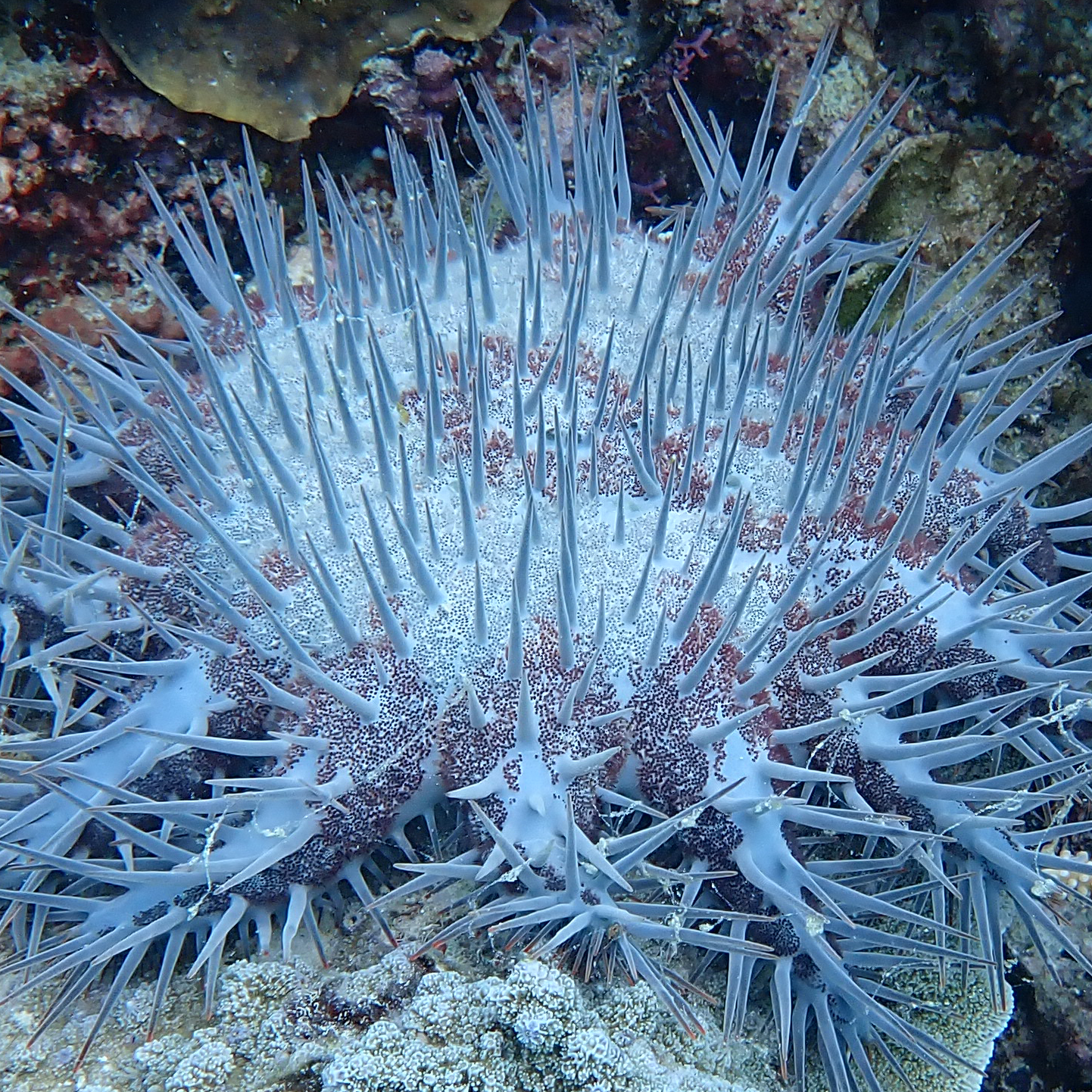
Coral reefs are under immense pressure around the world. Climate change, oil spills, pollution, plastics and tourists are all contributing. But for more than 60 years, we've been aware of another threat that is part of the reef ecosystem itself. The Crown of Thorns Starfish is voracious, venomous and very, very hard to stop. Professor Morgan Pratchett from James Cook University has spent three decades studying the creature in an effort to fight back.



David (00:09)
In Greek mythology, the Hydra was a marine monster with multiple heads. It could inflict terrible poison. If you cut off a head, two more would grow at its place, making it almost impossible to kill. In the more recent Marvel Cinematic Universe, the archetypal evil empire used the title Hydra because any members lost would be replaced by more, as well as to show just how bad these particular bad guys are.
Clip “Captain America: The First Avenger”
Hail Hydra (repeated)
But there is a very real and somewhat more troubling version in reality that neither Hercules nor Captain America could possibly handle. Hello, welcome to Where Are We At With? I'm your host David Curnow. The Crown of Thorns starfish has hundreds of venomous spines. It's capable of consuming entire sections of coral at a time. It has eyes and brains in each arm. And if it's cut into 20 pieces, it even has the ability to grow back into 20 separate creatures.
But even if doesn't, it's capable of producing hundreds of millions of babies at a time, which themselves can then wait for years before they transform into rampaging reef ravages, just like dearest mummy and daddy. All of this means while they're not likely to threaten downtown New York anytime soon, these alien-like invaders can spell devastation for reefs such as Australia's Great Barrier Reef. Except they're not aliens. They're native, indigenous reef dwellers who just happened to occasionally launch a killing spree over vast areas of ocean. Thankfully, scientists are on the case. Renowned researcher, Professor Morgan Pratchett from James Cook University in north Queensland is one of those, having spent three decades studying this extraordinary echinoderm.
David (02:09)
Professor Morgan Pratchett, thank you so much for joining me today.
Professor Morgan S. Pratchett (02:12)
Yeah, thank you so much for having me on.
David (02:15)
I think we should get some nomenclature out of the way to start with. Sea star, starfish. Are they the same? Are they different? What's going on there?
Professor Morgan S. Pratchett (02:24)
Yeah, so very much the same thing. There's obviously people who object to calling anything that's not a fish, a fish, but it mostly is a distinction between the sort of American vernacular where they tend to like sea star versus more sort of, you know, European where it tends to be starfish. And we still commonly refer to things like jellyfish as jellyfish. So it's not that unusual but yeah, crown of thorns, starfish or sea star, same thing. I will tend to refer to them as starfish or perhaps even with the abbreviated term COTS, which stands for crown of thorn starfish.
David (03:08)
Anyone who does any research into this or any reading immediately recognizes the acronym COTS. So there you go. It may be from here on in we call it that. Don't worry for those of you who can't call oat milk, milk. It's the same here. We know it's not a fish. Please don't “at” us about it, but that's the way the world goes. Okay. Let's fill out a bit of a dating profile, the online dating profile for the crown of thorns starfish. Tell me a little bit about them. I know they like long walks on the coral. What else do we know about them just as a species?
Professor Morgan S. Pratchett (03:38)
Well, they're probably the most alien-like animal you're ever likely to encounter, whether on land or in the water. you know, a couple of things that you need to know about them is they're covered in toxic spines, you know, it begs the question, what eats them, if anything? And interestingly, lots of things will eat them. But also in order to feed on corals,
They actually stick their stomach out through their mouth and the stomach folds lay over the coral and they externally digest the coral. And this is, when you think about it, probably the most efficient way you could ever eat a coral because it's only the very thin sort of veneer of the coral that is alive. And these animals have come up with this amazing way to feed on coral tissue.
David (04:33)
And I suppose that's quickly something we need to clarify too, because when we think of coral, we often think of large, what effectively look like coloured rocks. It's not the case. The living factor as part of the coral is not the effectively exoskeleton, the really tough part, is it?
Professor Morgan S. Pratchett (04:51)
That's right. So we're talking mainly here about hard corals, which build reefs. So this group of corals, the order Scleractinia, have usually a thin veneer of tissue just over what is essentially their skeleton, their hard skeleton underneath. different corals, you know, whenever we come up with one of these generalizations, you can talk about the exceptions.
There are some corals for which the tissue permeates deep into the skeleton, but to all intents and purposes, most hard corals are just a rocky-like organism which is formed by the calcium carbonate skeleton with this thin veneer of living tissue over the surface.
David (05:33)
And when our crown of thorns is eating it, effectively externally digesting it, it certainly saves on chewing, the dental bills are much lower. What are they getting out of it? How much nutrition and what's the process then? How much can they eat?
Professor Morgan S. Pratchett (05:48)
Well, so when they go to feed on one of these corals, the stomach comes out, it spreads all over the coral. And this is a really effective way for feeding on complex or branching corals because the stomach folds can stick all in and in among the coral colony. And then they eat an area that's approximately the size of the oral disc. We need to come back and talk a little bit more about the morphology of the crown of thorns but it's a central body or an oral disc surrounded by multiple arms. They can have, you know, many arms. They're not like a typical starfish where it's just five arms. They continue growing arms when they first metamorphose into the coral feeding version and keep adding arms monthly and can end up with something like 40 or 50 arms. So each one of those arms, has a modified eye or modified tube feet at the end, which is capable of fairly primitive vision. But also, the key thing about those arms is that's how they're getting around. So on each of those arms are numerous, many, many tube feet, which are the little mechanisms by the organelles, mechanism by which they move around. They use that to grab hold of the coral and then stick their stomach out. So that oral disc varies with the size of the animal and that's what dictates how much coral they can eat at any time. This process of feeding takes hours. So they stick the stomach out, then they're stuck in position while they're feeding on this coral for three, four hours. Then when they leave, the entire area of coral that was intact in contacting that stomach is now dead. So they have effectively killed the coral. So if the coral is smaller than their area, the entire coral is now dead. So they can wreak untold damage on coral reefs.
David (07:57)
Wow, so it's not like if we imagine say a parrot fish chewing away on just the skeleton there and taking little bites. It's pinching bits off in a sense. It's not actually killing the entire species. I suppose the equivalent would be imagining a koala that's big enough to eat a whole gumtree at one go.
Professor Morgan S. Pratchett (08:14)
That's right and you know ingest the entire thing immediately even though it might take a few hours.
David (08:21)
Yeah, it's a long sitting but by goodness it gets its value out of all it can eat. How long then before it needs to eat again? Will it then sit idle for a few days? Is it like a reptile where it doesn't need to eat for a while?
Professor Morgan S. Pratchett (08:34)
Yeah, we used to think that they come out and feed on a daily sort of cycle. We know they tend to be nocturnal. So previous research has suggested that an animal will typically go and feed early in the evening, eat what it needs to eat, then go and rest throughout the day. We're now actually finding that it's a bit more complex than that. And some starfish come out and actually eat anything up to, you know, 10, 12 corals in a single night and then need to take several days to assimilate all that before they'll go on another feeding bout.
David (09:10)
Quickly, we mentioned the fact that they can grow multiple arms and at the end of each of these is some sort of visual receptor. It may be light and dark. It may be something fairly primitive. What about thinking mechanisms? Is that a central organized system?
Professor Morgan S. Pratchett (09:25)
So the interesting thing about all the echinoderms, which is the group of animals which includes starfish, is they tend to have most of these critical organs replicated throughout the body. And that's interesting because if you cut an arm off a crown of thorns starfish and it includes part of that oral disc, it can theoretically go and form a new starfish. And we've shown that you could if you get like a pizza cutter and cut these things into eight equal parts, you will very effectively create eight new starfish. So the brain is not centralized. It does have sort of like these concentrations of nerve cells, which effectively are brains spread throughout the entire body. So, you know, all the relevant, you know, organs are replicated in every single arm. And so it's capable of living independently as long as you get at least part of that stomach.
David (10:27)
Right. I mean, the way you describe it, sounds like, as you said, alien. It sounds like a Hollywood film in which they've described the perfect alien enemy that's coming to consume Earth, dividing it and it will just grow into new ones. It can consume whole areas at a time. It's relentless. It's a little bit intimidating here.
Professor Morgan S. Pratchett (10:47)
Yeah, and on top of that, it has, you know, what we believe might be the highest reproductive capacity relative to its body size. So a single large crown of thorns, and now we should point out that there's rumours that they can get to at least one metre across. The largest I've ever seen is 75 centimetres across. Now, when those large animals are rare, we don't see them all the time, but when we've measured the reproductive capacity of ones that are even just sort of like 50 centimetres across, they're producing a billion offspring every year. So the question is, why aren't these animals completely overrunning the environment and they're in plague proportions all the time?
David (11:36)
That's, I mean, the immediate response is you think something that distributes its young that profoundly, that can eat so much that has spines that have toxin in them that as you say, if they get broken up can then just multiply. That's the question in itself. Why isn't the entire reef just one giant crown of thorns starfish?
Professor Morgan S. Pratchett (11:58)
Well, I think it comes down to resource limitation. So they do have phenomenal capacity to eat a wide range of different prey items. Their preference, however, is a very specific type of coral. And if they don't have access to that very specific type of coral, which we refer to as Acropora, it's the sort of main branching coral you find in shallow reef environments, then it's actually not capable of its full reproductive capacity. that access to that prey constrains its entire sort of population dynamic. So you get this boom of animals where the highest recorded density of crown of thorns is like 1,500 per hectare, where the normal density is only around three starfish per hectare. And at that density, they're going to eat all the available coral really quickly then they're going to starve to death. Because they're starving, they're also not able to reproduce. We then think they become really susceptible because they lose condition to disease and the population crashes really quickly. Now it's going to take a while before that population can be sustained at that level again, because the reef has to recover. And that's the sort of, you know, probably explains the lag time before we see a new outbreak arise.
David (13:08)
Okay, a couple of things to follow up on there. One, 1500 per hectare, according to the RSPCA, that means they qualify as free range, at least if they were laying chicken eggs. Two, if they are eating all of the coral and the coral itself has to survive, how long does it take from effectively the young that they produce to grow into a reproducing crown of thorns starfish?
Professor Morgan S. Pratchett (13:31)
They have an extremely complex life history and we understand that they're incredibly flexible in terms of when they decide to transition between these different life cycles. So when they're first conceived, when you get the fertilization of an egg and sperm, they swim around in the open ocean, what we call planktonic larvae. That larvae will drift around partly on the ocean currents but is capable of some self-
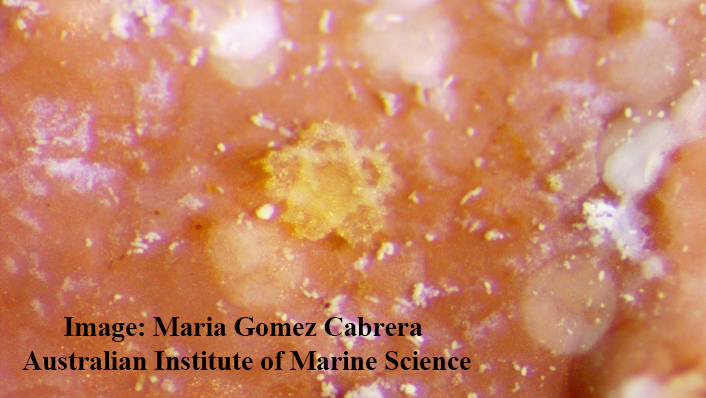
termination and swimming towards a reef. And it can be in the water column for anything up to sort of 40 or so days. It finds a nice reef to settle on, then it settles down and turns into what we would draw as a starfish if we were a child. A nice little pink five armed starfish without any really obvious spines or anything like that. And at that stage, it's eating what we call crustose coralline algae. So it's not eating coral, it's actually a herbivore. And it can live like that for probably anything up to six months, but there's new evidence which suggests that they can defer any of these sort of transitions. If they have access to coral, they'll then trans, you know, metamorphose into what we typically imagine when we hear of Crown of Thorns starfish, this large spiky multi-armed starfish, and that's when they start eating.
David (15:11)
But they can also defer and go, know what, there's not a lot out there. I'm just going to hang out here eating my algae until such time as the buffet is open?
Professor Morgan S. Pratchett (15:19)
Well, that's right. There was an experiment that happened somewhat fortuitously where they left some baby crown of thorns in a tank for many years before they then offered them coral. And so they were able to defer that metamorphosis for many years. Then when they were given coral, they actually metamorphosed and started feeding on that coral quite readily.
Professor Morgan S. Pratchett (15:46)
their subsequent growth was very much in line of animals that had transitioned much earlier.
David (15:53)
Incredible, incredible and really quite disturbing, let's be honest. One thing we should also point out very early on here is when we think of creatures, particularly in Australia, that are causing harm to various ecosystems, we might imagine the rabbit, the cane toad mouse, deer, horses, camels even. They're all introduced pest species, crown of thorns. Is it from around here at all?
Professor Morgan S. Pratchett (16:16)
Yeah, that's the interesting dilemma we face is that this is arguably a pest species because of its particular life history dynamics, the fact that it can, you actually the population can grow so quickly, but it is not an introduced pest. It is a native animal to coral reefs throughout the entire Indian and Pacific Ocean. It's been living on these reefs for you know, very long time and has probably been fundamental in structuring these reef environments and the associated assemblages of coral prey.
David (16:51)
Yeah, so the reefs themselves have formed as part of this life cycle. So you can't just say, let's just get rid of them all. Because in a sense, that's part of the biome.
Professor Morgan S. Pratchett (17:03)
Yeah, there's some arguments for not controlling populations of crown of thorns, where if we accept that they're a natural part of the dynamic of reef ecosystems, they might have some important positive effects on biodiversity. The issue, however, is that we know they're native to animal, they're native to coral reefs. We don't know to what extent outbreaks or massive increases in their density are natural. The first documented outbreaks in terms of the traditional scientific record were only in the late 50s, early 60s. There's evidence that they were probably outbreaks based on oral history before that time. There's a description of a major outbreak of crown of thorns in the northern Great Barrier Reef and Torres Strait in around the 1930s. So they probably did happen before but we don't know whether they're with the same frequency, same severity or whether they're getting worse.
David (18:09)
And in terms of First Nations knowledge, tell me little bit about this. Do they have words for them? Was there any role that they played in, I don't know, diet, tool making, anything like that? Were they utilized or at least spoken about in any way?
Professor Morgan S. Pratchett (18:25)
Yeah, so in terms of the Aboriginal people and the original custodians of the Great Barrier Reef, it doesn't seem that there's intimate awareness or names for crown of thorns. There is, however, some rock art in the northern Great Barrier Reef, which could be a crown of thorn starfish. And so, you know, they obviously knew they existed. Interestingly, when you go to other parts like Torres Strait and also out into the Pacific, they are much more aware of the crown of thorns. They do have names for crown of thorns and there's stories about not being able to walk across the reef because of the risk of stepping on a crown of thorns. So that suggests to me that there were periods when they were much more abundant or undergoing outbreaks because normally they're really rare and really cryptic.
David (19:21)
When you think about the history of particularly the northern part of Australia when it came to the interaction with not only First Nations Australians, but also people from Indonesia, Papua New Guinea and areas like that, you'd have trepang fishermen, you'd have the pearling industry, things like that. They would have had to have come across them as part of that, wouldn't they?
Professor Morgan S. Pratchett (19:40)
That's right. So, so it's some of the early sort of, you know, discussions around fishing on the Great Barrier Reef that sort of have highlighted the fact that people were recording them regularly in the 1930s. And this was fishermen working in the Torres Strait. But, you know, you've got to remember like the advent of scuba and the, you know, foresight we had of coral reefs just wasn't the same, you know, pre 1950s. So you could imagine if these things come and go really quickly, they might just have been completely missed. And so we know that they're natural. We know that there were probably outbreaks before the 1950s. And so it makes it really hard to understand whether they've got worse or whether they're just a perennial ongoing problem on reefs around the world.
David (20:40)
And in terms of the way they consume the reef and then leave evidence, how long after they've been there does the evidence disappear? I suppose, how recently do they have to have eaten a coral reef for us to be able to tell, well, that was crown of thorns versus we don't know how that died.
Professor Morgan S. Pratchett (20:59)
Yeah, so that's a very, very short term prognosis where if a coral was eaten by a crown of thorns versus died as a consequence of one of the other corallivores, one of the other animals that eats coral, or maybe it bleached and died that way, we would only know that in the period that it stays white and you can actually discern that it's died very, very recently. After anything you know, from about four weeks, especially a few months, you won't know what killed that coral. The one thing we do know is whether it's still intact after several years. It's probably something like crown of thorns as opposed to cyclone damage where it's more likely to be broken apart and dislodged. But, you know, in the longer term, once a coral is dead, that carbonate skeleton is prone to breaking down through natural decomposition and bio-erosion. so, you know, the ultimate fate of that dead coral depends on how fast the things around it grow up and it either becomes embedded within the reef matrix or it becomes coral rubble and then ultimately sand and then ends up on the beach.
David (22:13)
Ends up with a little hat on top as they make a sandcastle or perhaps bury dad in the sand. Professor Morgan Pratchett is our guest on Where Are We At with today from James Cook University, Professor of Marine Biology and Aquaculture. are discussing where are we at with the crown of thorns starfish. I think most Australians particularly are aware of the name. We've heard it throughout the recent decades. We perhaps even have an image in our mind when it comes to what it might look like. The description you've given today is frankly a little bit disturbing. Tell me a little bit more about the spines. Do we know the purpose of the toxin? Is it purely defence? Is there anything else there?
Professor Morgan S. Pratchett (22:49)
Yeah, we're pretty much convinced that the spines and the toxins are to deter predators, but they're not completely effective. There's lots of things we know will eat crown of thorns. There's not actually that many animals that are capable of outright killing an adult crown of thorns. Most of the sort of nominal predators will come in and scavenge on a crown of thorns when it's already been attacked by something else or is dying. But recent research has suggested that probably our most important ally in controlling crown of thorns starfish is the spangled emperor. Those things can definitely come in and rip these things apart. They don't seem to be particularly bothered about the spines or the toxins. And especially large animals or schools of the spangled emperor are very, very effective at killing these crown-of-thorns starfish.
David (23:52)
I think we will discuss this in a bit, the idea of a biocontrol when it comes to something like this, the Spangled Emperor is actually a target fish species for a lot of anglers, isn't it?
Professor Morgan S. Pratchett (24:01)
It is. And, you know, it suggests that we possibly need to think a bit more about protecting that particular species from fishing. We've known for a long time that the incidence of outbreaks of crown of thorns is lower in areas that are close to fishing in our green zones or no-take areas across the Great Barrier Reef. And this provides an obvious mechanism by which that might play out. But that said, Crown-of-thorns have other ways that they evade predators. So they do tend to, especially during the daytime, hide in amongst the coral where the fish just can't access them. And so we do get crown-of-thorns and we do get outbreaks in areas which are close to fishing. So that's not the entire story.
David (24:49)
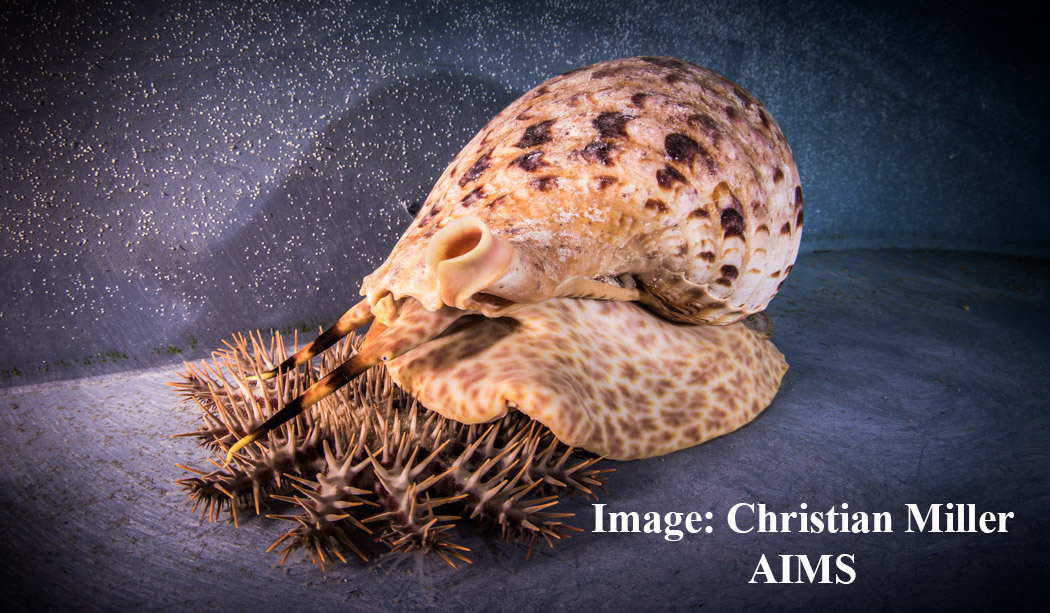
Other than the fish species, I know that for a long time we thought that the triton, giant snail was one of those that eats them. Do they actually eat them?
Professor Morgan S. Pratchett (24:58)
There is no doubt that giant triton will eat crown of thorns starfish and also there was a large fishery for the giant triton which has certainly suppressed densities of those animals on the Great Barrier Reef. The issue is that these animals were never you know, anywhere near as abundant as crown of thorns can be and whether they ever did enough to effectively regulate the densities of crown of thorns is somewhat unknown. We recently did an experiment where we presented these crown of thorns to the potential predators essentially on a platter and we did get a giant triton come in, but it ended up not eating any part of the crown of thorns we gave it to it. It was really just the spangled emperor that did all the damage. So they're obviously important and we need to think about what consequence might the consequences might be for having, you know, the lasting legacy of overfishing that animal. But I think that, you know, in terms of controlling crown of thorns, we possibly can't just rely on the natural predators.
David (26:11)
The Great Barrier Reef obviously is complex. The interaction with various species as well as external factors, climates, human interaction is one thing. But when we talk about just the sheer size of it, obviously it makes some people proud to know we've got this massive reef here in Australia. That very size must make it hard when it comes to finding Crown of Thorns outbreaks before they become huge.
Professor Morgan S. Pratchett (26:38)
Yeah. So I mean, the size of the Great Barrier Reef is very, very important in terms of the resilience and the current status of this system. So the greatest threat to coral reefs included in the Great Barrier Reef is now anthropogenic climate change. But many of the other really serious sort of anthropogenic threats to reefs globally are not so critical on the Great Barrier Reef by virtue of its size and also there's a fairly low density of people living on the coast immediately adjacent to the Great Barrier Reef. But at the same time the sheer size makes any of these sort of like management actions all the more challenging. So you've got to realize that Crown of Thorns don't just simultaneously occur across the entire extent of the Great Barrier Reef. The new waves of outbreaks seem to start in the north and then successively spread southwards. We have a pretty good surveillance system for finding where the outbreaks are, but that's necessarily focused on the big picture, understanding where there are or aren't outbreaks and those surveillance methods aren't that good at telling us precisely when the outbreak started or exactly how many animals are on a reef.
David (28:10)
And is there a time frame involved? Do we see it happening in cycles at all?
Professor Morgan S. Pratchett (28:15)
Yeah, so like I say, we've had a series of outbreaks since the 1950s. It appears that there's this really regular periodicity there where the start of each successive outbreak is about 15 years apart. And so we were all prepared for the start of a new outbreak on the Great Barrier Reef in around 2025. And we've done a lot of surveys in the relevant area of the reef in the lead up to that. And we can confirm that what is the fifth documented outbreak since the 1950s has well and truly started.
David (28:50)
On the plus side at least it shows that the science at least was on the right track even if it hasn't exactly solved the problem. There are those who play computer games who talk about the concept of spawn camping where you basically go to the place where the new creatures are arriving and you pick them off there. Is there any way of setting up near where these areas or are they just too big to be able to control in those northern areas?
Professor Morgan S. Pratchett (29:12)
Yeah, I think that, you know, trying to identify and focus all our management attention on the area that these outbreaks initiate is probably the best chance we have of preventing future outbreaks. The problem is, is that we're still not really clear about where or why these outbreaks start. The latest research suggests that it's you know, probably a bit further north than we previously thought in an area where there's not a lot of research that goes on. And it's probably sort of just, you know, the fact that there hasn't been enough monitoring in that area that, you know, we missed the true onset of these outbreaks. And then we only really appreciated they'd commenced when they'd moved a little bit further south.
David (30:03)
And how big or how old, how far along in the development are they for you to notice them? Obviously, if they're still in the plankton size, you're not going to see them. How big do they need to be for scientists or science even, whether it's robotics or computers or whatever the scanners might be to pick up the numbers of these young ones moving through?
Professor Morgan S. Pratchett (30:24)
Yeah, there's emerging methods and technologies for detecting Crown of Thorns in that larval stage. But most of the sort of, you know, history of information is based on counting or realising that there's, you know, a high density of adult animals. So usually they don't become really apparent until they've been on the reef for probably about three years and grow to the sort 30 centimetre size class. That's the point at which most surveillance methods effectively detect and provide some indication of the increasing density of these animals. It would obviously be useful to know that they're there well before they get to that size, but also there's new methods now which much more resolved estimates of the density. So we actually suggested that the densities were increasing in the northern Great Barrier Reef in around 2021. It's just that it wasn't until 2025 that the densities reached a level that we would suggest that they surpass the density that signals that there's an outbreak actually underway.
David (31:43)
What are some of the methods we use? understand you're actually involved in developing some of them. Is it the SALAD, the SALAD surveys? You can make friends with SALAD.
Professor Morgan S. Pratchett (31:49)
Yes, yeah. so SALAD is another acronym, which is Scooter Assisted Large Area Diver-based Surveys. Just basically, we use underwater scooters to increase the ability to traverse areas of the reef. So I need to go back a bit because we used to tow the divers behind a boat because it's just not effective.
Professor Morgan S. Pratchett (32:19)
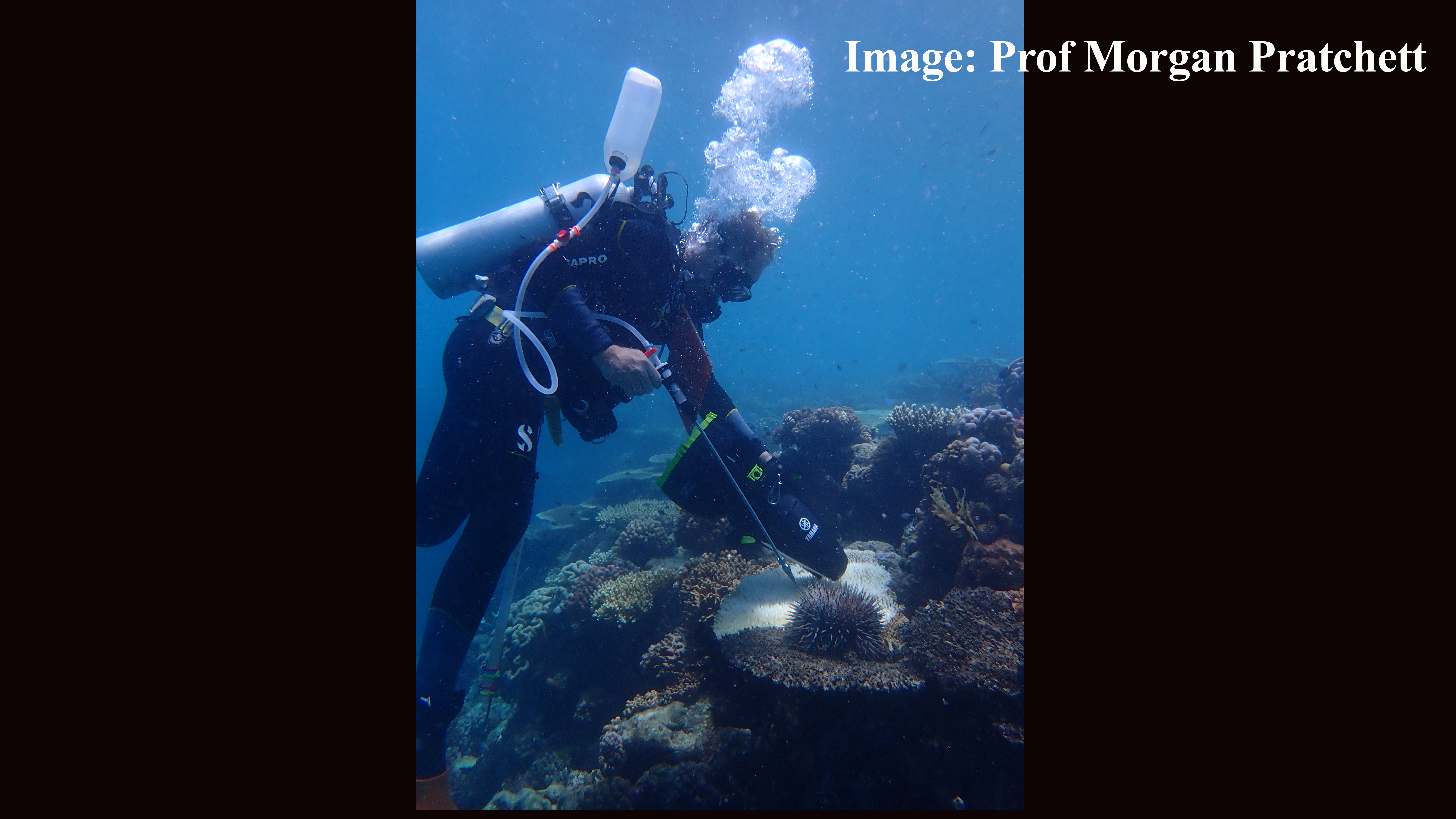
to swim and count these starfish. So we used to tow them behind a boat so that they could cover as much ground as possible. The problem with that is the person can't stop and interrogate areas of the reef where they think they might have seen evidence of a crown of thorns. With these scooters, we've got much greater autonomy to stop when we need to. So you don't usually see the starfish first. What you usually see is evidence of recent feeding. So these bright white corals and then you go down, have a look at those corals, see whether it definitely was a Crown of Thorns starfish or something else that's caused an injury, if not bleaching to that coral. And so we can then provide much better estimates of the absolute density of Crown of Thorns Now, these scooter surveys or SALAD surveys have helped to show that the densities have been increasing since around 2021 in the vicinity of Lizard Island. The thing is that for the last five years, we've just swam over all these crown of thorns. We knew they were a problem, but we focused on just providing accurate estimates of the densities. What we're now doing is carrying the injecting apparatus that a lot of the commercial operators use and actually kill every starfish that we do see.
David (33:42)
Okay, I think it's time to get on to the methods of control. Professor Morgan Pratchett is our guest, James Cook University. He has actually just returned from a field trip as part of the work, both looking at, studying, understanding, and hopefully controlling to some degree the outbreaks of Crown of Thorns starfish sea stars that have damaged the Great Barrier Reef as well as other reefs in the Indo-Pacific region. We'll take a step back. What were some of the early methods? How did we control them when we first discovered that they were an issue? After all, they're kind of spiky and they hurt.
Professor Morgan S. Pratchett (34:13)
Yeah, so when people first realized that crown of thorns posed a threat to reefs, and you know, when there's high densities, it's very clear that, you know, they're rapidly depleting the coral. The first sort of, you know, action was to remove them from the environment, and they were physically collected. Now, some people thought maybe it was a good idea just to cut them up and pulling them out of the reef but as we've heard they're capable of you know remarkable recovery and resilience and so that that activity might have simply been you know making things worse. So the predominant way was to actually collect them by hand either using a long stick or you know if you had access to very long barbecue tongs.
David (34:45)
Hmm
Professor Morgan S. Pratchett (35:04)
You want to stay away from the spines, obviously, because those spines, even if you're not allergic to the toxin, do hurt. And I've been stung many, many times. it does seem to be getting worse. So the injury you get depends on how many spines go in you and how far they go in you and these sorts of things.
David (35:13)
Have you been stung?
Professor Morgan S. Pratchett (35:31)
I would suggest that when I do get spined now, it hurts more than I recall it did before. And also I have sort of a clear, obvious, localised reaction, which I never had before. So there is a suggestion that it gets worse. And we know that for the people who do this commercially, they're ever more alert to the risk that's posed. And they're told that if they get spined three or more times that they shouldn't be doing the job anymore. So there's strong impetus for them not to get spined because the risk is that some people are going to have severe anaphylactic reactions to the toxin.
David (36:16)
Yeah, and it's not a place you want to have it, you never want to have it, but particularly if you happen to be underwater for any particular period of time. Okay, so we've somehow managed to use our very long barbecue tongs, we've picked them up. You're talking creatures that are 50, as you said, up to 75 centimetres and can have 20, 30 arms, they must be relatively heavy each of them. It's a labour intensive process to do this.
Professor Morgan S. Pratchett (36:39)
Absolutely. Unfortunately, during the outbreaks, the majority of the animals tend to be in that sort 30 to 40 centimetre size class. So they're a lot more manageable, but we're still talking a lot of biomass of animal. And the other thing is, like I said, these things live in amongst the coral. They don't tend to come out during the day. So it's actually quite a process to carefully extract Crown of Thorns without damaging the coral. So it was extremely labour intensive. Then there was the issue of what you did with those animals once you've collected them. Typically they were either buried or left to weather on the beach. So you just transport them to somewhere where you leave them to essentially rot down. Now, obviously because it's so labour intensive, the next step was to move towards a mechanism where you could kill them in situ. The chemical that was used initially was sodium bisulphate or dry acid. But, crown of thorns are incredibly resilient and so if you didn't inject them all over the body and multiple times on each arm, you would just cause these burns over the animals and they'd eventually recover and just go on eating coral. Yeah, so it was actually quite difficult to get a kill.
David (37:59)
Wow. So you're just torturing them, but they're going to live anyway.
Professor Morgan S. Pratchett (38:07)
We ended up coming up with a new method that got the sort of holy grail was to develop what was called the single shot injection method where you found something you could inject them just once and you were pretty sure they were going to die. It's a long sort of, you know, story about how we came up with that particular chemical and it was somewhat fortuitous, but the chemical we found was most reliable was bile salts. It's literally bile from a cow that was slaughtered, turned into, it's dehydrated, turned into a salt, then rehydrated, dissolved back in water and you inject that into the starfish. And it's very, very effective.
David (38:50)
I mean, it doesn't sound pleasant at the best of times to be injected with, let alone acid, the injection of rehydrated bile, but how effective are we talking? And does it matter where the injections happen?
Professor Morgan S. Pratchett (39:03)
Yeah, so, you know, it's a massive step change from using the dry acid. It is very effective at killing a starfish. They generally die within 14, if not 24 hours, which I know seems like a long timeframe, but you've got to remember how versatile and adaptable these animals are. They're incredibly difficult to kill. But it's far more effective than anything we had previously. And so you can administer a single injection pretty much anywhere on the body. The problem is if you stick the needle through the oral disc it'll just come out the other side and you're injecting the chemical into the stomach or actually out through the mouth. So we recommend applying these injections in the top of an arm and just because there's the chance that you you might still stick the needle through the other side we tend to administer two doses for every animal. So we also ended up changing the injection apparatus. We changed the needle that we use and it's now become apparent that pretty much any acid does kill the animal. So you can actually use household vinegar to kill crowd thorns. But it's not quite as effective or foolproof as the bile salt solution. And so, you know, one of the things we discovered recently is that if you're using vinegar, there's still the chance, you know, especially during the reproductive season, if you're using vinegar, there's still a chance that those animals will spawn, release their offspring before they die. Whereas with the bile salts, because it is, you know, kills them so much more quickly that that opportunity and that risk is greatly reduced.
David (40:53)
You mentioned the idea of commercial control, the fact that people are being paid to do this. What is the structure of Crown of Thorns control when it comes to administering these sort of things? This isn't you and a few PhD students out there every Saturday. This is obviously a much bigger scale of operation.
Professor Morgan S. Pratchett (41:12)
That's right. So, you know, when this first started, it was implemented by tourist operators who were concerned about the risk posed by crown of thorns to the areas immediately surrounding their infrastructure. You know, there's there's a number of permanent platforms which a lot of tourists go to on the Great Barrier Reef. And the last thing you want is crown of thorns coming in and eating all the coral in the immediate vicinity of those platforms. But through a number of iterative advances including the development of the single shot injection method. It's now become much more tractable to kill crown of thorns over even bigger areas and protect more of the Great Barrier Reef from crown of thorns. So there now is a large scale commercial culling operation where there's a number of operators, six different operators tender through the Great Barrier Reef Marine Park Authority to undertake crown of thorns control pretty much year round. So, you know, there's an increasing fleet, an ever increasing fleet of boats, but on any given boat, there's anything up to 14 divers who are full time employed to go out and call crown of thorn starfish. Now it's still a big problem is the Great Barrier Reef is so large. There's so many individual reefs. We're working in the marine environment where you know, you know, you can be really constrained in your operation by bad weather, you know, even just the strong South East trade winds, let alone the risk of cyclones and things constrained, you know, really where you go and how effectively you can operate. But these large, you know, full time teams of crown of thorns cullers are now killing anything up to a million starfish a year.
David (43:06)
A million crown of thorns starfish a year. And there's a problem still.
Professor Morgan S. Pratchett (43:09)
That's probably, yeah, that's probably slightly exaggerated numbers. I'd have to check the exact number, but it's well over sort of, you know, the hundreds of thousands. ⁓
David (43:20)
Yeah, we're not talking hundreds, we're talking hundreds of thousands is the point.
Professor Morgan S. Pratchett (43:23)
That's right. issue is, that, you know, what are the previous estimates of exactly how many crown of thorns there were on the reef? And that's, you know, probably, you know, a gross underestimate because of the challenges in effectively getting to enough areas. And even when you're in an area really assessing the density was that there was about 7 million. So even if we're killing half a million a year, there's still a long way to go. That's why we need to think about ways to stop the outbreaks in that area, like you said, where they start or acknowledge that we need even a greater investment or even greater effectiveness of the current operation in order to really affect meaningful change and conserve coral reefs going forward.
David (44:21)
Yes, the risk of dad joke, it is a bit of a drop in the ocean when it comes to controlling them if we're if there's 7 million and we're getting a few hundred thousand, it's not going to make a major dent. You mentioned the idea of maybe scaling up perhaps using more control funding wise GBRMPA is this federal as the still tourism operators contributing state and federal where is the money coming from for something like this?
Professor Morgan S. Pratchett (44:45)
Yeah, so the investment is coming from the Commonwealth government. So it's a federally funded program. And at this point it is funded out until 2030. It is considered a very critical component of the management of the Great Barrier Reef And that recognises that we need to do everything we can to try and prevent the corals from dying. And not just because of the threat posed by crown of thorns, but also we need to try and maximize resilience to other escalating disturbances, the main one being climate change. even though it's not having, like you say, it could potentially have much greater impact, it's still an important component of maximizing the amount of coral cover we have, allowing them to adapt to the ever-changing environmental conditions and providing critical services for not just the sort of animals that live on the reef, but also a lot of the industries that are really dependent on flourishing and vibrant coral reefing ecosystems.
David (45:55)
I guess when it comes to the idea of Crown of Thorns, as I mentioned at the beginning, most Australians have heard of them. And particularly through the, late 80s, early 90s, it was something that was considered to be a major concern for the future of the Great Barrier Reef. In a sense, that headline's been overtaken by bleaching and by climate change, whether it be through acidification, through rising water temperatures, through nutrient runoff, all those things. Do any of those have correlating effects on crown of thorns outbreaks? Does more nutrient mean more crown of thorns? Does higher water temperatures create more or do they instead be harmed by the same thing?
Professor Morgan S. Pratchett (46:35)
Yeah, look, I'm increasingly of the belief that outbreaks of crown of thorns are a natural phenomenon. So the fact that we get such high densities of crown of thorns is just a direct consequence of their particular life history. So the fact that they are so versatile in their diet, they can grow quite quickly, have phenomenal numbers of babies. But at the same time, there's a number of anthropogenic activities. The obvious one you mentioned being declining water quality, which is caused by a number of things. But probably the most critical one in this discussion is land runoff of elevated nutrients, which could provide more food for the larval stages. But the other one is also the fact that there has been a lot of sustained fishing activity and we have certainly suppressed densities of some potentially important predators across the Great Barrier Reef. And so these threats may actually have exacerbated or made the outbreaks worse than they otherwise might have been. The problem is that even if we were to find a way to completely reverse those anthropogenic impacts and restore water quality to what it was before we modified the Queensland coast and had intensive agriculture, or where there's completely stopped fishing, it probably won't stop outbreaks of crown thorns. But it will go a long way to making the reef more resilient.
David (48:17)
Yes, you mentioned the idea of outbreaks over history. And of course, 200 years ago, the tourism industry on the Great Barrier Reef probably wasn't as developed as it is today. It doesn't matter if there are sections that are white. That's just how it is. But in those days, it could bounce back as we suffer rising water temperatures as some of those concerns affect the reef. isn't in a place to be able to handle those influxes and rebound, I suppose. What sort of work are you doing when it comes to studying the effect of temperatures and water conditions on Crown of Thorns.
Professor Morgan S. Pratchett (48:49)
Yeah, I think it's really critical to point out that none of these disturbances are operating in isolation. You go to reefs anywhere in the world and they're subject to some pretty serious and very frequent disturbances. The most obvious being the mass coral bleaching caused by anthropogenic climate change. And so it's just the fact that these disturbances are just coming so frequently that even if the reef was resilient and able to recover, there's just not sufficient period between those successive disturbances for that recovery to actually occur. So there needs to be a lot more activity in terms of the changes in management that are required to really underpin the sort of resilience and sustain sort of coral growth in these environments.
And we simply can't afford to lose the coral. A lot of my work is showing just how important high cover but also a diversity of different coral forms is for all the things we value from coral reefs. And so there was...
David (50:04)
What are some of those? That's something we should have started with earlier and that's obviously the questioner's fault here. My fault for not asking earlier. I said tourism industry, which is of course glib and completely superficial. The coral on the Great Barrier Reef or and indeed reefs right around the world play a much bigger role than just attracting a few sightseers.
Professor Morgan S. Pratchett (50:24)
Absolutely. So, you know, we do have that luxury in Australia that the key use of the Great Barrier Reef is for, you know, enjoyment and tourism. But, you know, in other parts of the world, coral reefs are their fundamental food security. So there's, you know, a billion people globally who get most of their protein from coral reefs. And if we lose the coral cover, which is the clear sort of, you know, first impact of a lot of these disturbances and the associated degradation of reef environments, the productivity and biodiversity of those systems declines. And so, you know, it's a critical threat to food security and, you know, human wellbeing throughout large parts of the tropical world.
David (51:18)
And these are already communities living by the water, which itself may rise already. have issues in the future that they need to be concerned about, let alone whether there's any food in the ocean where it has been. I was reading one of the papers you wrote a few years ago, talking about the role of coral reefs into the future in the Anthropocene era, this era of human affected environment. One of the things you wrote or you and your co-authors wrote was that future reefs will be unlike anything previously seen by humans. What do we mean by that? What sort of changes driven by what sort of factors and I guess the big question will there even be reefs?
Professor Morgan S. Pratchett (51:58)
Yeah, so there will be reefs. The reefs as we sort of think of them in terms of the structures that have been formed over multiple generations of carbonate forming animals will be there. And they'll be there for a long, long time.Even with sort of escalating impacts of climate change, ocean acidification, more severe cyclones, there'll be reef structures talk about the changing face or the structure and function of reefs. It's about the size and diversity of animals that are actually living within those environments. And we tend to focus a lot, for good reason, on the reef building organisms, and that is the heart corals. So already we've seen some fairly major changes in the composition on reefs and it depends on to what extent these reefs have been affected by these major disturbances determines the current assemblage structure. But one of the things that's happening, and that's what's mostly happening on the Great Barrier Reef, is we're shifting towards many more weedy species. So these are the really fast growing species which are able to bounce back from these recurrent disturbances. They're capable of really fast growth and so you can get to high levels of coral cover quite quickly in the aftermath of a disturbance. But the problem is, is they're extremely vulnerable to the successive disturbances. And so when you have, you know, a really good example is, you know, in the aftermath of the mass bleaching, there was phenomenal recovery in the area of the northern Great Barrier Reef. But it could be that the recent category 4 cyclone, Cyclone Narelle that passed over that environment could have undone all the recovery that we've seen in the last few years where there haven't been major disturbances. It's also where we're starting to see these outbreaks of crown of thorns, which also feed on the same corals.
David (54:04)
Wow. So that quickly it can turn around again, if they're not the traditional harder form of corals. It's almost like the, I suppose what the fast growing undergrowth when you clear fell a forest and things grow up to replace it. They themselves are more susceptible to being knocked out and or birds, something like that.
Professor Morgan S. Pratchett (54:20)
Yeah, the analogy we often come back to is fires. So, you know, if you think about a fire going through a really mature forest, it's probably going to have limited damage on some of the, you know, limited impact on those really sort of old, larger trees, they'll probably survive it. Whereas if, you know, you'd already had some other catastrophic disturbance that removed all those large trees and you were just in the process of going through that early recovery phase, that fire is going to probably destroy every piece of vegetation in that environment. And so we're opening ourselves up to a system which is much more weedy and much more vulnerable to each successive disturbance.
David (55:04)
A shout out to our previous episode, those who may recall, Where Are We At With Eucalyptus? Professor Stephen Hopper, it's amazing how closely so many of these varied topics are. Let's finish today with the unknown unknowns as it were. What are some of the questions you would like to see answered in the next, 10, 15 years?
Professor Morgan S. Pratchett (55:24)
So the absolute sort of goal for Crown of Thorns research is to understand when, where and why these outbreaks start. So our goal is not to eradicate this natural organism from coral reefs. It's just to try and contain outbreaks and therefore, you know, prevent the coral loss that they cause. So we now understand a bit more about when. We know that we're looking forward another 15 years to the next outbreak and the capacity to try and contain that outbreak. But we don't know exactly where it start or why. If we knew that, I think we'd have much better hope of preventing the impact of crown of thorns during the next still some short term goals as well. We need to find more effective ways of especially in that early sort of phase when the densities are still low because our current mechanism is completely geared towards trying to suppress really established outbreaks. Whereas I think, you know, we need to be thinking in about different ways of doing this so that we can prevent or contain the outbreak rather than addressing these really high densities once they're established.
David (56:45)
Effectively shutting the gate after the horse is bolted in this particular case. Based on the work that you're doing and obviously many others in the field are doing, how confident are you that you can answer those questions? Is there enough money being spent? Are there enough people looking at these problems?
Professor Morgan S. Pratchett (57:02)
Well, there has been a fairly substantial investment in crown of thorns research to complement the control program. Unfortunately, we're seeing the end of that just at the moment and decisions need to be made about whether there's going to be similar investment or any investment going forward. But we have made significant advances in our understanding and management of crown of thorns. But that's going to only happen with, you know, suitable investment, but also the thing that's really changed through the current sort of wave of government support is all the different research agencies and individual researchers coming together to design this research as a collective and really collaborating quite effectively to identify and address these key research priorities. So we spent a lot of time thinking about what the next set of research priorities are. A lot of researchers throughout Australia are on board with this and we just need the necessary investment to make that next step forward. I do however want to emphasize that it's only part of the solution. Crown of thorns are not the foremost threat to the Great Barrier Reef, but just at the moment, we need to be thinking about all the different ways that we can prevent ongoing coral loss and reef degradation. And this is going to be for, at least for the next few decades, an important part of the way that we need to manage coral reefs in the face of climate change and escalating threats.
David (58:44)
So it's not just up to scientists such as Professor Morgan Pratchett to solve the problem. We all have to play a role as well. But if those scientists can all, like the arms of the crown of thorns, work together, each with their own eyes on the end, looking at their different targets, perhaps we'll get to a result. I stretched that analogy a little bit, but I'm going to stick with it. Professor Morgan Pratchett, thank you so much for your time today.
Professor Morgan S. Pratchett (59:07)
Thank you so much.
David (59:13)
And big thanks to Professor Morgan Pratchett for his generosity and for fitting us into his busy research and fieldwork calendar. You can see some of the photos he's taken for work on our website as well as links to his research and some of the information available on contributing organizations like the Australian Institute of Marine Science. Don't forget to rate and review our show on your podcast app of choice. It lets others find it as well as letting us know whether you liked it or not.
Next time the votes have been counted, the tribe has spoken, and democracy is in trouble.
Saffron Zomer: Australian Democracy Network(59:46)
Globally, 7 % of our population live in a country that qualifies as full democracy, compared to 74 % of us that live under an autocratic regime. Yeah, that that's less full democracies in the world and less people living in democracies than 25 years ago, for example. So at a meta level, I would say we're going the wrong way. And the headwinds are very strong
David (1:00:13)
Where are we at with democracy? That's next time. Thanks for listening. Goodbye.
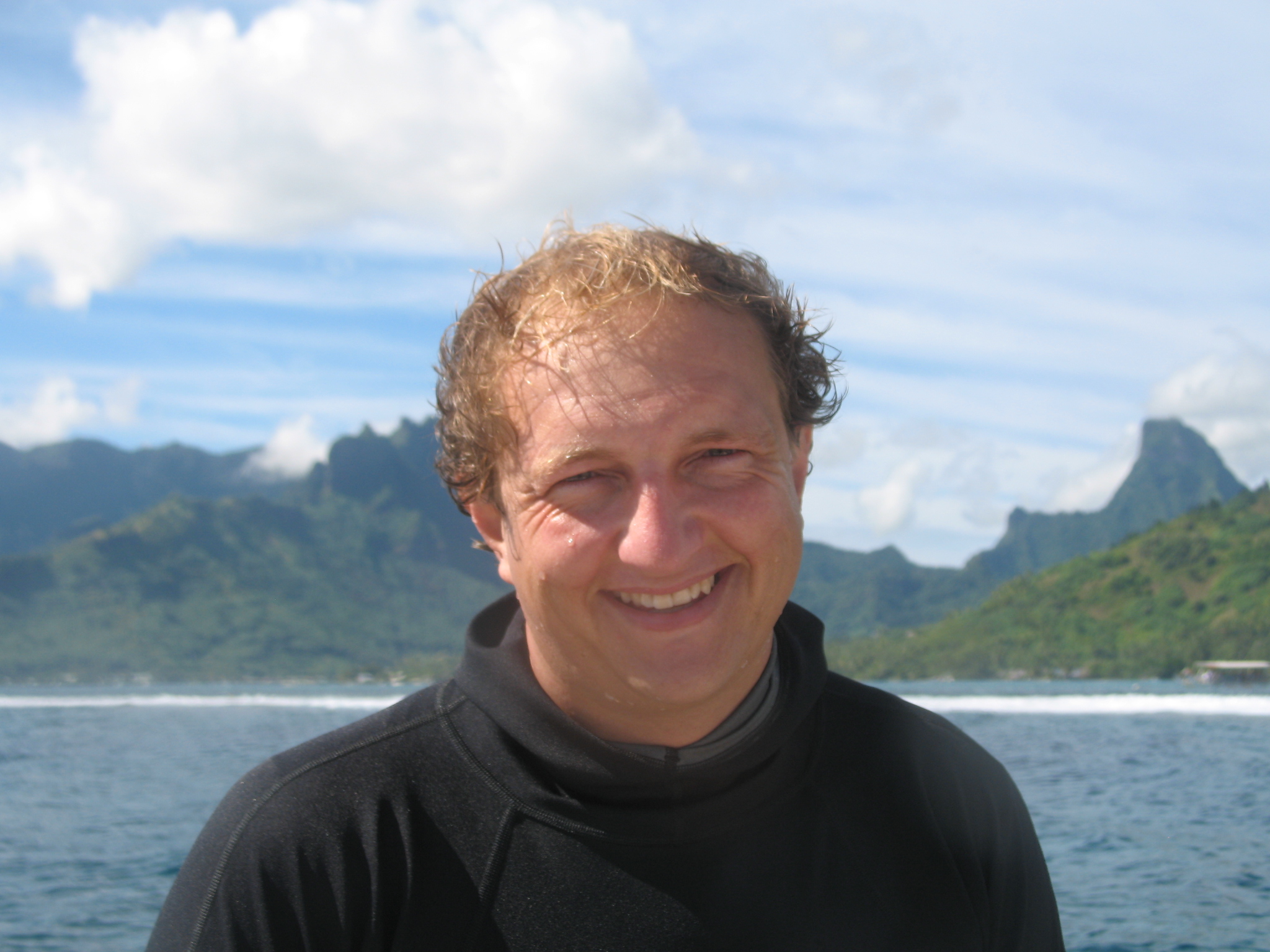
Professor
Prof Morgan Pratchett is a marine conservation ecologist with extensive knowledge of coral reef ecosystems. His current research focuses on major disturbances that contribute to widespread declines in the abundance of hard corals, and corresponding changes in the structure and function of coral reef ecosystems. This includes population irruptions (or outbreaks) of coral eating crown-of-thorns starfish. Morgan has been studying crown-of-thorns starfish for 30 years and made substantial contributions to understanding and managing the threat posed by periodic outbreaks.