Where Are We At With Eucalyptus?
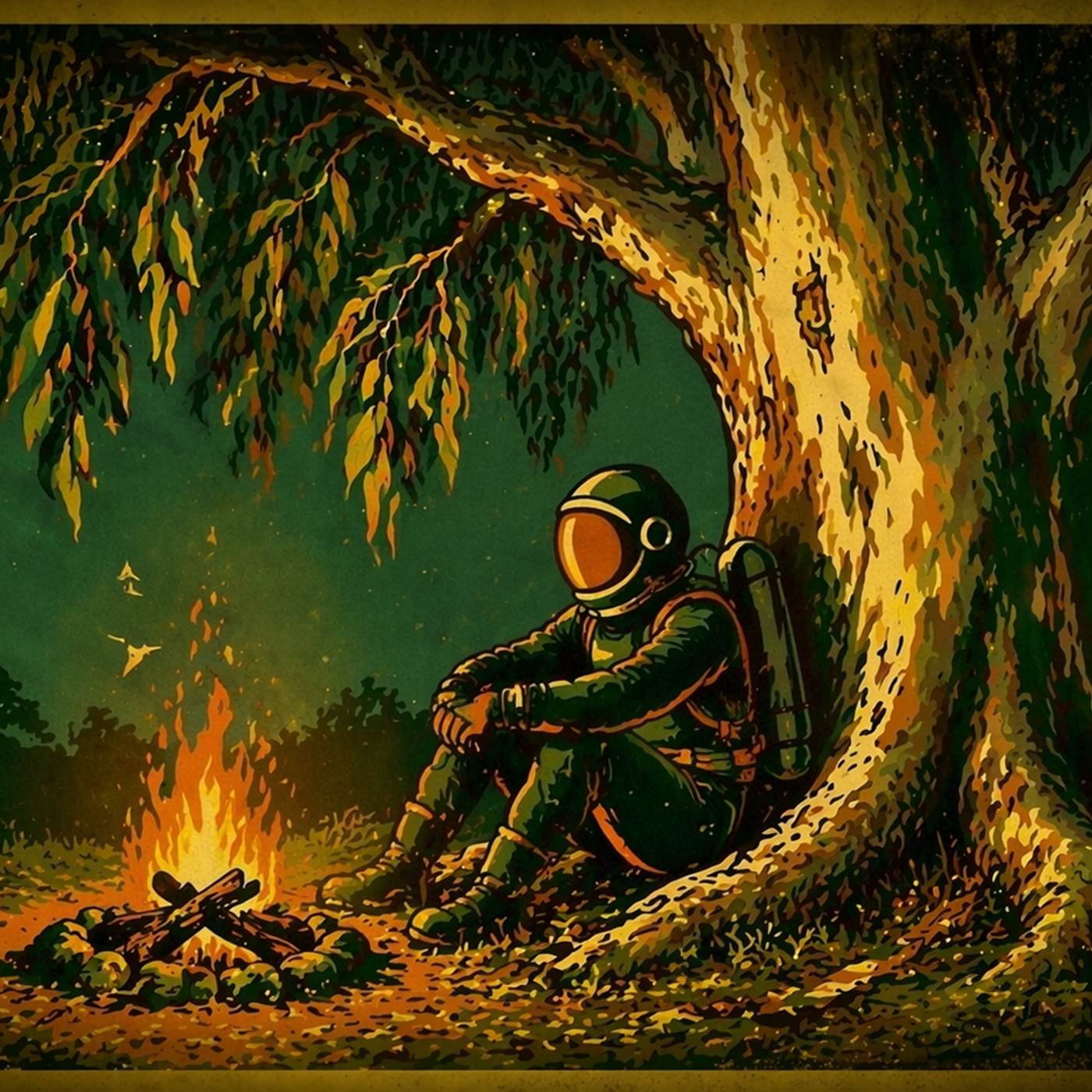
Eucalyptus trees define the Australian landscape. However, what sustained First Nations Australians for millennia mystified and frightened European colonisers. Now, Eucalypts are grown around the world, often causing immense damage to the local economy, environment and culture. One of the world's most respected botanists, Professor Stephen Hopper from the University of Western Australia, explains what modern science can tell us about these trees, and how ancient knowledge can help protect them.




David (00:10)
Give me a home among the gum trees with lots of plum trees. A sheep or two and a kangaroo, et cetera, et cetera. Hello, welcome to Where Are We At With? The podcast updating you on just about everything, one topic at a time. I'm David Curnow We could have just played you that iconic Australian song, but the rights are about $400 just for that little section. So check it out yourself on YouTube. When Europeans first arrived in this part of the world, they found a landscape completely foreign to them. The colours, the shapes, the smells were all different. The leaves of the trees caught fire instantly, even when they were green. The timber itself was almost impossible to cut with an axe. The locals seemed to love eucalyptus so much that they made nearly all their tools out of them, including weapons. Any colonising Englishmen who scoffed at what they saw as primitive weapons changed their tune when confronted with the business end of a nulla-nulla, a throwing stick or perhaps a shower of spears launched from woomeras. And when the resilience of the hardwood and the speed of its growth became clear, those colonisers set about selling the trees to the world, causing serious problems even now. Understanding of these plants has come a long way, even while an enormous store of knowledge held by First Nations people was overlooked for centuries.
David (01:43)
Thankfully that's now stopping with researchers such as today's guest, Stephen Hopper from the University of Western Australia. A world-renowned botanist, Professor Hopper spent six years in charge of what's considered the top botanic garden in the world, the Royal Botanic Gardens Kew in London. Last year he published a book appropriately titled Eucalyptus. Yep, it's all about a tree that's affected art, science and landscapes around the world. Uniquely, this book combines cutting edge modern scientific findings with the ancient perspectives of the people who themselves were shaped by the plants upon which they depended. Where are we at with Eucalyptus with Professor Stephen Hopper.
David (02:30)
Professor Stephen Hopper, thank you so much for joining me today.
Steve Hopper (02:32)
My pleasure, David.
David (02:33)
Before we get to looking at where we're at with Eucalypts, I want to ask you, do you have a favourite tree a physical single tree anywhere in the world?
Steve Hopper (02:41)
I do, actually. The first eucalypt I worked on, Eucalyptus Caesia occurs on granite rocks to the east of Perth. And I went out with an old 70-year-old seed collector called Alan Winchester. And we went to a place called Curran Cooping. And they're the biggest Silver Princess I've seen was on the rock and I got a nice photo of Alan standing beside it and that tree is still there. This is 1978 when I first saw it. It's still there and hasn't, has barely changed.
David (03:15)
On that topic then, it's amazing that trees can create emotions from a perspective and give us memories that are more than just a physical object. Why do think that is?
Steve Hopper (03:24)
Probably their age, know, they just, many of them live a lot longer than we do. And, you know, when you get to know trees, everyone is individual in form. And, you know, memories are triggered, I think, by the place as well where they grow exactly and where you are in your life and what that particular moment might have meant to you.
David (03:48)
Yeah, it's interesting. It's almost like the little blue marble photograph from space or from the moon looking at earth. The idea of standing beside a tree and thinking of its history and your small place in its large, large life. You can create that emotion. I suspect I'm guilty along with a lot of people at looking sometimes at Australian landscapes and thinking, A, that's beautiful. B, gee, that's a lot of the same sort of tree. How far from the truth is that?
Steve Hopper (04:13)
Well, it really depends on your acuity, I guess. Most of us live busy lives and if you're not brought up in my topic of eucalyptus, for example, as you drive down highways, you see, might notice that some have smooth white trunks and others have rough barked black trunks and the canopy might...
David (04:17)
Let's say not high.
Steve Hopper (04:36)
might be a little bit different, by and large, you don't have time to process the diversity you're often driving through and past. So that's what I mean by your acuity, really. Once focused on some of this stuff, I find never forgotten with most people. don't have to be an expert or whatever, just to go out with someone who really enjoys trees and understands them. And suddenly, as I say, with Eucalypts, a riot of diversity emerges.
David (05:05)
I imagine a few people have gone out with you and found the same. Can we go back perhaps a little step and talk about your early career? What got you interested? Do you remember becoming interested in plants generally? Were you a bush walker, a leaf collector, flower presser? What was your initial approach?
Steve Hopper (05:20)
I guess my interests initially were marine, in part because my father was involved in the prawn trawling industry and ran a trawler out of Byron Bay very early on in the days of that particular industry. And I spent some time with one of his brothers, my uncle George and his wife in Moreton Bay. They had their own trawler a few years after Dad first got his and you know, I was just taken by the rich diversity of the bycatch. You know, didn't appreciate at the time the damage that trawlers do to benthic bottom dwelling fauna and flora. But you know, just to see what came out of the net really was something and I went to university with one of the career ambitions of becoming a marine biologist and so enrolled in zoology. But I also enrolled in physics and chemistry and with the naive aim of nuclear physics perhaps as a career. I sorted that one out fairly quickly. I failed first year physics and that meant that I had to make up a few units and take four years to do the three year degree. So I enrolled in botany in my second year. And what really got me interested came towards the end of the four years when an honors, an option to do honors in research arose and I preferred what Botany offered and was inspired by the genetics lecturer at the University of Western Australia, called Sid James, who really pulled no punches in his lectures. And I didn't have a clue what he was talking about for the first year. But come the end of the second year, it clicked and I began to appreciate he was talking about stuff that I was keen to get more involved in the evolution of flora in general. So that's how I got into botany.
David (07:17)
Mm. I can tell you we share the ability in nuclear physics as anyone who listened to our episode on where are at with nuclear fusion can attest. Not exactly great, but I on the other hand didn't become one of the world's great botanists. Your PhD was on kangaroo paws. What was it that sparked your interest in them? I love a kangaroo paw.
Steve Hopper (07:35)
That's right. Yeah, they're very attractive plants. And while I was going through the undergraduate courses, field camps were offered to second and third year botany students. And we had one at a place called Yanchep just north of Perth. And one of the exercises was at a little town called Gingin just 30, 40 kilometres inland. There the cemetery grounds, which were about a hectare or so, had at the time 10,000 red and green kangaroo paws growing in them and about a thousand of our related species called cats paw and about 40 or 50 hybrids between the two. So the student exercise was to look at the hybrids and learn how to identify them and try and work out their significance. and I asked at the time Sid was there, Sid James, my alternate supervisor, and said, has anyone worked on kangaroo paws? Because by that stage, I'd well and truly decided I wanted to do research. And he said, well, the species have been named, but nothing much else. And this is the state's floral emblem. So I just said, wow, that's remarkable. And settled on kangaroo paws as topic for my honors, looking at hybridization in the, between these two. And then went on to address a bigger question, which is why is Southwest Australia so rich in species, particularly endemic species found nowhere else, given it doesn't have the high mountains at places like the Andes or the Alps, which are regarded as the richest places on earth have.
Steve Hopper (09:14)
The kangaroo paws were a nice compact group, about 12 species, something in three years I hoped I get at how they had speciated.
David (09:21)
Achievable goals. It's always a key part of studying. We'll get onto some of that Southwest Australia diversity and very individual landscape in a moment. One of the other specialties that you've had over the time, and you mentioned this already when it comes to granite outcrops. Why are granite outcrops so different, special and important when it comes to studying the flora life on them?
Steve Hopper (09:45)
Well, in southwest Australia and in most places on earth, fact, they're like islands in a sea of terrestrial vegetation. they have rather extreme conditions sometimes, you know, the sun really bakes them. And equally, they can be much wetter than the surrounding terrain, depending on where you are on their topography. And my first job was as the state's first flora conservation science and policy officer, which I got just as I was writing up my PhD. And I knew, you know, a bit by then about kangaroo paws, or a little bit, and nothing much else. So I thought, how am I going to, you know, the job was the whole of Western Australia. How am I going to helping conserve such a rich, rich place? I thought I'd work on the top of the canopy and eucalypts came up because of that, on the kangaroo paws and orchids, which are low down on the ground. But then I thought I need to work on one community as well, and just go for everything, even if I don't know a thing about them. And the Granite Rocks just were nice places to work. Again, they are featured on one of the student field camps I'd done as it turned out, about two-thirds of the threatened species that we first looked at in the first 10 years of my job were confined to rocky outcrops. Not all granite, but mostly granite. So there was this unusual concentration of threatened species on these isolated island-like geologies.
David (11:19)
They're not unique to Australia. Obviously you'll get granite outcrops pretty much wherever there's granite. Do they share similar challenges around the world?
Steve Hopper (11:24)
No. So you go to the granite rocks in Britain, for example, and the flora there is very little different from the surrounding terrain. But in the Mediterranean climate regions of the world, the five different places that have that climate, they tend to be, as I found in southwestern Australia, quite a different flora from the surrounding terrain and often many rare and localised, highly localised species. So this sort of tied into my scratching my head about how could the flora of a relatively subdued terrain of southwestern Australia, the granite rocks we're talking about, the tallest one is sticks up about 500 metres, but that's really exceptional. Most of them are less than 100 metres above the deck.
David (12:13)
Yeah, and we should explain here you mentioned subdued and that's something you discussed in your book as well. We don't tend to think about most of us terrain as being subdued. in a sense, we're talking about the fact that it's not especially tall or jutting up, jutting deep canyons, all that sort of thing. Australia is relatively flat.
Steve Hopper (12:30)
Absolutely. And the whole continent is, know, the Mount Kosciuszko isn't much of a tallest mountain for a continent, for example. But, you know, I spent 30 years thinking and researching about this and finally got an opportunity to go to UWA for the first time in a couple of years there. And when I got there, I thought I need to come up with a..
David (12:38)
We're trying our best.
Steve Hopper (12:54)
...a body of theory that might help research students, know, other PhD students and the like, with important questions that might help explain these unusual patterns that were turning up, had turned up. So yeah, the granites were fantastic. As it turned out, the reasons why I think they're so rich in threatened species is They're very old landscapes, the granite just east of Perth is half the age of the Earth itself, know, it's two and a half billion years old. And they've been around as landforms for the duration of the evolution of flowering plants, at least. But without much modification, a good rate of erosion of a granite rock is about a metre per million years in Western Australia Whereas in other places like the UK, it's 15, 20, 30 metres per million years.
David (13:46)
I was going to get to this a little bit later, but let's dive in right now. Let's talk acronyms, OCBIL and YODFEL This is something that you and some colleagues have developed. it really is quite a striking theory in terms of evolutionary process. Tell me a little bit about the OCBIL and the YODFEL.
Steve Hopper (13:53)
Yeah, so I've inflicted those two acronyms on the world and subsequently discovered this much more elegant nomenclature. anyway, OCBIL stands for old climatically buffered infertile landscapes. And those three attributes, the age of the landscapes you're looking at, so these when you think about granite hills in the wheat pelt in southwestern Australia were around when dinosaurs were around in more or less the same form. They might have eroded 50 metres or 100 metres, but more or less the same hill you see today has had very long antiquity, climatically buffered because on both on the two sides of southwestern Australia, there's been ocean since 90 million years ago when the world's highest ocean levels occurred. And ocean, as we know, buffers climate, don't get snows too often or rarely in southwestern Australia, only on the highest peak. so, you know, the climate is variable, but moderated by proximity to the ocean and proximity, I mean, up to 500 kilometres can still have an oceanic influence and then infertile comes from in part being very ancient landform sitting in situ and not eroding away or whatever. So if you get 100 million years of rainfall, that leaches out virtually everything but the quartz sand that is the bedrock, if you like, from the bedrock.
David (15:31)
Yeah. And I think anyone who's had a pot plant and watered it too much knows your potting mix after a while, it's effectively not doing anything except holding the plant in place. It's not providing any nutrients. That's effectively what we're referring to here, isn't it?
Steve Hopper (15:41)
Exactly. moreover, it transitions. initially, it's nitrogen that is the problem in young landscapes. so nitrogenous fertilizers are used by Europe and UK and all that sort of thing on these young post-glacial landscapes in the Northern Hemisphere. But if the landscape stays in situ without much change, eventually phosphorus becomes the nutrient and hence Australian farmers load up their lands with super phosphate and that's enabled them to grow all sorts of crops on what in the past was a difficult material.
David (16:16)
Yeah. So in a sense, the soil is lacking in that phosphate that the plants need. And so in those particular areas, they have to add it rather than add the nitrogen. And as you said, effectively some of these areas, the OCBILs, as you refer to them, they're not seeing things like glaciation or volcanism so that we're not getting those additions, I suppose, of nutrients or creation of difference.
Steve Hopper (16:23)
Yeah, yeah, major, major erosional events, you know, the biggest ones have really affected the globe has been the plasticine glaciation the last two million years with, you know, massive glaciers covering much of the Northern Hemisphere and relatively little of the southern Hemisphere affected by the same. So Australia has, is old because of it, it escaped major perturbations, if you like.
David (17:03)
And one other thing I learned from reading your book among many, many things, the concept of where it is on a continent. as drift occurs, because of course Australia separated from Gondwana many millions of years ago, along with continents such as Antarctica, the Indian subcontinent and South America, but because effectively of where that southwestern part of Western Australia is, it's the trailing edge, so to speak. So it's not forging its way through as the continent drifts and that plays a role as well.
Steve Hopper (17:31)
It does. So that's why East Coast has got the Great Dividing Range on the leading edge, if you like, of this. So that's it. And it doesn't mean that there hasn't been some earthquakes and tectonic activity as the tail wags a bit, but much less geological perturbation than has occurred elsewhere.
David (17:36)
It's the carpet slipping up as it pushes its way along. like a trailing edge flutter in a sense as it drifts its way through. Incredible to think. It's probably time in this conversation where we speak about where are we at with eucalyptus that we bring in the star of the show. Let's talk about eucalyptus. What is a eucalyptus? What does the word mean and how do we define, I suppose, the species broadly?
Steve Hopper (17:54)
Yeah. Thanks. The name comes from ancient Greek and it literally means well covered. So it was applied by the French botanist who named the genus in the late 1700s. And it alludes to the bud cap, what's called the bud cap or the operculum. It covers the bud and that covers it entirely. know, nothing, no stamen hang out or anything like that. It's ready to flower. There's a dehiscence point around the base of the bud cap and it falls off and out come the stamens.
David (18:39)
And many Australians will know about finding those little caps all around eucalyptus trees. I don't think many of us ever considered that's why they were called that. Just from the very small part of the tree came the name.
Steve Hopper (18:47)
Yeah. Yeah, it's a very opposite name for the group of organisms called eucalypts. Now, I use eucalypts as the English word advisedly because there are four genera now recognized in Latin or Greek that we would call core eucalypts. And when I was first introduced to the genus, there was only one, eucalyptus. But in 1995, ⁓ Corymbia came along, the Bloodwoods as they're commonly known. And, Angophora was around, but that was East Coast, that's small, small genus. People in Sydney would know really well, it the Hawkesbury sandstone, beautiful smooth red bark and, and that has a different operculum structure, it tends to split.
So the operculum is a combination of what we call the perianth or the petals and the sepals united into one structure.
David (19:43)
Okay, a quick side note to explain this petal, sepal, perianth thing. If you remember your early biology lessons, the petals are usually the colourful bits around the outside of a flower. The pollen-carrying stamen is in middle. Picture a basic daisy. Broadly speaking, in eucalypts, the petals are basically all joined together to form the cap. That pops off and out comes the coloured stamen inside, which is what we often see, and what so many birds, animals, and insects rely upon.
Steve Hopper (20:12)
And each of the genera and subgenera within eucalyptus have different ways of achieving that outcome, if you like. And just in 2024, a fourth genus was added, Blakella which is the ghost gums and certain forms of bloodwoods. Spotted gum is probably best known to the East Coast people, highly planted and that's a Blakella these days.
David (20:38)
Just a quick refresher for those who forget their botany 101. When we talk genus, where are we talking in terms of rankings and divisions and how they're broken up?
Steve Hopper (20:47)
yeah, so every species, if you like, has a dual name. The genus is the encompassing first name. So eucalyptus is a genus. And then if you want to talk about a particular species, say Jarrah over here in Western Australia, the common forestry, that's Marginata. So this is a tradition that goes back that Linnaeus made. popular in the middle 1700s. He didn't invent the system, but before that, people use sentences to describe things. So, you know, you go out and start talking about a dandelion and you'd have to describe it as in Latin, as, you know, a daisy-like flower with several petals and male and female bits and whatever, you know. So it was quite complicated. And Linnaeus loved walking out with his students and just introducing them to plants and what it is a shorthand and the binomial was the way.
David (21:43)
And again, regular listeners will remember Carl Linnaeus from our episode on Where Are We At with Cane Toads. He, of course, was the one who originally named the giant toad its original name. So there's a link right there. We're keeping the continuity going here on Where Are We At with that's our goal. How many species then, if we use the word species within the eucalyptus area, what sort of numbers are we talking?
Steve Hopper (21:53)
I have that. Okay. Hey, good on you. At the moment between 850 and 900. I say that approximately because 50 of those 900 are still to be finally named formally. And it depends also on what concept of a species you apply. So most of the eucalypts that have been named have been come from conventional herbarium work where people eyeballed specimens and put like things together and unlike things separate. But eucalypts, as we all know, grow into big trees and there are lots of different characters that don't squash onto a herbarium sheet. So unless those other characters are described, it's quite limited and it tends to encourage botanists to lump things that, with modern DNA studies, prove to be quite different species.
David (22:57)
Yeah, that's what I was going to mention. The fact that DNA obviously has certainly revolutionized the way we look at many species of things, whether they be flora or fauna and how we traditionally have perhaps separated them all, put them together. From a eucalypt perspective, that certainly is going to continue to change no doubt as things move forward. It really struck me again reading your book about the idea of hybridization and the role it plays when it comes to both understanding what is, as you say, a species or perhaps
Steve Hopper (23:05)
Yes.
David (23:23)
the way some species can adapt and become combined as they live close to each other. What role does that play and how long does that process take?
Steve Hopper (23:32)
Well, increasingly we're learning a lot now because of DNA. When I first started at university, modern DNA techniques weren't available. so to identify hybrid you had to use what you could see, and measure things and do all that sort of stuff using morphology as it's called, the observable features of different plants so DNA has really generated a whole host of, with modern techniques, literally thousands of new characters that are completely independent of what the thing looks like. So it's a great independent test of ideas and hypotheses you might generate by looking at morphology. And it's interesting, the colleague I work with mostly on describing new eucalypts, it was a man called Ian Brooker from CSIRO and he regarded hybrids as what he called freaks. Because they these intermediate things. And that's a really old attitude that goes back to the 1800s, at least if not earlier. Whereas once you begin to apply modern techniques, we've come to realize that hybridization is one of the many, one of the major in fact, forms of variation and creation that ultimately lead to new subspecies and so in order to understand the origin of species and how eucalypts do evolve and interact, you can't ignore hybrids any longer.
David (24:51)
it don't ignore the freaks as the axiom says looks don't necessarily matter the most. Professor Stephen Hopper is our guest on Where Are We At With Today? Where are we at with the eucalyptus? And well, where we're at currently we'll get to I suppose in a moment because your book published or released last year about eucalyptus, one of several books that you've published, is one of the first to have a look at it from the perspective of First Nations as well as the Western scientific treatment. And we will get to that in a moment because that's one of the fascinating aspects. You mentioned the idea of looking at effectively features, the shape of a leaf, the size of a leaf, the gumnut, things like that. The first overview of eucalyptus, I understand, was even published by a former Kew Botanic Gardens antecedent of yours who'd never actually seen one in the wild.
Steve Hopper (25:32)
That's true. One of the men called George Bentham, who wasn't the director of Kew, he was working with the director at the time, guy called Joseph Hooker. the colonial floras that they were producing was part of the Agency of Empire. going right back to Joseph Banks, when he got back from the Cook expedition, he was introduced to and befriended in George III and George had this patch of land on the Thames just outside London, seven miles away from downtown at the time. And Banks said to George, we can make this the richest collection of plants on the planet. And why would we do that? Well, because Napoleon and his wife Josephine had a wonderful collection developing at Malmaison in Paris. A bit of cross the channel rivalry going on. But also as empires were expanding, new floras, new faunas were being encountered and several economically valuable plants were part of the expansion of empire. So if you think of coffee or rubber, for example, they came from specific countries and in order to be grown and become the mainstay of modern products they needed growing and horticulture and botanic gardens were well set up to do that.
David (26:46)
We often think of Botanic Gardens these days as repositories or places of both study and beauty, but of course, in reality, to begin with, they were often weapons of colonisation tools to enable the subjugation of others and maintaining their position.
Steve Hopper (27:00)
Absolutely, that's correct. So writing colonial floras was an integral part. So many species were unknown in those days. And Joseph Hooker, the director that George Bentham collaborated with, argued that only the big European collections of plants with their associated libraries should be the places where colonial floras are written. It didn't trouble him that Bentham had never been to Australia. And he wrote a seven volume Flora of Australia, published in the 1860s and 70s, and handled eucalyptus. Now, this was a source of frustration initially to the Victorian colonial botanist Ferdinand von Mueller, because he knew the eucalypts as live plants and began producing these wonderful descriptions of new species and his desire to write the Flora of Australia ultimately was suppressed by Kew and they said no for these reasons. Not on.
David (27:56)
When you look at a species in a botanic garden such as that, where you've got a collection, I assume you're looking at either versions that have been grown there or indeed collections that were dried and preserved from earlier visits. What can you take from those samples and what do you miss out on?
Steve Hopper (28:13)
You're right in your description, but the vast majority actually came from elsewhere, not from being grown in the garden. Some did, and the first eucalypt, for example, was a case in point. That's why the French guy was able to name it. But again, with eucalypts, if you just think of eucalypts you might know in your own neighborhood, they're big trees, right? And obvious things that you can see when you look at the tree like bark, is rarely incorporated into a herbarium that's the size of a specimen, that's the size of a newspaper, for example. And so, you know, really critical characters straight away would tell you you've got two species, like smooth bark versus rough or iron bark or stringy bark or whatever type of bark you want to describe it as just isn't there unless the collector wrote it down and it went on the label. And so Bentham found that he, because of that, he was restricted in the number of characters he could look at. was obviously buds and fruits. Yes, leaves, yes. You usually get some of them. But, and he based his classification of the larger groups of eucalypts on the shape of the anther, you know, the male bit that's on the end of the filament in the flower. But it turns out that the groups we recognize today need a whole range of characters, not so all these anthers. And these days, most people fortunately are now using DNA as well to really nail what are the biological entities.
David (29:42)
Of course, eucalypts have been around for a lot longer than humans, as we talked about when it comes to the spread of continents, drifts and that sort of thing. Can we quickly go back then to where we think or how we think they first developed? What do we know about the first eucalyptus and where it was, where it originated?
Steve Hopper (30:00)
To answer that question, you have to look at the fossil record. First up and fossils up to 60 million years old exist and rather interestingly, eucalyptus these days is confined to Australia and a little bit northwards into Indonesia. But fossils are known from New Zealand, perhaps not overly surprising, but South America as well, Argentina. And just last year, a paper appeared that's described a new genus from India. So they had a much wider distribution in the past than they do today.
David (30:34)
Do we think that that was due to effectively the Gondwana, the coexistence of all these lands, the connection with through Antarctica to South America and India, the fact that they were all one land body?
Steve Hopper (30:44)
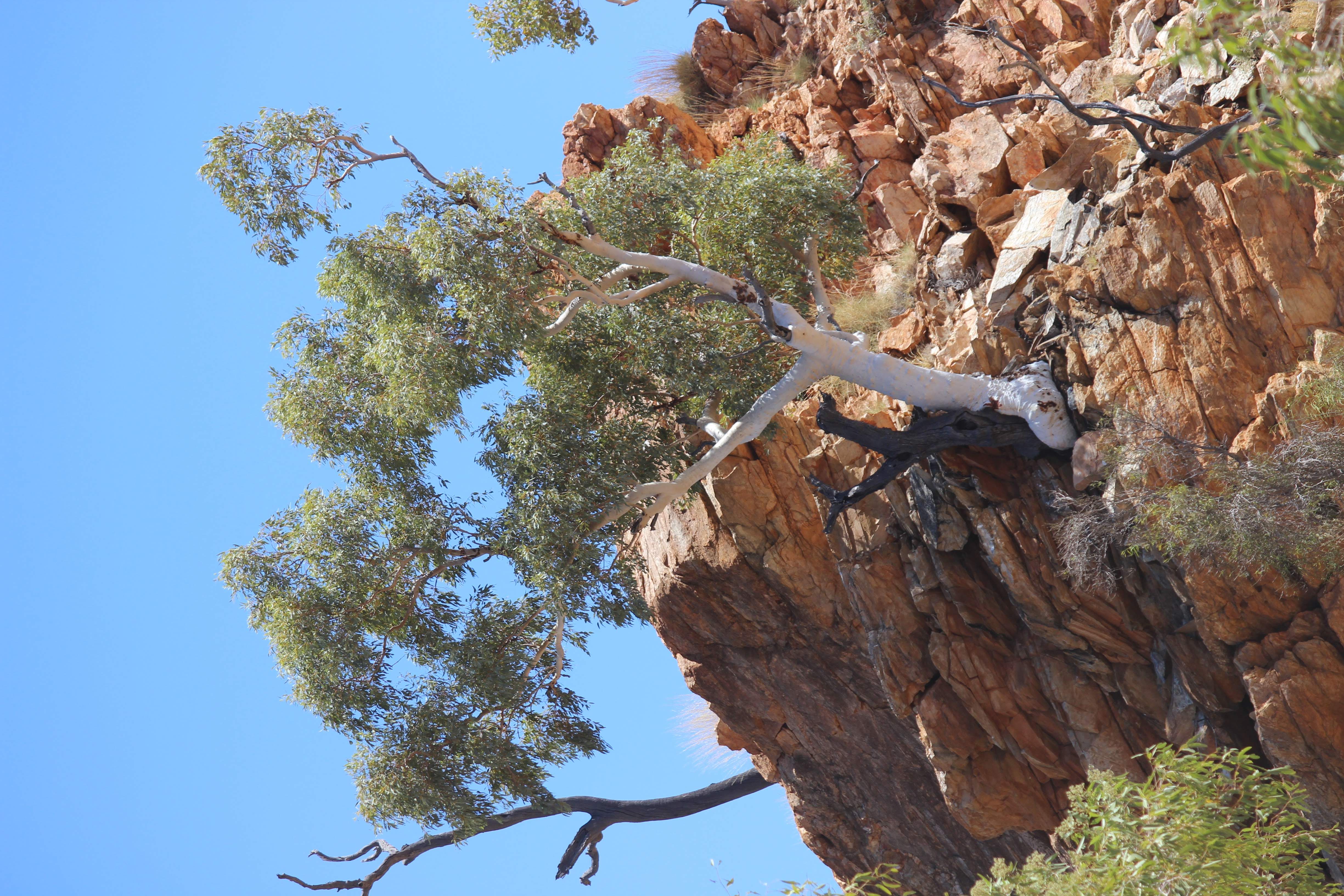
It could well be, you know, so the, you know, the Eucalyptus sent you stricto (?) 60 million years old, but their ancestors go back 100 million years old. And that's when Africa and South America, Australia, Antarctica, were all joined together. India is a little problematic because that split off from Western Australia and went out into the middle of the Indian Ocean 160 million years ago and then did a right angle bend to crash into Asia and push out the Himalayas. So, you know, it's a little bit problematic. Fossils are informative, but they're not the whole story because fossilization usually occurs in relatively wet habitats, so around the margins of lakes, for example, where you get the right combination of conditions to fossilize. And I had the temerity in 2021 to introduce an alternative interpretation to the mainstream idea. The mainstream idea is that they appeared in rainforest or rainforest margins. And because the first older fossils turned up in Argentina in rainforest, that's volcanic land. So people said, must have been plants associated with fire caused by volcanism on the margins or in the in the midst of rainforest. If you look at eucalypts today in Australia, then they do occur on the margins of rainforests, and some of them are effectively rainforest trees up and down the East Coast spine. But if you look at the classification based on DNA now, some of the really old lineages are mallees. So mallees are shrub-like things with a big mallee root, lignitude or underground wooden structure. And from that resprouts after disturbance, you know, lots of stems. So there's a species, for example, called Eucalyptus curtesii, and close to where you are in Southeast Queensland. And that's believed to be sister to all of proper Eucalyptus. So it's not a rainforest tree. It occurs on sandstone rocks in semi-arid woodland.
David (32:46)
Yeah, we tend to think of mallee as being an area where it's fairly low nutrition, not great soil, not a lot of rainfall often depending on where they are, not necessarily a rainforest or volcanic area.
Steve Hopper (32:54)
Yeah, Yeah, you're spot on. In fact, OCBILs And so I've published in 2021, a thing called paper called Out of the OCBILs in relation to eucalyptus. And naturally, it's generated a fair bit of academic heat. But, you know, merits, I think testing and there are hypotheses you can apply that enable you to discriminate between a rainforest origin and an origin in isolated hills relatively close to oceans on landscapes that have persisted for a long time and that are phosphorus deficient. you know, the opportunities for growth are nothing comparable to being a big tree which you can beside a rainforest. So that's, that's a matter of active research at the moment.
David (33:42)
Look, quite a lot of scientific theories over the years have generated a bit of heat. Some bloke called Darwin, I believe, was a bit controversial in his day. Professor Stephen Hopper, our guest on Where Are We At with Eucalyptus today. We talked about the fact that you've got big tall ones in rainforest areas, plus quite small ones. Tell me about the diversity, because it is the eucalyptus. It contains the world's tallest flowering plant. But a lot of them are small. A lot of them are stumpy. A lot of them spread clonally.
Steve Hopper (33:48)
It was Blackberry.
David (34:09)
That is a vast diversity, isn't it?
Steve Hopper (34:10)
Yeah, they sure is. And most people think of eucalypts when you mention that word as big trees, basically. So they're often surprised to learn that there is a shrubby form which has mallee roots. And ⁓ some of those shrubby forms struggle to reach a metre in height in Western Australia, for example. So really dwarf. But there's a lot of clonality also associated with these old landscapes. And there are now probably 20 species of eucalypts that are known from clones that are 10 metres, 15 metres minimum across. Some of them even up to 30 metres, we know of in WA and only growing a metre, maybe two metres high, that sort of thing. There is this tremendous richness in form. And in order to understand that diversity, you really have to use all the tools available to us today.
David (35:02)
We tend to think about all the tools available today as being something like DNA, whether it's using computational analysis, very powerful microscopes, things like that. Again, genetic records or archaeology. But of course, one resource that perhaps hasn't been utilized as much as it should have been is the knowledge of those who've lived with those trees for millennia. Tell me about your first involvement with First Nations knowledge regarding eucalyptus.
Steve Hopper (35:03)
which is yeah, I worked in the State Department of what was then called Conservation and Land Management in the 1980s when I was first working, or soon after I got the job as flora conservation scientist. And in that department, which was formed in 1985, was an Aboriginal bloke by the name of Noel Nanna. He is a Wajuk man. He comes, he's father comes from Mundaring just behind Perth in the hills and his mother came from further north. And he grew up in Geraldton, which is about 300 400 kilometres north of Perth. And he was the state's first Aboriginal national park ranger. And these days, there's a distinguished elder who's well known for trying to encourage people to think positively about Aboriginal cultures and what they offer all of us. And he and I spent time in the field. In fact, he was the first Noongar. The Noongars are the people, it's a name applied to the people who occur from about Geraldton way right through to Esperance on the south coast and about 14 dialects or more. And he was the first Noongar to actually take me on a songline journey.
Steve Hopper (36:42)
through Southwestern Australia. Now that was a great privilege because when I did anthropology in the 1970s at UWA, the old professor there had this line that if you want to study Aboriginal culture, forget southern Australia, it's all gone. And you have to go to the centre of the continent or up north to see authentic Aboriginal culture. And so I thought I'd never see a Noongar songline because if it's all gone, it's all gone. But Noel and his family have stories that now have become deeply embedded in Southwestern Australian ⁓ knowledge based on songlines that every young, initiate, male and female traveled like the European Grand Tour basically and would spend two years or more going on their songlines, learning the stories of other dialect groups being hosted by uncles and aunties in those groups, and coming back much the wiser about the diversity of culture.
David (37:39)
Historically, Western historians have looked at things like songlines and dismissed them due to variance. Historians like things to be the same and if it's not the same, well, perhaps we can question it. One of the strengths, I think, of songlines, or at least has been positive by people, is the fact that there is variance when it comes to interpretations and telling and why different stories about the same thing can mean different things. What does that reflect when it comes to the involvement with the eucalyptus and the use of it as well as the spiritual side of things.
Steve Hopper (38:10)
Yeah, you're really onto something that in cross-cultural work, we have to dispel Western notions. So place names, everyone knows there's only a single place name for every place. And, you know, the oral history that I've been taught by people on the south coast here and by people at NOL is that it depends on who's telling you the place name, where you're standing how far through the initiation process you are and what you're looking at. So an individual place, you just have to move 20 metres or 30 metres and it can have a different name, for example. And same with dialects, everyone thinks, if we're gonna name things after Aboriginal culture, then there's one name for everything. the diversity is mind boggling. And so I've learned it's the same with eucalypts. We have the richest diversity of eucalypts in southwestern Australia. now eclipse Sydney, which had three generations of eucalyptologists and argued all that time that that was the centre point. there are three centre points, so they're very close in number of species. So Sydney, the Queensland-New South Wales border and southwestern Australia on the south coast in particular are the richest places. And you would expect in each of those places to have tremendous cultural knowledge and for their stories to vary depending on where you are on the landscape and who's talking to you and all that. having now done 600 videotaped interviews across the south coast from the Great Australian Bight to Margaret River. And with more than 2,000 videos, it's very clear from just a couple of families that escaped stolen generation and have continuous oral history that there's wonderful knowledge about eucalypts. if I could perhaps start by saying with I think most people are familiar with the fact that Aboriginal cultures venerate old people, elders, and they're treated almost like god-like because they are the repositories of knowledge in an oral tradition and without them you know their cultures would be, they wouldn't function. And what I've learned from working with the a number of families now is that not only do they venerate old humans, they venerate old things in general. So eucalypts, it's the same, you old growth eucalypts, it's almost a spearing offense when you're applying fire to the landscape to kill an old eucalypt. It's okay for young saplings and that, know, their collateral damage and looking after the old stuff. The old stuff carries the stories by and large. so, you know, no one in their right mind would apply fire to the landscape like white fellows tend to do these days from probably air from helicopters and taking out 10,000 hectares at a time because it's completely uncontrollable, you know, in that way in terms of its specific impact on old growth trees.
David (41:11)
Fire is a really important part of the eucalyptus story and I think we should maybe get to that in a little bit because it is a topic unto itself. When we talk about First Nations involvement, as I said, it's not just prosaic, it's not just tool making, it's food, it's medicinal. As you said though, it's also spiritual, this veneration of old and even dreaming stories of creation. How important are they and what are some of those tales that you can relate?
Steve Hopper (41:36)
A term that I've picked up from a Newcastle ethnologist and she called it, lady called Lourdaine, rational reverence is the way Aboriginal people operate. So the reverence alludes to this spiritual thing you're talking about, but it's rational. It's all based on survival and applying skills that ensure you and your family continues. There's all sorts of stories. One that I particularly enjoyed and talking about was conveyed by Lynette Knapp, who's an Albany-based Merningar lady. Now, listeners won't know what Merningar is. It's not because it's not mentioned in Tyndale's book that was published in the 1970s on the dialects or the tribes of Aboriginal people. I think he may have called it where he said there's 250 tribes all with completely separate non-overlapping boundaries. Very, very Western concept of understanding what's going on. Lynette's family overlaps with about six of those dialect groups and Tyndale didn't pick up that they existed because they didn't want to have anything to do with him probably when he passed through southwestern Australia. And Lynette's family, she escaped stolen generation because she was taken into a mission that contracted childhood meningitis almost immediately and spent four months in hospital and then her father wouldn't let her go back to the mission. said, no, I'm going to bring out my daughter. Her father was a man called Alf Knapp and he was born in the heart of Albany and Lynette lived for a time in a town called Denmark, which was just to the west of Albany, about 50 kilometres. And there there's a hill on the estuary that Whitefield has called Weedon Hill, but Aboriginal people know it as Waraumbup. And Waa in the Merningar dialect means female kangaroo or female in general. So it's a woman's place. And up the top are big granite boulders and sheet rocks and karri trees, which are the second tallest
of the eucalypts, second to Mountain Ash from Victoria and Tassie. And when big boulders abut the big Kaori trees, you know, I'm talking about boulders five metres in diameter, something like that, callus tissue develops at the base of the eucalypt and starts to grow around the boulders. So for all intents and purposes, these look like the eucalypts are giving birth to the boulders. And that's the Noongar story. That this was the birthplace of all southwestern Australian granite rocks that after they were born, they spread out across the landscape with bit of help from ancestral spirits. for a western scientist, you know, it takes a bit of a challenge to normal assumptions about process. But it was really a way for the Noongars to express that trees are absolutely fundamental to all life and to all land. And without them, we are bereft. So just a magic story that exists on this one hill as the birthplace of all the rocks.
David (44:49)
It is an evocative story and you certainly can picture it when you look at those trees where the rocks are effectively, it looks like the rocks are coming out of the roots versus the tree growing around them and it is an explanation. If you want to know more of those stories, of course, you can actually just check out Professor Stephen Hopper's book, just a subtle mention there. I want to talk about the fact that from a First Nations perspective, it was a case of living with and utilizing what they could, again, whether it be weapons, food, medicinal or the spiritual relationship. But as soon as Europeans saw them, their approach appeared to be, how can we utilize these commercially? How can we manipulate them as such? It surprised me how quickly the first plantations occurred, or the first, not plantations, the first plantings occurred, which then did lead to plantations only a few decades later. Why was it attractive? Why did Europeans see this plant and go, gee, I'd love to plant one of them in France, Portugal?
Steve Hopper (45:38)
Their eucalypts are very relatively fast growing because they come from Australia and most of them on soils of limited fertility. Not all, know, some grow in very fertile lands, but they can still push up a tree in the heart of what should be desert-like conditions across the continent. So relatively fast growing and that means
David (45:38)
wherever it might be.
Steve Hopper (46:01)
wood in particular becomes available in a relatively quick turnaround, seven, eight years, 10 years and the like. So, you know, as a source of fuel wood and timber for construction, they had a lot going for them. They're also relatively herbivore resistant, although in Australia, you know, they have their fair share of insects and things like koalas and they'd munch on them. But nonetheless and they're very simple to germinate and grow. you just grab seeds, put on soil, add water, cover with a little bit of soil, that's it. Two weeks later they'll start germinating, up they'll come. So nothing special required horticultural leaf for the vast majority of them. Again, there are some problematic species, by and large anyone can grow a eucalyptus. So that was the motivation. They're also being discovered and described under the colonial empire building model. So naturally, the Brits wanted to see eucalyptus growing everywhere because it would help in the process of colonising other places. you know, are now places like California, which of the order of four or 500 species of the 900 eucalypts are grown. And I've talked to Californians who said to me, what, these are Australian? We always thought they were native to California. I said, that's a lay view, but.
David (47:22)
No. Yeah, absolutely. And they did spread quite widely, as you mentioned earlier, Ferdinand von Mueller and his work. In a sense, we could almost think of him as Johnny Gumseed, like the Johnny Appleseed, but in a way of spreading them across. He was particularly passionate about the tree, wasn't he? And spreading it around the world effectively as a way of in part helping some parts of the world, as you said, with both timber for fuel and resources when it comes to structure. Tell me about how that spread and where some of the places that took it up were.
Steve Hopper (47:57)
Well, these days you find eucalypts on every continent but Antarctica, so very successful. In fact, I propose in the book that it's the most widely grown hardwood, which I believe it is. So Mueller was particularly keen on blue gums, for example. He was applying the Kew model, so he was growing things in Victoria and observing different species. and looking for those that really had the combination of fast growth and good timber and the like, plenty of nectar for honey production. so Blue Gums from Tasmania and Victoria came up top of his list, but he promoted a broad range of species. And he was a voluminous writer. So he was getting people to collect for him from all across Australia. And he was also writing to people in Europe and providing seed and sometimes cuttings if the plant grew that well. know, sending out one year, I give statistics of the sort of stuff he was sending overseas and know, ridiculous amounts of seed and herbarium specimens and letters going out, thousands in a year, you know.
David (49:07)
thousands upon thousands of both seeds or saplings or things like this across the world. And look, we haven't got time to cover everywhere they went, but some of those, the legacies, as you mentioned, well, not great, whether it's from an environmental perspective or in places like India, where effectively it became a way of subjugating local peoples. Ok now, we briefly touch on, you mentioned California, that's causing environmental problems at the moment when it comes to wildfires and the fact that it is creating real fire problems in that part of the world. And then of course, you've got situations in Brazil where the world's largest grower of eucalypts, which is all fast growing pulpwood overtaking traditional forestry and indeed changing water tables. In a sense in Australia, we look at the eucalypt and think, what a wonderful tree. A lot of the world looks at the eucalypt and goes, there's the floral cane toad.
Steve Hopper (49:55)
Yes, absolutely. They have a mixed press is how I'd express it. And they've impacted not only landscapes and water tables, as you say, but also native peoples of various countries where, in India, for example, the massive areas were taken over when the Forest Department was established in the 1850s or 60s there, poor agrarian farmers in India, the idea was that they'd all work on the plantations from now on and abandon the means of sustenance that evolved over thousands of years for them. yeah, it's quite something. I visited Madagascar two decades ago and met some people there. They're the French colonial government introduced this form of servitude whereby every adult male and female spent a quarter of the year establishing eucalypt plantations and destroying the rainforest and other communities.
David (50:50)
And the irony of course in Madagascar is like parts of Australia, we are talking about a highly localized, specialized environment and habitat where it's been disconnected from the rest of the world for millions of years and things have been able to evolve and change as anyone who's watched any documentaries about Madagascar knows. And yet here a species from a similar type of situation has been introduced and causing real problems.
Steve Hopper (50:58)
that we're saying to the people that are about it Yeah, absolutely. So you have to manage fire carefully as well. know, the uncontrolled and unmanaged eucalypts, as we all know, well, if it gets up into the canopy and takes off, you're in a lot of trouble.
David (51:27)
Yeah, eucalyptus oil not known for its ability to put out fires. Let's talk then briefly about conservancy because that's been part of your focus for decades now and certainly one key aspect of your life's work. Part of that also was involved in your work at the Royal Botanic Gardens Kew We've talked about its origins and some of the roles that it's played over the years. Briefly, I'd like to hear about your time there. What was your, I'm not involved, but we know you were the boss. What were some of the things that it was striving to achieve, the goals that you set out while you were there?
Steve Hopper (51:56)
Well, it's moved on from the Banksian colonial model. These days, most botanic gardens around the world have something to do with conservation. you know, as wild places are under the pump, they provide a range of skills that arm people with the ability to even restore and repair damaged places. So, Kew is very much in that that vein when they were looking for a new director. I just out of the blue received an invitation to apply because the previous director had come to Western Australia and seen Kings Park and Botanic Garden, which I managed for 12 years as director there. And he liked what he saw. know, it was a relatively young and regional garden, but obviously doing some good things in particularly in conservation. So that's that's the model of Kew, and Kew has such deep roots and such extensive collections that it's able to collaborate at a global level and has formal agreements with 100 different countries, helping other people establish gardens and restoring and repairing.
David (52:59)
For a lot of people, establishing a garden is something they might do at home, either for aesthetic purposes or perhaps so they can get extra basil or tomatoes in summer. What is the role? We talk about working with different countries when it comes to conservancy. How does a botanic garden such as Kew achieve that?
Steve Hopper (53:14)
Well, it's the knowledge that's been acquired over more than 250 years now at Kew that is often missing in countries. They can't afford to employ such large numbers of botanists. They might have a herbarium in national collections, if you like, but it'll be small and in some cases not being curated at all in some places in Africa that I visited, that was the case. plant knowledge is still fundamental to human life. We rely on plants for food globally, for medicine, for timber, for honey, it goes on and on. And these days increasingly, fine woods and arts and crafts, all of that is fundamentally dependent on, on plants and woody plants in particular. So, also has growing in this collection an extensive arboretum. So it has a lot of experience with trees, has Australian eucalypts growing there, for example, about 20 species. So yeah, it's that expertise that Kew can apply in helping train people with the scientists in Kew. It's possible in collaboration with universities to run PhD programs and they do that extensively now. So people come in from all around the world to do a PhD in Kew and then go back to their country with newfound skills.
David (54:31)
both a repository and a disseminator of knowledge. Speaking of repository, one of the things it does is the Millennium Seed Bank. Quite a lot of seeds, I understand, in the "illions"? In fact, while you were there, was it the billionth seed that was... Who counts them? That's a tough gig. Some of those seeds are tiny too.
Steve Hopper (54:42)
Yes, it was the billionth seed. Yeah, yeah, that's it. They are, they are, but it's so well curated the collection. that's the case. So the Millennium Seed Bank was really one of the highlights in conservation at Kew as well.
David (54:58)
How does it differ from something like the so-called doomsday vault in Norway?
Steve Hopper (55:01)
Well, it is a genuine bank at Kew where you can both deposit and withdraw. Whereas Svalbard the agricultural doom bank, is putting away all just a very small proportion of plant diversity agricultural crops with no policy about withdrawal other than Armageddon and doomsday.
David (55:21)
Do you get a seed mortgage? How do you go about this? In a sense, it's about maintaining diversity in places where perhaps there's been a loss.
Steve Hopper (55:29)
That's right. And that's why I mentioned reparation, restoration at Kew. One example is Egypt lost its seed bank to a fire. Not while I was there, but just before. And Kew was able to exchange seeds and reestablish the seed bank in Egypt with its collection. So very tangible demonstration of the global centre being used appropriately in our time.
David (55:53)
Professor Stephen Hopper is our guest on Where Are We At With... We're about to find out, to be honest. We're getting to the nub of it, as it were, the root, the heartwood of the particular topic. You talk about conservancy and one fact that struck me the most when it comes to looking at eucalyptus is that in a world where some scientists are hotly debating whether we're in the middle of a sixth mass extinction, how many eucalyptus species do we know of that have gone extinct?
Steve Hopper (56:18)
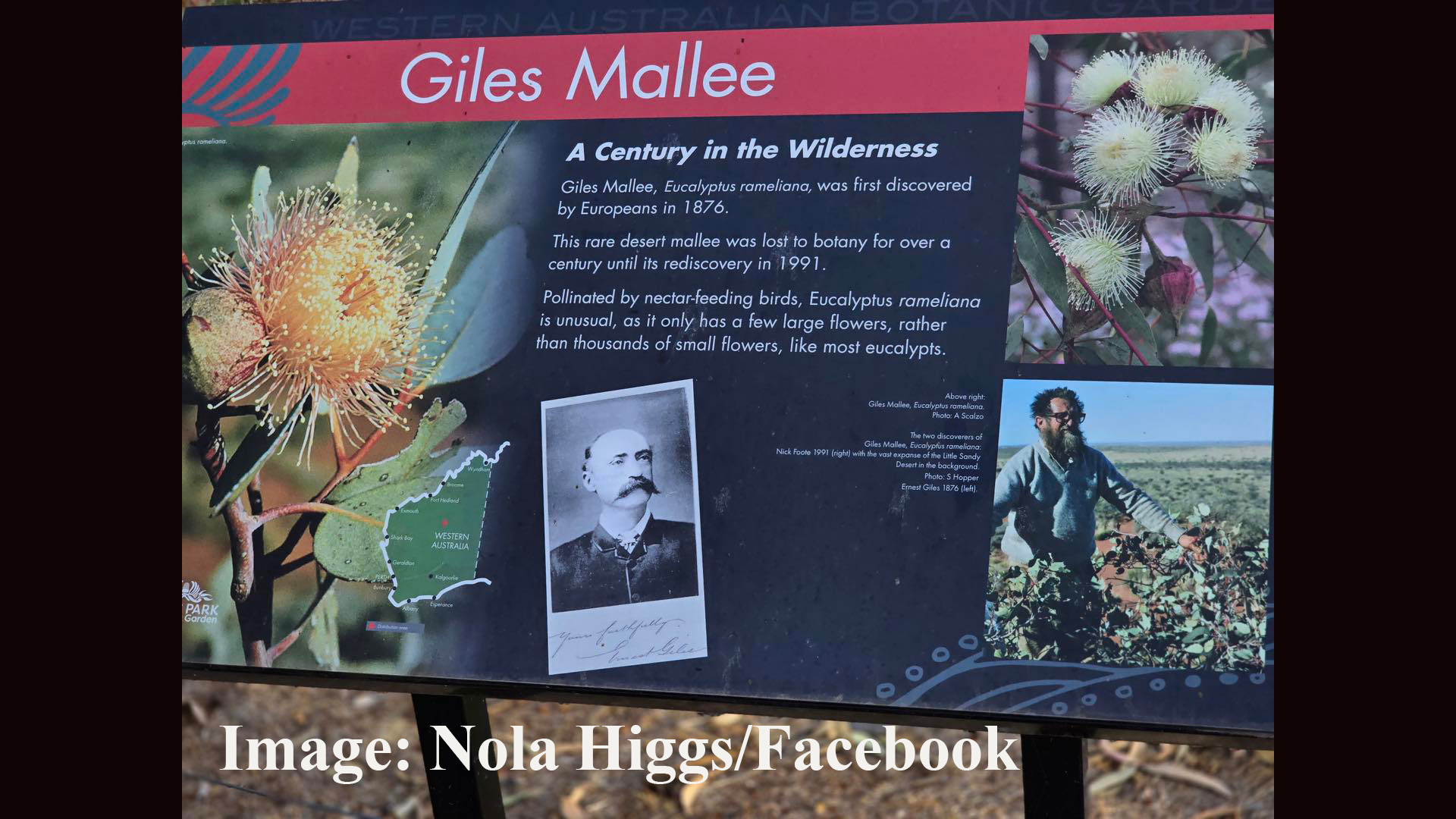
None, I'm pleased to say. And that was quite surprising to me. When I was actively searching for rare eucalypts, there was only one species called Eucalyptus ramelliana, which had been collected... Giles, sorry. and collected by him and given to Von Mueller in Melbourne on his return to Melbourne. And Mueller named it immediately. It was an obvious species and he named it for one of his disciples helping establish blue gums in Africa and Europe. But it was picked up, there was a false alarm. Several people tried to relocate it and the location was a bit nonspecific, written down by Giles as it turned out his camels were. being poisoned at the time by poison bees and the like. Eventually a seed collector that I knew quite well rang me up on radio, telephone, primitive little setup he had and said, I think I might have found this missing eucalypt. And sure enough, he had it. So that meant that not a single named eucalypt has gone extinct. And that just attests to the resilience and the toughness of the genus, its ability to grow in deserts, I've mentioned, and eat enough water out to survive.
David (57:27)
That's not to say that it's risk free. You look at a map of species and there are threatened species of eucalyptus. You look at the map of where they are and it pretty closely aligns to agricultural land in Australia where effectively they've been broad-felled to make way for the cropping basically.
Steve Hopper (57:43)
It sure does. Yeah. Yeah. So in fact, close to a quarter of the eucalypts are facing some degree of threat and they're all concentrated in the weak growing areas of Western Australia, South Australia, Victoria, New South Wales. If you look at the top end of Australia, where pastoralism is practiced, then there's none. No threatened eucalypts or maybe a few.
David (58:05)
which really surprised me, particularly because images we often see used from years past when it comes to things like the chain clearing and wide scale clearing. A lot of that was for pastoral, for cattle country. And yet while it's not great generally, it doesn't appear to have caused a drop in eucalyptus numbers in those areas.
Steve Hopper (58:13)
Yes. Yeah, you're talking about the top end of where cereal cropping occurs. So just into southern Queensland and northern New South Wales. So that's part of that big southeastern arc of destruction. If you go right up to the top end, then ⁓ far less broad scale clearing has been practiced. So give eucalypts enough space and they'll thrive and survive.
David (58:48)
same for a lot of species, I suspect. Let's talk about fire. I mentioned earlier I'd like to get back to it because we often associate eucalypts with fire. In Australia, perhaps we quite often wrongly believe that fire is important to their survival. And in some cases, that's true, but it needs to be fairly specific, doesn't it? Tell me about the relationship with fire and eucalyptus and the times it can help and the times that it can really harm.
Steve Hopper (59:11)
The throwaway line that profile advocates often offer to us is that the Australian flora and fauna is adapted to fire. Adaptation is a specific evolutionary term and requires very rigorous evidence to demonstrate. What eucalypts do is cope with fire because they're expert at bouncing back from any disturbance that removes above ground vegetation. And by and large, fire is important in that context. But think of flooding, think of erosion of steep slopes on mountains, for example, windstorm, all of these things will destroy above ground vegetation. And that's Eucalyptus' special niche, if you like, the ability to bounce back either from buds in the trunk, if the trunk isn't totally destroyed, or from That's why there are so many mallee species, you know, with the underground lignotuber. I'll re-sprout from that because that's not destroyed. today we've become, certainly in Western Australia, fixated on aerial prescribed burnings, so dropping incendiaries from the sky and taking out rather large areas. I mentioned already that Aboriginal people are destroyed at the practice because you simply can't apply what I call precision burning, is what Aboriginal people have practiced and demonstrated to me through PhD programs we've run and just witnessing direct what they do. It's far more sophisticated than anything we currently do with fire and eucalypts. Because it's built around this notion that we would need to protect the old growth trees in particular. But also the promoters of wide-scale large area burns, Aboriginal people just burn everywhere, so why shouldn't we? And that is well removed from the truth. In fact, very precise locations in the landscape were burnt regularly. So usually lowland, not up on the ocules, hilltops and that. usually with the around campsites, we've found are concentrated in southwest Australia along rivers, around lakes and along coast. Places like that, burn as often as they could because everyone's walking around barefoot. You want to keep it open so the snakes don't get you. And the flora is capable of bouncing back in those specific landscape positions. far more so than it is on the hilltops. you know, we're beginning to learn that just as there is diverse language and cultural beliefs among Aboriginal people, the application of FOA is equally diverse. you know, applying simple solutions right across the continent at large scale under hot conditions is in fact not what Aboriginal people did and do.
David (1:01:56)
Indeed, one example that you gave that really struck me was the idea of the fact that while sometimes fire can help in the dispersal or pollination or germination of a particular species, it depends on when, it depends on where, it depends on how recently the last one was and how hot it burns. And the fact that even a small fire can actually be worse than a large one sometimes by not getting rid of certain predation species, insects, vertebrates, things like that. The idea that the fire can be not hot enough
Steve Hopper (1:02:20)
Yeah, that's entry. That's all.
David (1:02:24)
or too hot or too many in too short a space of time having an effect.
Steve Hopper (1:02:28)
Yeah, there's a degree of sophistication that will only be revealed by white fire ecologists forming long-term relationships and learning about local areas and how they are best managed. With that combination, I think we've got a good chance of reinstating burning approaches that are appropriate for eucalypts.
David (1:02:50)
Let's finish with that then. Reading your book, again, the things that struck me often were the fact that you regularly referred to the phrase, little work has been done in this area or more studies are needed. How many times that cropped up in a fairly heavily studied species at times. Where are the areas that will most have an effect on where we are at with eucalypts in Australia, particularly for the generations moving forward?
Steve Hopper (1:03:13)
I would commend an Aboriginal approach. So giving preeminence to place and not trying to generalize across the whole continent based on doing a PhD in one area and just saying, well, that's how it is. And just sitting back and learning to listen. As a Western scientist, so used to the model that we have for teaching and researching that often involves non-Aboriginal ways of understanding or learning. So I would commend to ecologists, get to know your local elders, their trust, and then shut up and listen most of the time and the rewards will be phenomenal.
David (1:03:51)
It's wonderful to see some of the rewards as they've been coming so far with work such as yours and others. And we really do appreciate that work and their work as well. And we appreciate your time today. Thank you so much, Professor Stephen Hopper.
Steve Hopper (1:04:04)
And a real pleasure, David. All the best.
David (1:04:11)
Professor Stephen Hopper's laces book, Eucalyptus, is available now at many retailers. We have a link to it on our website, as well as a more thorough rundown on his remarkable career and a transcript of this episode. Next time on Where Are We At With, the first dedicated running shoes were only created in the 1970s. But now there are versions that are so good they're banned in competition. While our feet are literally the furthest things from our mind, we're still figuring out how they work and what can be done to make them better.
Glen Lichtwark (1:04:43)
A modern shoe might give back something like 80 % of the energy that you put into it. Whereas previous from 10 years ago or even before that are only giving something like 60 to 70 % of the energy. You still have to put that energy into it. So the faster you go, the more energy you're putting into it. And so your muscles still have to do that work. But once you're up to that speed, you can get more energy back.
David (1:05:04)
Where are we at with sneakers? Next time, I'm David Curnow Goodbye.
Professor
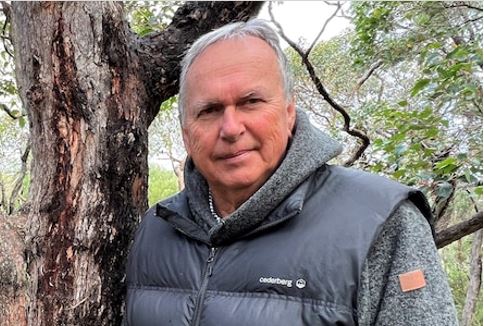
Currently Professor of Biodiversity at The University of Western Australia, Stephen D. Hopper AC has worked over 50 years as a conservation biologist and academic. He also led as Director Perth’s Kings Park and Botanic Garden (1992-2004), and London’s Royal Botanic Gardens, Kew (2006-2012). Today, Steve’s research focuses on sustainable living with biodiversity. He collaborates especially with Aboriginal Elders. He is author/coauthor of more than 300 scientific papers and several books, including Eucalyptus, Soul of the Desert, Life on the Rocks and Kangaroo paws and Catspaws.