Where Are We At With Fashion? Part 1
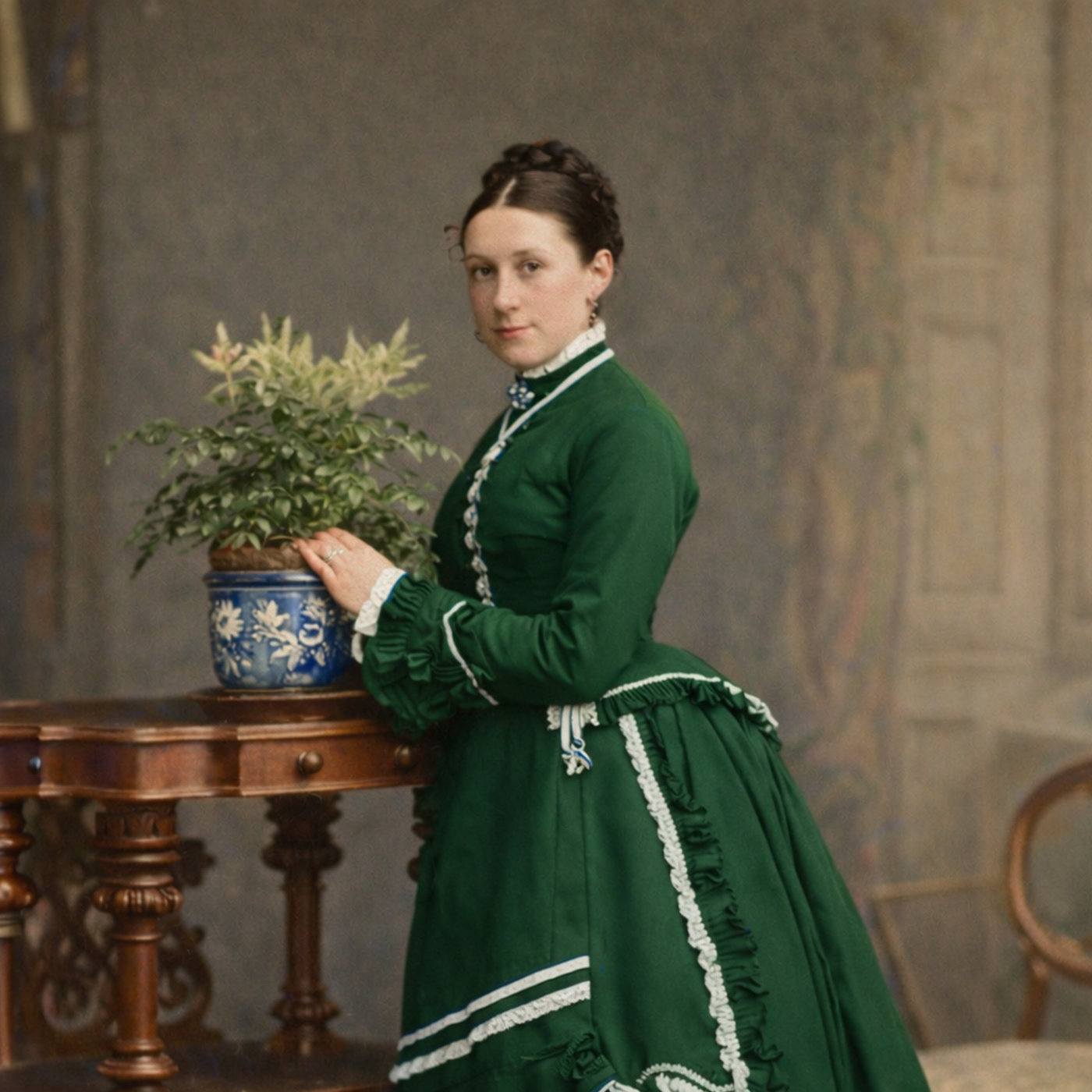
Watch a movie from the 50s or 60s about the future, and apparently, we should be all wearing silver jumpsuits or coloured PVC by now. Most of us aren't, but what we are wearing is shaped by a myriad external influences, be they cultural, social, demographic, economic, political, or more.
Fashion historian, Dr Madeleine Seys from Adelaide University explains what role colonisation played on fashion in Australia, and why active-wear was already a thing 200 years ago.


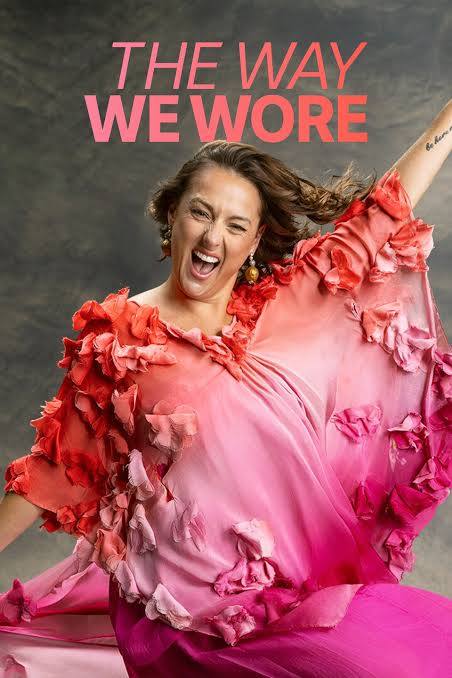
You can see more about some of the influences on fashion in Australia, and elsewhere, in the 2023 ABC production, "The Way We Wore". Hosted by Celeste Barber, but with commentary from a number of experts including our guest for this episode, Dr Madeleine Seys. The show is also now available on Netflix in Australia.
Dr Madeleine Seys has contributed to a number of design and fashion exhibitions around Australia, including The Art Gallery of South Australia's "Radical Textiles" exhibition, with an article "Queering the Wardrobe" published in the catalogue.
AGSA "Radical Textiles" catalogue for purchase
Her 2018 book "Fashion and Narrative in Victorian Popular Culture" is available online and in selected libraries.
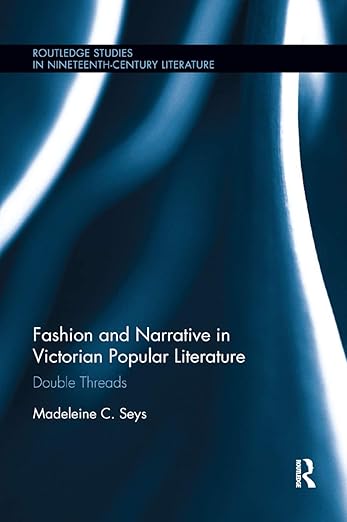
Review for "Fashion and Narrative in Victorian Popular Literature"
David (00:09)
We don't know when or why the first hominid put on its first item of clothing. Perhaps it was a fig leaf of modesty. Most likely it was the skin of an animal, worn purely for warmth. Since that time, however, fashion has been with us the whole time. From togas to top hats, kilts to cod pieces, and knickerbockers to neon nylon, we wear what we wear because of a lot more than pure practicality. And whether we care about our kit or not, the demand to clothe our bodies employs millions of people, costs billions of dollars, and causes untold upheaval to economies, the environment, and even governments.
Clip from The Devil Wears Prada (2006)
And it’s sort of comical how you think you’ve made a choice that exempts you from the fashion industry, when in fact you’re wearing a sweater that was selected for you by the people in this room.
Hello and welcome to "Where Are We At With...?" The podcast updating you on the promises of the future made in the past. I'm David Curnow, and I would have been a terrible assistant for Miranda Priestly in The Devil Wears Prada. But as we look at movies and books set in the future, we're often struck by the strange looking clothes they're wearing. From the single coloured jumpsuits of Star Trek and Logan's run, to the double knotted ties and shrinkable shirts of Back to the Future. Or how about Jean Paul Gaultier's work in the quirky but delightful "Fifth Element"
So with the size of the topic being bigger than Ben Hur's tunic, we're splitting it into a two-piece outfit. This week, a look at how we got where we are at with fashion, particularly in Australia with the dominant early influence by European colonizers. Our guest today is a fashion historian specializing in interpreting gender and cultural roles presented in literature during the 19th century. Madeleine Seys is from Adelaide University's College of Creative Arts, Design and Humanities. She's also a bespoke tailor, writer, and a museum and exhibition curator. For part one of "Where Are We At with Fashion?
David (02:13)
Dr. Madeleine Seys, thank you so much for joining me today.
Madeleine Seys (02:17)
No worries, this is such a pleasure. I'm really excited to get into the question of where we're at with fashion right now, with an eye to where we've been and where we're going. Such a broad topic, I'm excited.
David (02:28)
I'm going to ask you something which I've never asked anyone before and I promise I won't again, male or female. What are you wearing today and why are you wearing it?
Madeleine Seys (02:33)
Thank you, that's a beautiful question. I always ⁓ relish any opportunity to talk about clothing, be that mine or others. ⁓ I'm wearing a blue linen dress that I made myself. I make a lot of my own clothes and clothes for my family. I made this a few years ago and it's become a firm favourite. ⁓ Locally sourced fabric and I cut it using a minimal waste and reuse method, which is something that's really important to
how I dress. ⁓ Yeah, and it's a real favourite.
David (03:11)
I think it is wonderful to note as well, particularly given that as a middle-aged man I tend to dress for comfort and not necessarily much else. ⁓ Let's talk about, is there any clothing style in history or period, I suppose, that everything else aside, you wouldn't mind living in?
Madeleine Seys (03:24)
Yeah. Ooh, I probably won't surprise you to hear that this is something that I think about often. And if I'm thinking on purely aesthetic grounds, which is a difficult thing to do as a fashion historian, as somebody who does like to delve into the depths of how we make and wear fashion, I'm very drawn to the aesthetics of the 1870s and also the 1970s. The 1970s I incorporate frequently into my wardrobe as a collector of vintage fashion, but also as somebody who can make clothing in almost any style that I desire. I delve a little into the 1870s, but those styles are a little less conducive to wear in modern Australia, particularly the Australian climate. So I have great respect for those 1870s Australian women.
who managed it. But given the choice, I'm a little more selective, let's say, in my application of that passion. But there are two decades, aesthetically, I find very compelling.
David (04:34)
Wow, and quite diverse as well. Fascinating to think about the two differences of the 70s, the 18s and the 19s. Who knows what we were wearing in the 20s, 70s. Let's talk then about Victorian era because we're going to skip over a lot of human history. We've missed the Romans and togas, we've missed animal skins sort of, and we're moving into the 19th century because particularly from an Australian perspective, that's when changing clothes tended to become noticed more, and we tend to think about clothes from what we see. For a lot of us, we imagine the drawings, the paintings, or even as we move forward into the photographs. But you're somebody who's looked at how you can understand clothing through literature. Tell me more about that.
Madeleine Seys (05:19)
Yeah, so it's intricate and detailed sort of vocabulary that exists in 19th century literature around clothing that provides readers contemporary to you and I, for example, a real insight into the aesthetic imagination of the 19th century and also a range of encoded narratives around identity, particularly those that don't get ready expression in already and really direct expression in the literature of the period. So something that I've spent many years thinking about and analysing is the way that language around the colours, textures and fabrication of clothing allow 19th century writers to represent femininity and female sexuality in ways that couldn't be or frequently weren't openly expressed in the literatures and it speaks to modes of visual communication that were understood quite readily, I argue, by Victorians ⁓ on a symbolic ⁓ level. So lots of detail about the colours and the types of fabrics had meanings that come from their origins, but also come from this kind of vocabulary around the colour red being associated, for example, with passion and the colour white being associated with purity and virginity. ⁓ It becomes even more intricate than that in the literature throughout the century. But there are a couple of ready examples that we can draw on in the way that a brief note that the heroine was wearing a white muslin gown is not merely an aesthetic marker, but is in fact a marker of class, of social status ⁓ and of her place in the sexual economy and the gendered economy of the time as well.
David (07:18)
I suppose it's something that we don't tend to think as much about today. We like to think of ourselves as classless, although that doesn't tend to be the case.
David (07:27)
The structures, the formality and the awareness of those things in Victorian time particularly was really quite high compared to what we have now. In addition to the fact that literature of course had an explosion as literacy rates exploded with various changes in Europe. And so we're led to a situation where suddenly ways of signalling that person's social status or marital status or political opinions were done in ways that we don't consider these days.
Madeleine Seys (07:37)
So. Yes. Yes, yes, indeed. We are by and large far more direct in our discussions around those things. ⁓ But in the 19th century, yeah, lots of visual signifiers that were fairly universally understood, but rarely codified, which makes my role as a researcher quite particular. It becomes one of a kind of deep archival, almost archaeological approach, ⁓ because we're never going to find a guidebook that lays this out, because that quite sticks with us.
David (08:23)
Yes. Nobody's got the reference points there where you can look them up and find out what those particular words or colours or patterns meant. We think of the 19th century, a lot of us, and lump it as a Victorian era, even though obviously the Queen in England wasn't on the throne all of that time. And of course, lots of things change. Tell me about some of the changes throughout that period when it comes to fashion and the key ones. You've already mentioned 1870s as a period that stood out. I could reckon that most people would not be able to tell the 1870s from the 1860s or 90s with any ability whatsoever.
Madeleine Seys (08:43)
Yes. Yeah. Fashion moved so incredibly fast in the 19th century in regard to the silhouette. ⁓ This is a bold claim, but I would say that the fashionable silhouette changed more rapidly in the 19th century than it had in any single period prior to that, or even perhaps since. ⁓ The 20th century is no doubt marked by real evolutions and revolutions in fashion, but in terms of the overarching aesthetic and this particularly the fashionable silhouette for women, 19th century changes were so incredibly rapid. So every couple of years, even within the space of a season or two, the position of the waist would change, the position of the bust would change relative to the waist and the hips. We see skirts broadening out in the 1850s and 60s to that hoop skirt, crinoline style that's quite synonymous, even in our 21st century imagination with the 19th century. Then they narrow again in the 70s, a swept to the back and up with that classic kind of bustle style. So we see women with that creating almost like a shelf out the back of their skirts and then cascades into a very long train at the ground but we also see the position of the bust and the waist rising and lowering. And part of that is created by the ⁓ corsetry and the undergarments that are being worn, but also by a sort of visual trickery that happens by ⁓ puff sleeves balancing out broad crinoline hemlines, but then we have narrower, more tailored structures around the shoulders cinched in very sharply at the waist and then sweeping gradually down to a broad hemline but really skimming the hips. So every couple of years that shifts.
David (11:01)
What's driving these sort of changes? When we look at these sorts of movements through fashion, there's no Miranda Priestly here. The fashion magazines weren't quite happening. Who was driving this sort of, as you say, quite rapid change ⁓ that you don't want to be seen in the wrong decade?
Madeleine Seys (11:08)
Yeah, I think if we had to make a claim for who in quite specifically as a person or a group of people, fashion in this period is driven largely by the fashion of the royal family and the court in Britain. ⁓ And then that flows on throughout the colonial world to the aristocratic classes and filters from there down into the middle, increasingly large middle classes in the 19th century and ultimately then to the working classes. So they're the kind of people who are making these changes, of course, in concert with what is developing as a class of professional who are not merely dressmakers, but they are designers of clothing, and as any artist or professional creative in any period, people such as, let's take Charles Frederick Worth, for example, as a British and French designer of this period is looking to stand out from his contemporaries, but also to make a claim for himself and his fellow designers as artists, as opposed to makers, which is unfortunately a term that in the 19th century comes with a sort of lesser status. I'm all for championing the maker, but that's not necessarily something that up in the 19th century is so commonplace they're creating novelty. They're saying this is the new fashion. This is something new that I have developed for the season. ⁓ And so that gets picked up initially in those wealthy aristocratic and as I said, or court associated classes.
David (12:46)
And in terms of its transition, we talk about the fact that it moves from, say, the royal influences of their day through the aristocratic, the wealthier upper class in Europe. Eventually, it makes its way to the dominions that they've invaded and are trying to make work for them. How long does that take and is there much adaptation by the time it gets here?
Madeleine Seys (13:08)
Enjoy. Yes. It doesn't take as long as perhaps one might think. ⁓ So really the distinction that happens, let's just take British and then Anglo-British Australian fashion in the 18th and 19th century. Let's work with those examples. ⁓ Really the significant time difference is not so much a practical one based on transportation or communication of styles. It's more to do with seasonal difference. So what is fashionable during a British summer season. Six months later when Australia circles around to our summer season, we'll see those styles coming across there. So there is undoubtedly a lag, but it is less about the ⁓ idea of Australia being sort of behind the times or the southern colonised places being behind the times in terms of their colonial fashion and more practical based on our weather.
David (14:20)
Yes, absolutely. And of course, yes, you're not going to suddenly start wearing winter clothes in an Australian summer.
Madeleine Seys (14:25)
No, no, regardless of how fashionable they may be. ⁓ So that information comes to Australia in textual form. So with magazines and newspaper reports, fashion illustrations and the like. It also comes through private communication. So we see ⁓ in archival records, letters written between family members, between friends, asking questions about what's fashionable, sending fashion plates, sending descriptions of the latest styles and that kind of information across that is then used by women in Australia. And I say women, it was mostly women or of course not entirely to replicate those styles ⁓ and also to work with them to then develop their own version ⁓ of fashion that was coming to them from chiefly Britain and continental Europe but to a slightly smaller extent from the Americans.
David (15:28)
Well, you mentioned females and the fact that we're talking about perhaps writing letters, trying to seek advice so that they know what they can either have made for them or make themselves. Men at this stage, we don't think as much after the height of Beau Brummell earlier and setting fashion tones, the men weren't quite as fashionable in their drive, I suppose, to be seen.
Madeleine Seys (15:52)
Yes, yes. What it means to be fashionable as a man and what fashionable masculinity looks like takes a dramatic turn, post-Brummell really. And what's really curious to note, even from our perspective in 2026, is that the formal fashionable wear for men today bears very close resemblance to what it did in, say, if we're generous, 1900. Even prior to that, we see a lot of similarities. There's really been not significant change there in the way that we see it for women in terms of silhouette, in terms of how the body is covered or not. And the fashionable accessories remain much the same. Subtle changes in, let's say, the width of a lapel, the placement of buttons, the length of a trouser leg, that was our subtle changes in comparison to what we see for women.
David (16:50)
We are so boring as men. The width of a tie, perhaps. 1970s certainly taught us something there. But you're right, there's very little change ⁓ since that time. And yet here we are still wearing these clothes. We'll get onto that in a moment. I'd like to very quickly ask you, though, sorry about, we talk about colonial and we talk about the fact that English and other European nations invading, taking over, taking possession of various places in the world.
Madeleine Seys (16:52)
Yes, yes, absolutely, Yes. Mm-hmm.
David (17:15)
and judging the people there based quite often on not just their sophistication when it comes to tools, when it comes to their society, but also their clothing. When they arrive at a place and judge those people for not having sophisticated clothes like these, in a sense they're making a judgment of savagery almost immediately, aren't they?
Madeleine Seys (17:16)
Absolutely, absolutely. And what happens from there is the use of clothing as an incredibly brutal tool of colonisation. Yeah, the history particularly of Australia bears that out and there are a lot of incredible First Nations scholars who are delving into those questions. How clothing ⁓ and material cultural practices have served and continue to serve as tools of the colonial project in Australia. You're absolutely right.
David (18:09)
Quite literally, my next question was going to be along those lines of effectively forcing First Nations and look, definitely in Australia, that was part of it. But also when we think about First Nations people in North America, India and the areas there as there was a force to wear more European style clothes, it is in itself a form of subjugation, isn't it?
Madeleine Seys (18:30)
It undoubtedly is, yes, yeah, and speaks to bodily control in some very particular and insidious ways as well. And then what we see in a lot of those colonised places as well, very distressingly, is the enforced labour of the Indigenous population in the production of clothing or textiles for the clothing industry as well, which is another side of that same story.
David (19:03)
And I suppose we don't tend to think as much about the cotton side of things from Australia like it was in India and places like that but the wool industry in itself took off in Australia because of Europeans going out and grabbing land from the First Nations people to grow this wool which was suddenly so valuable.
Madeleine Seys (19:15)
Yes. Yes. Absolutely. Yes, yep, absolutely. And then bringing Indigenous labour, often enforced, very rarely paid, into the agricultural cultivation of that land and the care of the livestock, ⁓ which is both recognising some expertise amongst the First Nations population in understanding the land, but at the same time, ⁓ abusing that in the most horrific, horrific ways, whilst also stripping people of their humanity and their agency as well.
David (20:00)
I very briefly wanted to touch on, we mentioned the fact that the fashions from Europe would make their way to colonial countries or places such as Australia, the climate as you said is different and what you wear in England, what you wear in northern Germany or Scandinavia should not, cannot really be the same and yet people persisted. Were there any adaptations at all or do people just persevere in the worst possible textiles and the worst possible climate?
Madeleine Seys (20:28)
I think a little bit of both, it would be fair to say. There were definitely some adaptations and alterations that were made in Australia in terms of the cloth used for particular garments. ⁓ So if we think about women's undergarments in the 19th century, it was quite commonplace for women to be wearing multiple layers of petticoats under their skirts, which was a matter both of shaping a silhouette, creating those iconic 19th century silhouettes we were speaking about, but also a matter of hygiene and understandings of how to look after our bodies and how to look after our clothing as well. But whereas in, let's say in colder climates in the Northern Hemisphere, at least one of those layers would be wool. We might also see women wearing a quilted down stuffed petticoat almost like a doona basically as us go in Australia.
David (21:31)
It's a puffer jacket for the lower half.
Madeleine Seys
Exactly and there are certain climates in which I think that would be absolutely essential and I wouldn't mind one of those but this time of year in South Australia when it's 30 something degrees is certainly not it. So those layers would be replaced with cotton petticoats and perhaps we're talking about wearing one or two instead of three or four. So there are those changes which may feel quite subtle ⁓ to us but are no doubt incredibly important in terms of the embodied and lived experience of being in those clothing, of being in that clothing. So cotton is used more readily than wool.
David (22:00)
I think anyone, yeah, anyone we see has effectively replicating some of those fashions or trying them on as even just a dress up or something will often comment on the different feel of the entire thing. It's not just the look, but it is embodying and being part of that person at the time.
Madeleine Seys (22:30)
Absolutely. Yeah, it really changes how you think about your body and how you move your body. ⁓ So yeah, incredibly fascinating stuff.
David (22:39)
And of course, as that plays into the gender roles, as we mentioned, after Beau Brummell and his nearly painted-on pants caused hearts to race and possibly his fertility to drop. In 19th century Australia, how would we look at the clothes enforcing gender roles here. In the, in the way I suppose you think about some of the, the outfits, they're not conducive to say, working to, to building a house to go going out and checking on the sheep or, or things like that.
Madeleine Seys (23:07)
Yeah. Yes.Yes. There's a real in the written literature that exists, and I'm talking published novels, as well as extant diaries and letters where we have them. What we can see is amongst, particularly amongst aristocratic, monied classes, colonial classes in Australia, a certain amount of anxiety about maintaining that status so far from the colonial heart. So far from the centre of power that abuse ⁓ the upper classes with that title and the respect and lifestyle that comes with that. So maintaining a distinction of fashion between the classes and between the genders is a really important part of that, which is one reason why we do suspect and see some evidence of women really struggling through the very hottest of hot days with of course no effective ⁓ way of cooling a building, particularly a stone colonial building ⁓ in fashionable 19th century layers because they're holding on to the status symbol and the gender symbol associated with wearing a corset and crinoline and certain other trappings of fashionable femininity at the time. ⁓
David (24:34)
It's interesting, I look at, sorry to interrupt, but I do, look at some of the archival records for things like ⁓ death causes and things like that. You know, I lead a fun life, do. But the fact that a hot summer could quite literally lead to many deaths, in part because of the fashion structures and rigours that people put themselves through.
Madeleine Seys (24:36)
Yes, yeah, absolutely. It's stunning to recognise that.
David (25:01)
Was there any movement to effectively fight back against that, to resist? .
Madeleine Seys
I think it was at grassroots level, undoubtedly, yes. And although there is very little written record, the working classes, of course, are leading the way in powerful but subtle alterations to their dress, allow the kind of freedom of movement and health and safety are required to exist in a climate so very removed from what was, ⁓ where those fashions have originated. ⁓ Absolutely. But we don't see a lot of record in the 19th century until we get to the last couple of decades of that resistance. It is happening within families within communities on a practical grounds. It does not have any political overtly and outwardly political impetus behind it. And there is a certain level of shame associated with not adhering to the fashionable norm of the time. So it's happening or at least as historians we strongly suspect it was happening but it doesn't get written about very much or at least not in any public way because it has these shameful sort of associations.
David (26:29)
some of the changes and political statements where it's written about in various times. Tell me about some of those, particularly I suppose a little bit further back into our 19th century or early 20th.
Madeleine Seys (26:34)
Mm-hmm. ⁓ So fashion is becoming increasingly radicalised and politicised in the latter part of the 19th century. Earlier in the century, Amelia Bloomer ⁓ was a pioneering dress reformer, is the term that most 19th century dressers and scholars would use. People who are actively addressing the impracticality of particularly women's fashionable clothing and the dangers of the extreme, the physical dangers I mean, of extreme corsetry, example, very heavy skirts, all of those kinds of styles. So Amelia Bloomer, ⁓ after whom bloomers are named, ⁓ is an 1850s, 1860s dress reformer. ⁓ It remains quite a powerful but niche political, cultural, and sartorial position, but is gaining momentum into the 1890s and flowing then into the 20th century with a movement that becomes the rational dress movement, starting off in Britain, ⁓ but very much coming across to Australia with ⁓ quite significant force and speed to reform the dress of politically minded Australians.
David (28:08)
And what sort of changes did that manifest? What do we see in terms of the way a rational dress advocate or person who's taking part in this would actually, what would they look like differently?
Madeleine Seys (28:20)
So, such a polar opposite of the fashion aesthetic, which was entirely their rationale. So, working in the 1890s, what fashionable women are wearing are very slim cut skirts with full hemlines, so skimming the hips quite firm down almost to the knee and then sweeping out from there with very firmly formed and quite closely tailored bodices as well. So we're talking long skirts that sweep on the ground. ⁓ The rational dress movement advocated for freedom of movement ⁓ and healthful dressing is a term we see a lot in the literature of the time. Healthful indeed, not a term that we use a lot today, David. ⁓ But what that meant ⁓ was fabrics that are breathable, styles that don't constrict the movement of the rib cage. ⁓
David (29:01)
Healthful. Mm-hmm.
Madeleine Seys (29:19)
and don't restrict the movement of the body ⁓ or inhibit sight, for example. So there are some really dramatic examples from the 19th century of the ways that women's clothing could be deadly. Tight corseting is one that is frequently discussed, also somewhat exaggerated ⁓ during the 20th and 21st centuries, I would argue, but is undoubtedly dangerous as anything is that is extreme. Women's headwear could also be very dangerous, ⁓ impeding ⁓ peripheral vision so much that we see women being run over by carriages because they could not see, they almost had blinkers on, for example. Crinoline fires were not infrequent and incredibly catastrophic occurrence in the 19th century as well. ⁓ So there are lots of examples of the way that clothing could be dangerous. So rational dress is pretty much throughout the rule book on what women wore looked chiefly to menswear but also to sporting wear for solutions to this problem. So rational dresses.
David (30:25)
Now, sorry, by sporting wear, we're not talking what cricketers or the soccer players are wearing, we're talking more English sports, hunting horses, that sort of thing.
Madeleine Seys (30:34)
Yes, yes, yes, hunting and equestrian sport for the most part. And also at this time, this is running parallel to the development of the modern bicycle. So the two wheel bicycle that resembles very much what you and I would ride today is being increasingly popularised at the end of the 19th century and is a readily available and relatively, and I say relatively in relation to owning a horse, for example, or a carriage, inexpensive way of allowing an individual, particularly a woman, to move around the country, move around the city independently. So rational dress is drawing on equestrian wear on garments for design for let's say polo for shooting those kinds of sports ⁓ to develop something that is both politically and artistically aesthetically radical also deeply practical and safe for riding a bicycle.
David (31:37)
And a lot of people just don't appreciate how big a role the bicycle played in the suffragette movement in the women's freedom of that period of time. And of course, you're not going to ride it if you're wearing crinoline and a bustle and a corset.
Madeleine Seys (31:45)
Yeah. it's incredible. Yes. No, no, indeed that would be very difficult, very dangerous. So what the Rational Dress Society and proponents thereof did was develop a variety of divided skirts of bloomers that became in the British vernacular known as Rationals with a capital R, which I just absolutely love, and the idea that this clothing is rational, therefore other clothing is irrational is really quite a compelling and powerful statement as well but to go with these garments, the garments on the upper part, on the torso also change and bear very close resemblance to tailored menswear of the 19th century. And that's where we get a real political edge to rational dress, as well as on these grounds of practicality and health. So women are wearing ties, they're wearing with it tie pins. Bowler hats become very popular as part of this aesthetic of the rational or dress reformer as well, which is really drawing attention to the way that gender is constructed and performed in the 19th century and is met with considerable concern on both sides of this kind of divide. So we see both male and female critics being incredibly critical of these changes because it is really drawing attention to the fact that gendered power is performative. is a lot of these signifiers of power are so material, so ephemeral, so easily reinterpreted and refashioned for this new group of politically and physically mobile and independent women.
David (33:49)
And when we talk about political statements, this is not effectively about supporting a political party or a
Madeleine Seys (33:56)
No, I'm not.
David (33:58)
Democrat versus Republican, a capitalist versus socialist. This is about effectively signalling a desire for change.
Madeleine Seys (34:07)
Yes, yes, absolutely, absolutely. And there was certainly not a clear equivalence between that desire for change and a particular political party line or affiliation. It would be quite neat to an association, let's say, between rational dress and the rational dresses and the suffrage movement, for example. And those connections are there. There are threads drawn between those communities in terms of individuals who are active in both. The temperance movement is also very intricately interconnected with these as well in the late 19th century. But it is not as easy as saying that all dress reformers are become suffragists or suffragettes in the 20th century. That is far unfortunately too simplistic an argument to make.
David (34:36)
Yes, the Venn diagrams don't necessarily always match up, but you're right. We don't often associate that concept of the suffragette and the temperance movement, which played such an important role as hard spirits were becoming more common and the ability to distill was becoming more common and the side effects were becoming more noticeable. And of course, not just changes of the way that the women approached it, but also the men and managed to convince them in the America to move to no alcohol whatsoever, a different topic for a different day.
Madeleine Seys (35:25)
Yeah, famously so. Absolutely. But all these things when we really delve into the archive become very interconnected, which is one of the reasons why I find fashion history so fascinating a topic because it is, the threads flow through to pretty much every other facet of life. I mean, we're dressed every single day and what we wear. and how we think about and talk about what we wear is connected to our personal politics, our communal politics, our culture, our practices around so many other parts of life as well.
David (35:58)
Dr Madeline Seys is our guest today on Where Are We At With? A lot of people may not consider fashion to be a topic that you would discuss, where are we at with it? But as Dr Seys says, it is in fact something we're part of every day. Most of us. No judgment if you're not, that's your choice. It's a very warm climate that we live in, many of us. When I look at what people wore in Australia in the first century of colonial expansion, invasion, that sort of thing, it's almost as if the white people's clothes represent a battle, not just against the first inhabitants, but also the bush, the land itself. It was an adversarial combat.
Madeleine Seys (36:28)
Yes. Absolutely was. Yes. Yeah. And I think that comes partly back to what we were speaking about earlier, which is this desperate attachment to the signifiers of power and privilege that have come with these colonising people from Britain and the upper classes for lots of reasons that we've discussed are holding onto those things more dearly. I think it would be to do people a slight discredit though to not only recognise the fact that there was some personal anxiety around being in a place that was so profoundly unfamiliar, so far away from personal community and network as well. So although these big political forces around class, gender, around wealth and the colonial project, no doubt drive how people are dressing. Of course, I think we could all recognise as individuals that we want to maintain some sense of our own identity, our bodily identity through clothing and styles that are familiar to us from our upbringings as well.
David (37:41)
Absolutely. you've come to an entirely new, well, hemisphere for a start. Everything sounds different, everything looks different, everything smells different. At least if you can wear the clothes of home, there's something that you can hold onto. Hmm.
Madeleine Seys (37:52)
Something familiar, yes. When I'm talking about this, always think about short story by Henry Lawson, The Drover's Wife, which you and maybe some listeners are familiar with. It's a beautifully poignant story about a woman who finds herself alone ⁓ in the bush while her husband is off working. She's alone with the kids and various catastrophes before her household in this period. But there's this really powerful scene where a bush fire is approaching the property quite rapidly. And she puts on her husband's, worn out husband's clothing in order to go out and fight the fire and save her family. And when it's done, she comes back inside, washes herself off and puts her skirt and her blouse back on. But that's a really powerful and I'm sure not entirely unrealistic or uncommon expression of just what that bathroom can look like and the the clothing can play in those scenarios.
David (39:03)
Yes, and again, reinforcing that gender segregation in a sense of the man's work is to do this, the woman's is to do this, but if I put those clothes on, I can do that. But I'm back home now and I'm going to return to what was my role. Interestingly, we talk about familiarity with European styles for those who had come to this country from another part. But there was still inclusion with things like not only the Akubra hat which was developed using a non-native, but still a problem here, rabbits, but also things like the various pearl and shells that were found in this area. There was a bit of an adaptation of those too, wasn't there?
Madeleine Seys (39:40)
Yes, yes, absolutely. ⁓ And throughout the latter part of the 19th century, we certainly see uniquely Australian or Southern hemisphere products and practices around material cultures and around dress being incorporated into the Australian fashion industry as it is developing in that period. So use of Australian plants, Australian animal products, Australian leathers, you say, shells and then increasingly gold, right? And ⁓ opals and these products from Australia into a fashion. And that's where I would argue by the time we get to, let's say the 1880s, 1890s, if I'm just sort of plucking a particular date ⁓ from the archive where an Australian style is starting to develop.
David (40:37)
It's interesting when you think about opals obviously a brooch or something like that. What about the native animals or the flora? How would that be represented?
Madeleine Seys (40:38)
In terms of the flora, it becomes a beautiful aesthetic component for the most part. ⁓ So we can see in the 19th century women embroidering Australian botanicals onto garments, incorporating that kind of iconography and also the colour palette that is drawn from the Australian landscape into their embroideries, into their home decor and into their fashion as well, shells and all of those things form a role there. There are lots of intricate, intricate ways when we really look at the relatively limited but no doubt important number of extant Australian garments from that period, where we see those aesthetics, those icons come into to influence.
David (41:41)
And did any of those flow the other way back towards Europe at all? Was there any take up of those or were they just treating that as colonial, something to be dismissed?
Madeleine Seys (41:48)
Mmm. Far from being dismissed, was something that was incredibly desired. This is the great, I think, irony we see of the colonial project, particularly in the 19th century, that there was a dismissal of Australian and First Nations Australian cultures ⁓ on a broadly political level. We know that Terra Nullius of course, was incredibly powerful narrative that dictates the management of the Britain-Australia relationship right up to the present day. But at the same time, there is this fascination and it does come from a sort of exoticism or orientalist approach to the items to a certain extent. But they have become incredibly fascinating in Britain to collect or to incorporate some of these things back into the British fashion. So the flow does go both ways, not in equal measure, but it certainly is there. But we spoke of the industry earlier and Australian wool, merino wool in particular, ⁓ goes to Britain and really revolutionises British fashion and a lot of the way that is used speaks to an Australian sensibility. And the language around the wool goes across to, for example, in Britain, they talk about the word "parramatta" with a lowercase p is used to describe a particular wool cloth that was very popular in the 1860s and onward for mourning wear, mourning with a U. And it is so named because it originates in the Parramatta region of New South Wales around Sydney from wool that is cultivated there. We don't in Australia use, did in the 19th century as far as I'm aware, use that term for the same cloth. But when we export it, got a cool marketing idea, we're going to call it "parramatta". So that happens as well as the more overt iconography around Australian animals, Australian flora, the Australian landscape that we've been discussing.
David (44:02)
Yeah. We need to get to the 20th century soon or we may never make it at all. But before we do, I do want to touch on something that is slightly more related and you've, I think, written about in the past. Tweed. Tweed is something that we mentioned sporting a tie when it comes to hunting and the like. Quick rundown on tweed in terms of both what it is for those of us who can't really picture normally and what role did it play at the time?
Madeleine Seys (44:06)
All right, so tweed originates from the Scottish weaving traditions. Originally practiced, speaking about back, we're talking hundreds and hundreds of years, practice as home weaving, or home spinning, by Scottish ⁓ shepherds and particularly the families, the female members of the families in Scottish ⁓ farming families, particularly around the border districts. We're talking about places around Tweed. And also Paisley in Scotland has a very strong weaving tradition. On a practical level, tweed is a medium to heavyweight cloth, fancy woven, that's a 19th century term, so woven with some sort of pattern in it. ⁓ So something like a subtle check, ⁓ houndstooth, ⁓ herringbone, anything approximating a sort of argyle print, these are terms that will means something, at least one or two of them to most listeners, think, from our modern usage of the terms is tweed. They're spun, so we're not thinking ⁓ of dyed Scottish tartans, clanned tartans in this conversation. That is a related but different conversation. These tweed cloths in the 19th and going into the 20th and 21st centuries are mostly spun with the natural utilising the natural pigments in the wool. So variations of whites into light browns and creams and grays and patterns are created through the manipulation of that natural color scheme. In the latter part of the 19th century, dyes are brought into the production of tweed, but they stick with a natural color palette. So we're seeing bringing in olive greens, heather colors of sort of purple, light to dark blues. We're not talking about bright reds or yellows or any of those very bold colors. And tweed is used for outdoor wear, of course coming from the fact that shepherds would wear it, looking after their flocks of sheep. We also use spun tweed to look after sickly sheep and lamb. That's a common practice as well, keeping the flock warm, and then it comes across into use for ⁓ hunting and related sports. And we talked about ⁓ cycling. That's where the cyclists pick up tweed. And it was practical for these pursuits because it was breathable, relatively lightweight. We're not talking about a heavy wool coating. Kind of thickness we talked about something that was quite pliable something quite light and it also was untreatable So maintained a high level of lanolin and therefore was quite naturally water resistant as well so sweat-wicking water resistant pretty much the original high-tech sporting fabric that textile technologists today are working with those same constraints in terms of high performance sports textiles. So tweed was one of the original textiles to step into that and to be marketed in those ways.
David (47:54)
And then effectively to make the transition from people who are using them practically with a pragmatic purpose, I do that because I am riding my horse, I am looking after the sheep, to effectively representative the idea of I'm wearing a cloth or a type of clothing which shows that I'm sporty. Like the modern, you know, leotard leggings, yoga pants.
Madeleine Seys (47:56)
sporting and practical and yes, exactly. It's sort of like athleisure wear, the way that that sort of gestures to a certain personality around health, certain practical grounds there become something that's fashionable. And yeah, the 19th century, 19th century that's happening. It's fascinating. Nothing is new in the, in the cycle of fashion day, but nothing is entirely new. Perhaps the material is new but the drive remains very thin, painfully attires for many.
David (48:39)
Indeed, we won't get into tweed in the modern era just yet because it's still here. Let's move past World War I because that drove a lot of change, the Great War. It changed social outlooks, it changed political outlooks, it led to a lot of changes. But of course, in the fashion world, we also see a number of changes between the world wars. What are some of those that stand out to you both internationally and here in Australia. And it was the 20s I was thinking of when you said that about silhouettes...
Madeleine Seys (49:08)
Yeah, I mean, I did make the bold claim early of the 19th century being perhaps the biggest period of change. I don't want to entirely walk that back. Yeah, yeah, look, it's a bold claim and one that I'm very happy to debate. ⁓ That interwar period is a really significant one for sartorial and fashionable change, undoubtedly. And those changes are driven ⁓ by practical considerations in a huge way, as well as of course by that constantly turning cycle of fashion where we desire novelty. So fashions for both genders we're seeing a much more sparing use of cloth. Gone is the 19th century style that is using meters and meters of cloth in a skirt or in the skirt of a frock coat, for example. We're looking to use less fabric and far more sparingly and create visual interest in other ways. So one example, see, for example, the 19, sorry, the 1920s are such a beacon of fashion ⁓ in the 20th century. And also after the fact, I would argue so iconic as a time of ⁓ sort of party and celebration post-World War I. When one really looks very closely at those iconic 1920s, let's say flapper dresses. They're incredibly simple. They're a sheath dress with very little shaping to it. So therefore necessitating not a great meterage of fabric. But the visual interest is made with the adornment of sequins, of beading, of a very carefully placed little frill, those kinds of details as well.
David (50:59)
It's almost the minimalist approach there, isn't it? It's again the reverse of the previous and what led up to it.
Madeleine Seys (51:02)
Yeah Yes, definitely. And that was a big part of how the, if we're working with the flappers, how they understood what they were doing. They're like, this is not what grandma wore. This is not what mum wore. This is wildly new. Nothing like this has ever been worn before. And they were absolutely right. Of course, the way that the body appears ⁓ and the kind of independence and autonomy that one could achieve in a flapper dress is very different. You couldn't do the Charleston in crinoline, you trip over. But a flapper dress, absolutely. So that's one sample from the control.
David (51:38)
And again, it raises politics, the idea of that movement when it comes to the freedom, the liberation, I suppose, of particularly women through the World War One experience of having to pick up the tools and do the work, many of the men not coming home, the expression of being able to be liberated in a way, it's not just wearing the crinoline, but also it's no longer wearing the overalls or things like that.
Madeleine Seys (51:53)
Yes, absolutely. So during both World Wars, women stepped into a lot of roles that had previously been denied them in terms of work outside the home. And that is necessitated ⁓ by a need at a family level, with men off fighting that income strain is being cut off. So women needed to go and work to support their family. But then also there is a if we're about Britain, we're talking about Australia, there is a broad community need for that labour to be performed. ⁓ The production of food, the production of clothing, the production of munitions, these new industries that war necessitates, that work has to be done. So women step into that work and their clothing changes with those new rumps. Rosie the Riveter, that kind of image of the woman in the boiler suit.
David (52:35)
Yeah, absolutely, the arm up, it's what you what you picture, isn't it?
Madeleine Seys (53:04)
Absolutely, yeah. It certainly is and for good reason. It's become iconic for a very good reason. And so fashion does not go back to where it had been.
David (53:15)
you mentioned the idea of paucity impact possibly incomes, and the challenge of dealing with whether it's low income or in the case of places like World War Two rationing, when it comes to restriction on supplies. How did that affect fashion and I suppose the way people interacted with their own clothes? .
Madeleine Seys (53:31)
Yeah, it made some really significant aesthetic changes as well as bringing in and sort codifying different ways of looking after our clothing, for example. So if we talk about World War II, the make-do and mend movement is a very, very big one. So the phrase make do and mend comes from this little brochure that was published by the British Ministry of Information in 1943. And it's a booklet distributed to households about how to, as the title suggests, look after, repair, reuse your clothing, which is necessary because of wartime rationing around textiles. ⁓ Mules are not creating very much, if any, fabric for the ⁓ ordinary ⁓ wartime household home front population because they're busy producing ⁓ sometimes textiles, sometimes they've been repurposed for other uses on the front. So there's very little fabric available. Fabric is rationed and it is very expensive. So Make Do and Men tells you how to mend your clothing if it's been torn, if it's been eaten by moths, ⁓ includes some incredibly ⁓ fascinating examples of how to cut up garments and make them look fresh into a new style for a new family member even. know, cutting up your husband's dress trousers that he's not wearing, quite frankly probably doesn't fit into anymore, into a charming suit for yourself or into a pair of trousers for several of your children. ⁓ So it's all about the sustainable, is a term that we would use today, approach to utilising and reusing textiles that are already circulating in the economy ⁓ within the home, but also within an increasingly large secondhand textile economy in that mid 20th century period.
Madeleine Seys (55:48)
But these practices long pre-exist this, I think it's important to say. ⁓
David (55:52)
Yeah. there's no question that people were preparing their own clothes before that, but ⁓ as a movement across a nation and I suppose across a side of the war, as it were, people were forced to do that and take it up where perhaps they might not have previously.
Madeleine Seys (55:56)
Yes, and it became a matter of national importance. This was supporting the war effort. We make your clothes, support the war effort. Look after your textiles, support the war effort.
David (56:18)
I'm reminded of two things. One is ⁓ The Sound of Music making the clothes out of the curtains
Clip from The Sound of Music 1965
Do you mean to tell me my children have been roaming about Salzburg dressed in nothing but drapes?
David (56:40)
the other is of The Simpsons where Marge really makes her suit several times to try to appear a bit different.
Clip from The Simpsons
Oh I'll be there with bells on! Where will you hang the bells, Marge? Somewhere on that mangled Chanel suit?
Madeleine Seys (56:44)
Yes!
David (56:55)
Let's talk then about politics again because post World War II politically I think we start to see movements towards freedom, particularly when it comes to women. But men also have a bit of a role here in the T-shirt and blue jeans
Madeleine Seys (57:10)
Yes, yeah, absolutely. We have been talking a lot about women's fashion today, but there are some really significant changes that happen, particularly post-World War II with ⁓ men's fashion as well, which is much like what we've been discussing about a drive to garments that are practical for the work being undertaken ⁓ and the activities being undertaken as well as for different climactic conditions. If I think about dress reform for men in the Australian context, as a South Australian, I can't help but think about Don Dunstan and his famous ⁓ 1970s pink short shorts, but also his reform of parliamentary dress, the parliamentary dress code in the South Australian State Parliament, ⁓ which did away with colonial dress ⁓ standards. ⁓ He's quoted as saying that the parliament was a workplace like any other and the members should be able to dress in a way that is comfortable and appropriate for the weather there. And that effect flows through the professional South Australian world, through the professional Australian world, where we see it becoming increasingly acceptable for men to wear tailored, admittedly tailored, shorts to work during the summer months. And jeans go from workwear to casual wear in a not dissimilar time period. So we're talking sort of from the 50s onwards roughly.
David (58:43)
A lot of Australians who aren't in South Australia perhaps don't appreciate the role that Don Dunstan played in not only politics at the time, but also, I suppose, gender identity and gender conformity and the very concept of, as you said, those little pink shorts, probably the most famous pink shorts in Australia, other than... Well, yes, they look a lot like the sound recordist to Star Wars who wore little pink shorts as well. And until Warwick Capper's little shorts, certainly also.
Madeleine Seys (58:51)
Mmm. Like your most famous shorts of any colour, oh yes, another pair of small shorts.
David (59:15)
The role of small shorts. Where are we at with small shorts?
Madeleine Seys (59:19)
That would be an episode for another day, but I'm very happy to join you for it
David (59:23)
I like it. Look, let's talk politics though. Again, we have done a little bit of that so far. Don Dunstan definitely trailblazer, but when it comes to politics and fashion, I suppose the only other ones that stand out are either Paul Keating's Italian suits or the negativity surrounding female clothing and using fashion as a weapon against women such as Julia Gillard or in the United States your Hillary Clintons and Michelle Obama. Tell me a little bit about that.
Madeleine Seys (1:00:03)
Using the word clothing rather than fashion here in a very deliberate and studied way, as clothing being a bit fatuous ⁓ about being associated with ⁓ feeling rather than the intellectual life or the political life ⁓ that the fashion industry and care for ⁓ textiles and clothing being work traditionally historically done by women within the home devalued because of that. It is something that is unfortunately very easy for critics across the political spectrum to ⁓ grab hold of and criticise in order to put women down. throughout history, in all the examples you've listed and unfortunately countless others, women are wearing the wrong things they are, let's say, too dowdy, they're unfashionable. But then on the other side of the fence, a female in any position of power, politics and others, is deemed to be too fashionable, then they're clearly spending too much time and money on the pursuit of looking a certain way for, to cultivate certain kind of gaze, perhaps, is another part of this, and not enough time focusing on the job at hand. So it comes from this long very misogynist history of fashion being fatuous, being about women's work and all of the ways that that is denigrated culturally, politically and socially. And it's very much, I think the cultural conversation is changing slowly, too slowly, but it's very much been a case of damned if you do and damned if you don't as a woman in power in terms of what you wear.
David (1:01:52)
Absolutely. And look, the conversation of where are we at with misogyny is a different one and another topic we're going to have for another day, but it is striking to note that while so many improvements have been made in the rights of women, the treatment of women and the understanding of how women have been treated, that something like fashion can still play a role when really it's just wearing something for practicality. Let's very quickly touch on, we haven't got too much time left, but I'd like to very quickly touch on, we mentioned make do and mend. Of course, in the current era in the 21st century, the opposite is the problem and that is of what's termed fast fashion. What do we mean by fast fashion?
Madeleine Seys (1:02:27)
Yes. The fashion that is deemed fast fashion is fast in terms of its production and in terms of its disposal. ⁓ So fashion has, the production and consumption of fashion has sped up over this whole timeframe that we've been speaking about today. And that is driven by the industrialization of the textile industry and the industrialization and mechanization of garment production as well. It's also driven back in the opposite direction to a certain degree by market demand. So the cycle of fashion turns faster and faster and faster and faster every year., It doesn't necessarily translate across to the swift and dramatic changes in silhouette that the 19th century was marked by. But every new season and even the inter-seasons ⁓ in the fashion industry are marked by new garments. ⁓ We don't, in the fashion industry, it's not necessarily a conversation about there being four seasons every year. It's commonly spoken about there being five or six seasons and seasonal changes. So fast-fashion makers and retailers are constantly producing, for the most part, low-quality garments in inexpensive cloths. we're talking mostly not natural fibers, lots of microplastics, ⁓ lots of textiles that require lots of petrochemicals, let's say, because they're easy to produce, they're inexpensive, and they're selling them on the high street for a lower price point. The idea being that they'll be purchased, worn a couple of times for that very short season. And then for the most part, the idea is that they're disposed of because the market is driven by desire for the new in the next season and on and on and on from there. And of course, the damaging effects of this environmentally are huge. A couple of years ago, the ABCs' War on Waste uncovered a lot of evidence to suggest that Australians dispose of 23 kilos of textile waste individually every year. ⁓ Allegedly, we, I say we because I know that I don't do it, but purchase 27 kilos of textiles a year, or least 23 of those go into landfill. And the fast fashion industry is a huge, huge part of that.
David (1:05:06)
It's interesting to compare the idea of the fast fashion with fast food and by fast food I mean ultra-processed food in that it is a similar process of almost assembling textiles in this case as opposed to nutrients which is what ultra processed foods do and assembling them getting them out as cheaply as possible, as quickly as possible. And what happens after that really isn't their concern. And yet it's causing immense damage, not just to the people who are being forced to make them in factories in various countries, but also then the places that our rubbish that we're throwing away ends up.
Madeleine Seys (1:05:42)
Yes, which is by and large in the developing world. ⁓ There are some very distressing images ⁓ shown as part of that report of where the textiles go. But while this is happening, ⁓ there are counter movements pushing back against this. We're looking at greater transparency, great in the production pipeline. We're looking for, there are lots of movements on coming from a kind of radical perspective, but also increasingly, although slowly, coming from government to regulate clothing, pollution, and trying to cut down on the amount of textiles that are going into ⁓ landfill, et cetera. And make do and mend that sensibility ⁓ is quietly, certainly among some groups coming back into practice, idea of thoughtful consumption.
David (1:06:44)
I'm not asking you to draw a picture of what future people will be wearing. But what do you see as the big influences over the next few decades to fashion and clothes as an entire entity?
Madeleine Seys (1:06:48)
I believe that the wheel of fashion will slow a little bit and I think that's already happening. ⁓ Maybe not ⁓ as quickly as we'd like, but I think practices around thoughtful reuse of textiles recycling ⁓ sustainability will have more and more and more of a presence in the fashion economy. ⁓ Perhaps what our clothing looks like is not going to be revolutionized in the way ⁓ that let's say at the beginning of the 19th century fashions of the future were seem to be, you know, well there was lots of spacesuit type images of the fashion of the future. I don't think the fashion of the future is necessarily going to look that unrecognisably different to what we're wearing today or what we have worn in the past. But I think how it's made is going to be fundamentally different ⁓ at a micro level in terms of the materials that are used, but also in terms of the processes of that. think there'll be greater transparency too. And I certainly hope there will be in the labour of the fashion industry and that a living wage across the garment industry and the textile industry will be an absolutely global standard. So that's my hope for the future. That's my image for the future. Perhaps it's a little naive and optimistic, but I see people working towards this. So that's my image for the future.
David (1:08:18)
So if there are silver jumpsuits, at least they'll be responsibly made out of hopefully a sustainable and renewable textile. Dr. Madeline Seys, thank you so much for your time today.
Madeleine Seys (1:08:41)
Absolutely. It's been such a pleasure, David. Thank you.
David (1:08:51)
Dr. Madeleine Sayes from Adelaide University there. And for more of her background and achievements, there are plenty of them, you can check out our website. Just click on the link on our show's page in your podcast app. You can also find a transcript of this episode along with the others. Feel free to let us know what you thought. If you liked it, perhaps tell someone else. If you didn't, well done getting this far through a show you don't like. That's serious commitment.
Next time, for the second half of this series, a closer look at fast fashion and what's being done to regulate the industry, as well as some of the materials being used to make the process less toxic. Who knows, your next set of underwear could be made of something a little different.
Alice (1:09:29)
Pineapple plants and the leaves. Actually, if you break them open, they have long fibres within them already, they're just a bit like linen or flax and you'd you'd soak it and then you'd take the fibre and make a beautiful cloth out of it.
David (1:09:43)
Turns out the rough end isn't so bad to sit on after all. Pineapple pants, growing your own handbag, using your jeans to charge your phone and making retailers responsible. "Where Are We At With Fashion?" part 2, next time. I'm David Curnow, thanks for listening. Goodbye.

Fashion Historian, Adelaide University
Adelaide University's School of Humanities, College of Creative Arts, Design and Humanities.
I am a researcher, writer and artist in the interwoven fields of literary studies and material cultural studies.
My research explores: nineteenth-century literary and fashion histories; Australian literary and material histories; Pasifika photography and visual art; theories and experiences of gender and sexuality; histories of feminism and women's movements; embodiment and corporeality; museology and curatorial studies. Working with textual, material and visual sources, I employ queer and interdisciplinary methodologies to explore and enact the making of stories and identities and objects.
My doctoral research undertaken at The University of Adelaide explored the use of dress as a way to encode narratives of female sexuality and agency in British popular literature from 1860 to 1900.
This work was published as Fashion and Narrative in Victorian Popular Literature: Double Threads by Routledge in 2018.
I write scholarly research and creative non-fiction across my fields of interest. I am a member of the Australasian Victorian Studies Association executive committee and the editorial board for the Australasian Journal of Victorian Studies and social media coordinator for the Mary Elizabeth Braddon Association.
I also work as an academic editor, consulting museum and exhibition curator, fashion historian and bespoke tailor.
I am currently working on a fashion history of South Australia.