Where Are We At With Food Labelling?
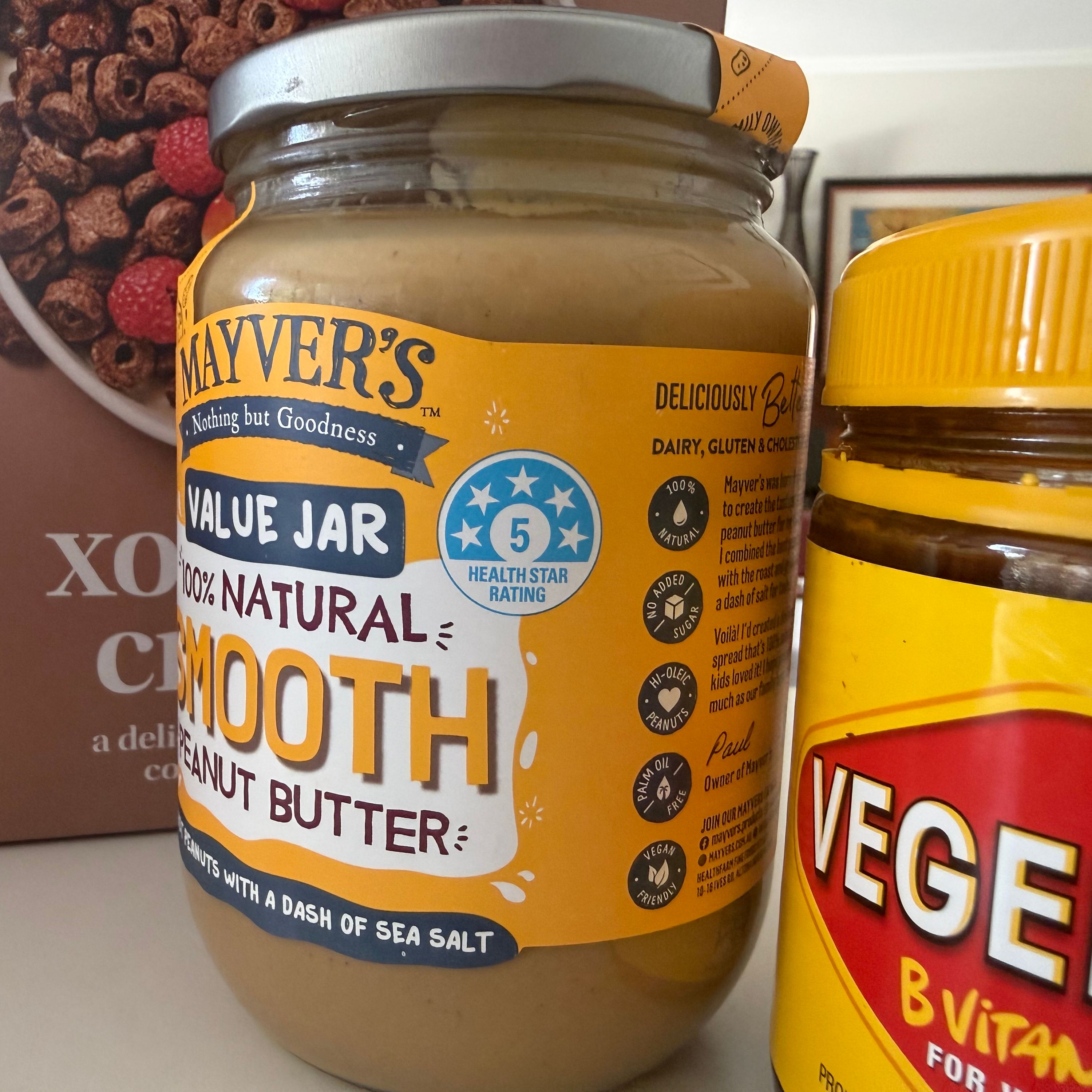
"Frankenfoods". Ultra-processed foods formed in factories, not created in kitchens, make up about half of Australians' nutritional intake. Labelling the food we eat correctly while also letting us know what is healthy and what is going to kill us. Eventually. Dr Alexandra Jones from UNSW and The George Institute for Global Health joins us to help understand Where Are We At With Nutrition and Food Labelling?


The George Institute for Global Health

Food Standards Australia and New Zealand website
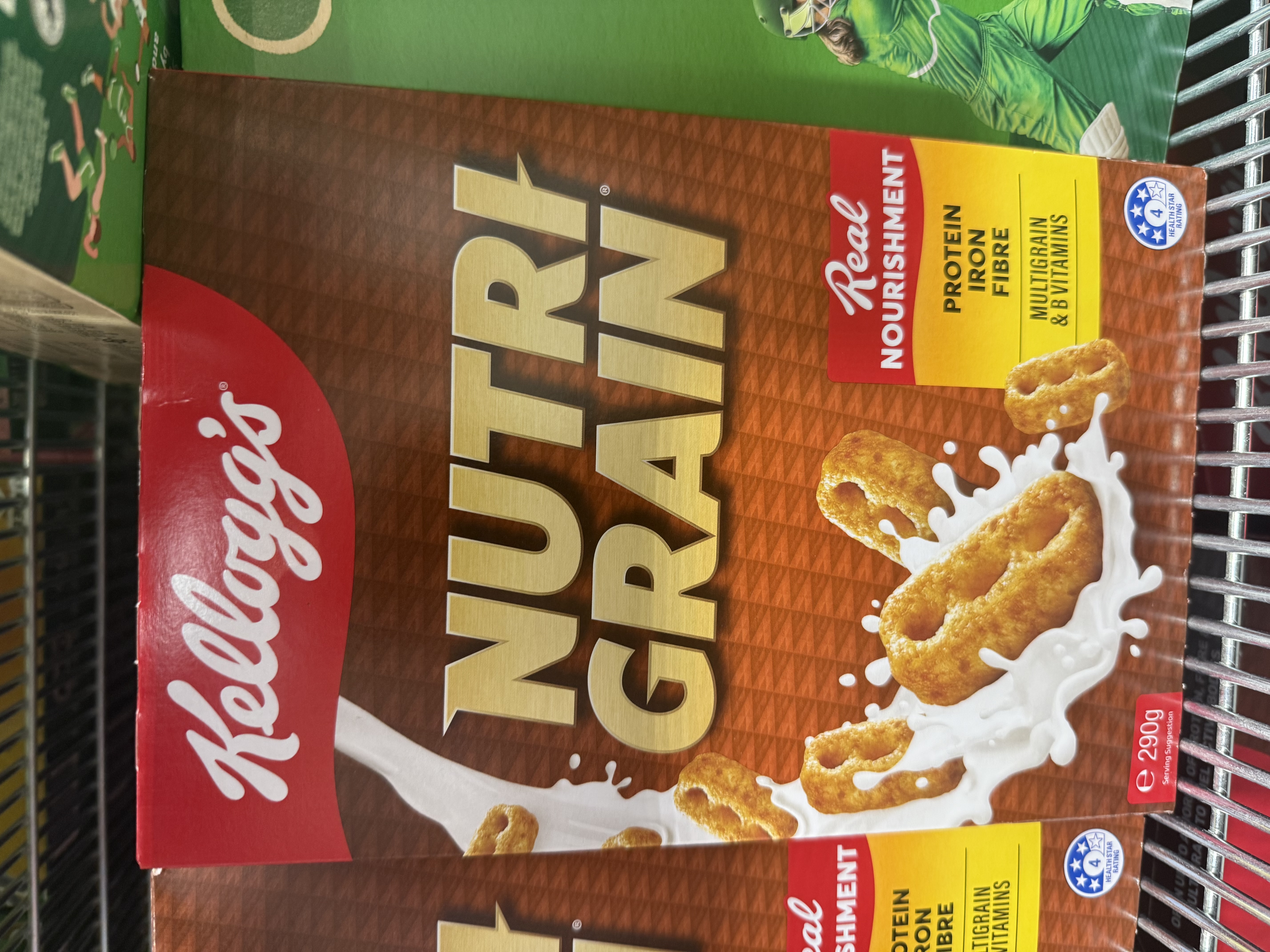
Adding certain things like extra fibre and protein means products like NutraGrain, that are high in sugar, to achieve a higher rating than they should otherwise get.
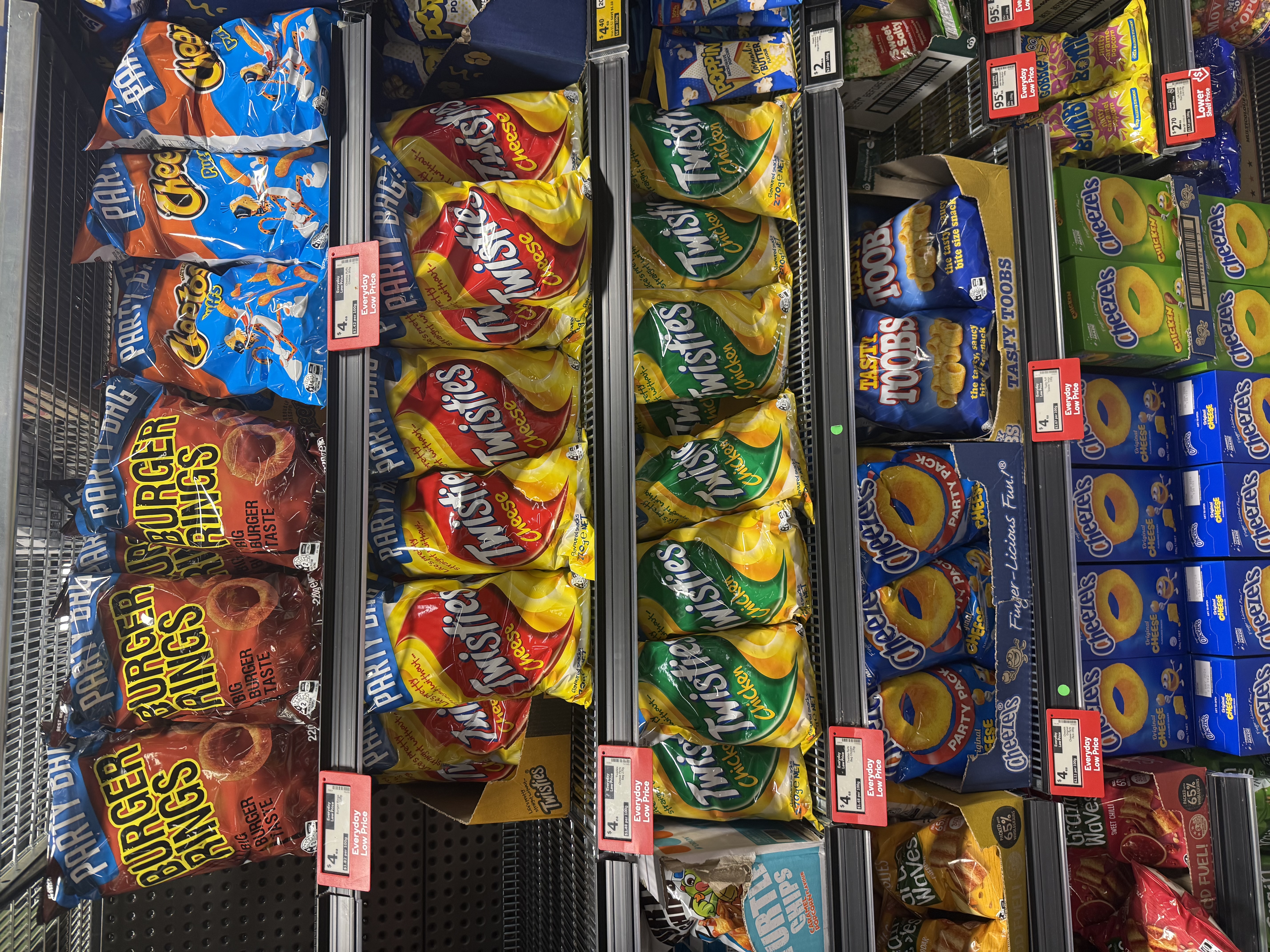
Because Australia's Health Stars system is voluntary, those products that are very unhealthy don't have to display a rating.

David Curnow (Host)
Food, glorious food. I like it for dinner, I like it for tea, a little each day is the bare minimum for me, and most of us. No longer are we mostly hunter-gatherers, scraping the environment for what sustenance we can find. The developed world is now awash in obesity, where the biggest challenge is not eating too much, or eating things that don’t contribute to our ultimate, chubby demise.
Clip from “Austin Powers, The Spy Who Shagged Me”
“Get in ma’ belly!”
Hello, welcome to “Where Are We At With…?” the podcast bringing up to date with the promises of the future, made in the past. In today’s episode, nutrition, regulation and labelling what we eat, and just how much it can do against the relentless marketing of the wrong foods, especially with the rise and rise of ultra-processed foods.
(Clip of Dr Alexandra Jones)
“Everyone wants to eat healthy, but the system isn’t set up for it.”
This week, on “Where Are We At With…?”, just how closely do you look at what’s in the food you buy? Do you ever check the ingredients? And if you do, how many do you recognise? What is maltodextrin, or methylene chloride? And what on earth is it all doing to your body. We’ve come a long way from running down an animal and cooking its flesh alongside seeds, leaves and roots from the world around us.
Our guest today is Dr Alexandra Jones. She’s a public health lawyer and researcher at the University of New South Wales and George Institute for Global Health. A PHD in medicine and health, a masters in law from Georgetown in the US. She received a NSW Young Tall Poppy Award from the Australian Institute of Policy and Science in 2024, and in 2020 was named one of the top Emerging health researchers of the year by the BUPA foundation. Where are we at with food and nutrition labelling, with Dr Ali Jones.
Dr Alexandra Jones, thank you so much for joining me today.
Alexandra Jones
My pleasure.
David
My kids often ask me about food. Dad, is this food healthy? And look, if it's KFC, I can say no, not at all. Maybe if it's like a raw broccoli and kale salad with a few chopped up almonds on top, I can say probably it is. for most of us, most of the time, most of the food we eat is somewhere in between. How hard is it to tell whether a food is healthy?
Alexandra Jones
A very big question. I think it's one of the reasons why as a lawyer that I've actually been drawn to this work because I'm interested in how you define whether something should be captured or not by a rule. I think with food, like you said, it's sort of easy at a high level. Actually, the basic principles of dietary guidance, which very few of us follow, are pretty simple, which are eat more fruit and vegetables, don't eat too much, eat some lean proteins. So we know that. But when we go to a supermarket today and we're faced with 20,000 products and you actually wander down the aisles in particular, the outside of the supermarket, most of that's pretty healthy. Things like the fruit and veg, the plain dairy. But it's when you go down the aisles especially and you start to look at things in packages, it is hard to make that definition of what should be in and out of a healthy diet.
David
I do love that concept. I never even thought of it. The idea that on the outside edges of a supermarket are the places you most likely to find the healthier food. It's a great thing to think about. One of the buzzwords at the moment in nutrition is ultra processed foods, UPFs. What are they?
Alexandra Jones
Yeah, so this is a concept, you know, for a long time, we have talked about avoiding foods that are high in salt, sugar and fat. You know, I think most people are familiar with nutrient focus. The science in recent years has been heading towards recognizing that there's something beyond just the nutrients that's bad for us. And so ultra-processing is a way of sort of categorizing foods according to their level of processing with ultra-processing being sort of the worst group. And they're the focus of where the science is coming out that there's something about ultra processed foods that are linked to ill health in the same way that we know sugar and salt and fatter. There's something beyond that around processing. So these are foods basically that contain ingredients that you wouldn't find in home cooking. So things like emulsifiers, additives, artificial sweeteners, and they're often created using processes that you you couldn't cook at home, you couldn't make yourself their industrial processes, things like extruding a snack to make, you know, a puffed, a puffed cheese snack or things like this. So things your grandmother wouldn't recognize from her pantry, for example. Part of the difficulty is that we don't have a clear global policy definition of it. you will see and consumers are seeing in the news all the time now, increasing discussion of this and a sense that we need to avoid foods that have been highly processed.
David
And to avoid them, we kind of need to know A, what they are and how to spot them. How can we do that? Looking at packets?
Alexandra Jones
Yeah, one general guidance principle we'd have at the moment is if you turn over a pack and you see the ingredients list, a product that's got more than five ingredients is likely an ultra-processed food. So the longer the ingredients list goes on and if it starts to contain numbers and things like that, ⁓ that's a good sign of an ultra-processed food. ⁓ Other things, like I mentioned, extruded snacks, these are sort of like puff snacks or things in weird curly shapes, things that you can't cook yourself. That's a very good sign of ultra-processed food. where it gets a bit harder is things like ⁓ homogenized or pasteurized milks. Processes that we've actually had for a while that we accept are necessary for food. So again, like the other definition, it's sort of some foods are easy to spot and then there's the edges of this definition where we're still debating and figuring out they are.
David
And in terms of what ⁓ Australians, particularly I suppose, or the Western world, are eating at the moment, do we have an idea of how much of what we're eating is falling into this category or towards this category?
Alexandra Jones
Yeah, well, it depends a little bit on how you define it. So we know how much we're selling or how much we're eating or how many calories are coming from it, look around half of our diet, you know, a large proportion of our diet and that would have shifted quite a lot over the last 40 years, you know, from more home cooked foods to more foods that come in a pack that live for a long time on the shelf, you know, without being refrigerated. You know, you've probably got a sense of what's in your pantry and you'd know there's a lot of those foods in there.
David
I mean, I have an idea of what's in my pantry, I definitely do, but at the same time, the thought that about half of what I'm eating, and it may not be half, it may be less, it may be more. But the fact that it's not just a small percentage, that half of our nutritional intake could be these things, it's a little scary.
Alexandra Jones
It is, though I would say it's not that different from high fat sugar salt. We would also say we've known for many years that a large proportion of our diet is that. And these two concepts overlap a lot. So most foods that are ultra processed are also high in at least one of those nutrients. And so it's not that we're totally revising nutrition science. It's rather we're realizing that there's some extra layers of things that weren't captured by what we previously considered that we now also want to watch.
David
And those layers weren't 3D printed on top of the Twisties at the time. Let's take a step back because we talk about processed food and there has been concern over processed food for a while and yet processed food is itself a tricky concept to think about. is processing food, fermenting, making, whether it's alcohol, whether it's cheese, things like that, and that's processed. And early on, some of the processes were about making the food much better for us or less likely to be bad for us.
Alexandra Jones
Yes, so if we want to live in cities and not each of us have a farm and everything, we do need access to food that is safe on the shelf that in the past may have been maybe sold as a preservative on meats. you can understand that lots of these concepts have existed for a good reason. And that is part of the reason why the definition is about ultra-processing and not just processing that, you know, ⁓ it's these newer forms of processing that are the ones that we're really honing in on as a cause of ill health. But yeah, the reason we process food is in a large part due to food safety. And, you know, we sort of take for granted now in Australia that we don't die overnight from food poisoning, you know, but that wasn't always the case. And there's a huge swathes of regulation to make that so, you know, food companies have to do a lot of things to make sure that they don't make us sick overnight. But the challenge for us now is that the majority of Australians are dying from what I would call long-term food poisoning, which is essentially consumption of ultra-processed or sugary, salty, fatty foods over a long time. But because it's a sort of slow-motion thing, we also have been much more reticent to actually implement regulation to stop that.
David
Yeah, it's a fascinating concept, the idea of long term food poisoning as opposed to what does get the headlines like a listeria outbreak or something like that when there is a breakdown in some of the food safety standards. So let's talk then about some of the jumps, because I know that throughout, particularly the last 150 years or so, there were some developments in the way food was manufactured and delivered to consumers and the type of food. Can you think of any of those that were big ones over the last 150 years?
Alexandra Jones
That this sort of historical analysis is not my primary area of work, but I would say, yes, it's in how they're made, much more the rise of transnational food companies that are shipping products all over the world that, like I said, you can find a packet of Oreos anywhere in the world on a shelf. Similar, they can sit there for years without being eaten. So mass producing food in a way that we weren't before, shipping it around the world in a shelf-sable way. The other thing is not just how our food's been made, but what's changed our diet is how food is marketed and sold to us. So, you know, we now have so much, you know, the wallpaper of our lives is food marketing. And so when people tell me or something, you know, I don't want the nanny state or I don't want the government to tell me what to eat. I kind of, you know, just take a step back and think about who is telling you what to eat right now. And it's, know, Uber eats or Coca-Cola billboards or, you know, the subway posters everywhere and these sorts of things. And they are not for the healthy foods that should make up the bulk of our diet.
David
We'll get a little bit later to the idea of profits versus health food and making consumers healthier versus just selling them something. Before we do that though, when I first contacted you, I, a little bit flippantly, let's be honest, ⁓ referred to the movie, Fifth Element, in which the ultimate being, Leloo, basically takes a small tablet, smaller than a pea, puts it on a plate, puts it in a microwave type device, presses a button and out comes a giant roast chicken.
Clip from movie "The Fifth Element"
"Chicken! MMM chicken, good chicken!"
David
How much of processed, ultra processed food comes about because of convenience.
Alexandra Jones
Yeah, it's a huge part of this is convenience and it's linked with other huge shifts in our lifestyle. So if you think about women going to the workforce, for example, and the amount of time that women in particular have spent cooking and shopping in the past, they're still the primary shoppers and cooks in household. But women going to workforce meant that we didn't have the same amount of time to prepare food and we need to get food on the table for families. know, I've worked in this field for over 10 years, but now that I have a small child, I really get some of these concepts of like, I have a very small window to get good food into my child when he comes home from day-care. And so a lot of innovation in food has been targeting this. may also be, know, particularly you see this for people who live say, often in the lower socioeconomic areas of a city on the outskirts, where there might be fast food everywhere. And these people have long commutes to the city. And so it's also, you know, what you eat is greatly influenced by your postcode and, your need to get food potentially in limited hours outside working hours.
David
Another topic I'm keen to get back to in a moment, Dr Alexandra Jones is our guest today on Where Are We At With? We are looking at where are we at with both nutrition, but also perhaps the way we label it and tell people what's in the food and how we make better decisions. She's with the University of New South Wales, as well as the George Institute for Global Health. What do food manufacturers have to do in Australia now when it comes to labelling? What do they need to put on a product?
Alexandra Jones
Yeah, there's a lot of labelling regulations and lots of them are uncontroversial. you know, they have to say where it was made. There's a mandatory country of origin label, which is sort of interesting. You'll have the nutrition panel. So the one we're all familiar with on the back with the numbers, we know how many grams of these and it will tell you per 100 grams. So you can kind of see what percentage of the product, you know, having that kind of standardized information like that is a significant change we've had. don't know exactly when they first came in, but the fact that it's basically on every product now ⁓ is huge for transparency and also provides the basis for using it for other policies. putting a tax on something, you need to know how much sugar is in the product. ⁓ There's also other lots of basic information, best before used by all of those. The name has to be correct. You can't have a misleading name, so you can't. label something with a strawberry if there's not actually strawberries in it. So there's lots of basics. And then where we're going with what I would call front of pack nutrition labelling, which ⁓ has been a large area of my research is we know that most people still don't turn over the pack and analyse that ⁓ panel, even though it's important. So how can we give people quick at a glance information on the front of pack to help them make a better choice? And worldwide, think about 50 countries now have done some kind of label. In Australia, we have the Health Star rating, and that is the rates foods from half to five stars using this underlying algorithm. The main challenge for us in our area of nutrition is that it has been a voluntary label. And so over the last 10 years, we've seen really lacklustre uptake and selective uptake. So I don't think consumers in Australia have really got the benefit of that policy yet.
David
I mean it makes sense if you are a manufacturer of a food that is not getting a great label, it's a half a star health rating, you're not going to be super keen to go slapping that on the front of your packet.
Alexandra Jones
No, and that's exactly what we've seen in our research. So if you score three or above, much more likely to be showing stars, know, thousands of products with half or one star not showing it. There are some exceptions, which I should say is that so Coles and Woolworths home brand products, the private label products, which make up a significant proportion of the supermarket. If you shop in those stores, they have it on everything, regardless of what they score. So, and that does have the impact of sort of creating a bit of momentum in the category. So if you look at two products on a shelf and the home brand one has the star and the other one doesn't, for them, I think it's a bit of ⁓ a value add for their home brand, but also they make money off whatever you buy. they're less invested in sales of particular one product.
David
Yeah, I don't know whether we can get into then. Would you choose the one that does have a half a star or the one that doesn't have anything? So it could be better. I don't know.
Alexandra Jones
Well, there is science that shows that I think a half star does turn you off more than having no star.
David
Okay, I also want to say that reading through some of your papers, as well as other industry reportage, the acronym for the front of product labeling is fantastic, FOPNL I just like FOPNL, it's fantastic. FOPNL. What about statements like high in fibre? How do we compare it mean compared to a glass of water, compared to our other products, or just certain number of grams per serve?
Alexandra Jones
FOPNL
Yeah. Yeah, we have regulation around that and our regulations are based on sort of global norms of that. So it's about the percent, it's about an amount that you have in that product, although the amount's based on a proportion you should have in your diet, which would be like an adult male. So, you know, there's some standardization there that wouldn't apply to everyone, but basically if something is high in fibre, it's got to have more than a proportion of your daily recommended, recommended intake of that. You know, if something says it's low in sugar, it does have to have below a threshold like proportion, I forget exactly off the top of my head, you know, but it might be below 2 % or, you know, below 5%, something like that. So those things are regulated.
David (sidenote)
OK, so I checked this out. Food Standards Australia and New Zealand say low sugar needs to be less than 5g of sugar per 100 grams of solid food and 2.5 grams per 100 for liquid. Also, you can't claim something has no added sugars if the original substance already has more than 10 grams of sugar per 100 grams of solid food, and 7.5 grams per 100 ml of a liquid. This podcast for instance? No added sugar, because it's already sweet enough. Back to Dr Jones.
Alexandra Jones
We do have a lot of things that are what I would call sort of fluff claims in between. So words like natural, people think it's healthy.
David
Yeah.
Alexandra Jones
asbestos is natural, like sugar is natural, but they know that, you know, a natural confectionery company, you know, contains natural flavours, contains natural colours. people obviously associate that with, it's healthier, but it's not necessarily. So those things are widely used and there's no sort of cap on that. It would be the same in an environmental context with just the term sustainable.
David
Yeah, dirt's natural. Yeah, don't get lawyers started on using the word sustainable in marketing. I know a few who struggle with that. ⁓ It's a bit like putting "flushable wipes" on the toilet wipes. Yes, they're flushable in the same way that a piece of Lego is flushable. Don't do it. What about unpackaged foods? When I buy an orange I don't see that. When I buy a steak from my wonderful local butcher I don't see that. Are they differently regulated?
Alexandra Jones
Yeah. Yeah. Yeah, packaged foods have a higher level of packaging information requirements. ⁓ There are requirements on foods that are not for retail, like the packaging of food that's not for retail sale. if, say, a bunch of legumes arrived to a wholesale store in a bag, it would have to have certain things on the bag, not the nutrition information necessarily, but there are labelling things for things that aren't in packs. There's no label for what's on a cow before you cut it up. So no, there's quality standards for those products still, but you won't see that information on the label.
David
Is labelling the only mechanism to effectively have an impact on consumer choices?
Alexandra Jones
Absolutely not. mean, I would say that most of the best foods don't have packages. So, you know, in terms of dietary advice and we're not, we don't want to see a whole lot of, I know vegetables and fruit are being more sort of half prepared by supermarkets and packaged for convenience again, but we don't want everything to go in a pack just to give people more information about it. We do want them to eat, you know, whole foods that aren't in packs. But aside from labelling, you know, this is a little bit like tobacco. From a policy perspective, it's similar to tobacco control, where we know that the package of cigarettes in Australia has been hugely regulated and is important. But the gold standard for policy is to have a comprehensive range of actions that would include taxation. in a food context, subsidies on healthy foods and taxes on unhealthy foods, things like standards of what sort of food we serve in schools and hospitals.
Marketing restrictions, huge one, particularly, you know, digital marketing now, things like that, which we haven't really touched in Australia. Or ⁓ other product standards like we've had policies to reformulate products to encourage companies to cut sugar and salt. But we could also have a maximum level of salt or sugar in a key product in the same way that we have a maximum level of other toxins, like the things that make you sick overnight. So you know, we could also, if we wanted to, if we had the political will, there's sort of regulatory precedents for doing that kind of thing too.
David
I'm reminded of, is it Ireland where effectively because of the percentage of sugar in Subway bread, had to be taxed as cake or something along those lines. that, that's the sort of thing we talk about?
Alexandra Jones
I think I've seen a headline like that. Yes, that's true. even at a basic level, something like the UK sugar tax on soft drinks is taxed on the amount of sugar in the product. Overnight, we saw most companies remove sugar from their product to put it at a, so it wouldn't get taxed at the higher amount. What we have seen there is substitution a lot with artificial sweeteners, which the, there's a lot of scrutiny in that area. And we do think that they're less harmful than sugar, but I wouldn't necessarily be encouraging people who don't have a sugary drink habit to start one with a diet coke habit. But we do know that those sorts of levers are very effective for getting companies to change their behaviour.
David
You mentioned tobacco as well. You've done quite a bit of work in that field as well as food and nutrition labelling and marketing. Tell me about the correlations there because as you said, are packages, the Australian packages are particularly ⁓ unique, I suppose, around the world with some of the approaches taken there. And yet people still are going to buy tobacco. ⁓ The same when it comes from a food perspective, there's only so much that those things can do, isn't there?
Alexandra Jones
Mm. Yes, people are still going to buy tobacco, but we do have some of the lowest cigarette smoking rates in the world. And we have taken a precautionary approach to vaping that is challenging, but I think we're doing better than a lot of other parts of the world on that. it's our smoke-free policies. It's all those policies together. And we also have huge rates of taxation that have brought down smoking progressively. In a food context, A, it's harder because the goal is not zero use for smoking, the regulatory goal is zero use. With food, we have to eat, which is why we get into these debates about what's healthy, like what's in and out. And we can spend a lot of time on that. But I think what we haven't done in Australia is implement mandatory policies. So we've been stuck in an approach, which is very different to tobacco, where we have had the food industry at the table, developing regulations and then implementing them like the health star on a voluntary basis and saying, everyone can do this in a nice way. And it hasn't worked. Even where the objectives of the policy and maybe the underlying evidence is there. We know people do understand what a star rating means. They can use it, but they've sort of been let down by 10 years of voluntary operation. It's done nothing really to build their trust in the system because it's just allowed the food industry to use it as selectively as a marketing tool. And it hasn't reached its full potential as a public health tool.
David
One of the other things that you've been involved in is assessing the outcomes of some of these policies and seeing what effect they've had. How do you go about doing that? How can you tell whether something has been successful or not?
Alexandra Jones
Yeah, I mean, there's lots of different types of studies we do. And one of the major pieces of my work is that we hold a database of the food supply. So every year we capture the packaging information for about 30,000 products. And so we can tell you, know, are they changing their label? Are they changing their nutrition content? What products are there more of? You know, sometimes we are able to link it with sales data and see whether there's actual changes in sales as well. So by doing that, we can see that something like the Healthy Food Partnership, which has been a strategy in Australia to reduce salt and sugar, has had very little impact. And that's, you know, we could have predicted that because it's voluntary, but we can show it very clearly by having this longitudinal analysis of change over time in the foods.
David
And when you do look at those empirical statistics, when you look at the changes over time, how little difference are we talking? Are things going up, down? Just stay the same.
Alexandra Jones
Yeah, they've usually, the problem is that often the target is mediocre from the start. So even if you say, well, we've met the bread target, but you can say, our target was so lame that that's not going to have a meaningful difference on heart disease in Australia. And in some categories, nothing's really changed. There was a category, there's reduction targets for saturated fat and nothing's really happened there in processed meats, for example. I think there has been sugar reduction in some products in part driven by consumer interest in that probably more so even than just the voluntary policy.
David
Okay, so part of the challenge when you're assessing these sorts of things is looking at what evidence shows from the product itself. What about consumer response to it or consumer interaction with it? How do we assess that?
Alexandra Jones
Yeah, so we can do a couple of things. So in the early days of policies, or even in the lead up to policies, we're often doing experiments with people. So, you know, we'd put them on a computer and might have even like a simulated supermarket, but we're just testing, we'll show them two products, you know, would you be more likely to buy this one or that one? Can you understand this label, you know, show them to Health Star ratings, and do they pick the one with the higher rating, you know, ask them to pick the healthier one and see if they. So we know from that kind of thing that people, like I said, people understand Health Stars, they can use it to pick a healthier choice. But the trouble when you come to looking at how these policies perform in the real world and assessing consumer behaviour is that, well, if the label's only been on about a third of products, then people, they can't use it to compare products, really. They can't use it to make a healthy choice. So, you know, even saying that, if you survey people, they will self-report saying that they like it, they can use it. ⁓ But I think in terms of what it's actually done to change their behaviour that we can't assess that fairly in a voluntary system. It hasn't reached its potential, we know that.
David
Internationally is there much debate about efficacy of these sorts of programs among different scholars different people looking at it
Alexandra Jones
Yeah, so World Health Organization puts it in its bucket of recommended cost-effective policies, front of pack nutrition labelling broadly. So there's no doubt that we need these kind of policies that definitely don't seem to do any harm. It seems like they do some good and it seems like they might do even more good if we link them with marketing restrictions and things like that. So basically a product that has a low star rating couldn't be marketed to children. You'll see countries which have done a better job at linking label and then you get more effects as well. What the World Health Organization and the International Food Standards Agency don't say is that there's one type of label we should do. And so, you know, our label is over 10 years old now. In the intervening period, there's been a lot of different innovation worldwide and some countries have gone for, there's sort of two poles of approach, I would say, that both have evidence behind them. One is Australia's model, which is very similar to what Europe has. Europe has an A to E rating, but it's similar. It's an overall rating, very similar algorithm underneath. And then you have countries like South American countries who have gone for a different approach, which is just warning labels. So stop sign octagons on foods that say, you know, warning high sugar, Ministry of Health. ⁓ And so there is sort of academic debate about which one of these work best but they achieve slightly different things. And because the ones we've had have been only voluntary, it's also hard to compare their real world efficacy because obviously the warning labels have been mandatory. Otherwise nobody would have put them on.
David
The resistance one assumes to mandatory labelling is the food industry. Is that the main issue? Is it cost? Is it we don't want people to know what's going in there?
Alexandra Jones
Yeah, it is the food industry, obviously the manufacturer of especially unhealthy, cheap to make, but unhealthy products. when we say the food industry, we should be more nuanced than that because the food industry is huge. But it's not the vegetable producers that are complaining about this. And they're never the ones at the policy table either. It's the Coca Colas the big companies. ⁓ I think that they talk about the cost to labelling for sure, but they change labels all the time. So for example, I did a study of at least from even from a policy perspective. So Australian government implemented a new mandatory country of origin label. ⁓ It did so after a scare of hepatitis in frozen berries from China, which made some people sick. Nobody died, but it created a window of political opportunity, I think, to have this new mandatory label and
industry were given two years to put it on their products and 93 % of them did that in those two years. In the same period, Health Stars was operating and most of them chose not to put on Health Stars at that time. And so you can see that while they would say it's about the cost of a label update, it's obviously about more than that. And we know that from, you know, even just anecdotally looking at cereal packets and seeing how many different competitions they might have on their packs in the year or you know, there's a new high protein version and you know, so from a marketing perspective, they're able to change, but they don't want to pay for the cost of a label update if it's likely to decrease the sales of their product.
David
Dr Ali Jones is our guest on Where Are We At with today. We're talking about food, nutrition, labelling. She's a public health lawyer and researcher at UNSW, as well as the George Institute for Global Health. Now, you mentioned some of your motivation for getting into this particular field earlier on. You have an arts law degree, a master's in law from Georgetown in the US, a PhD in medicine and health. You're not mucking about here. What was the inspiration? When you started university, what were you thinking?
Alexandra Jones
Academics are the worst at just continuing to study. ⁓ What was I thinking? I was thinking, you know, I entered law because I care about the pursuit of social justice. I did have a brief stint working in a corporate law firm and that confirmed that that was not why I wanted to practice law. I did learn a lot there. You know, I'm grateful for that experience, but in terms of values and what motivated me in the work, was very clear there. So how I ended up in Georgetown was that…
David
Ha ha ha!
Alexandra Jones
…the masters there is a mix of public health law and international law. And I'd say about half my cohort went on to become pandemic preparedness specialists and they've had very big careers in the last few years. And the other half of us were working on what we call chronic disease. know, heart disease, diabetes, cancers, these things kill majority of Australians, but also majority of people in low and middle income countries. And they are caused by four behaviours, which are unhealthy diets, smoking, alcohol consumption, and not enough movement. And so the vectors of those disease are not a virus. It really is the behaviour of transnational corporations selling us unhealthy products. And so if you're a lawyer interested in that area, then your motivation is to regulate those products better and to change our environment so that we are walking around every day where it's possible to make food and I think everybody actually does want to live a life where they're eating healthy food that helps them feel energetic and mentally well and all of these things but our food environment currently is set up to make that really difficult even for the most motivated individuals and I think that's what got me into this work.
David
Yeah, and look, I can second that as a busy dad trying to get kids to eat the right thing as well. That's another challenge where I'd never really thought about it too much when it came to me. I knew that I probably should eat healthier, but gee, I really need to make sure I'm doing the right thing for the kids, but not scaring them. You're to have treats, all this sort of thing. It makes it very complex, doesn't it?
Alexandra Jones
It does. And you it starts really young. You know, you just mentioned kids, but there's been a lot of focus on the creation of foods for toddlers lately. You know, the dietary recommendation is that toddlers should eat family foods. They should be eating the same foods you and I eat, maybe with a bit less salt on it. But you know, it looks like whole food. But what we've seen pop up is a new category of toddler, especially snacks in the supermarket. And now everywhere you go, you see people feeding their kids stuff in pouches, those squeezy pouches, because they don't make a mess. And and other extruded snacks that might have some vegetable flavour, but are not really vegetables. And that is a deliberate creation of the food industry of a new category.
David
Yeah, they can always find some on the market too and by goodness, you can spend a bit of money on it. Very quickly, I want to talk about the fact I mentioned, obviously, you're at UNSW at the moment, but you're working with the George Institute. What is that? Because a lot of Australians, we know about some of the universities, but some of these institutions that are working towards things like global health, what do they do?
Alexandra Jones
Yeah, the George is a medical research institute that's part of UNSW. Our mission is to improve the health of millions of people worldwide. We basically do that through research. We're not a lab-based organization. We really are ⁓ out in the field doing population health studies, doing clinical trials as well. But how the food policy team grew up there was that we were working on clinical trials for drugs to treat heart disease, diabetes, these sorts of things. And some of the people, the founders of the institute were like, we need to work on the prevention of these things. We can't just go to the treatment end. Life would be better for all of us. It would be cheaper if we address this by preventing it in the first place. But the trouble from a political perspective is that prevention, it's a little bit like climate science and action on climate is we're talking about long-term things and it's very hard to create political momentum on those things.
David
Long-term and incredibly broad scale. I would say when you look at a food industry where that 50 % of the calories or 50 % of the intake is products that we shouldn't really be having or should be considering more, it's a difficult thing to effectively wind back or undo.
Alexandra Jones
Yes. And you know, we need to change the product, but like we said, the food is also part of it. We need to look at, you know, we can't just tell people, stop eating ultra processed food unless we're going to give women two hours back in the day to cook a lovely, you know, or the money to buy all the lean proteins and all that. Men too, for sure. But the science definitely says that women, in terms of time spent, it's still disproportionately borne by women.
David (interrupting with some man-splaining)
And a few men…
Alexandra Jones
Yeah, we need to, a response needs to support people to live and choose a healthy diet in lots of different ways, I guess.
David
You also mentioned just before about some of the disproportionate effects had in different communities. Can we talk briefly about that cultural, societal, socioeconomic differences when it comes to the impacts of these sorts of things?
Alexandra Jones
Yeah, I mean, all of those things are basically risk factors for having a poorer diet. know, rural and remote areas, you know, we know that and we know the price of fresh produce in many parts of Australia. You know, you see photos of a lettuce in the outback that's, you know, $17 or something, and it might already be quite brown. you know, yes, if you live outside the city, you can have poorer access, poorer access to the food and also poorer access to the health services that you might need if you have the diseases from eating a poor diet. Aboriginal and Torres Strait Islanders also have higher rates of things like heart disease, diabetes. So ⁓ all of these things, yeah, we really need to address food systems. When we talk about food systems, then equity is also really important to address. We can't just have solutions for the worried well. that is sometimes one of the critiques of labels, is that the people who most read labels are probably the people who don't need to read them as much. I mean, so ideally what we want is that we're not just relying on individuals to make better choices. That my ideal impact of a labelling policy is that the food company just produces a better product in order to get a better label. Or, you know, they just cut salt and sugar from the product. It doesn't actually matter then if somebody reads the label or not. We've just improved the healthiness of the food supply overall.
David
So effectively creating change at the very beginning of the chain rather than at the end where the consumers are making that decision.
Alexandra Jones
Yeah, and I think that is one of the ongoing challenges in food is this individual responsibility versus government or the nanny state. I don't like that term, but it's taking a public health approach. And it's not that we need one or the other. We need both but you often see things put back on or put back on parents for their children and things. And it doesn't recognize the environment. I like to think of it almost like a road safety analogy. in road safety, sure, we license people, so we educate them about how to drive safely and everything, but we also design the roads, all the rules, traffic lights, lane markings, all these things to guide you well, to avoid accidents.
David
and airbags in cars and things like this.
Alexandra Jones
Yeah, and all of that seat belts, but in food, you know, we do need nutrition education, you know, there'll always be calls for that. And I think we could do better at that. But even if we educate people, and they even if they had a nutrition license, you're setting them out on a street that's totally set up to fail them, like the whole supermarket, the end of aisle displays, the two for ones, the pricing, the marketing, the contents of the product. you know, we've got to work on both of those things.
David
We've touched on marketing and you talk about the idea of subway stations with lines and lines of ads wherever we go, we're just swamped with this sort of thing. mean, 150 years ago, Coca-Cola or a little bit less Coca-Cola could say it basically cured rheumatism, baldness and impotency. These days you can't make claims like that. And yet marketing is almost more prevalent and ubiquitous everywhere we look.
Alexandra Jones
Well, Coca-Cola is happiness now, David. And so, you know, it's more broad than that, right? We're more sophisticated in our marketing and we're also much more targeted. So, you know, I open my phone, I open it at night if I'm a woman and I might get some stuff around what to feed my kids or, you know, ⁓ women who are breastfeeding can get ads for toddler milks and stuff like that, you know, landing in their phone at night when their baby won't sleep. So companies have access to us in ways that they haven't before as well.
David
And in terms of the way that's used, even things like on the front of a packet where it's not targeted at you specifically, but it is targeted at you because I know that someone like you will be coming along this aisle looking at it. If you put a picture of fruits and vegetables on a package where the product itself isn't fruit and vegetables, does that make it healthier? Does it make people choose it more?
Alexandra Jones
It increases the perception of healthiness. And, you know, we'll see that with ultra processing, you know, like maybe something like a roll up and then on the pack there's, you know, an actual strawberry and in the end what you're getting is basically like a strawberry sugar syrup that's been distilled down, you know, so, yeah, challenging.
David
Yeah, it's just been steamrolled. That's all it is. And extruded, back to that word, extruded, let's talk about ultra processed food again, specifically when it comes to ratings, because we talk about the Australian Health Star ratings, and that's been something that's been implemented for a number of years now. What's the NOVA rating when it comes to processed food?
Alexandra Jones
Yeah, so NOVA isn't so much a rating, but it's a way of classifying food. Yeah. And it's emerged from ⁓ some scientists in Brazil, Carlos Monteiro being the most well-known recognized, I guess, the initial author of this. you know, I think there's been other people talking about processing, but NOVA has taken off. And it is this idea of foods that are industrially produced, mass produced, containing sweeteners.
David
Classification, yeah.
Alexandra Jones
You know, the other categories of NOVA aside from ultra-processing are processed. So it's still got some processing, but it's not ultra-processed. Sort of culinary ingredients, which are things like oil, sugar, salt. It's a small category. ⁓ And unprocessed or minimally processed food. So that's like fresh fruit and vegetables. And so it's just got these four groupings and it's the ultra-processed ones where the newest science is looking at associations of eating diets high in those foods and having linkages to mental health outcomes, cancer, diabetes, all the things that we want to avoid.
David
What sort of correlation is there between Health Star ratings and this NOVA classification? Can we see any link?
Alexandra Jones
Yeah, well, like I said, there's a lot of correlation between high fat sugar, salt foods and ultra processing. So we have looked at ⁓ whether the Health Star rating captures ultra processed foods. At the moment, it's not in the algorithm. So it's not directly going to do that. And there have been a lot of calls from health groups for this and including from the George Institute, we've been modelling what it could look like to put ultra processing in the algorithm. It's not in there and we can, we can come back to talk about some of the policy challenges of getting there. But I think what we see right now is that overall, if you look at what Health Star would put on every product, so that's not what consumers see, but it is what I can see at the backend if I put the algorithm over everything in our database, it gets it right most of the time in terms of alignment with our current dietary guidelines, which don't take into account ultra-processing either. But what we've also seen, so it's getting it right most of the time, but that's not what people really see when they shop because they see the selective use of it. But what we have seen also is a lot of attention on what we'd call outlier or anomaly products, which are clearly ultra processed, which have managed to gain that algorithm to get a high score.
David
I was going to ask about that. The idea of an algorithm means that effectively data is going in, data is coming out. It's using certain inputs to come up with an answer. And as we all know, any company that wants to make money is good at gaming those algorithms, whatever they might be. How easy is it to do?
Alexandra Jones
Yeah, so yeah, to just talk about what goes into the algorithm for people, guess, to understand. So basically you lose points for salt, sugar, fat and energy content, which are all, you know, associated with disease. So it's fine, but you can get some points back for protein, fibre and fruit and veg content. And so this, this allows a balancing. And I think where you see products that ⁓ get a high health star rating that are ultra processed, it's most often because they have added protein and fibre. ⁓ that's how, so, you know, a classic example would be a NutraGrain. And, you know, other examples would be ⁓ low sugar confectionery that's been popping up a bit, which has artificial sweeteners in it and the confectionery might otherwise be made up of these sort of weird fibres. So it's definitely an ultra processed product, but it's not high in sugar per se, it's not high in salt. So it's managed to get a good score.
David
And that makes it tricky, I suppose, not just for regulators, but also for consumers looking at it going, well, I know that's not super healthy, and yet it says it's not terrible.
Alexandra Jones
Yeah. Yeah. Yeah. It's, I think it's harder for regulators than consumers, to be honest, because regulators have to come up with a rule. And, you know, it's very frustrating for me when I see a product get a score that I don't want it to, because, but as a consumer, on the, you know, I think it's actually quite a good thing that people talk about these products because they know they're not healthy. So they're saying, you know, well, you know, they could use the star to buy it.
David
Okay.
Alexandra Jones
But they could just trust their gut and be like, okay, it looks like Nesquik has done something dodgy here. And I don't believe them that it's healthy, so I'm not going to buy it. You I'm going to keep buying. you know, the hard part for the policy overall and the potential promise of the policy is that it's undermined trust.
David
Yeah. And look, we appreciate that. I think a lot of people understand that it's, it's easy to say we should try and do something, but to write good laws, to create good regulation that picks up as much as possible and does as much of the best thing as possible. That's hard. And that's what people like you are trying to do.
Alexandra Jones
It's hard and I think on the plus side, good nutrition is about dietary patterns. So it is really about our dietary pattern overall. It's not about this every single product getting exactly the right score. And so, you we do think it gets most scores, most foods about right. And if you do data studies where you link up high health star rating diets with disease, they have better disease outcomes. So if you tried to follow a diet that was of foods that had higher health stars, should lead you in the right direction. But I think people also love to have these gotcha moments of food and focusing on individual products. And it's a good thing, but it's also a challenge for popular support for the policy.
David
Yeah, I blame the media, journalists, they're the problem, let's be honest, in most situations. It also leads to asking about things like, so that you talk about the algorithm and how it assesses things and diets, not necessarily weight loss diets, but a big push for low fat, as we talked about, or reducing sugar, that, well, so low fat ended up being more sugar in things to compensate. Low sugar ended up more artificial sweeteners, which we know are a challenge as some of these say trends, but discoveries and opinions moved along in the years. Has that changed things like the algorithms or how we assess these items?
Alexandra Jones
I'd say like one area where we currently seeing interaction between a trend and the algorithm that works for them is high protein, which also is maybe reflected in the recent American dietary guidelines too, that there's sort of this fixation on protein, even though most Australians already get more protein than they need. that, know, ideally we want to be getting that from whole foods, both plant-based and meat. People think of meat, you know, it's also plant-based sources of protein. And ⁓ but what we ending up with in the algorithm is, you know, NutraGrain, it's like protein powders and protein bars and things that we just, they're not a necessary part of the diet, but the current policy would allow promotion of that kind of thing.
David
I suppose that's another aspect too, the idea of what is a food, what is a supplement and are they regulated differently, that sort of thing. That makes it a little tricky as well.
Alexandra Jones
Yes, there are boundaries around that. I mean, I do think as someone working in regulation in this area, I it's, I remember going to a lecture, initial lecture with someone where they wrote, you know, caffeine, Panadol, ⁓ and like food, forget what they had as a food, but you know, we make choices about which box we put these things in and whether they're treated as a food or a drug or a supplement. And sometimes those decisions are cultural or historic rather than, you know, grounded in where it has to go.
David
Speaking of challenges, one of the challenges when assessing nutritional value is when we look at ultra-processing anyway, humans evolved to eat and digest certain foods. We didn't necessarily evolve to digest maltodextrin or methylene chloride, hydrogenated, grape seed, all these sort of things where they're created. Does it change the nutritional value of the foods themselves?
Alexandra Jones
That's a difficult question, I think, for me to answer as I'm not a food technologist per se. I'd say, you know, it won't show up on the nutrition panel, for example. But where I think it's interesting and also most of these things will not make you sick overnight because our laws would stop that, you know. But we don't know the long-term impact of consuming diets high in all of these things. So there is a lot of interest, for example, in researching the microbiome and changes on the microbiome of these things. Or also the impact of these things on mental health. Like when we're about additives and preservatives, it might not influence your obesity, but it might influence your attention span. And some of these things could be good to focus in on actually, because from my perspective and policy interests, things that have a shorter term impact, or maybe young people care about their mental health more than long-term heart disease risk. It's a more prescient thing. So I think the more we recognise these things and try and address them, it's better, but it does sort of cause a splintering of interest groups and people in the space.
David
And we do know that some foods affect some people differently. The fact that I have to avoid Ribena or I get a little bit excited, ⁓ you know, it does change depending on the individual.
Alexandra Jones
You, yes, yes. And dietary advice will always have to be like that where we've got these broad brush principles of things we know are good for us. you know, whether it's cultural or your own preferences or your body's biological reaction, you you've got to have a tailored approach.
David
When we were communicating early on, you raised a point which I hadn't really factored into nutrition and food labelling and things like that. And that's the rise in medications which can effectively make you less hungry, semaglutides, Ozempics, Wegovys things like that, which in a sense are almost creating a position where, we just need to eat less. We'll lose weight and we'll be healthier. Doesn't matter what we eat then.
Alexandra Jones
Yeah, it's a lot of discussion in our field around it and fascinating sort of and challenging from an ethical perspective. Public health groups for years have been asking for government action on obesity and the policies that I mentioned, know, labelling taxes, marketing restrictions, they're the things we've wanted that there's evidence for, but there's a huge implementation gap worldwide, you know, particularly in Australia, we're not a leader in implementing. And so at the same time, we have all these people who are currently obese, you two out of three Australian adults are overweight or obese, one in four kids. And we have these drugs that were developed for type two diabetes, but have had this side effect of making people lose weight that are very effective. you know, there's a lot of people currently already quite overweight who are benefiting from these drugs. And so if you're a, ⁓ a doctor who's treating, you know, people with severe obesity, these drugs are a solution for your patients in front of you. And so we do want to make them available. But they are very expensive and very expensive on a health system if the government is going to subsidise them. And because this is a socio-economic issue, I think we do want to subsidise them. We don't want to say it's only for people who can afford it. But the challenge there is then will they take their foot off the brake on this prevention? And also, think, which is a high risk because they've not really shown a lot of impetus on prevention already. So it gives them something they can do to say they're addressing it. But there's also this thing of well, then we're just going to let the food industry make huge profits off making us fat and then make an inlet another industry make huge profits off selling us a drug we've got to use for the rest of our lives to stay thin.
David
The Venn diagram of "trying to make the most money possible" and "trying to make the healthiest food possible". Can they converge? Can they be anywhere together?
Alexandra Jones
Yeah, look, I would hope so. I mean, if we want to support Australian farmers who are making fruit and veg, know, there's a lot of, there is money to be made from healthy food. You know, it's, but as long as it's easier to make money off unhealthy food, you know, think the thing is the impetus is there, I guess.
David
Okay, ⁓ can we, and this is again something probably not necessarily for somebody working in the regulation space like you, but I'd be interested in your thoughts. Do you think currently we can feed the world with only healthy, sustainable, climate friendly foods ⁓ with what we have on hand right now?
Alexandra Jones
That is a massive question. But no, but look, I don't know the metrics off hand, but I feel like when I do see this discussed, people would say there is enough, but currently, know, the way food goes around the world is not equitable. You know, that we do have the capacity. With a changing climate, we're certainly going to have to get smarter about how we make food because we can't...
David
Yeah, feel free to, you know, just knock off an answer and solve world hunger for me, you?
Alexandra Jones
...probably a lot of the way we're making food now is damaging soils, is inefficient, it's using too much water, and so we can't sustain what we're doing. But there is a lot of food out there. We have made huge strides in addressing malnutrition, but at the same time, we now have families in Africa and stuff that are having obesity as the major problem in their house. So there's the quality of the calories and making sure that that's equitably distributed. I think that that is a huge global challenge.
David
Finally then, what can we, when it comes to where are we now with nutrition, what can we as consumers do to ensure we're making the best decisions possible in the environment that we're living in right now?
Alexandra Jones
Yeah, ⁓ well one, you could shop around the perimeter of your supermarket. think that's, you know, that is a good general rule. You know, take an interest in the, in your food. You know, I appreciate you've got a balanced convenience and you're not always going to be doing home cooking from scratch, but making sure we retain a connection to our food. mean, that, that to me would be one of the saddest things about the example you, you described with the chicken in the microwave or, even just relying on GLP-1 drugs is that food is so much more than just nutrition. It's about connection to family, it's social connection, it links with history and agriculture. And so, you know, just taking an interest in food, the more you cook yourself, the healthier you're likely to cook because the reality is that the way food's prepared in restaurants and things like this is just less healthy. So, you know, if you've got local farmers markets and things, great, you know, go there, actually meet the producers of your food, be a bit more connected to the food system. And then if you are reading labels, read them. You can also use apps, we produce for example, Food Switch, it's a free app, many have, you can download, which will tell you, it'll give you for example, the health star rating of every food, even if it's not on the pack, and then it will tell you healthier products in that category. ⁓ We've also got filters that would allow you to see more sustainable options, or if you're hypertensive. We'll show you lower sodium options, things like that. Another popular one is the Yuca app. I know many people are using that right now. It's one of the leading downloads, I think, in the wellbeing apps around the world. So people are interested in this stuff. So you can inform yourself. But again, relax. Food should be enjoyable. So you don't need to analyse every piece of food you eat. If you generally eat whole foods, like less things in packs, more fruit and veg, you'll be doing fine.
David
Do people get nervous when you walk in the room? Am I eating the right thing?
Alexandra Jones
Sometimes they do, but I just generally tell them that I'm not the food police. I really am here to try and ⁓ impact change on those upper levels just so that the food supply is better for everyone. I really don't mind what you're having for lunch.
David
There's a lot of work for you to be done in this space for a long time yet, but we really appreciate sharing with us what you're doing so far. Dr Ali Jones, thank you so much for your time today.
Alexandra Jones
Thanks, David.
Concluding comments
Thanks again to Dr Alexandra, Ali, Jones, and if you go to our website you can find links to the George institute for global health as well as the apps she mentioned there like the “FoodSwitch” app developed here in Australia by the George Institute. Yuka, the French originated alternative is on most app sites as well.
Our site is www.wawawpod.com, that’s www.wawawpod.com.
You can also find the transcript of the show as well as other episodes and an idea of some of the episodes we will feature in the next few weeks.
Next time on “Where Are We At With…?”
Clip of Dr Warren McKenzie, HB11 Energy
“It's about three billion dollars per year going into fusion programs, but it's about to ramp up a lot. Really, really a lot. Most governments know that energy and quality of life are essentially correlated exceptionally well. Whoever has the most energy is gonna lead the highest quality of life because energy itself runs the economy. And that's absolutely more true now than any time in the past.”
David
It’s the promise of immense power, but will it happen, and who will be the new energy superpowers as fossil fuels are phased out. Where Are We At With Nuclear Fusion? And what is Australia doing on the field with all the big kids?
Feel free to send us an email with your thoughts for future topics, as well as any questions you have about them. Don’t forget you can also watch the video of the show on Spotify and YouTube, featuring our wonderful guests, and special command performances by my eyebrows. Music for the show is written and performed by Michael Willimot, production assistance from Claire McMillan, Jenny Newton and Annie Pappalardo.
I’m David Curnow, Goodbye.
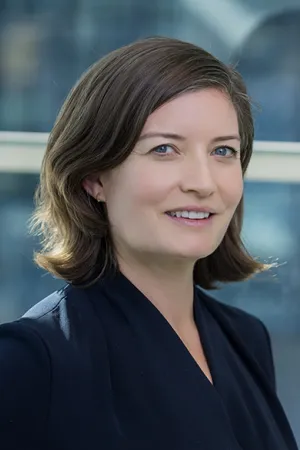
Program Lead - Food Governance, The George Institute for Global Health
Program Lead - Food Governance, The George Institute for Global Health
Conjoint Associate Professor, Faculty of Medicine, UNSW
Ph.D. (Medicine and Health), LL.M. (Global Health Law), LLB, BA
Alexandra Jones is a public health lawyer and researcher leading a program of work on regulatory strategies to promote healthier, more sustainable diets. Her work uses an innovative mix of law and science to generate evidence that supports policymakers to design and implement policies with maximum public health impact. She works closely with UN agencies, national and state governments, public health and consumer organizations, and academic collaborators to translate evidence into effective action.
Ali’s current research interests include food labelling, composition, pricing and marketing policies. She also supports the Institute’s growing work on the commercial determinants of health. Her PhD explored Australia’s Health Star Rating system and similar front-of-pack nutrition labels used worldwide. Its impact can be seen in important reforms to the Health Star Rating system, and in the terms of international food standards being developed in this area.
Ali has previously worked on global tobacco control, and in health and human rights. She holds a PhD in Medicine and Health from the University of Sydney, a Master of Laws in Global Health Law from Georgetown Law (Washington, D.C.), and a Bachelor of Arts/Law from the University of Sydney. Ali is currently supported by an NHMRC Emerging Leadership Fellowship.