Where Are We At With Military Drones?
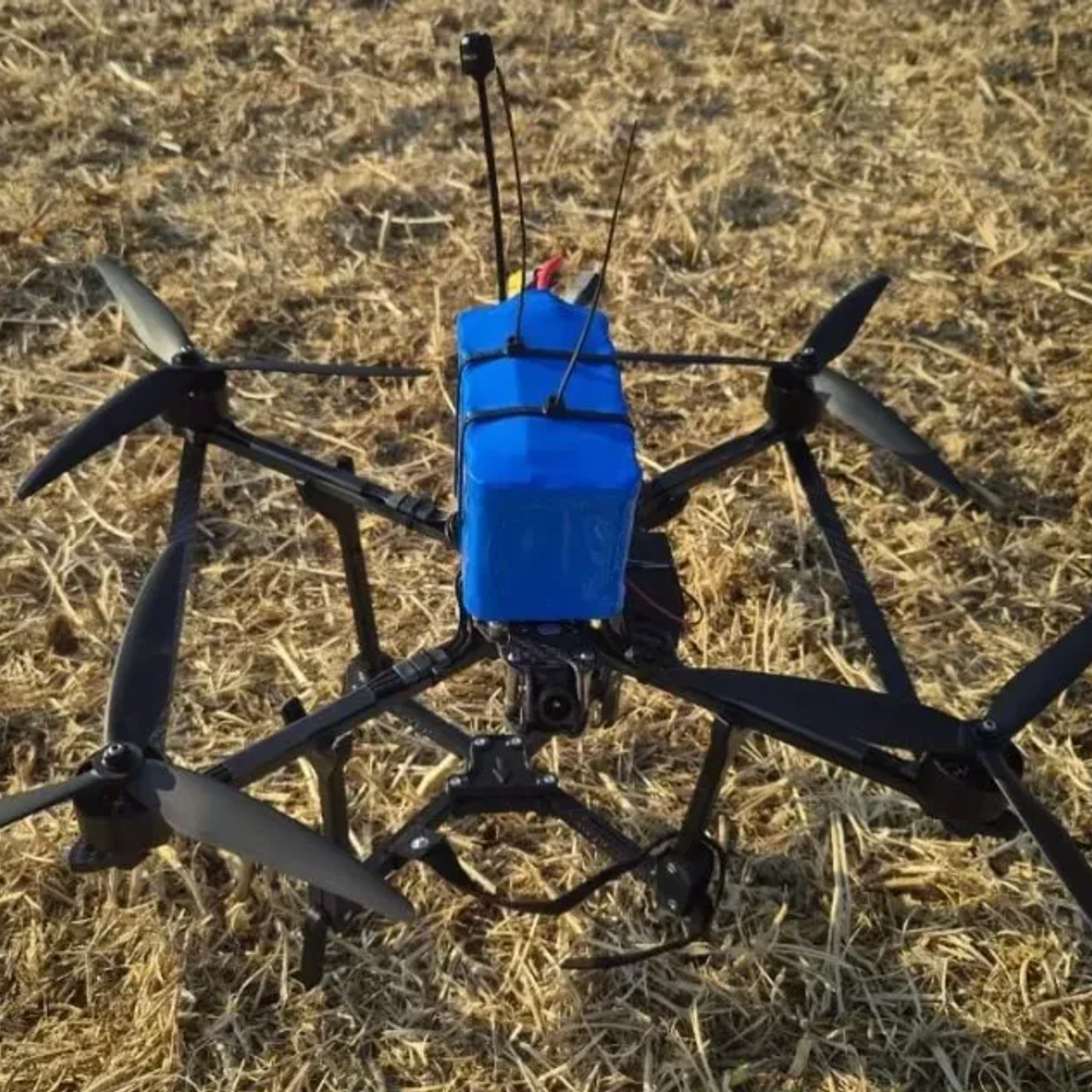
No longer just an eye in the sky, drones in the air, sea and on land have changed military strategy forever. The invasion of Ukraine by Russia has killed tens of thousands of soldiers and civilians alike. To the world's horror, international law and expectations have been savagely upended, but to its surprise, the smaller nation has managed to keep fighting.
Dr Oleksandra Molloy from UNSW explains why drones have become the most important weapon on the battlefield, but will never replace their human pilots.
Cover image from Ukraine Ministry of Defence.
GTU. GTTH.


David (00:09)
In 1849, in the first Italian War of Independence, Austria's army released around 200 paper hot air balloons, each carrying a small bomb. The army hoped they would float over their enemies in Venice. Only one did. Many, in fact, were blown back over Austrian lines. But that marked the first ever use of unmanned attack aircraft in war. 177 years later, things have changed. Drones are kind of a big deal.
Hello and welcome to Where Are We At With? I'm David Curnow. In this episode, it's a story that's a little different to some of our usual topics because right now, as you watch or listen to this, people are being killed. Soldiers, civilians, men, women, children. Russia's invasion of Ukraine, a mighty massive country trying to steal land it once considered its own, armed robbery of a nation that was convinced decades ago to give up its own nuclear weapons on the promise of not being invaded by its neighbour. But despite being vastly outnumbered, outgunned, and outspent, Ukraine has managed to fight on. And a huge part of their success has been due to drones. Forget getting your pizzas delivered by one or filming your wedding from the air with one. These often cheap and tiny machines are literally revolutionizing modern warfare, throwing a century of strategy out the window, and then navigating around the corner and exploding in the enemy's front line.
Our guest today wrote a paper for the Australian Defence Force in 2024, outlining the development and deployment of drones in the Ukraine conflict and advising the Defence Force on what lessons have been learnt and what Australia should do to make sure it's prepared for both using and defending against this battle-changing technology. Dr. Oleksandra Molloy is a senior lecturer in human factors and aviation safety in the School of Science of the University of New South Wales.
She has a PhD in aviation, a master's in two different fields. Oh, and did I mention she's originally Ukrainian? So there's some skin in the game on this one. Where are we at with military drones with Dr. Oleksandra Molloy?
David (02:21)
Dr. Oleksandra Molloy thank you so much for joining me.
Oleksandra Molloy (02:23)
Thank you so much for having me on.
David (02:25)
What sparked your interest in aviation from an early age and I suppose in a nutshell how did it take you from Ukraine to Australia?
Oleksandra Molloy (02:33)
That's a very interesting question because I think I've been always passionate about innovations and new technologies and the development that makes specific changes and also help people. But I think that key past towards aviation from my side was in understanding that effect between people, technology and engineering psychology, which is in the broader terms, refer to human factors. So and as we do know, it originally came from the aviation industry, so that understanding and the ability to work in a team, crew coordination, crew communication and apart from that just technical skills, so we'll call them soft skills or non-technical skills. I think that was quite a fascinating but also very developing area where most of the accidents, know, if not, you 80 to 90 percent ⁓ in the past, let's say 10 to 15, 20 years ago, attributed to this human error claim. So hence there was a lot of work to do in that space.
And it happened to be at the time I was originally, I'm originally from Ukraine and I lived in the city where there is the only aviation university who is preparing actually for teaching pilots. I think it just meant to be. And combining that perspective of education and teaching as well as human factor as part that really sparked my interest and broader, came to the point of safety, right? So aviation safety and the way, can we improve? How can we reduce? So, number of incidents and accidents, how we can, improve, the non-technical skills and to be perfectly honest, even how can we develop that for the students at the university while they, studying that and while they develop in those skills, because it often came to the, that pilots would graduate and they would start the job. And then only then they would start learning about human factors at the time, crew source management. And it just takes time and you want to incorporate that. So I think that originally sparked my interest. you know, it's always that learning curve that you want to keep up and to really develop those skills. So at the time, that point of human factors was a very niche.
I think it still is, but it just can be taken from different directions whether you just design or you work with people, et et cetera. So that was absolutely fascinating area how it started and definitely brought me to the point that I kept developing those skills.
David (05:10)
Yeah, and it's interesting because you look at human factors and so much of accident reports, whether it's both aviation or other accidents of any sort, whether they are a motor vehicle or a transport or even just in the house, so much of it does come down to human factors or human error. And yet the actual training of how to deal with some of those, perhaps we don't think about as much. when did you leave Ukraine to study elsewhere?
Oleksandra Molloy (05:48)
So I had an opportunity to choose a specific field in human factors and basically do some more professional development and learning. actually, UK and US were the leading countries at that period of time, who were paying quite a number of, you know, different fields and quite a lot of attention to this topic. So yeah, I went to, to Nottingham, was the university of Nottingham and one of the leading human factors and ergonomics, research groups where I continued my proficiency there.
And actually I thought it was just relevant to aviation, but I didn't realize that it actually opened me the whole world. So, all the applications and the context that it can go broader than just that, and it just goes broader than just a human error. And actually, even if you apply to the everyday life, it's all applicable because we are working with people, we are working with the rounded and it's about being able to design better, avoid errors, improve and a great combination of those intersections of studies. actually I thought it was niche, but then it just absolutely like broader transport. For example, there are applications in railway, of course, and driving and also defence. But interestingly, of course, very importantly, healthcare, you know, so being able again, we're talking about the safety component and being able to work in a team in that very threatening environment and high risk environments.
David (07:20)
You shared time between Ukraine and the UK at the time, and obviously you have ended up in Australia at the moment. At what point did your eyes turn to not just human factors in aeroplanes but human factors in what are effectively known as unmanned craft drones?
Oleksandra Molloy (07:32)
and....
David (07:43)
Okay, don't worry, it's not just your internet connection causing that digital glitching in the audio there. It's at this point we first had some sound problems in our recording. To summarise, Dr Malloy told me that her move from the UK to the Southern Hemisphere was because a lot of research into human factors in the road safety space was happening in Australia. Then, while she was here in 2014, came Russia's first invasion and illegal annexation of the Crimean part of Ukraine occurred followed by the full invasion in 2022. That led her to becoming interested in not just the human factors in the system, but the systems themselves. In the case of drones, not new, but peripheral uses quickly became central. And so an expert in human factors in aviation safety, pivoted to the pilots that stayed on the ground while their aircraft flew, creating quite definitely unsafe conditions.
David (08:37)
Okay, back now to my conversation with Dr. Oleksandra Molloy.
David (08:41)
I suppose it's a little bit of an elephant in the room when it comes to the fact that you're studying aviation safety, you're looking at the effects of military drones as well as other things here in Australia while there is a war in your country and Ukrainians are dying. How hard is it to separate the emotional and the intellectual in some of these things? And I suppose the other question is, do you need to?
Oleksandra Molloy (09:02)
I definitely try to separate that emotional part, but it's very challenging. The only part I would say it's just, it just allows me to, you know, like every morning I wake up in them and read thousands of lines, thousands of course in Ukrainian that really brings that information. So information overload, I would say, but I think it's important to provide that and share that knowledge with people in Australia. So to be able to understand the objective information, the key facts, the trends and basically in the world of social media and the open source and the way how drones of course create that. It's very easy to be misled. It's very easy to... imagine or just, you know, even AI, right? So there could be like so much different sources that you don't really particularly know. So yeah, definitely. I try to just maintain that objectivity and provide the evidence and the key facts as they are.
David (10:08)
Let's take a step back. What is a drone?
Oleksandra Molloy (10:11)
A drone, depending on the point we talk about. So we can look at it as just a toy, right? So drone, it's a toy with a camera that flies and is used in many different things that provide some eyes in the sky. So you know, interestingly, a few years ago, like, let's say five years ago, it was one of the Christmas presents I gave to my relatives. And it was a great, great, great time because at the time, which I thought about, all right, so that's a great fascination. The kids would love it and we'll take some pictures and it's a great part. So seriousness aside, a drone has really become not just a flying camera but absolutely important tool for many, many applications. So let's put aside the war for a moment. Let's just look at it as that essential element that can actually fly and perform a specific mission. So think about like agriculture, right? It helps farmers save hours and hours of work, resources and funds, and just really be able to provide that information that is faster, more reliable, more effective and efficient and so on and so forth. It can provide. are that line of connectivity between remotely remote areas. So, well, let's say like Australia, but not only in Australia. So, tell to take any applications, they can provide necessary supplies and medications and transportation. So, just generally, dual use there are so many applications and look at them. Australian registrations of drone pilots. think they're incredibly large numbers and they're incredibly large areas of applications towards that.
So if we think about drones, it's a tool that could be used for your specific purposes to save time and resources and definitely developing something incredible. Like I see it in ⁓ so many ways and I do believe, know, a drone is actually like our iPhones and iPads. That is a feature that everyone in the near future will kind of be using it, whether in this way or another in the future
David (12:33)
I also was given one same sort of thing. And it is that novelty value of being able to see high in the sky and take pretty pictures and all that sorts of thing. But, it's, can be used for so many different ways. Can we ask, this is not the first time drones as such have been used for a military purpose though. That dates back well over 100 years, isn't it?
Oleksandra Molloy (12:52)
Yes, indeed, of course, it's been used in previous conflicts and mostly what we've seen you know, just even getting back to the First World War. So they were used by British Royal Flying Corps and they were delivering payloads of explosives. So they were that delivery tool and they were striking aerial targets. So in the Second World War, again, both Axis and Allied forces were using drones, for example, to strike small drone aerial targets, both produced in the US by army and navy and Germans were developing drones for surveillance missions so you know they were attempt and they were the users of these systems in the past.
I think the key one is that the focus of recent developments in drones in modern warfare, how we've seen it is more precise strike, large systems, technologically developed, MQ1, Predator, MQ9 Reaper, the Triton, Global Hawk, and so on and so forth. can continue further. So the key part was in their basically stealth capabilities and advanced and high expensive and ⁓ multiple use platforms that could be working for extended hours and can have a specific precision pinpoint strike capabilities.
David (14:19)
Yeah. And over the years, I suppose we've seen that happen where the, and even the moral questions about some of these, because it was all targeted towards the large, very expensive, military, but particularly the United States, we think of the Reapers and things like that. And the idea of somebody sitting in a room in America, delivering munitions, effectively assassinating an al-Qaeda target or something like that. And that being the primary use of them, that has shifted.
Oleksandra Molloy (14:45)
that's what we see with different types of drones for different missions in the Russian-Ukraine war, where the concept of a drone as a toy, as it emerged, was something that can, particularly you can just strap onto and send it and, you know, strike or have their, those eyes in the sky and the capability to see beyond just the trench line. think that, absolutely important. And look, even, you know, if you think about the value of that, of the system, both sides are using them. Even if just hypothetically, let's say Russia has some more our expensive systems or capabilities or opportunities to develop, still do pay attention, they still do drive the same in millions as Ukraine. So there is definitely some shift that has occurred with the modern warfare and I think we need to closely watch it.
David (15:40)
Yeah, prior to the 2022 invasion of Ukraine, the smaller drones still had a role. There were separate classes, I understand, defined and they each effectively allocated different purposes. How did that, I suppose... manifest and how did it look at the start of the invasion when it came to their use from the class one or the little micro drones right up to the heaviest and biggest ones? Well, yes, 2014, that's a good point. Let's start there.
Oleksandra Molloy (16:07)
2014 or 2013?
And I think that's important to highlight again to the listeners because when we talk about it, people forget, I mean, not even aware of. So 2014, that's where the invasion of Ukraine actually occurred by Russia, right, by annexation of Crimea and also occupying parts of the eastern part of Ukraine, which was absolutely tragic and devastating. Look, and we think about that time. drones had not been widely used by the armed forces of Ukraine at the time, but volunteers were buying drones and soldiers were trying to learn how to use them. So they definitely tried to see how they could be and they did provide some surveillance, right, and reconnaissance information at the time, maybe just like... very primitive, I would say, know, very simplistic ways of the use of drones. And pretty much they were like DJI Mavic, someone would have again as the type of entertainment and those sort of things. It was very popular at the time to record, you know, various events like weddings, et cetera, and you would have a drone. So the drone operator actually, those who could ⁓ operate it, they were said they were on cost of gold, they were very precious because they could just operate it. But again, at the time, so we are talking just about very basic simplistic drawing that can just like be, know, any child can learn within an hour or minutes to operate. So at the time it was very simple technology and very simple in operations. So, but since then, of course, the ⁓ extension of those systems really just extended that range of you. And you think about 2022, of course, Ukraine had eight years potentially to think about. And it's more about as well, people and people preparedness to something that potentially can occur. think that's what important. And when you think about that cohesion and that absolute desire to get Russians out of, you know, the land that was working together, developing in garages, you know, in the, some of my colleagues who were teachers and in the universities and they were teaching robotics, they have turned it into the labs and they were doing drones and they were making components. And the key part is, yeah, I mentioned components, right? So it's very important. So when things stop working, that you have that opportunity to develop something inside. of course, it's great to have those expensive systems and in large numbers, but when you think about a much larger adversary with so much power, technology, and manpower, know, they're kamikaze people that it's very important that you have something to protect against think about cocktails Molotov, so even just like those rudimentary things that people were making and just like trying to. So it was quite challenging, but at the same time that, you know, drove that innovation, necessity, is a mother of invention. So and it just came to the point to defend all the front line. Think about thousand kilometres of that.
David (19:31)
Absolutely.
Dr. Oleksandra Molloy is our guest on Where Are We At With Today. We are talking where are we at with military drones. And by we, I mean the military, of course, but so much of this technology is being driven by these days conflict in Ukraine with Russia's invasion there, as Dr Molloy mentioned, both initially the invasion and annexation of Crimea and then the invasion of the rest of the country in recent years. Military acquisition and military development is renowned for being very expensive and very long wait periods, tens, decades of years for things to happen. And yet in this particular technology, we're often seeing the developments being made day by day by people at the frontline. How much of a difference is there and how hard is that to plan for?
Oleksandra Molloy (20:25)
I think it is very hard to plan for and you know, it's a million dollar question if someone knew what's coming next. So that would be absolutely incredible. But that's the thing about being able to be agile, to innovate fast at scale, but also to be able to adapt. So unfortunately, so Russia is highly intelligent nation that can work with their systems very fast and duplicate and adapt as well. so once Ukraine develops something there, you know, try to counter and, you know, and it's not necessarily just, you know, one system or like one drone. So there are so many other things that we need to think about. But I do want to highlight that, yeah, although drones are relatively cheap and cheaper than those expensive systems, they are everywhere. They are in hundreds and thousands, produce millions. And I think that's something that it's important to understand. So drones are here to stay and they are going to be used in any future conflict in this way or another. And that's what we've been witnessing recently in any conflict that is emerging, right? So, but it's more than just cost. Almost 80 % of casualties on the ground is due to drone strikes. Drones provide 86 % of targeting data to the soldiers. They help with decision-making process for commanders. They help with humanitarian support, search and rescue, mining, demining, surveillance, course, strikes, logistics, and so many, more applications. From the air, they have transitioned to the multi-domain operations. So we've seen them more and more used at sea like Sea Baby and Makura drones that are doing absolutely incredible work in that area, in the theatre of operation, as well as the ground vehicles, uncrewed ground vehicles, which is probably the most challenging of all due to many different factors, but we do see that combination. And one of the fascinating things, I think, in terms of the innovations is that combined drone arms, as I call, where UGV, which is uncrewed ground vehicle, work with uncrewed aerial vehicle to achieve a specific mission or another way around. there could be an includes surface vessel, which is a sea drone providing driving like 400 kilometres and then just launch relatively cheap FPV drones that can fly just 10 kilometres and just do specific important in fact. So we see more and more of that integration of those systems. And Okay, so people may not necessarily see that innovation, but it's the new way how they've been used. It's the new tactics. It's the new everything.
David (23:09)
That's something that struck me reading your 2024 report for the Australian Defence Force on the use of drones in Ukraine and the changes you spoke about things like counter-artillery or the time between observing something and being able to strike back or guide in whether it's an infantry brigade or something like that, the ability and the speed at which reactions can occur.and the changes that have occurred in the few years since the invasion, full invasion began. Tell me a little bit about that.
Oleksandra Molloy (23:41)
Yeah, definitely. I think that's one of the important factors. although the drones are great tools of delivery of weapons, let's say, or ways of application, they do not replace traditional systems. And we can't put them in the category, let's compare drone and F-35 or let's compare a drone and a tank. No. So every system has their place on the battlefield and this is up to military people to decide what they are using in a specific missions but what drones actually have contributed to is to that speed of making decisions right because if you're able to see and understand the battlefield so I would call it I wouldn't call it transparent because we don't really think know what's happening in people's minds but it's more visible and you can basically see you know, people, equipment, everything. So it can provide you a specific information where the force is concentrating and what the next step could be by both sides. So I think that's why, you know, recently the drone operator has become one of the most precious target, because if you can eliminate that, it means, you know, if your drone is gone, so then you can proceed with your further forces. And that's a key part. So they have created, they have saturated the air.
So in the past we had planes and air dominance superiority. Now we have drone superiority in the air. And one of the key challenges is really that part, because there are so many in hundreds and thousands and different parts. It's very challenging even to identify where is a friendly drone, where is the enemy's drones, right? So, and that's the least you want to do. So it's incredible coordination between the teams that is happening and it has become quite a complex process. So remember when I said the simple one, just like learn to operate that DJI Mavic. This has become quite a complex process and you need absolute pinpoint coordination and team and logisticians and engineer and every part play a role. So they support artillery, they support traditional systems. They are in the hands of every operator. The team will not go on a mission if they don't have drone in the air, so it's as simple as what we do see is that continuous part of importance and I will highlight as we talk about uncrewed systems, it's that their ability to defend against them. So imagine they're hundred thousand millions in the air, right? And they striking various targets. And I think that's important first and foremost to know how to defend against them at individual level at, you know, defend your equipment, defend your military ?knot? and heart and logistics and so on and so forth. So I think that's absolutely important to understand.
David (26:35)
Yeah.
Let's talk a little bit about that because one of the key aspects of conflict often is that battle, so to speak, between attack and defence and the adaptation that is required when technology moves along. When you develop the ability to do something, I need to develop the ability to stop that. And when I develop the ability to stop that, you need to develop the ability so on and so on without getting tedious. What are some of those changes that we've seen where a certain technology replaces another which then defends against
Oleksandra Molloy (27:09)
One of the key trends of 2024, 2025 was that rise of fibre optic FPV drones, right? That they are not controlled by the radio controller, but by that fibre optic cable. And that provide their opportunity. You just... simply cannot jam that technology. And based on that, you develop a specific tactic but having said that, of course there are plenty, plenty, plenty of systems to counter these systems. And that's why it's becoming even more challenging and it highlights the importance of planning the mission and understanding the adversary and how they use their electronic warfare. For example, some of the jamming stations the Russians are using, so they are working for let's say 15 seconds, they are not continuously on. It's impossible to have all the time, you know, power and all those things and you know, Ukrainians figure it out and then based on that knowledge, so you just use it in your advantage. So to understand how it works, it's very, very complex. It's almost mind blowing, but that's why again, it just highlights it's a complex process, but with every measure there need to be a countermeasure. And of course there are so many different layered approach systems that help for us to detect identify, track and destroy. And depending on the type of technology, you need a specific system as well to strike them. You know, one of the most devastating and of course challenging at the moment is Russian strikes of Shahed drones that are just for a moment, imagine, I'll repeat, is like 500, 700 a night. So, if you think about the system that should be effective to counter that, so you need those operators and everyone to be able to do that, to do it safely and to do it ideally before it enters any urban area. But it is absolutely challenging because as the systems to counter them, like drone interceptors, where another trend of 2025, where you try to develop the solution that not only can counter it, but that could be cost effective.
So of course you can strike a missile, million dollar missile into one Shahed drones, right? So that wouldn't be cost effective. It can't be sustainable. We need to think about it. And that's we've seen in some European countries that the cases were happening around Europe. So we need to think about those cost-effective approaches and solutions that will help to counter the threats. So at the moment, of course, it's developing and the importance that it is scaling up. So we see the increase in the numbers let's say of interceptors but same Shahed drones like for example the interceptors increased twice in their scale but Shahed drones production increased three times and although you think that you are level up and being able to counter it's about the numbers it's about the scale it's about so many different factors that we need to continuously consider but similar You know, the tactics that I use and concentrate the forces, let's say on Kiev alone, makes it quite challenging to be able to do that. Still, Ukrainians are quite successful in that and they are able to strike back with 80 to 90 % of that. Unfortunately, if it happens, they just really devastate, especially now in winter when they target the critical infrastructure, energy facilities, et cetera.
David (30:38)
Yes and so much of the attack from Russia is about not just military, is civilian as well, so much and utilizing things like the weather, attacking, warming and heating, that sort of thing. We also look at the fact that with those Shahed drones, they're not a DJI Mavic they're not a wedding drone. This is a large, almost car-size thing capable of delivering quite a lot of explosives, but mingled in there, are decoys, so both sides using effectively subterfuge trying to trick the other side into attacking the wrong targets.
Oleksandra Molloy (31:13)
designs are continuously improving as well as tactics, right? Apart from just decoys that can be done very cheaply, their components are quite cheap and they are trying to improve the design. So recently we've seen the drones, know, Shahed or Heron 5 version where it is almost like a rocket, it has higher speed you know, the speed is increasing, so something flying 600 kilometres per hour is very challenging to almost impossible to even if you identify to strike and defeat against it. So the payloads are increasing. So let's say again, recent Shahed had like 90 kilograms of explosives in that and you know, they just experimented. They don't have precise strikes. So and unfortunately that just absolutely devastated. And again, it's about scale.
Russians will continue to increase that scale and I think it's important to think and with some Ukrainian recent announcements to really to have that dome, really to have that ability to strike and protect the skies is absolutely important and it's important to do it just before they course enter their urban environments, but if you think about it, like Shahed drone is kind of like a class three drone, which is not a small UAV, right? So not small UAS that is highly available. So that highlights that again, every type of drone that we see has that specific mission, whether it's tactical, operational or strategic. One of the key highlights that I've seen quite, of course, useful from both sides, more now evident as well from Ukraine is the use of these deep strike long-range drones for strategic effects. as similar as those Shahed drones are flying, Ukrainian long-range deep strike drones striking oil facilities, their military infrastructure, manufacturing facilities that are producing those missiles and those systems. And I think that's quite important to say. So we do see that portfolio. We do see that range of systems. And of course, you can develop and you can use a million dollar drones, but at the same time. within a second, you can just like, yeah, you can just lose your $1.5 million drone and you still need another one tomorrow. So it's really thinking about that. Sustainability. Yeah. Yeah. How can you sustain?
David (33:41)
Yeah.
The economy of scale plays such a role in this. Interestingly, we talk about this a lot and we've mentioned the training of the crews, the fact that people train to fly some of these. These days, how much time does it take to train them and is it just the technical side of things when it comes to controlling up, down, left, right?
Oleksandra Molloy (34:05)
completely different to what it is used to on the battlefield, unfortunately, because it's more than that. And there are so many ways how, let's say Ukraine is doing that. And the key is to train in a close to real environment with electronic warfare with different threats with other FPV drones flying. it's no longer flying in the simulation. Of course, you get your basic skills. Let's say you have like 30 days to 39 days to obtain that FPV basic skills operation one. Of course, then you go in the field and fly with instructor. And then you get to the point of flying the real world. And sometimes you just go on the battlefield that's where your first practice is because there are shortages of this important important important role on the battlefield so the training is no longer just operating technically but it's been able to know the tactics and planning the mission and understanding and making sure. think the other part is that having your engineer there who will be able to support it if something happens, because you can spend hours on planning the mission, working in the team, having everything ready. And then you start the mission, then you lose your video. You can't see. So if you can't see, you pretty much can't do much about it. So I think that's why, you know, apart from we hearing about drone operator schools, we need to have the engineering schools, we need to know how to fix and fix and match and just, you know, put it back together. Because sometimes, for example, you can just use the Russian system, but it's still deployable and employable and you just like change it over and just like send it off. So I think that that's important. So training is becoming quite complicated. But also, we see a number of training facilities have opened in Ukraine and they are free for training the operators, yes, supported by the government. There a lot of private and public, there are so many different areas how you can do that. But you definitely learn your basic skills and then you are going to go through more tactical sides of that.
David (36:18)
I read somewhere, possibly in your report, school kids are even learning how to fly a drone. They're being taught in schools, is that right?
Oleksandra Molloy (36:24)
Yeah, that's right. Yeah. I've written it in the report and then we, we, we see it more happening. So that has become the part of the national curricular at the moment for year 10, year 11. So as part of the chorus, let's say defend Ukraine, right? So this is about first you just learn about it and then you just like go and fly it. So again, coming back to the part that I was looking at in the beginning, I do believe that this is the future of various skills because there are so many applications beyond that, right? And this some of the skills that many countries are starting to look at as part of curricular look. And even if you think about, in other countries like Australia, we do have so many different clubs like robotics, you know, just like an other part, they're just not mandatory curricular. Some becoming part of it. We do have a great, you know, cadet drone racing teams and things where they can learn and fly and learn the things, but ⁓ in Ukraine has become more and more. In Russia it has become as well part of the curricular for their purposes of course but they do believe that you just need to learn those skills. Since the beginning more and more courses in the universities are opening of course in this space and I think that's where the future will go.
David (37:43)
Yeah, can I ask then, we talk about the humans, we talk about the training, what about the psychology? Because from both sides, both the attacking, the taking of a life in some cases with a very first person view, and in other cases, the soldier on the front line hearing the drone itself and knowing that there could be death in the sky somewhere near, what does the psychology like for this?
Oleksandra Molloy (38:05)
is incredibly challenging, of course, the psychological state. pretty much, again, the numbers, 80 % of casualties on the battlefields done by drones. So if you hear drone over you, can just only, you know, you can only imagine that you can just think that something is just about to strike and you can just like hope and use the correct techniques to be able to hide from it or avoid that. But that's the reality. It's showing you know in the past you could probably have hide in a trench or you know in some dig out etc. these days and that's a challenge that it's very hard to move from point A to point B because everything is transferable and sometimes it just not sometimes but it's just like easy and safer to remain where you are and if you think about some of the land in Ukraine is just like vast fields and there are some tree lines. So sometimes you can just like, it's even hard to find that ⁓ something to do that. But that's one side of it. Another side is that information warfare, right? So, and that's ecology of war that again, drones have enabled. They provide the footage. It's very, it's an open sources. It's easily available, you know, in the past. So military would go and learn the lessons in a specific ⁓ conflict and they would come back and inform that. Now everyone has that ability to see. And again, it comes to the point, you know, when we see some impressive strikes, it may not necessarily mean that it's just like so impressive everywhere. Learnings are unequal, there are very different challenges and so on and so forth. And of course, it's very hard to believe when Russian side are showing something like that. But anyway, so yeah, if you can see, it just that psychology and that human factor is apart from your fatigue, tired and absolutely exhausted and still need to perform your mission. also need to be able to defend against those threats that are now everywhere 24 seven.
David (40:17)
Most of the people listening to this are in Australia. Hello to those who aren't. I know there are some of you. But from a perspective of a military such as Australia's, it's small, it's relatively minor in world scale, and it is defending a nation which is fairly large. So therefore the lessons learned in one conflict may not necessarily transfer completely over. What is it that Australia perhaps needs to improve as a result of what we've learnt in this particular conflict?
Oleksandra Molloy (40:44)
Great question, it's important to have a continuous learning cycle, observing lessons, and have some formal way of translating that through the filters to the Australian context, to Indo-Pacific context to be able to see how these systems can be applied effectively and efficiently. It has become force multiplier. It has become cost multiplier. So if you think about against smaller nation compared to a larger adversary, drones are providing that force multiplication that could be used and developing new systems and thinking about that there are different types of drones for different types of missions. And sometimes we just need to zoom out. It's not all about drones. It's sometimes it's at a broader picture. It's working with our people. It's training our people in a way. It's understanding first and foremost that although we have our training or doctrines from 10 years ago from previous conflicts, the modern warfare, modern conflicts are changing. And look, we don't have to acquire drones if we don't want to but the adversaries will and whether we want it or not so we need to be able to train how to defend against those systems you know if a 500 dollar drone will come and spot or strike multi-million dollar ship that we can see or fighter jet or helicopter or submarines these are the cases that are evident already we need to be able to defend our assets. So if something like a Spiderweb operation, hopefully the listeners know what it is, but that's where Ukraine used FPV drones to strike billion dollars assets of aircraft that they were just there unprotected. If anywhere else in the world it can happen.
David (42:39)
So a quick note here about Operation Spiderweb. For those of you who missed it on the news, in June 2025, Ukraine deployed over 100 drones right across Russia, striking air bases up to 4,300 kilometres into Russian territory. The drones were smuggled across the border and assembled around the country. Then, using what's thought to be a combination of mobile SIM cards and artificial intelligence, their pilots in Ukraine launched a simultaneous attack on planes in five different time zones between 20 and 40 aircraft were damaged, around 10 destroyed, but it was as much the audacity and the incredible reach of the attack that had Russia and the rest of the world suddenly a lot more nervous about drone technology.
Oleksandra Molloy (43:23)
So I think it's a challenge and I think many military are scrambling their heads around how to deal with that. So I think it's important to understand that you need to work with your defence industry and local producers that are absolutely talented people and that they're in the country. So, and build that capacity. Remember, I get back to something I said in the, in the beginning, it's about having those components available. You know, it's not about doing the same thing in thousands companies. Let's do drones suddenly, but let's do those components. Let's help each other and let's build that capability if needed to be able to develop in at scale. And of course, now the part is these systems can be applied to different parts. So let's think about logistics, right? With remote areas and so the ability to be able to transfer and deliver and so on and forth and support. Sometimes we just like to simply get into the point that we can't use FPV drones.in the same way how Ukraine is using. Maybe that's true, but there are other systems. There are long range drones that now can fly for three or four thousand kilometres. So think how they can be applicable. They could be logistical drones from ship to ship. There could be on-crew ground vehicles that can support your forces. There are so many other different types of drones. I think it's just like really experiment, experiment, experiment how they can support your mission because they are force multiplier, they are cost multiplier. And we come to the long and protracted conflict, cost is key and we need to be able to defend our soldiers with the tools they need.
David (45:02)
Yeah. Absolutely. You mentioned componentry and that is of course one key factor in all of this is the fact that for a long time China was the predominant manufacturer of the components and the drones themselves and that included one of the most important factors which is the software to control the drones. How important is it to have your own made drones? I know some countries ban the use of companies like DJI because they are from a country that perhaps in the future may be on the other side of the line. Why is that a key factor?
Oleksandra Molloy (45:37)
This is very, important question you just asked because the componentry and ingenuity of your systems is one of the most important part. think about Ukraine again at the beginning of the war and now. So of course it's great when there is assistance provided by other countries and Ukraine is absolutely grateful for that, for continued support. But you need to defend every day and night with things you need to produce, you need to have your local production to have your industrial capability to have the components. If you don't have that you just can't simply sustain it, right? If you cut off with their access to foreign components so you're pretty much stuck. So you have to have your own line of manufacturing, you have to have your way how to sustain and develop and produce or you have to stockpile something somewhere and whether there is an argument that things are changing. So there are still some basic things like frames that are not changing. So there could be some software and power that will be advancing and developing. But there are some things that are remaining, all motors, that they are highly dependable on countries like China and Asian countries. I think that's something that, again, Australia and its partners and allies, of course, work together to identify and learn from each other. However, if you are cut off from the foreign supplies, so the only thing remains is just to rely on your own manufacturers. And that's why you have to do this now and work better with the industry to be able to sustain. And it's not only about drones. You can think also about your larger systems. If you are dependent on another country, so it still becomes a challenge whether it's a drone or any other system. So that's ability to be able to produce at scale if needed.
David (47:35)
which is something that of course if needed is very much in the hands of sometimes a third party that we don't get to control. Let's finish off this discussion by talking about where we're at now because I know one of the biggest challenges when it comes to the use of drones and the development of drones at the moment is the introduction of the AI to the controlling of them, the ability to hand off the drone and say "right you go off and do your thing, here's your target, chase it". How important is AI to the future of drone warfare?
David (48:10)
Okay, so once again here technology let us down. I could see and I could hear Dr Molloy, but apparently our computers decided to stop recording her.
LITTLE BRITAIN CLIP
"Computer says no"
Dr Molloy though generously and graciously took the time to record voice memos of her answers and send them through to us. So it may sound a little different. Here though is her first answer to how important AI will be to future drone warfare.
Oleksandra Molloy (voice only)
Well, the short answer, it will continue doing more than today, but never have an absolute control. AI is already deeply embedded in how drones see the battle space, process information and move faster than human decision-making allows. What's changing is not whether AI is used, but how trusted it becomes and where humans draw the line. today's battlefield, AI is most powerful as an enabler. It helps drones detect targets, fuse data from multiple sensors, coordinate swarms, and operate in environments where GPS is jammed and communications are unreliable. And in high tempo conflicts, humans simply cannot react fast enough to hundreds of incoming threats. Artificial intelligence fills that gap, not by replacing commanders but by compressing the decision cycle to machine speed. But here is the critical distinction. Autonomy doesn't mean independence. Even as drones become more autonomous tactically, navigating, avoiding threats or striking pre-approved targets, humans remain responsible for intent, escalation and the use of lethal force. No military wants a future where accountability ends with the algorithm decided. Strategic judgments, ethics and responsibility are not optimization problems and they cannot be outsourced to code. But what we are really moving towards is human AI teaming. AI will do what it does best, process vast amounts of data, suggest courses of action and execute micro decisions under pressure. But humans will do what only humans can do, weigh consequences, apply judgments and take responsibility when things go wrong.
David (50:27)
can drones ever replace humans completely?
Oleksandra Molloy VO
Drones are displacing the role of soldiers on the battlefield rather than replacing. The soldier is still the one taking and holding the ground. However, UAS performs a full range of effects across battlefield operating system spectrum, but it is not better than soldiers. However, the sweet spot is where you can find a way of integrating UAS and soldiers that essentially complement each other, because at the end of the day, that soldier is that factor and the beam that holding and taking the ground and ⁓ UAS is them ⁓ enable that is delivering the effect to enable the operation to succeed. So they also enhance sensing and striking, but they cannot reassure population and exercise authority. And Ukraine illustrate that drones amplify the effectiveness of infantry and artillery rather than substitute them, ⁓ reinforcing this continued centrality of human forces in combined arms operations. Next, important that operational experience in Ukraine illustrate the drones expand the human component of warfare because each uncrewed platform requires operators, maintenance, communication specialists, intelligence analysts and logistics support. Drone warfare has generated new military occupational specialties such as FPV pilots, electronic warfare teams, imagery analysts and rapid modification units. ⁓ And definitely that highlights that while drones are quite essential in today's battlefield and they will continue in future modern conflicts, they are displacing the roles and the tasks rather than replacing.
David
Dr. Oleksandra Molloy, thank you so much for your time today.
David (52:36)
And a big thank you to Dr. Oleksandra Molloy. And of course, we once again apologise for some of the sound issues in this episode. We'd like to blame Russia for sabotaging our internet connection. They're probably too busy murdering civilians or planning to invade Central Europe to bother with us. We do have links to Dr. Molloy's advice paper for the on our website, along with her impressive biography. Just click on the website link in your podcast app, or you can visit www.wawawpod.com ⁓
That's www.wawawpod.com Next time on Where Are We At With, the first of a special two-part feature looking at the clothes we wear. What they mean by getting what you want straight away is actually a massive problem with the rise of fast fashion.
Alice Payne (53:23)
So while it might have taken in the past, say, six months or a year to get a style from concept through to store, with the advent of fast fashion business you could now do a turnaround in as little as two weeks
Madeleine Seys (53:37)
I don't think the fashion of the future is necessarily going to look that unrecognisably different to what we're wearing today or what we have worn in the past. But I think how it's made is going to be fundamentally different ⁓ at a micro level in terms of the materials that are used, but also in terms of the processes of that.
David (53:57)
So our next two episodes, where are we at with fashion? With your ever fashionable host, David Curnow. Thanks for listening. Goodbye.

Lead of the Human Factors Research Lab, University of New South Wales (Canberra)
Dr Oleksandra Molloy is a Senior Lecturer in Human Factors and Aviation Safety and the Lead of the Human Factors Research Lab in the School of Science of the University of New South Wales (Canberra).
Dr Molloy has also served as the Aviation Discipline Coordinator and an Academic Board Member at UNSW Canberra. Dr Molloy is a research trailblazer and an award-winning leader who conducts multi-disciplinary research in uncrewed/autonomous systems, human factors, safety and risk management (i.e., aviation and road). In the area of uncrewed systems, Dr Molloy has led the first evidence-based research on the use of drones in the war in Ukraine (supported by the Australian Army Research Centre, Department of Defence), continuously research and provide expert views on the role of UAS/C-UAS in the war in Ukraine. In addition, Dr Molloy is leading several Defence Trailblazer projects in collaboration with industry partners (CAE; Praetorian Aeronautics). In collaboration with the Defence Flight Safety Bureau (DFSB), Dr Molloy has led the UNSW team to jointly develop and deliver short courses for the Aviation Safety Officer Advanced (ASO-A) program for senior Defence aviation professionals.
Dr Molloy has a PhD in Aviation (UNSW, Australia); a MSc in Human Factors (University of Nottingham, UK); a Master of Education (Central Ukrainian State Pedagogical University, Ukraine); a Graduate Research Certificate (Kirovograd Flight Academy of National Aviation University, Ukraine); and a Diploma in Aviation Safety (International Air Transport Association, Canada).
<…Read More