Where Are We At With Platypuses?
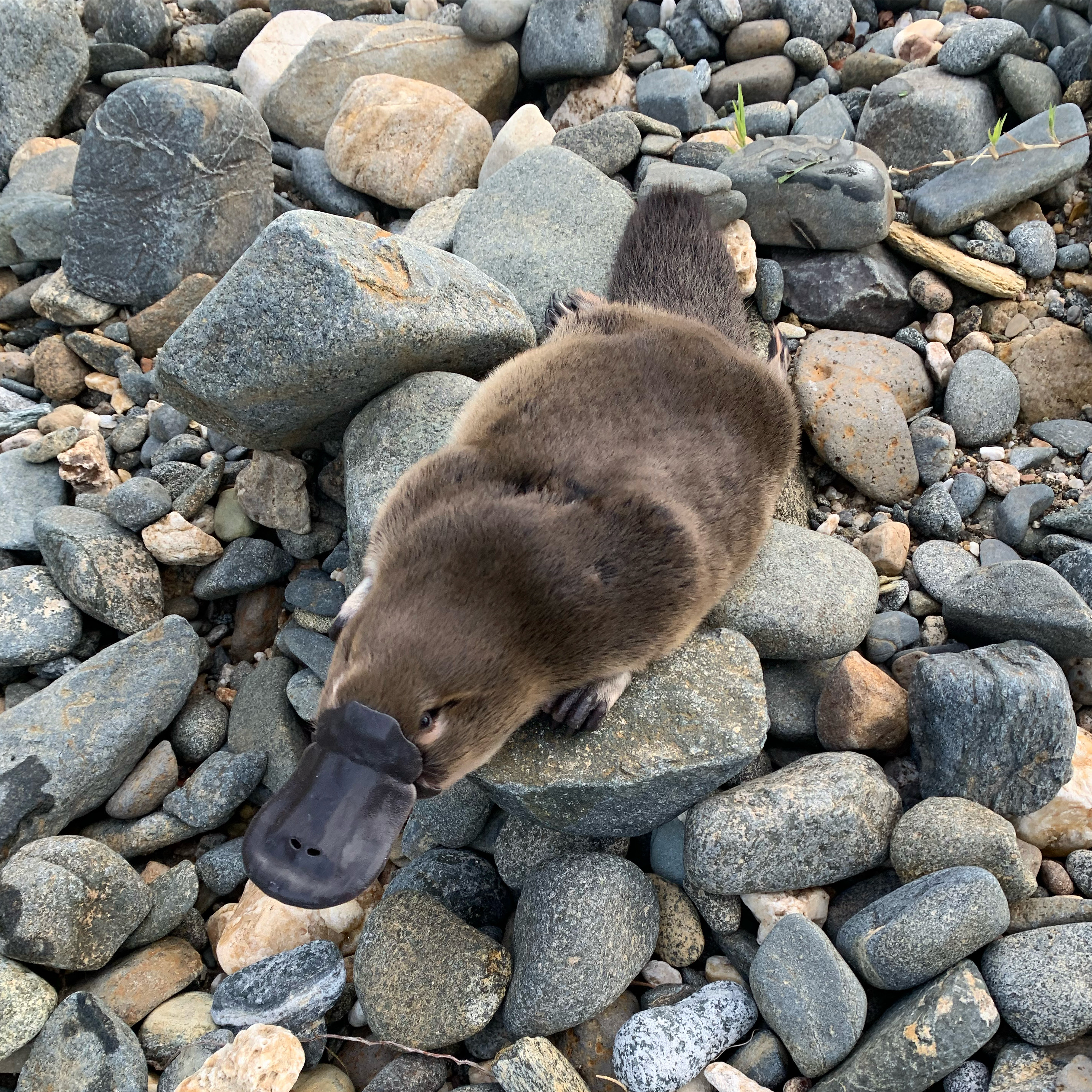
Lots of people don't believe the platypus is a real creature. Bill like a duck, tail like a beaver, body like an otter and venom like a cobra. It's like someone hit the "Randomise" button in the character creation section. They are real, but with their numbers declining in many areas, who knows for how long? Dr Tahneal Hawke from UNSW and Taronga Conservation Society joins us to talk all things ornithorhynchus.



David (00:09)
We've probably all heard the story. The preserved body of a small animal sent around the world to England, where experts immediately scoffed and declared it a hoax. And not a very good one at that. The tail of a beaver, the body of an otter, the bill of a duck, and they didn't even realise then that it had the venom of a cobra and that it laid eggs. Hello. Welcome to Where Are We At With? The podcast updating you on just about everything, one topic at a time, I'm David Curnow.
Despite more than 200 years of hard evidence, plenty of people around the world still think the platypus is just a myth. These days, perhaps it's just AI slop inspired by an animated Disney character called Perry.
Disney Channel Animations clip of "Perry the Platypus"
Good morning Agent "P", or as they say in Australia at this time of day, good evening.
Ornithorhynchus anatinus is real, though even Australians are unlikely to ever see one in the wild. And while 200 years has produced some remarkable findings about our platypals, there's still lots we don't know. I mean, how do you study a creature that lives mostly in the water, comes out mostly at night, burrows up to 30 metres long that can only be accessed underwater? It's an incredibly shy creature and it's nigh on impossible to breed in captivity.
Thankfully, some people are working on just this. Dr Tahneal Hawke is a joint researcher at the University of New South Wales and Taronga Conservation Society. Her work is focused on improving conservation outcomes for the species through scientific research, improving management practices, and through outreach and education, like speaking to us here to find out just "Where Are We At With Platypuses?".
David Curnow (01:56)
Dr. Tahneal Hawke, thank you so much for joining me.
Tahneal Hawke (01:59)
Thank you for having me.
David Curnow (02:00)
It's really important we get something out of the way first, because this is often the first question at least I'm asked about our topic today. Is it platypuses, platypi or platypodes?
Tahneal Hawke (02:11)
So this is also probably the most asked question that I get. Technically platypodes, so Greek origin, but generally we use platypuses. It seems like it's a bit more accepted in society, but definitely not platypi.
David Curnow (02:26)
Okay, so definitely not platypi. Platypodes is technical, but hey, who's got time for that sort of thing these days? And I'm sure they don't really care at all. So at the end of the day, it doesn't matter. The other question that I've been asked recently, which I'd never even thought of, you know, I'm getting old now, do they make a noise?
Tahneal Hawke (02:35)
I don't think so, no. Not really. Like for our purposes when we're in the field we actually do like an in-field anesthesia platypus. That's because when we're processing we want to make sure like we're maintaining a really low stress environment for these animals. So when they're coming off the anesthesia sometimes we get like some grunting, we can get a little bit of snoring, a little bit of squeaking. Generally though they don't make too much noise.
David Curnow (03:12)
I'm sorry, I immediately have to get off this and Google “platypus snoring”. With that shape nose, it'd be a very odd one, but they don't, I suppose, vocalise in the wilds with each other that we know of.
Tahneal Hawke (03:13)
We don't know too much about it to be honest, but like I said, like we think that they mostly probably communicate through things like sense rather than it being relying on vocalizations as much.
David Curnow (03:35)
Okay, well let's take a step back then. Other than listening out for them in the wild, may leave us sitting on the riverbank for a while, where did they come from? What's their Marvel superhero origin story?
Tahneal Hawke (03:42)
Yeah, so platypuses have been around for millions and millions of years, you know, like they've been with us since the era of the dinosaurs. So platypuses are a monotreme, which includes the species of echidna. They branched off from other mammals millions of years ago, which makes them really unique in terms of their both their genetics and their morphology. So obviously they have all these characteristics that some people might consider primitive for mammals. So we've got things like egg laying, we've got their kind of locomotion that almost reminds people of like a lizard or a crocodile when they're walking across the land. So they have all these features that kind of really highlight how unique they are both in terms of their evolution and their morphology.
David Curnow (04:33)
Looking into this a little bit earlier, I noticed that modern ducks evolved after the current platypuses. Technically, there are platypus-billed ducks out there, but we refer to platypuses as duck-billed platypus. It's an odd correlation. We know that the echidna is the other monitoring. Are they effectively related? Is the platypus the aquatic version of the echidna, or is the echidna the land version of the platypus?
Tahneal Hawke (04:47)
That is correct, yeah, good question. So obviously like echidna, platypus, know, that they're the most related species to each other, but they have a lot of differences as well. So echidnas, you know, they're on land, but there is evidence that a common ancestor was once aquatic. So you might notice in echidnas they have these kind of backward facing feet, which might suggest that their common ancestor was aquatic. So yeah, potentially some sort of aquatic ancestor in the platypus is kind of kept within that niche and they could just mend its way on to land.
David Curnow (05:33)
It's interesting because echidnas and platypuses, you say, the surface, they look really different, but the more you look, the closer, the more similar they seem to align. Again, even the, even the walking concept. There are echidnas in other parts of, well, there are different types of echidnas and some of them are also in places like Papua New Guinea, but there's only one platypus. Do we know why that is? Do we know were there other types?
Tahneal Hawke (05:59)
Yeah, so the fossil record kind of indicates that there were ancestral platypus species that occurred in Australia, possibly in other areas within South America, even into Antarctica. But again, that's like a very primitive monotreme species in terms of ⁓ like the modern platypus species. There is only one which we find today. And so that species spans from Cooktown up in Queensland and Australia all the way down the coast into Tasmania. So yeah, just one species of platypus. We're not really sure why it's just one species. So potentially still some questions to be answered there.
David Curnow (06:37)
And like wombats, even kangaroos, do they have an ancient ancestor who perhaps was 20 foot tall and ate large creatures? Are there bigger, tougher, scarier versions out there?
Tahneal Hawke (06:46)
Yeah, yeah definitely. So one of the, I guess, earlier forms of platypuses was considered to be much larger and also had teeth. So pretty different to what we see in the modern day platypus.
David Curnow (06:59)
Okay, and where do we know that from? What sort of fossils and where were they?
Tahneal Hawke (07:03)
I believe from Riversleigh up in Queensland is where those are found. Yeah, I'm pretty sure that's where it came from. And yeah, we assume that's just differences in diet, differences in habitat. And now the platypus, obviously with its macroinvertebrate water bugs, it doesn't need to retain those features any longer.
David Curnow (07:22)
We'll get onto his diet in a moment. We know it's not eating Billabong ice creams, but it may eat in a billabong. Given that it effectively feeds in water, does that mean that there are large parts of Australia where you won't ever see it or find a platypus?
Tahneal Hawke (07:26)
Haha yeah, so platypus is like I said before, kind of Queensland down to Tasmania, predominantly on the East Coast. So we see them in greater numbers on the eastern side of the Great Dividing Range and then less so as you head west or into those wester flowing rivers. But we, know, we don't find them out in central Australia. Obviously, they're dependent on waterways and stable waterways for both their feeding and their breeding. So that, they're generally confined to that eastern seaboard area.
David Curnow (08:03)
Okay, any in Western Australia or South Australia?
Tahneal Hawke (08:06)
No, South Australia, yes. So they are considered extinct on the mainland, but Kangaroo Island has an introduced population of platypuses. So they've been living on the island for almost 100 years now The population appears to be doing OK. We've done some surveys following, obviously, the bushfires there. You know, we're pretty catastrophic in 2020.
So they're still hanging on. We suspect maybe genetically they're doing less well compared to some of the mainland populations. And that's just because it's an introduced population and it was established from a small number of individuals. So obviously the genetics is not as robust. In terms of Western Australia, there are some anecdotal records that platypuses were like, they attempted to reintroduce, to introduce platypuses to Western Australia. A few kind of, sightings here and there over the last century, but you know nothing confirmed so we expect that it's predominantly on this east.
David Curnow (09:06)
Yeah, pictures or it didn't happen as they say. Kangaroo Island is a fascinating one to be because of course koalas were also introduced there and now they're in a sense the population can be at times challenging for the local ecosystem. I'm assuming the platypus isn't causing that sort of an effect and there's no need for platypus culling at any point.
Tahneal Hawke (09:08)
Yeah, exactly, it's an interesting one to talk to people about because obviously the platypus is such an iconic species. And in terms of Kangaroo Island tourism, like a lot of people actually visit these areas where they know platypus are to see a platypus. But in the other sense, it is actually an introduced species to the island. So, you know, there's a bit of a balancing act there. But in terms of their numbers, like, yeah, I think the population now is existing at far less than it was in the past. So we're not expecting that platypuses are having any detrimental impacts to that ecosystem on the island.
David Curnow (10:03)
And what sort of numbers in terms of the population?
Tahneal Hawke (10:05)
Yeah, very, very hard to say. I think, you know, around 20 years ago, was probably estimated that there is probably 110 or so individuals on the island, but that's kind of based on just some genetic analysis and some long term trapping that was done by a man called Rob Ellis on the island. Our post bushfire surveys indicated that the population might exist at about 50 % of that at the moment. But again, we need a lot more research to actually confirm what the numbers are on the island and how they might have recovered in the last few years since those fires.
David Curnow (10:39)
Yeah. Another thing we'll get onto in a moment is of course, how you actually determine the number of the species that don't exactly return their census forms on time like good little monotremes should. Quickly, obviously one of the things that's known about the platypus is that it's different. It regularly features in the top 10 weirdest animals in the world. When the Europeans first saw it, we know that there was the famous tale of thinking it was a prank. Were there any other misconceptions that lasted far longer than they should have?
Tahneal Hawke (10:47)
No, no. Yeah, like it's hard to say with the platypus. I think a lot of the world still doesn't really believe that this animal kind of exists, you know, like I know we have a bit of a following on social media. I put up, you know, videos of us in the field releasing a platypus and there is kind of this consensus from the international audience that it should be like a green fedora wearing animal like we know from “Perry the Platypus”, which is like a famous cartoon that involves a platypus and a lot of other comments are like, can't believe this animal actually exists, like we thought it was made up. So I think like on an international perspective, there is still like a bit of misconception about what a platypus looks like and whether or not it actually exists, even still today.
David Curnow (11:50)
We need better platypus publicists out there. And look in the modern age of AI, it's getting harder and harder to tell what's real and what's not. I know there were some images posted along with the conversation you had recently on a different podcast and a number of the comments there said, well, AI, not real. It's hard to convince some people. I mean, you've just come back from field work. You can tell us they're real.
Tahneal Hawke (11:52)
Yeah, exactly. Yeah. Yeah, yeah. It is. Yes, they are real. I can tell you we spend a lot of time during the evening sitting by the nets waiting for them and yep, they do exist.
David Curnow (12:22)
Tell me about field work from a platypus perspective, because again, as we mentioned, they're not so much secretive as shy. They're small, which means they are trying to avoid being spotted a lot of the time. And they're aquatic, which means we're not down there in scuba gear seeing them all the time. How do you go about studying them? What are the methods needed?
Tahneal Hawke (12:41)
Yeah, so I guess in terms of platypus, there's a few methods. Observational surveys obviously will give us an indication of whether platypus are in an area or not. We can also do environmental e-DNA surveys. That involves taking a small water sample and it kind of tells you if that species is present or absent in that area, which is like a really good way of just knowing if a species is around or not. But if...
David Curnow (13:07)
What? I'm sorry. Immediately. Is that because their skin cells are shedding or is it because they pee in the water and that's why?
Tahneal Hawke (13:12)
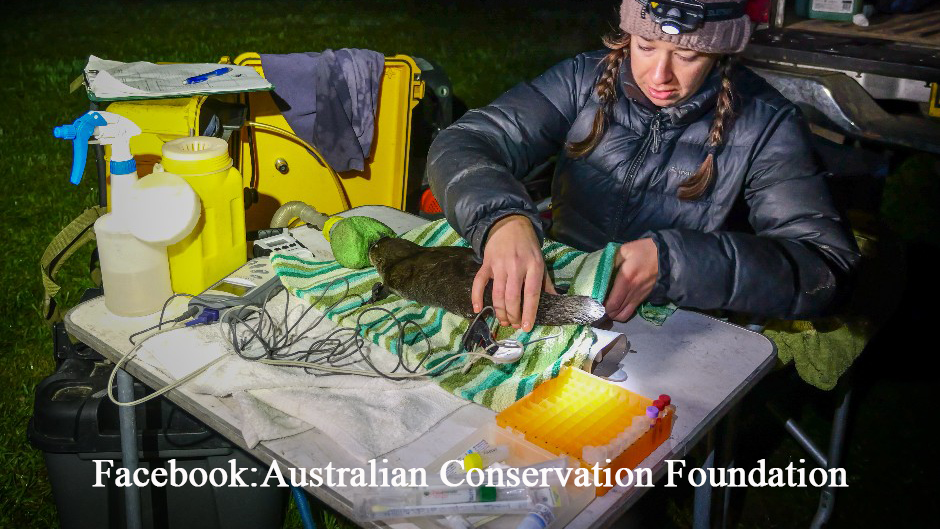
Yeah, exactly. Both, Yeah, so anything like skin cells, faeces, urine, anything that kind of ends up in the water, you can take a sample and send it to the lab and they send you back a big comprehensive list of every species that they detected. So it's amazing for understanding where different species exist. But it has a downfall at the moment that we can't determine how many of that species. So it's really good for presence absence. But if we actually want to say, how many platypus are in this area? How healthy are they? What is their genetic composition? Then we have to go out into the field and do surveys. that with platypus, what that looks like is setting nets. Obviously they're nocturnal. our work predominantly takes place late afternoon to early hours of the morning. If we have a small river or creek, we set what's called a fyke net. So it's like a hooped net with two wings that kind of reach either side of the bank and then a series of chambers. And the end of that last chamber is always out of the water. So the idea with the nets is that a platypus will be swimming down a creek. It will enter this series of chambers and then it can be resting either in the water or out of the water until we come along every two to three hours and check it and remove it for processing. The other type of net that we have is what's called an unweighted gill net or mesh net. Essentially that's for those larger, deeper, kind of slow moving pools that we have on big river systems. So we'll go out in a tinny, we'll set between 25 and a hundred metres of this net that kind of runs parallel to the banks. The idea with these nets is that they're unweighted. So platypus will be foraging in these pools. They'll hit this net and they'll immediately surface there. So we can sense their splashing with a spotlight and then we jump out on the boat, retrieve them in a pillowcase ready for processing.
David Curnow (15:10)
I love the involvement of the pillowcase that featured highly in some of the publications and research that we looked at as part of our preparation for this. want to talk about the pillowcases in a moment. Very briefly, how did you become involved in platypuses? Were you a kid who just always loved them? Did you like collecting platypus toys? What got you into this?
Tahneal Hawke (15:11)
Yeah, honestly, by chance. Like I hadn't seen a platypus in the wild. I didn't know much about them. But a PhD project was advertised and I just thought, I love Australia native mammals. Like, let's give it a go. I didn't think I would like have any shot at getting it. And then they offered it to me and I accepted. And here we are 10 years later still doing platypus. So yeah, I kind of just fell into it to be honest.
David Curnow (15:53)
Were you interested in animals of any sort prior to that? was science generally? What was the-
Tahneal Hawke (15:57)
Yeah, yeah, I had a background. So my bachelor's was in ecology, biology, and I've done a lot of volunteering with other Australian native mammals, some turtle work. So I was really keen to kind of pursue a career in conservation, like especially on Australian native mammals if something was going to come up. So when I saw the PhD project, it sounded like a perfect fit. But in terms of platypus, I had no prior experience or no stuffed platypus toys at that point.
David Curnow (16:26)
Do you have many now?
Tahneal Hawke (16:28)
I have one!
David Curnow (16:31)
They need to have more of those as well. I went through our collection. Precisely. Yeah. Publicist and plushies need more work on those things. Do you remember your first wild platypus?
Tahneal Hawke (16:33)
Yeah, very underrepresented in the shops around here. Yeah, yes. Remember it vividly, was a small female, which was nice, like really easing into it. Obviously those larger males with the spurs, can be the adrenaline's going, it's a bit more confronting. So was nice to start with just a small female platypus and get that out of the way.
David Curnow (17:04)
You talk small in terms of sizes, how big are we talking or more importantly, how small what are their dimensions? What's big or what's small?
Tahneal Hawke (17:11)
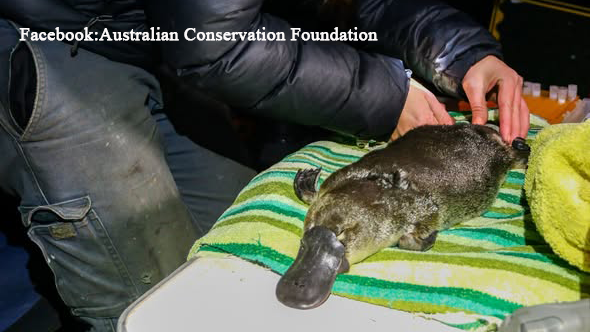
Yeah. So for platypuses, they kind of have a north south gradient in terms of their body size. So if we go up to Queensland, you'll find that the animals, they're much smaller. Whereas if you come down to Tassie, we've got like some bigger platypuses. And when I say bigger, I mean like the males are probably around three kilos as opposed to the males being probably around a kilo up in the northern end of Queensland. Generally the, around New South Wales where we do most of our work, would expect like average size for female to be around a kilo a bit more and about 40 centimetres or so. Males kind of pushing up to the two kilo mark. Yeah, about 50 to 60 centimetres or so.
David Curnow (17:56)
we know why there's a difference in morphology that way in terms of size. That's, that's a big difference for a creature.
Tahneal Hawke (18:01)
Yeah, yeah it is. We expect that it's something to do with temperature. So obviously up in northern Queensland it's much warmer, so the animals are smaller. So then when you come down into Tassie where we see those colder conditions the animals are larger. But interestingly enough the pattern is not consistent throughout the range. So for example up in the Snowy Mountains where I've done a lot of field work we don't get animals around the three kilo mark. So there's probably some more fine scale habitat, weather, climate interactions happening, but generally we do see that north-south gradient in size.
David Curnow (18:35)
Any other differences? I know something like an echidna, for instance, even though it's the same species in Tasmania, they're much fluffier, usually lighter in colour. Those sorts of differences, anything like that?
Tahneal Hawke (18:43)
Yeah, not that I know of. I haven't done work down in Tassie and I haven't done work right up in northern Queensland. Generally speaking, the ones that we get in New South Wales, Victoria, all look pretty similar. There may be some areas we've worked further north where we've noticed that the fur has more of like a red tinge compared to what we're used to in some of the southern sections where it's a bit more grey. But generally speaking, yeah, they kind of look pretty similar in all the areas that we've worked.
David Curnow (19:13)
Gingers! I love the thought. Dr. Tahneal Hawke is our guest on “Where Are We At With...?” We are looking at Where Are We At With, one of the most famous Australian animals in the world. And let's be honest, the iconic animals, even if it's just because people don't believe they really exist, the platypus. Now, part of your work with UNSW, you're also working with Taronga Park and the conservation work, as well as some Californian groups that are taking part in that. Tell me about their interest in this.
Tahneal Hawke (19:14)
Yeah, so one of our partners on a project that we're currently working on with Taronga and UNSW is the San Diego Zoo Wildlife Alliance. So San Diego has, I guess, a special interest in platypuses and that's because they actually have two at their safari park over in San Diego. They've been there for a few years now, they were sent from Taronga. And so yeah, those two platypuses are doing really well. You can actually go online and kind of watched them on one of their cams, they've got like a live feed situation happening. So yeah, San Diego has been an amazing partner. They've really invested in understanding platypus more. So yeah, it's been really good to have them on board for these projects.
David Curnow (20:22)
That's fantastic. How widely are they distributed in terms of captivity, I suppose? Are there lots of zoos around the world with them? Do people have them in private collections? That sort of thing?
Tahneal Hawke (20:33)
No, they're housed in only a small number of zoos across Australia. San Diego is the only institution outside of Australia that houses platypus. And that's really because they have such, I guess, difficult requirements to have them in captivity. they... Yeah. Obviously they like, they live in water, but they also need access to earth banks to build burrows. So you need to...
David Curnow (20:51)
I just want all the red &Ms obviously, just that sort of thing. Yeah.
Tahneal Hawke (21:02)
Your enclosure really has to be semi-naturalistic in the sense that they need fresh water, they need access to a good earthen bank to build burrows, but also they only eat live prey. So you've got to be able to consistently provide them with live food so that they can feed. So that combination really means they have like strict requirements for housing. So it really limits the number of institutions that are able to provide those conditions for this animal.
David Curnow (21:29)
And of course, the other difficulty being that as nocturnal or least crepuscular, in terms of displaying them for anyone who wants to see them, it's a tough task. know anyone who's been to Taronga and seen them, it's a dimly lit area.
Tahneal Hawke (21:36)
Yes, it is. Yeah, yeah. So some of them are stronger there in the nocturnal house. But even then, you know, you have to be lucky to see one of these animals. Another big reason why they're so restricted in captivity is because captive breeding has been relatively unsuccessful for this species. There's been maybe ever 20 successful juveniles raised in captivity. So they do quite poorly in captive breeding settings. So we're kind of trying to improve our understanding of what the requirements are to improve that success. And San Diego has been a really big partner in that project as well.
David (22:16)
Okay, just quickly here, you can find the link to the San Diego Zoo platypus cameras on our website. They're quite good actually, and the two Aussie expats seem to be living their best life. 14-year-old Birrarung, that's named after the First Nations name for what Europeans now call the Yarra River, and 21-year-old Eve. When they first arrived in 2019, they were the first platypuses outside Australia in more than 60 years.
Some fun facts too. Prior to that, there was a pair in the Bronx Zoo in New York, between and 1957. Now they were incredibly picky and expensive guests. According to Sydney's Daily Telegraph in 1953, keepers even had to change the colour of their uniforms to keep the two content. The habitats were altered repeatedly as the creatures reacted poorly to each new adaptation. Women in bright dresses were barred from entering and the PA system had to be muted. After all that, the female, “Penelope” seemed to fake a pregnancy, then somehow she escaped altogether, at which point the male, “Cecil”, promptly died. No wonder it's been a while between visits. and there's one more famous attempt to export an ornithorhynchus. It's so bizarre when Winston Churchill asked for one in the middle of World War II. In fact, so incredible that we have a special bonus episode looking at the saga that involves top-level diplomacy, English schoolboys, camouflage ships, an emergency side mission in Panama and German U-boats, and of course, a platypus. A bonus episode should be available in the next few days.
David Curnow (23:49)
I suppose that goes a long way to people not fully understanding them internationally when a lot of wildlife parks or indeed personal private collectors will have things like kangaroos or a koala or two or emus or things like that. Whereas if they're not even seeing them at their big zoo, it's a bit of a mystery.
Tahneal Hawke (24:06)
Yeah, yeah,
David Curnow (24:07)
We mentioned their diet when it comes to macroinvertebrates. What is that? What do they eat?
Tahneal Hawke (24:13)
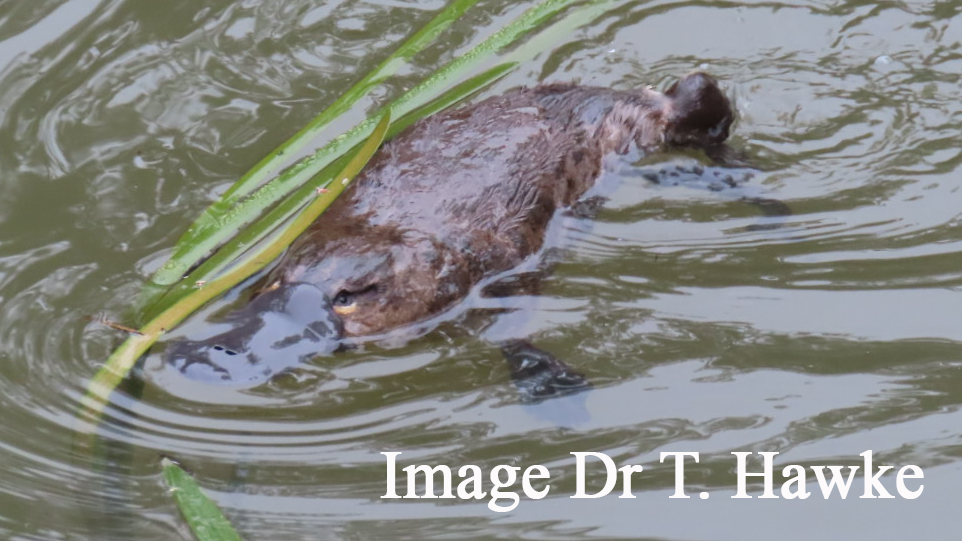
Yeah, so macroinvertebrates is essentially water bugs. So if you go down to the river and you notice little worms, you might notice little kind of beetles swimming. Typically their favorite prey is like the nymph version of dragonflies, dragonfly larvae, stonefly larvae, things like that. When they're feeding, they're kind of diving down into the substrate. They're sifting with their bill. They've got their eyes closed. They've got their ears closed and they're relying on their bill. So the bill is incredibly sensitive. They've got electro and mechanoreceptors there. And essentially what happens is those little water bugs are emitting like an electrical impulse, which the platypus then detects with its gill and then it can navigate through the water to find that prey. So it's like a really unique feeding system that they have.
David Curnow (24:58)
How accurate is that electrolocation? Because we know of dolphins being able to determine less than a millimetre in size through echolocation. Electrolocation, is it as accurate?
Tahneal Hawke (25:10)
Yeah, I would say so. Like these tiny, tiny little water bugs, you know, they can be only a millimetre big and the platypus has to consume a huge amount of these. Like if you compare the size of these bugs to the size of a platypus, obviously it has to spend a huge amount of time feeding. So it's got, you know, 50,000 of these electroreceptors in the bill. So it's really honing in on that prey, making sure that it can feed enough to sustain itself.
David Curnow (25:33)
And in terms of foraging, is it all through a water system? Is it just at the surface? If there are bugs right at the bottom of a 10 metre river, would they go there?
Tahneal Hawke (25:43)
Yeah, depends. So like platypuses, generally we think that their ideal foraging depths are between one to five metres. And that kind of corresponds with different habitats that we expect to find these macro vertebrate prey. So, you you'll get certain species that exist on the bottom of calmer sections or you get other species in kind of the more riffle, rocky sections. But anything over like, yeah, 10 metres is kind of pushing depths for platypus. They don't really like those large deep reservoirs, obviously, because they're not going to find a lot of food at the bottom of them because there's not a lot of habitat on the sides either. So generally we think about one to five metres is kind of the sweet spot for this species.
David Curnow (26:21)
and water type, what does that have to play in terms of whether it's still, whether it's flowing, whether it's particularly sedimentary or murky, that sort of thing. Do we have differences there?
Tahneal Hawke (26:33)
Yeah, so platypus are found in all types, to be honest. Like we see them, you know, their geographic range is quite wide and encompasses all these different kinds of water types. In terms of when we're trapping platypus, obviously I said the fyke nets go in those smaller, narrower kind of potentially faster moving sections of water compared to the mesh nets that go in these nice deep pools. I think generally if we're doing both, we have better trapping success with the mesh nets in the larger pools. And that's probably because it's just better foraging habitat for platypuses. If they're in these kind of faster moving riffle streams, they might be working slightly harder. There might be, you know, less overall productivity from what's available to them. So yeah, they definitely utilize both habitats. When they're kind of looking at their movement data, they seem to hang out in these deeper pools more often and kind of use these, shallower riffle section is more like a transient area that they pass through to get to a pool that may be further upstream or downstream. But definitely, they have no problem utilising the entire river system.
David Curnow (27:40)
Okay, and what about water temperature? We mentioned the fact that the ranges go from quite cold to relatively warm. Does that affect them when it comes to their own body temperature? Do they need to do different things?
Tahneal Hawke (27:44)
Mm. Yeah, so the platypus is incredibly insulated. It has super dense fur. It's like the second densest fur of any animal, so they're really well insulated. It keeps them dry when they're foraging under the water. So they can be found, like I said, in the Snowy Mountains. Tom Grant, who's been working on platypuses for 50 years, has found them actually foraging under the ice. So they're incredibly adapt to thermoregulating and maintaining their body temperature. The body temperature for platypus is around 28 to 32 degrees. And there were studies in this area that showed that they did maintain that temperature even when the water temperature was at freezing or less. So yeah, their fur is incredible.
David Curnow (28:32)
That's real. mean, I'm not a biologist, so I could be completely wrong here. That's quite low for a mammal generally, isn't it?
Tahneal Hawke (28:37)
It is, yeah. Yeah, the body temperature of platypus is running slightly lower. And so when you think about the opposite end of this spectrum, so obviously they have all this dense fur and we go up to Northern Queensland where the temperatures are much hotter, the warmer temperatures are much warmer, again, related back to that body size that we were talking about earlier, but there is an issue with overheating. So, you know, as those smaller areas, the water temperature is heating up, it becomes like intolerable for these animals. And we suspect that's kind of why they have their northern limit and also why they might have their western limit as well, because as you go further west, you know, you're getting those increased temperatures as well. yeah, likely to do with how they thermoregulate.
David Curnow (29:18)
Given the quality of the fur and what it can do, does that mean that they were a target for fur trading by Europeans?
Tahneal Hawke (29:23)
Yeah, big time, big time. So obviously the fur is like lush, it's waterproof, it's amazing. Unfortunately, as a result, they were hunted extensively when Europeans arrived. know, there's in the museum, you can see rugs and fur coats made of this platypus fur and they contain like 50 or 60 skins, as we say. So yeah, a huge number of platypus were definitely utilised for their fur.
David Curnow (29:48)
That's the problem, of course, if you're making it out of red kangaroo, then you don't need as many as when you have a tiny little creature like that. What about tails? Obviously with a tail very similar looking to a beaver, is it made up similarly? Is there a large fat deposit there?
Tahneal Hawke (29:52)
Yeah. Yeah, thanks, Yeah, the tail has a large fat deposit. It's where platypuses store most of their body fat. So when we're doing like a condition score on any of the animals we capture, we have what's called a tail volume index. Essentially, it's just how much you can kind of bend the tail. So if you can't bend the tail at all, the platypus is in like primo condition. If you can bend it and the sides touch, it means that the platypus has low body condition.
David Curnow (30:27)
We're doing a podgy platypus butt test.
Tahneal Hawke (30:32)
Yeah, essentially.
David Curnow (30:35)
The indignities of the poor creatures. Does that mean then if there is fat in that place that it would have been also edible, a delicacy or something that would have been sought after by First Nations?
Tahneal Hawke (30:47)
Yeah, we have some evidence that platypus were potentially eaten by First Nations peoples, but I can't validate any of these stories. And also I know that for like a lot of different tribes, it was like a totem animal. So very sacred species. So yeah, they're like I said, conflicting evidence about whether they were or weren't eaten. I have had some anecdotal evidence to suggest that they probably taste quite horrible. So if you think about the fact that they're like eating all these macro invertebrates they're getting around in the mud like I can't imagine that it's much of a delicacy to be honest.
David Curnow (31:23)
I imagine that about a few things and yet people still manage to eat it, particularly if it's a case of a fat store. And as we know, that's something that gets involved anyway. It would be great. Do you get any information from First Nations people when it comes to things like dreaming and, and origin stories like that?
Tahneal Hawke (31:25)
Yeah, that's true, that's true. Yeah, we've had a few over the years and it's interesting to see like the differences between regions, the different dream time stories. It's a space that we're trying to work more and more with and kind of increase that Indigenous knowledge. Obviously in some areas it can be sensitive, you know, we don't want to overstep some of these situations. It's not our place to pass on these stories if they're told to us in confidence. But we are working, would be like our dream is to have a more cohesive understanding of all these stories and kind of put them together and share these stories and kind of, you know, it's I think the traditional aspect is something that there's a lot of area to progress but we just have to make sure that we do that in a way that's respectful and appropriate heading forward.
David Curnow (32:23)
Dr Tahneal Hawke is our guest. She is a researcher regarding platypus. She's involved in some other creatures occasionally. UNSW is the primary employer. They're working with Taronga Conservation as well as some support from internationally. Let's talk about their burrows because the other challenge is they don't nest in trees where you can see them sleeping all day, hello, Mr. Koala. Tell me about the burrows.
Tahneal Hawke (32:48)
Yeah, so platypuses, have two types of burrows. One is the resting burrow. So that's kind of where we expect platypuses go every day when they're not out foraging, they go back to their resting burrow. So typically with burrows, you'll find that they've made them in the nice earthen banks along rivers. So they kind of dig these intricate burrows. With the resting burrows, they can be a couple of metres deep goes in there. It may have several burrows that it uses. may have one that it continues to return to. And then we have also the nesting burrow. So this is what the female will build during the breeding season prior to laying her eggs. These burrows are much more detailed. They're much longer. They can be up to 30 metres depth. Yeah, they have a whole series of tunnels, plugs, like all these. Yeah, it's quite a mess in there, but that's kind of where she goes and where she will have a resting, a nesting chamber and she will drag all this kind of vegetation in and she will construct her nest where she will eventually lay her eggs.
David Curnow (33:54)
And echidnas lay their eggs effectively almost internally into a pouch as such, but it's almost internally, whereas platypuses actually lay eggs and then incubate them.
Tahneal Hawke (33:59)
Yep. Yeah correct, yep she'll build a nest. So again another feature that is considered primitive, but yeah it's really, it's quite fascinating to see how they kind of grab all this vegetation, they hook it under their tail and then it's quite an effort for them to continuously make these trips and drag all that material through this chamber and then actually like weave this intricate nest that they laid their eggs. So yeah it's fascinating.
David Curnow (34:27)
How do you go about studying things like a burrow that's 30 metres long with multiple chambers and outlets and plugs and all this sort of thing? Sending the little remote controlled drone up there is a bit challenging.
Tahneal Hawke (34:31)
Yeah. It is, yeah, so in the wild, poorly to be honest, it's very difficult to study these things. Most of our knowledge of how platypuses construct their burrows and what they look like comes from a researcher called Jess Thomas. So she's the platypus keeper down at Healesville Sanctuary in Victoria. She did her PhD on platypus. She's like the expert on burrows. So that's where a lot of our information comes from. In the wild, it is much more difficult. We've done a few studies where we actually radio track female platypuses. we catch them, when we catch them, we place a small transmitter on their tail. And so we can kind of pinpoint their location in the ground. So we have like this little antenna when it's beeping, when the beeping increases, we know we're kind of right on top of the animal. So we can get an understanding of how far up that nesting chamber is from the water line. What's the height and all those details. But in terms of actually, you know, like crawling into a nesting bar and finding all these things like, yeah, it's pretty much impossible in the wild without having a huge impact on the species.
David Curnow (35:39)
Yeah, I mean, I'm assuming that if they're building a burrow, they're not making them super spacious and human sized to crawl through. I imagine they're really only, yeah, pretty much if you're digging 30 metres, you don't want to have to dig any more than you do. You mentioned deep in terms of 30 metres. Obviously what we're talking about is length. You assume that it has to go up because you don't want water coming up and drowning you or your babies.
Tahneal Hawke (35:45)
Yeah, yeah. Yeah, tiny. Yeah, just platypus size in a sense. Yeah. No, no. Yeah, exactly. So this has been a huge focus of our research, particularly on regulated rivers. obviously, yeah, like you said, it's an issue for platypus if they construct a breeding burrow, if they lay their eggs and then the water rises and inundates that nest, you know, it essentially means that the breeding has been, the reproduction has failed in a sense. So a lot of our work is kind of trying to understand what's the height that platypuses will typically build their burrows, how that differs between rivers and then what's the impact of things like environmental releases from dams that may coincide with this breeding season. You know, if we have this really unnatural rise in environmental water, obviously that's, it coincides with this breeding season, it's really bad. So when I say environmental water, we're talking about dams kind of opening their flood gates and releasing a huge volume of water rather than that kind of natural typical flow that we would expect with something like snow melt. So that's kind of been a huge aspect of our work. We want to understand how we can better manage this type of water to ensure that the risk are low to platypus.
David Curnow (37:11)
Of course, and that gets to something that we were going to talk about in a little bit is the fact of human impact on platypuses. When you think of Australia and waterways, our waterways are actually pretty marginal and small compared to most continents on earth. And as a result, Europeans who moved here did a lot of work when it comes to adapting them, changing them, altering them, either taking water from or in many cases damming them. The platypuses can live in some of those areas when a dam is made. Is there a difference upstream from a dam versus downstream?
Tahneal Hawke (37:43)
Yeah, again, this is where a lot of our research has taken us. Obviously, platypus distribution on the eastern seaboard here in Australia coincides with all of our most regulated rivers. And so, yeah, a few years ago, we kind of set out to, I guess, prove the obvious in a sense. Like we were assuming that a large dam wall is going to have an impact to these populations. So we had this study where we kind of surveying upstream and downstream of these large dams. We wanted to compare population size, health, and also the genetics as well to see how the connectivity above and below these walls was kind of impacting these populations, and it was a real mix, to be honest. It's not like every single system that's dammed is bad. And obviously, again, that's probably obvious, or there wouldn't be any platypus given the distributions coinciding with these regulated rivers. But downstream of some of the large dams that have really altered their flow regime, we saw obvious impacts of platypus. And so when I say flow regime, I mean changes to the seasonal timing of flows. So you're getting high flows over this breeding season instead of what we would expect normally to be high flows over winter or not coinciding with when platypuses are most vulnerable. Changes in temperature. So a lot of these large reservoirs in Australia, they release water from the bottom of the dam. And these dams are incredibly deep. They can be hundreds of metres deep. And so that water is much colder. So you're getting cold water pollution. It's impacting the water bugs that platypuses are dependent on for feeding. So when those two things are happening, we see a significant impact the downstream populations, but in other areas where the water is managed better, where the seasonality is less altered, and where the temperature regime is more similar to normal, we don't see that the detrimental impacts are as bad to the platypuses. In terms of genetics, there was obviously a difference upstream and downstream, and that was also dependent on how long the dam had been in place. So it shows that there is both an impact on the ecology and on the genetics of these populations.
David Curnow (39:42)
What about smaller dams? Things like farm dams or weirs that are put in place like that? Do they have any impact do we know?
Tahneal Hawke (39:49)
Yeah, so mixed to be honest. So smaller weirs, platypus can probably navigate most of these structures up until about five metres, depending on obviously a lot of factors like the surrounding area, whether they're able to circumnavigate around the outside, things like that. So small weirs, know, they might not be a barrier in the same sense that these large kind of, you know, hundred metre tall dams that we're talking about. Also smaller weirs, might actually in some situations create pools. So if you think about a weir on a kind of smaller stream, it might actually create a volume of water there that the platypus is more likely to forage in. So in some cases they may be beneficial. Those areas may also retain water for longer in periods of drought. So you might get more platypuses congregating in that area. Obviously, like I'm not promoting the construction of weirs in this sense, but in areas where they do already exist, it can be a benefit, but we just need to make sure that these things still maintain connectivity for both platypuses and for other species. And in terms of farm dams, we did see in the last drought that a lot of those dams were retaining water as opposed to the adjacent small river streams. So actually they might have also added as a refuge for platypus during this time. And we do have a lot of reports from farmers saying that they have them in their farm dams. So potentially, you know, that's acting as a bit of help for them during those times as well.
David Curnow (41:13)
Wow. Okay. So dams not necessarily bad, but they also allow cane toads to cross Australia. who knows? A little bit of good, a little bit of bad. We won't go there. When we intervene, when it comes to habitats with other creatures like koalas, for instance, they have a range, they have a home territory and we interfere with that. Do platypuses have a home range, a territory?
Tahneal Hawke (41:19)
Yes, exactly. Yeah, so again, this is variable between rivers, depending on the size of the river, depending on the number of animals in the river and also what resources that river can provide. if you think about a smaller stream, it might support less platypuses, might have less resources, might have less animals. So those individuals might occupy like a longer home range in order to obtain all the resources that they require. If we have a larger system with these nice deep pools, you know, one of these pools might support five, 10 platypuses. They've got access to mates, they've got access to borrowing. can find as many macro invertebrates as they need. So it does vary a bit in that respect. In terms of home range, we think females generally hang out within a kilometre or so, but there's nothing to stop them doing larger movements of that than that. Sorry, males have a larger home range and females, particularly in the lead up to the breeding season, they're trying to look for mates. They're kind of going all over the place. They can swim kilometres in the night. You know, we were tracking one male. He went about 15 kilometres in the 24 hour period. So they can definitely move.
David Curnow (42:41)
Goodness me. That's a very small creature going a very long distance at a very short time. And that's in breeding season.
Tahneal Hawke (42:46)
Yeah, sure is. Yeah, very impressive. Yeah, that was in the lead up to the breeding season for that male. There has been juveniles that have been captured and then recaptured over 40 kilometres away from their initial capture site. So they definitely can go kind of those long distances. But again, I think it just depends on what they're searching for and what access they have to their resources.
David Curnow (43:09)
So in a sense, it's not like some creatures who have a home territory that they will then defend, like a male koala for instance, it's more about resources and if there's enough for me and you, knock yourself out.
Tahneal Hawke (43:21)
Possibly males will get territorial in the breeding season though. So but again, we don't know much about this in relation to density So in some rivers you'll see that there is a dominant male that's kind of patrolling his area But then I've had in other systems that are much bigger and support more platypus There's like numerous males within the same pool. So think also there's a factor of density dependent going on here, but also, yeah, we know they get territorial, their venom increases over the breeding season, we see males engaging in conflict, so there's definitely an aspect of territoriality there.
David Curnow (43:54)
Okay, let's talk venom because among the differences when it comes to mammals around the world, animals around the world, it's not the only mammal that produces a toxin, but it is the only one that delivers it from somewhere other than their mouth. Tell me about the venom. What does it do? Do we know what it's made of and what's it for?
Tahneal Hawke (44:12)
Yeah, so male platypuses, have a spur on both their hind ankles, I guess we call it. It's normally a centimetre, two centimetres long. It inflicts the venom from this male if you get even envenomated, it inflicts crazy pain. So apparently like the worst pain known to man. Immediately, you're probably going to pass out from pain if you get to the hospital.
David Curnow (44:37)
But not the worst pain known to women, is that what you're saying?
Tahneal Hawke (44:40)
Women and men? Well, yeah. Potentially not. I'll leave that one open. I haven't, I haven't. No, I have not. No one that I know has either, which is good because apparently, yeah, it's excruciating So you get to the hospital, there's no anti-venom, morphine doesn't help. The pain can last for months, can cause like muscle atrophy. You can have pain in that spot for rest of your life. So it's definitely serious. When we're handling platypuses, we always assume they're a male.
David Curnow (44:45)
I'm assuming though you haven't been envenomated if you're talking about it.
Tahneal Hawke (45:09)
Always handling them by the tail which kind of keeps those spurs out of reach for us. But yeah you certainly have to have your wits about you which you know late at night it can be hard to kind of maintain that focus but the adrenaline, the adrenaline keeps you going.
David Curnow (45:23)
And forgive me if I'm wrong, I'm assuming they're not going, time for a nice cuddle. Thanks for catching me. How do they handle being caught?
Tahneal Hawke (45:30)
No. Yeah, a variable between individuals. So obviously it's a wild animal, it's caught in the net, it's doing its best to get out of that situation. Some are more placid than others, but males, particularly leading up to the breeding season where they are, you we do see that increase in venom production. They're much more aggressive. You can see them kind of they're like actively trying to spur you. So yeah, definitely steering clear of those spurs at all costs.
David Curnow (45:59)
And holding it by its tail. I'm not suggesting anyone holds the platypus anywhere. Please, please don't try and touch a platypus anywhere. But you'd imagine holding the tail of a creature is often the least safe way of doing something.
Tahneal Hawke (46:11)
Yeah, and when I first started, kind of thought the tail is right there near the ankles. It doesn't make sense, but yeah, yeah. So the tail, yeah, it's really the only place like they can't, if you've got them and I'm talking when I say tail kind of midway to tip rather than kind of in where it meets those ankles, but yeah, they can't really manoeuvre their body too much. They can't get their ankles back that far. If you're holding them from the head though, they will just kind of like manoeuvre their whole body and then you're getting better.
David Curnow (46:17)
Let's hold the other end.
Tahneal Hawke (46:41)
So definitely by the tail if anyone comes across an injured platypus always assume it's a male and handle it by the tail.
David Curnow (46:47)
Yeah, definitely a creature not to go cuddling just for the sake of how fluffy the fur looks if it is out and dry, which let's hope it's not too dry, if it's not for catching creatures because they're eating macro invertebrates, what's it for?
Tahneal Hawke (46:51)
Yeah. Yeah, so we think it is for male-male combat. obviously, if we were thinking this was like an anti-predator defence, we would expect to see it in both the male and the female. But because it's only retained in the male, we expect that it is like, yeah, something to do with how they become territorial during the breeding season. They will often fight each other. Males will spur each other. You can kind of see this kind of entanglement happening on the surface if you're lucky enough to spot it in the wild, but yeah, we expect that that's why they retain those spurs.
David Curnow (47:32)
I mean, having the spurs just without venom, you could imagine being part of a grappling or fighting strategy. But what happens to an envenomated male? Do they die?
Tahneal Hawke (47:37)
Yeah. No, so the venom doesn't have the same impacts on platypus as it does on humans. Obviously that might be a bit disadvantageous for the species if you know they were kind of sparing each other to death all the time wouldn't be in the interests of their longevity. Yeah, so like we don't, I don't really know what the impact is to another platypus. We have had situations in the past where we think during like so when we have five nets often we can get two animals in the same net.
David Curnow (47:55)
Oop, spurred myself again. Sorry, love.
Tahneal Hawke (48:11)
So when we're setting the flak nets, we, like I said, we have an area where platypuses can be in or out of the water. So we do that in a sense as well, so that if there is two animals, one can kind of find refuge in the water and the other can be out. But we have had a situation where we captured a female, she seemed a bit more docile than we would expect. Like she was fine, all her stats were fine, but we were thinking on maybe, you know, during the netting process, she's been accidentally or intentionally spurred by the male. And we do know from some records in captivity that males can get aggressive and spur the females. There is some like conspiracy, not a conspiracy, but you know some suggestions that maybe the males actually use these spurs on females to mate with them. But again we don't know enough about it. We still expect that the leading theory is male-male combat. I hope. Yes.
David Curnow (49:00)
typical blokes just to make things worse. I'm tougher than you are. Look, I can make you suffer. There was an early theory from Europeans that perhaps it was being used to or effectively hold themselves on when it comes to mating. Is that right?
Tahneal Hawke (49:13)
Yeah, possibly because they're obviously engaging in copulation in the water. It might be a mechanism, but the features that their penis has retained, so it has a barbed penis, we think probably plays that role well enough without spurs. But again, more research is probably needed in this space to understand exactly why they've retained these spurs.
David Curnow (49:34)
Okay. So we're pinching their podgy butts and also checking out the other side. Look without getting too indelicate. Echidnas have a four-headed phallus. Do platypuses have a similarly odd one?
Tahneal Hawke (49:39)
Yep. Mm-hmm. Two headed, so yes.
David Curnow (49:50)
Like two football games back to back, it's a double header.
Tahneal Hawke (49:52)
Yeah, exactly, but yeah, equally as weird, spiky, strange, alien looking. Yeah.
David Curnow (50:00)
Okay, I think I'm just going to move on from that just to keep our child safe status online. When it comes to catching them, you talk about using the nets. Obviously, once they're caught, as we mentioned, this isn't something that they're particularly thrilled about. You've done a bit of work when it comes to making it a better experience or at least less stressful. What are some of the ways you can go about doing that for the platypus?
Tahneal Hawke (50:03)
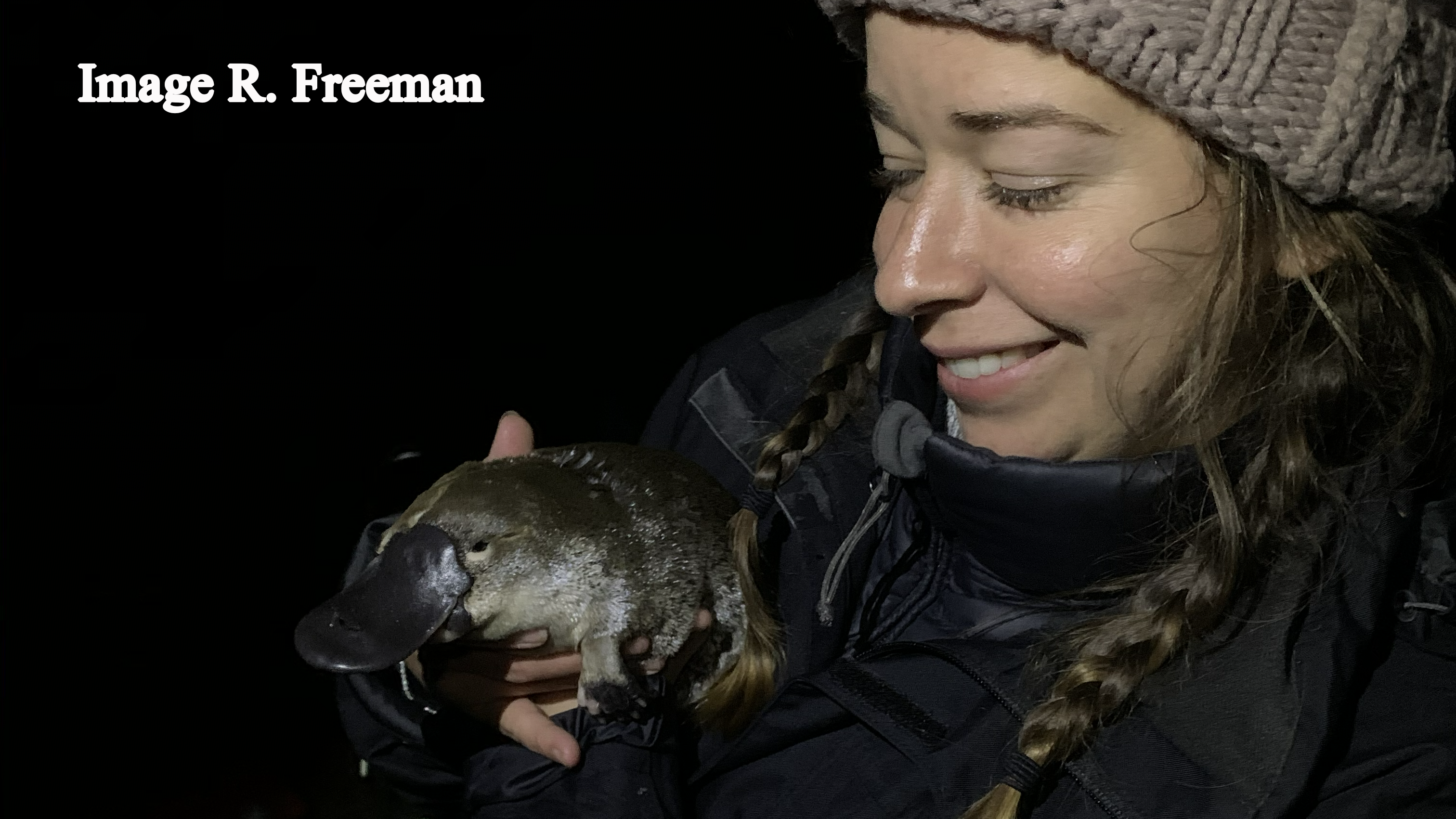
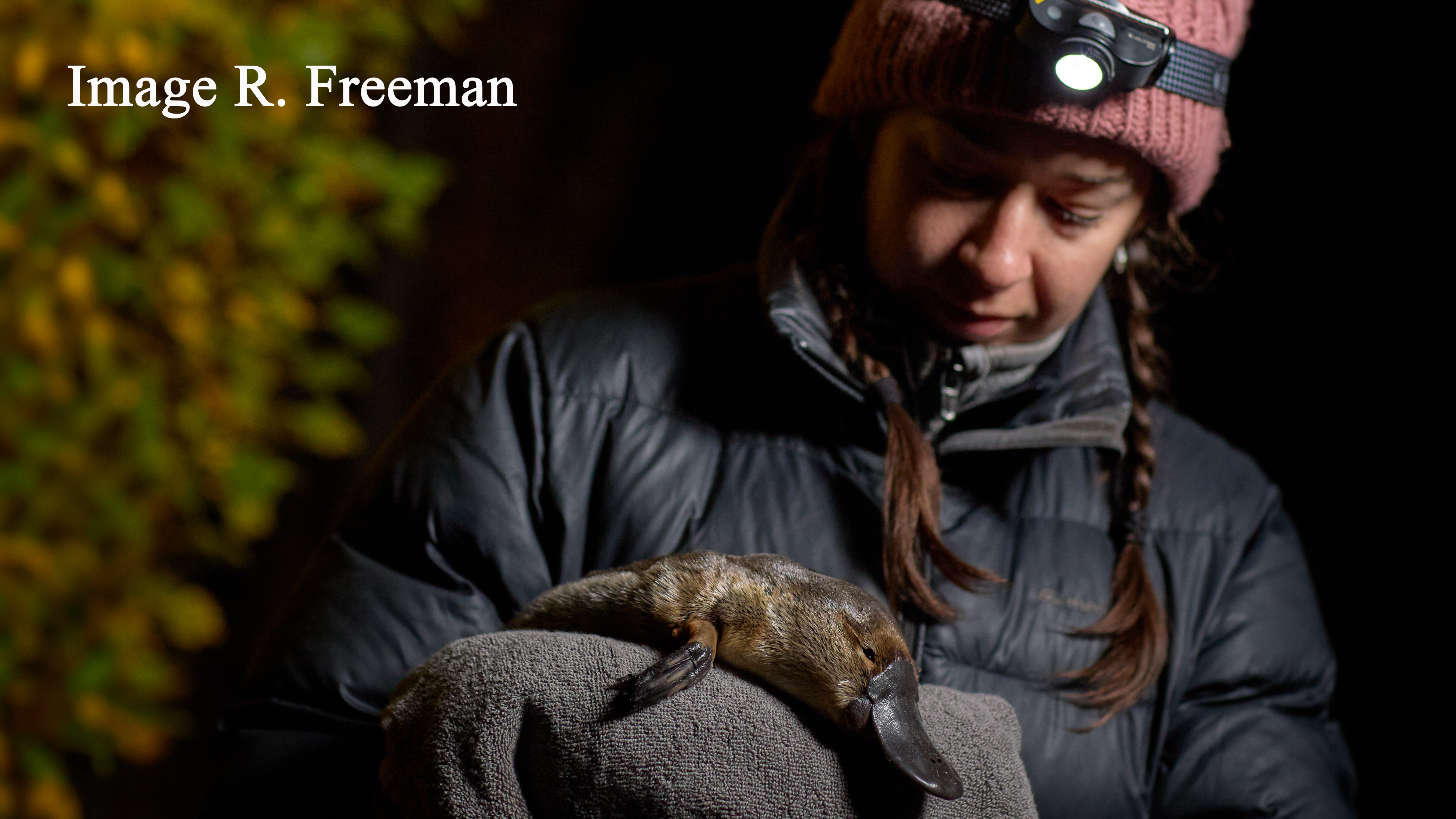
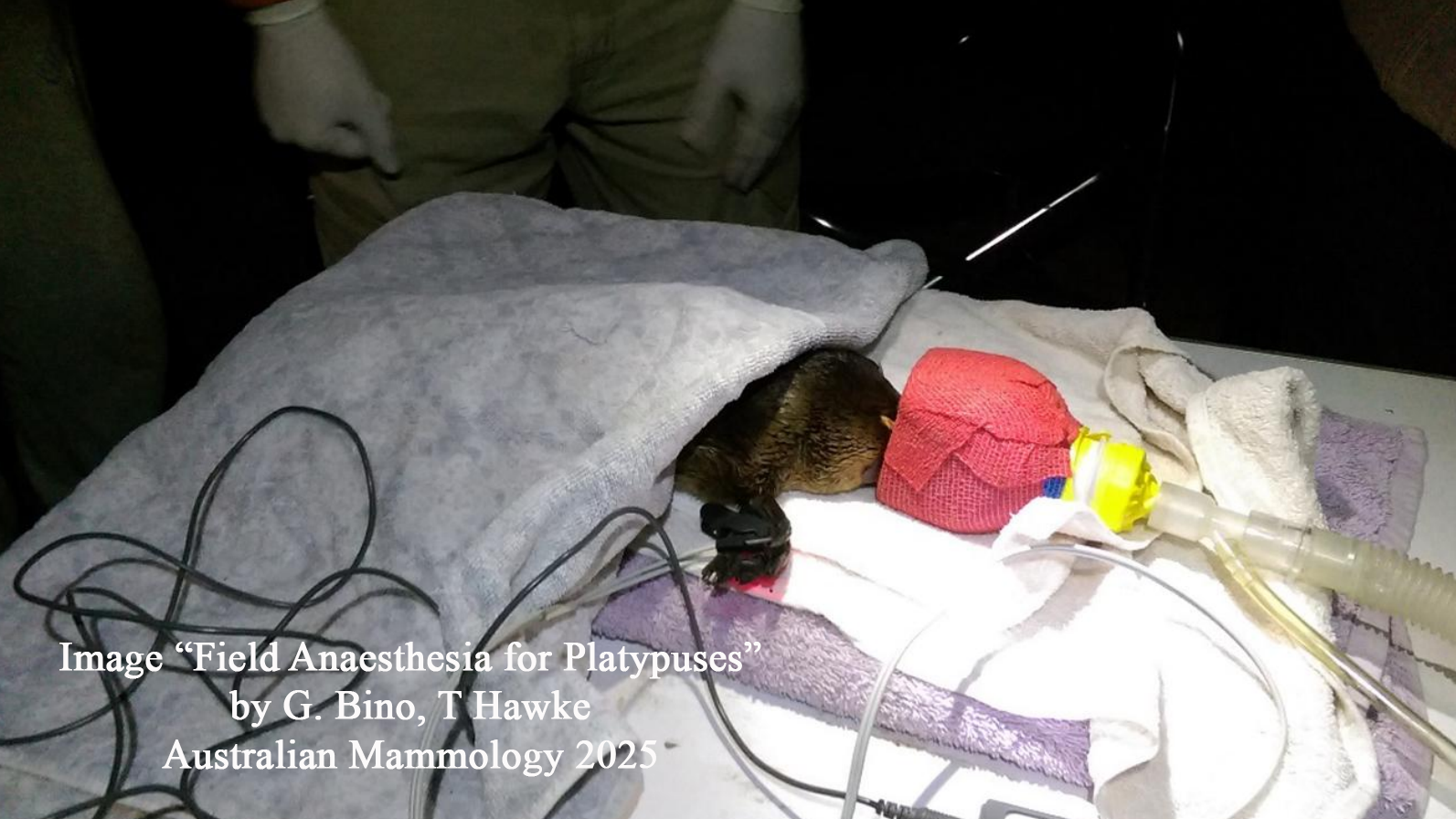
Yeah, so I guess for our research groups, like I said earlier, we kind of we did this in field anesthesia. So the process for us is as soon as we get a platypus out of the net, it goes straight into a pillowcase. People always find that either cute, funny, but essentially it's mimicking like a dark, safe place for platypus. So we'll put them in this pillowcase. Often the temperatures are cold. We'll kind of wrap them in a towel and they'll go into like the footwell of the car. In that space, the dark, it's quiet, they kind of go to sleep most of the time, to be honest. They're pretty chilled out. And then after they kind of relax, we'll do in field anesthesia. So the platypus while it's still in the pillowcase, it goes into this induction chamber. We use an isoflurane gas. So that's kind of typical of what you would expect if you take your cat or your dog to the vet, using all small mammal procedures. So the platypus is in its pillowcase, it breathes in this gas, it goes to sleep within about five minutes and then we can take it out of the pillowcase. We maintain the anesthesia with like a T- piece mask. So it's actually just a modified milk bottle that kind of goes over the bottom of this bill. Yeah.
David Curnow (51:32)
I love the pictures of this. It's very MacGyver. “We take a one litre milk bottle and then we create a mask and we onto the bill.”
Tahneal Hawke (51:38)
Yeah, yeah, exactly. It fits perfectly, fits perfectly. And then so yeah, we maintain it under this T piece mask and then we get a close look so we can take samples to look at the health, the genetics, the diet, all the measurements, know, just give it a give it a close look without adding any additional stress to the animal.
David Curnow (51:57)
You mentioned tail fat as one of the measures of say health of a platypus. What about knowing what they eat? Things like that. What are some of the indicators you look at and what are some of the things that vary, I suppose, over different populations and different water sources?
Tahneal Hawke (52:11)
Yeah, so in terms of diet, we do two things. We take a small fur sample from the platypus, which we can use for stable isotope. essentially everything that they're eating has a carbon and nitrogen ratio. So we can compare this first sample to samples of macroinvertebrates from the river and compare those ratios. And it will give us an understanding of what these animals have been eating for like the last three months or whatever kind of length of fur that we have there. Another method is that we take a kind of a swab from inside the mouth. So the platypuses, they don't have teeth, like we said earlier, but they have this cheek pouch at the back of their mouth. So if people have seen a platypus, they often come to the surface, they're like grinding their food and they're storing it in this cheek pouch. So when they're asleep, we kind of open their mouth, we take a swab of that and then we can send that to a lab who, as similar to the e-DNA that we were talking about earlier, can send back kind of a list of all the species that that platypus had within its mouth, and then obviously we do these research projects over a large number of areas. We can start to compare their diet, you know, between river systems, upstream downstream or dams and kind of look at how that's varying in all these different areas.
David Curnow (53:26)
You mentioned the fact that sometimes you might see them on the surface. And again, if you do, it's almost certainly going to be night or dusk or dawn. Sometimes you do see them during the day, just surface and swimming around. Does that indicating anything, poor health, poor diet, or just happen to be swimming around during the day?
Tahneal Hawke (53:42)
Yeah, think like so platypuses are predominantly nocturnal, but from our movement data, we do see that quite a number of individuals are also active during the day. So definitely not impossible to see them foraging during the day. think most people just expect them more on dawn and dusk and they're kind of more committed to searching for them. In terms of their seasonality, you would expect to find them out a bit more during the day during winter. It's kind of coming up to the breeding season. Those males might start making those longer distance movements. They might be more active, the water's colder they might need to forage for more hours during the day to kind of obtain all that food that they need to sustain themselves. So yeah, not uncommon to see, well, not very common to see them during the day, but not impossible. Yeah, well, that's true, yes.
David Curnow (54:24)
It's not common to see them at any time, let alone that time. But yes, it's not unheard
of. And it's not like some creatures where, I saw this. Well, that must mean it's sick. No, they can be just doing it as part of their normal day-to-day routine. I just like shopping at night because there are fewer old people with the pushing trolleys. Okay. You mentioned tracking them with radio trackers as one of the ways you do it. Are there any other forms of tracking them?
Tahneal Hawke (54:32)
Yeah, no. Yeah. Exactly. Mm-hmm. Yeah. So, we predominantly use acoustic tracking. So this kind of method involves setting an array. So we have these listening stations, which are fixed kind of in the river at whatever interval we choose, it's kind of like a cylinder. It's held down by a weight. It's got a float. The idea is that we then kind of either implant or externally attach an acoustic transmitter to these platypuses, depending on what kind of data we want. Implants, we can get up to two years of data. The external trackers, get three months or so until the fur grows and they kind of shed this tag into the water. And what happens is the platypus will be swimming upstream. It will kind of go past one of these acoustic listening stations and it will ping off that. And so if we have a number of them spread out, we kind of get an indication of these long distance movements or we can have smaller arrays too and we can kind of get an understanding of their fine scale habitat use and kind of where they're hanging out day to day. So it's a really effective tool for understanding the movements of an otherwise really elusive species.
David Curnow (55:53)
And is it something that is just effectively one every certain period of time or are they used as triangulations as things like that way?
Tahneal Hawke (56:01)
Yeah, generally it's like kind of one ping at a time...
Short clip “The Hunt for Red October”
Give me a ping, Basily, one ping only please.
Tahneal Hawke
...but we have done triangulations that involves having like a nice pool where you can set a number of receivers and then you triangulate the point within that single pool. But generally we're kind of looking at it over a larger area than that and trying to relate it to habitat characteristics or something. If we want more of that fine scale data within a pool, we generally aim to use the radio tracking just because you can really pinpoint seeing earlier where the burrows are kind of exactly the habitat that they're relying on within that fine scale area.
David Curnow (56:39)
And is that you walking around with a device listening for pings?
Tahneal Hawke (56:43)
Yeah, exactly. So the radio tracking is a bit more intensive. You kind of, you have to go out every day, you're pinging for your platypus and they might like, they might have gone 15 kilometres the night before. So it can be a bit of a process where the acoustic ones, you know, you just go and you download the data off the receiver. Yeah, it's a bit, it's a bit easier on the researcher, I guess.
David Curnow (57:04)
Let's talk about the researcher though. What are we looking at? What are the things that we want to know and by we of course, I mean you, what are the things we're looking at that we don't know and will be really beneficial when it comes to making sure they survive as a species?
Tahneal Hawke (57:18)
Yeah, so I guess a lot of our work now is kind of understanding a few things, but mostly how platypus are faring in different habitats and in response to threatening impacts like large dams and, you know, removal of riparian veg, all these kinds of threats that might be driving some of the declines that we've been seeing. So moving forward in this space, a lot of our work is understanding how platypuses respond to extreme weather events like drought. At the moment conditions in Australia are pretty good. We've had a few wet years. So the process for our last kind of few field trips has been trying to get an understanding of these baseline movement patterns for platypus. So using that acoustic data to understand, in good conditions platypuses are utilising this habitat in this way. And then inevitably in a few years when we have a drought, we might then compare how their movements change. You know, maybe they start utilising their habitats different, maybe they have to forage for more hours during the day. And we really want to kind of use that information to then understand when we need to intervene, like when these populations hit a critical level. We have a new facility out at Taronga Western Plains in Dubbo, which is an emergency refuge facility for platypus. So the idea with that is that during drought conditions, if a river goes dry or you know, becomes unfeasible to sustain platypus. We can go in, we can rescue these animals, we can temporarily house them in this facility and then we can return them to the wild when the conditions improve. So part of this research is understanding when it's actually appropriate to do that and how we actually do that.
David Curnow (58:59)
You mentioned the fact that they don't particularly cope well in captivity. What about translocation? Because we know from things like crocodiles, it can actually upset the whole ecosystem. What does it, what do they do? Do they cope with it well?
Tahneal Hawke (59:11)
Yeah, so there's only been a limited number of translocations that have happened. In recent years, one that we led from a place called Tidbinbilla Nature Reserve in the ACT, and this was under this same emergency scenario. And this is kind of what triggered us to have these refuge facilities is because a lot of people are reaching out saying, you know, we have platypus in our stream, we don't know what to do. And we had kind of nowhere to take those animals. And we had no understanding of how they would actually cope when we did intervene and when we did move them. The issue is like, obviously you could move them to another river or stream, but then that river or stream is likely having the same pressures. It's likely also in a drought scenario. Those animals are also under pressure. So, you know, we wanted to move them to a facility where we could control all these conditions. Those individuals did really well. They all went back to the wild. We were tracking them with these acoustic receivers for two years post release and four out of the five individuals appeared to repatriate fine. One we think moved outside the range, possibly it died. We can't answer that question with this data. So that's kind of, we know that moving them from the wild to captivity and back to the wild can be done. And then recently we did a reintroduction project to the Royal National Park, south of Sydney. So that was a wild to wild translocation. The Royal National Park, however, platypuses haven't been found there for upwards of 20 years. So we knew from environmental DNA surveys that they no longer occupied that system. So we moved platypuses back in in 2023, it was 10 individuals to start with as a trial because again, we weren't sure how the platypuses would handle, I guess being translocated into this environment. Although platypuses showed really good survival like at the 12 month mark, in 2024, we had breeding, so not even one year after the platypus has returned. And then, yeah, just last year we found another two individuals. So the survival has been really good. We've had evidence of breeding. So it does suggest that they're pretty resilient and they can be moved and they can be translocated, but you really have to have an understanding of what the source population is because obviously you don't want to have any impacts on them as well.
David Curnow (1:01:09)
Wow. Dr. Tahneal Hawke is, I guess, at UNSW, researching platypuses and including their habitats, which we humans have changed just a little. You talked about breeding after translocation. How important is breeding when it comes to a creature? How fecund are they? Are they popping out pups every second month? What's the process like in terms of timeframes and repeatability, I suppose?
Tahneal Hawke (1:01:57)
Platypuses breed only once a year, so the breeding season, it'll kick off around August. Again, north-south grading on this, so a bit later in the year down into Tassie. Generally, females will only lay two eggs per year. It's between one and three. We typically think it's around two, so not many and probably both of those eggs won't survive all the way to being a mature platypus either. So the breeding rate is not crazy.
David Curnow (1:02:23)
So they're not as like pandas. They're not really not putting the hard yards in. What are the eggs look like? How big are they?
Tahneal Hawke (1:02:30)
No, no. tiny. So when we say egg-laying mammal, people often think like a chicken egg, but it's like I'm talking like a spider egg. yeah, it's maybe two centimetres across...
David Curnow (1:02:43)
Tic-Tac? Maybe.
Tahneal Hawke
More like a Mentos maybe around Mentos. Yeah. Yeah. About that size.
David Curnow
Okay, but a different texture.
Tahneal Hawke (1:02:51)
Yeah, the texture is quite rubbery. It's not like a hard shell like we expect from a chicken egg as well.
David Curnow (1:02:59)
And in terms of how they raise that, do we know what are the processes for feeding? How do they, they're mammals, but they don't have nipples. As my children said, just imagine the nipple of a creature that has a bill like this.
Tahneal Hawke (1:03:10)
Yeah, exactly. So the females, they're kind of just excreting their milk through the skin, through pores on the skin. And then the little platypuses in the burrow, they're kind of just lapping that up. It's quite intensive for the female to begin with. She hangs out in the burrow with the young. She doesn't leave for a few days and then she'll start making bigger journeys. Obviously, she needs to sustain herself at some point as well. So she starts progressively leaving them alone for periods longer and longer as they get older.
David Curnow (1:03:40)
And the term for the juveniles, it like, is it puggles? Controversy. no.
Tahneal Hawke (1:03:43)
Well, this is, I guess, up for debate.
I say puggles think puggles has become more accepted in the last few years. don't, I think it actually just came from, technically echidna puggles. I think it kind of was getting a bit more use around zoo institutions and now it's really picked up in the media. I think it's cute. I think it makes people relate to platypus, but I think a lot of old school researchers are more into juvenile rather than puggle but I'm pro-puggle.
David Curnow (1:04:12)
Yeah, when you're posting on social media, nestling or juvenile doesn't hashtag as well as puggle. And two questions about those. Are they the cutest creatures on earth? And if you say they're not, can we fight?
Tahneal Hawke (1:04:15)
Yeah, exactly, exactly. They are, no fights.
David Curnow (1:04:27)
You wouldn't get to see them very much in the wild though, I imagine.
Tahneal Hawke (1:04:30)
No, we never see, we never see puggles obviously until they emerge at independence. So that'll be around January, February. So just on this last trip, we caught a few, what we would call juveniles, I guess at this point. So really young, they've kind of just come out of the burrow. The males have a characteristic spur of the juvenile male and the females, they actually also have a vestigial spur, which is tiny. It's like a, smaller than a match head. that's kind of how you can distinguish them also from their size. So they're much smaller. They're weighing often far less than a kilo. They're like tiny, but they look like a platypus. They're fully furred, you know, they're like 60 % of their adult weight, but still very cute.
David Curnow (1:05:10)
Okay. So that's the, that's the stage at which they would emerge from the burrow at which they are effectively look identical in terms of, from a distance size perhaps is different, but they are self-sustaining little platypuses at that stage.
Tahneal Hawke (1:05:19)
Yep. Yep. Yeah, Mum kind of kicks him out at about the three month mark and closes the door. You're on your own.
David Curnow (1:05:29)
Does she use the same burrow the next year?
Tahneal Hawke (1:05:32)
It's a good question. We think once the like juveniles emerge, obviously then she goes back to using a resting burrow. And I think a lot of the time they probably construct a new breeding burrow the next year. But I'd like, we don't have that kind of information for wild platypuses at the moment, to be honest. But I'd say like, you know, each year the conditions are changing, water levels might be different, there might be threats. So she's probably constructing a new one, but it'd be a lot easier if she just reused the one from the previous season. So who knows.
David Curnow (1:06:00)
In captivity, do they ever use artificial ones? Can you build them for them?
Tahneal Hawke (1:06:04)
Yeah, we have, we give them access to both an earth bank where they can build their own burrows, but then we also have artificial nesting, resting boxes that they can use if they wish. There's often towels in there trying to give them a bit more of a nice environment. Typically though, if they can, they will build their own boroughs, especially the females. They like to kind of make their own space and it happens pretty quickly, to be honest. They're kind of keen to build their own borough and have their own home.
David Curnow (1:06:32)
They're a homemaker.
Tahneal Hawke (1:06:34)
Yeah, exactly.
David Curnow (1:06:35)
Absolutely. Okay. Let's talk then about protecting them because what are some of the best methods that we know of at the moment for protecting platypuses, both individually, but obviously as a species across the country?
Tahneal Hawke (1:06:49)
Yeah, so like I said, platypuses, they're facing a huge number of threats. they live in the rivers, but they're also dependent on the health of the riparian area. So the area along the river edges, because they need those nice banks. And so a lot of the work that's being done, you know, it involves things like fencing off rivers. We want to make sure things like cattle and stuff can't trample those delicate banks. Replanting is obviously a huge one, especially in areas where we've seen a lot of erosion or clearing. Obviously those tree roots, those grasses are really important for stabilizing those banks so that they can build those burrows. And then the vegetation is important for the nest building. It's important for organic matter to make sure there's those healthy water bugs that are occurring. So there are a few of the big community-based things that are happening to try and improve conditions for platypus monitoring in general. So there's a lot more e-DNA work. There's a lot more community involvement in EDNA and reporting sightings. And that information is really critical because, you know, the platypus has such a wide range. They're so hard to study. Even with the netting, you know, it's hard for us to understand how they're faring in just one pool on one river, let alone from Tasmania all the way to Queensland. And so these, guess, community incentives to report these sightings are really helpful in understanding the distribution and the abundance of platypus. There's also work, you know, being undertaken in terms of pollution and fishing bycatch. So opera house traps, which is a yabby trap. It's used to trap yabbies, but platypuses can make their way into these traps and then they can't find their way out. So we see a lot of drownings occurring from these. But thankfully in the last few years, there's been a real push to have them banned, they’re only legal in certain areas in Queensland now, and we're kind of working on getting that legislation changed. And then just in general, know, educating people about fishing safely, removing fishing line, you know, rubber bands, all those sort of things that are really contributing to improving the situation for plight of this.
David Curnow (1:08:56)
We see many deaths as a result of things like not only nets, as you mentioned, fishing line and just general detritus in the water.
Tahneal Hawke (1:09:04)
Yeah, unfortunately we do in urban areas. It's a big problem with things like hair ties and rubber bands. Obviously in urban areas, people are swimming a lot more. They're losing these hair ties. Platypus is the way that they're foraging. They kind of slip over their neck and then they kind of get stuck there. They can't remove them with their, you know, their little flippers. And so that kind of just kind of wears away at them until it lacerates. And obviously that's not a good ending. Yeah, exactly.
David Curnow (1:09:30)
Effectively a noose snare such as you'd set for rabbits or something.
Tahneal Hawke (1:09:34)
Yeah, yeah, it's exactly that. And fishing lines a big problem, obviously, if you're leaving lures or you're leaving loose fishing line and it becomes entangled and the lure gets snagged on the water, the plight of a strand. So unfortunately, we do see like a, you know, a number of deaths from this that could have been prevented, I guess.
David Curnow (1:09:53)
You mentioned the idea of reporting sightings and things like that. How can people get involved in something like that? What are some of the places they can go to, I suppose, online or is it a phone call? How do you go about it?
Tahneal Hawke (1:10:04)
Yeah, so we have a partnership with the Australian Conservation Foundation, so we've got a website called the Platy Project. You just go online, you upload a sighting, like if you've got a photo or any like information about the date, you can write like a little blurb about, you know, it hanging out in the trees or a vegetated bank or just any information like that. Super easy to upload those sightings. And like I said, it's really critical for us as researchers, we can't, we can't monitor these animals everywhere. And when we're doing things like trying to get them listed as a threatened species, we're really heavily reliant on this atlas community data to kind of put the case forward that there might have been changes in their distribution and abundance.
David Curnow (1:10:42)
Yeah. And we talk about distribution and abundance. Do we have ideas when it comes to populations? Again, we mentioned this earlier a few times. It's tough to count a creature that spends its life hiding. Do we have any idea in terms of what they might once have been and what they are now?
Tahneal Hawke (1:10:59)
In the short answer, no, think, we have a gut feeling in terms of what we think. So we did a study a few years ago. It was actually, we wanted to put together all the old newspaper records that talked about platypuses. So we went to an online database called Trove, which was run through the national library. I kind of trawled through like 15,000 newspaper articles that mentioned platypus. Unfortunately, there was like HMAS Platypus, had to filter out all those kind of records that were useless. But it was really interesting to do that study because a lot of the records we're talking about, you know, in the early 1900s, we would see 22 platypuses on the Princes Bridge and the Yarra River, which is right in the CBD of Melbourne where like platypuses, obviously it's not feasible for them to live there now. It's like fully concreted on both banks. And 22 is a huge, huge number. And there was so many records like this and it's kind of led to this concept called shifting baselines, where now if we talk to people and they see two or three platypus, they think, wow, like that is so indicative of an amazing abundant population. But without this kind of historical context, you lose sight of what normality might be. And so, you know, maybe a hundred years ago, seeing 22 platypus was common. Whereas now seeing three is kind of the new normal for us. So I think a bit of that historical context kind of set alarm bells off for us in the first instance that maybe the situation is not as good as it once was. And maybe kind of this has kind of slipped under the radar a bit in terms of plethora of subunits.
David Curnow (1:12:37)
Okay, so another reason to keep up things like Trove sadly hasn't been in recent times such a useful resource. Who would have thought newspapers for platypus research? Incredible to think. Okay, koalas, there are some who believe that they may be functionally extinct by the end of this century. It's a dark thought and we certainly hope it's not the case. What about platypuses? Is there hope? Can we maintain a population even if it's small?
Tahneal Hawke (1:12:41)
Yeah, I think this is probably the thing I want to send home is that, you know, I think a lot of the times when we hear about threatened species, it's often too late. Like they've kind of reached that tipping point. They're too far gone. And then a lot of money seems to get poured into trying to fix what's like already irreparable in my opinion. I think with the platypus, we're in a really unique situation. They are still widespread. They're still abundant. Yes, there's evidence of declines, but I think, you know, we're in a position that if we make changes now, if we act now, if we put in these conservation management measures, that we really have an opportunity to turn the situation around for this species kind of before they're too far gone, before they reach that tipping point. So I think there's definitely a hopeful future for platypus. And I think just even in recent years, it's, you know, it's become a bit of sensation it's on people's minds, it's in the media, you know, people know about platypus so I think we're heading in the right direction. So yeah, I'm really hopeful that we have a positive future for platypus and I hope like, yeah, people are inspired to get more involved in kind of becoming a part of protecting that animal future.
David Curnow (1:14:11)
Dr Tahneal Hawke. Thank you so much for joining us on our “platypod” today.
Tahneal Hawke (1:14:14)
Thanks for having me, it was great.
David (1:14:21)
Thanks again to Dr Tahneal Hawke for her time and generosity. Check out the Platy Project by the Australian Conservation Foundation on our website. There's also a state-based public sighting scheme underway that's with the Wildlife Preservation Society of Queensland for people in that area. Both will give more information to scientists, so please check them out. Of course, there are those links to the platypus cams at San Diego Zoo on our site.
And don't forget our special short and sweet bonus episode exploring the amazing tale of “Operation Winston”. That's our name for it, not the real one. But it was a quest to bring a platypus to the British Prime Minister at the height of World War II. You'll hear from a historian who recently tracked down new evidence about the incident and the perilous journey of Winston, the platypus, across the war-torn oceans.
Dr Harrison Croft (1:15:08)
Winston was eating around 700 and 800 worms and grubs per day. So of course they left Melbourne with thousands of these, but when they made it all the way to Panama before they actually had to pull over in Panama to collect, to go digging for more grubs.
David (1:15:26)
Music for our show is by Michael Willimott. Thanks to Annie Pappalardo for help with this episode. I'm David Curnow, goodbye.
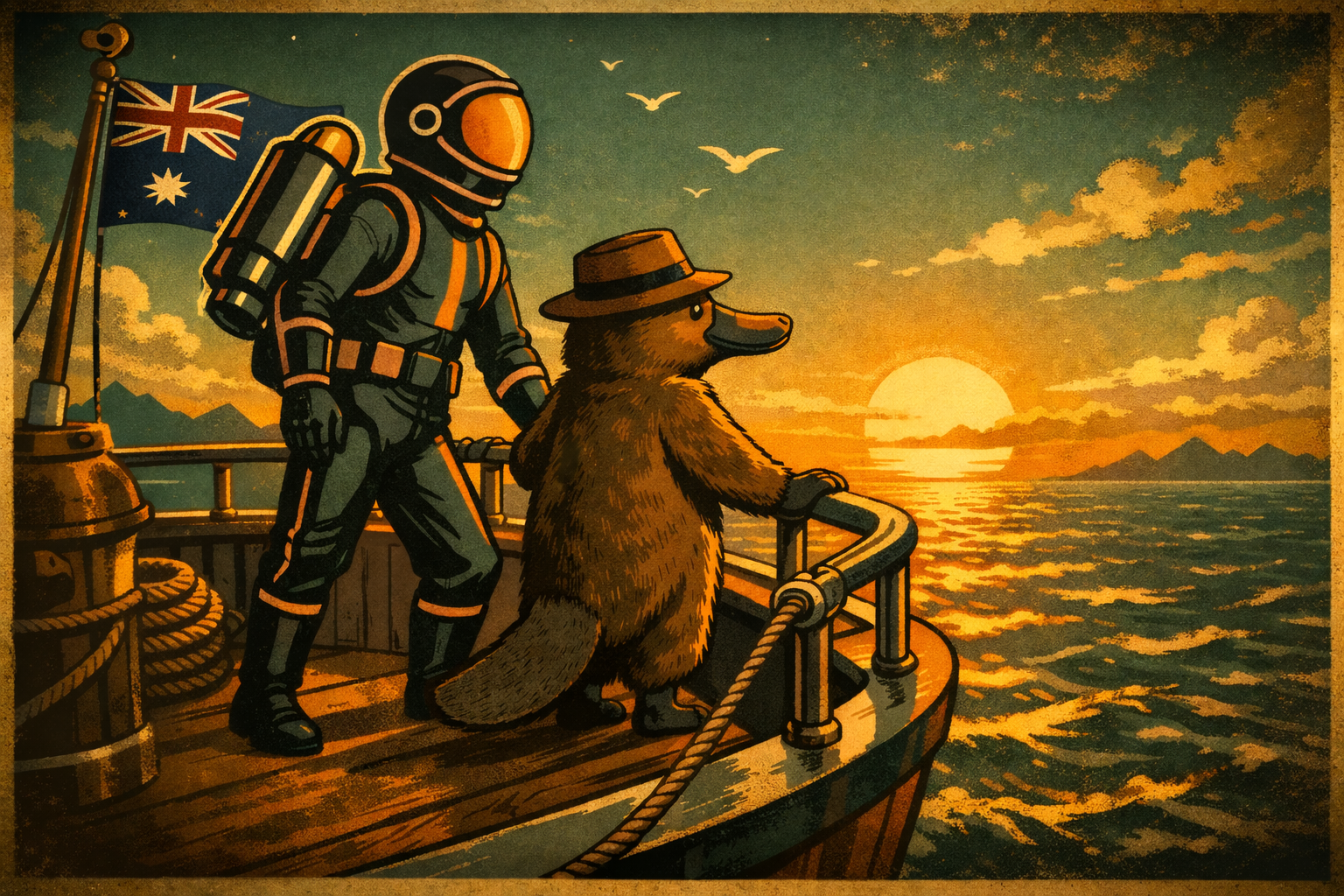

Researcher
Tahneal Hawke is a conservation biologist specialising in the ecology, health, and conservation of the platypus (Ornithorhynchus anatinus). She undertakes large-scale field and applied research programs across Australia, translating ecological science into practical conservation outcomes and policy impact.