Where Are We At With Urban Microclimates?
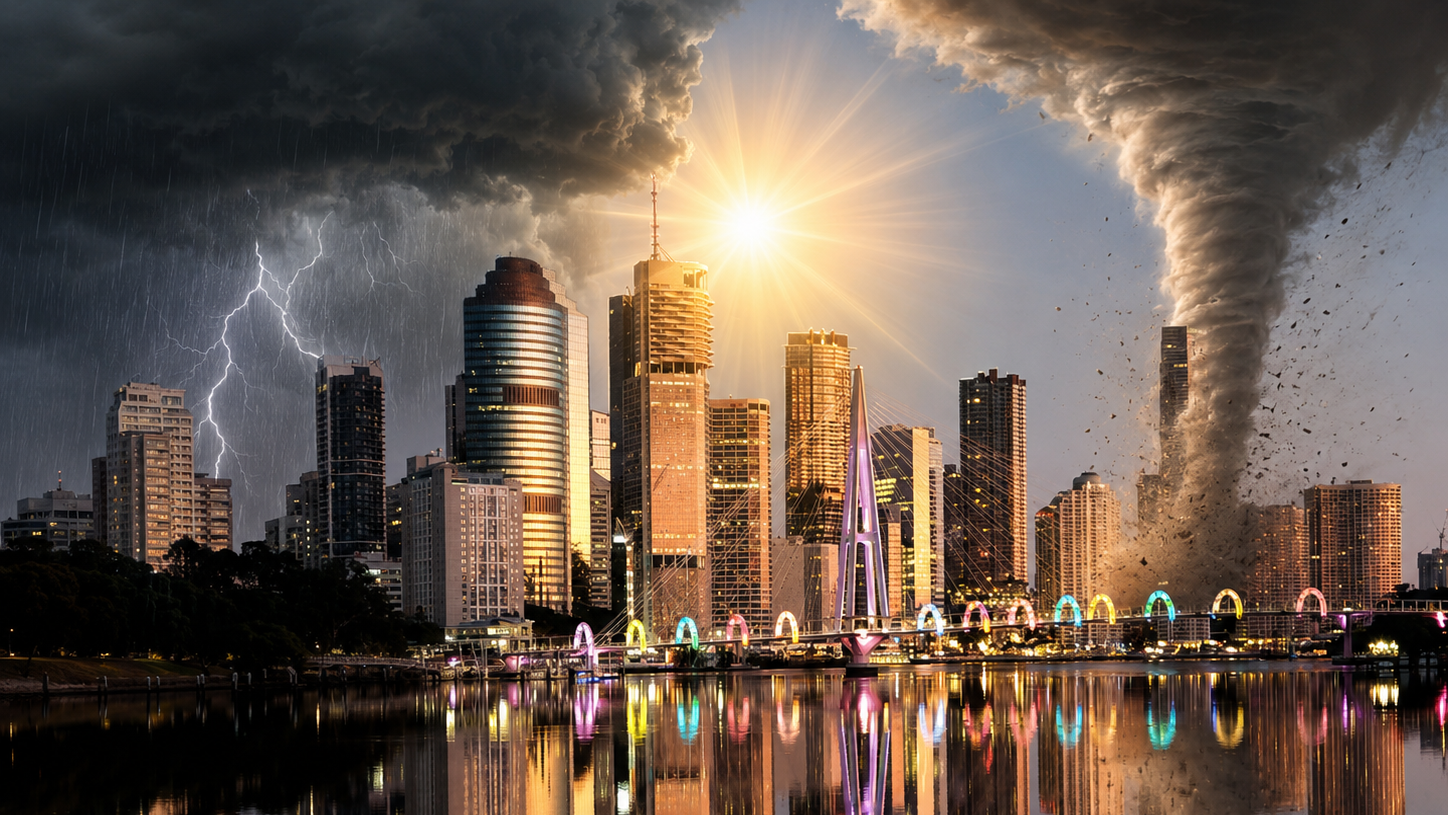
The global climate is changing faster than ever due to the actions of humans. But your local climate is too. Simple decisions like the colour of your roof, the location of a tree on a footpath or the material used in a children's playground can all have cascading effects on small-scale weather patterns. Perhaps it just raises the temperature a few degrees, or maybe it creates a hail storm where there wouldn't have been one, or flash-flooding that should never have happened. Dr Negin Nazarian from UNSW explains Where Are We At With Urban Microclimates?



David Curnow (00:09)
Hello and welcome to Where Are We At With, the podcast bringing you up to date on everything, one topic at a time. I'm David Curnow Firstly today, we did promise you last time that we would tackle hyperhydrosis this time. But don't sweat, we will be talking problematic perspiration soon. This time though, history's full of firsts. The first hominid structure that we know of was built in Africa by our aptly named relatives, Homo erectus. Get it? That was nearly half a million years ago. The oldest known dwellings were put up around 200,000 years ago in what is now France, but it wasn't until about 6,000 years ago that what's considered the first city was built, Uruk, in modern-day Iraq. Okay, so lots of dates and firsts. Here's one you may not have noticed. Twenty years ago, in 2006, the first time ever that more of the world's population lived in urban areas than outside them. What's the point of all this, other than your next pub trivia? Well with more than four billion people living in cities, it's taken some pretty serious building efforts to house them all. And while the world is rightly worried about the effect of climate change with atmospheric carbon and vast ocean current shifts, the climate can be changed in more ways than just globally. Urban zones have mostly grown haphazardly and incrementally, but there is often at least some consideration for how the city is affected by the local weather. Maybe it's the sea breeze, the winter snowfall, or possible storms or cyclones. Almost never, though, have we thought about what our city might do to the local weather itself. Urban microclimates are real and kind of a big deal. Have you ever tried to cross a large road barefoot in the middle of summer? Or found yourself trying to eat your lunch in a permanently shaded area in winter with the wind scything through your smart work clothes? What if the colour of your roof and that of your neighbours actually raises or lowers the temperature around you? Or those tall buildings in the CBD actually change the way moist air rises and actually creates or redirects hailstorms?
We've come a long way from mud brick huts and timber-framed cottages. One of those trying to work out just what impacts our cities are having on their local climate is Dr. Negin Nazarian from the University of New South Wales. She's in charge of UNSW's Climate Resilient Cities Research Lab. She's a chief investigator at the Australian Research Council's Centre for Excellence for Weather of the 21st Century, and among many other roles, she also chairs the Board on Urban Development at the American Meteorological Society. Where are we at with urban microclimates with Dr. Negin Nazarian?
Where Are We At With...? (00:00)
Dr Negin Nazarian thank you so much for joining me today.
Negin Nazarian (00:03)
Thanks for having me.
Where Are We At With...? (00:04)
Are you a cold weather person or a warm weather person? Do you like summer or winter?
Negin Nazarian (00:08)
I am an ocean person so definitely being out in the ocean in the winter is not as pleasant, so I'll stay a summer person.
Where Are We At With...? (00:14)
I thought we should get that out of the way because there are some people who really like it cold and there are other people who just can't stand it and their toes fall off and they really like it when it's warm. It would probably affect how you design a city, I suppose. We might get to that in a moment. What is the difference between climate in urban areas and rural areas?
Negin Nazarian (00:32)
So we want to first think about like what actually makes our climate, right? We have the like all the land that is around us, our natural environments, we have the mountains, we have the ocean and the earth and atmosphere, right? So this combination of these three components, let's say, the land, the ocean and atmosphere, is what's making our weather and climate. Now let's imagine what we do in our cities that actually make each of those. You might say, like cities are not in the ocean, so we can set that aside. I don't know how I would like them to be in the ocean, like we established. But land and the atmosphere is actually the parts that we end up changing quite a lot. Imagine you have a forest and then you start removing the trees, then the characteristic of the land. It maybe it's soil, you're changing it to asphalts, different materials. All of a sudden you have these blocks of concrete. So you're changing the land drastically, right? But you're also changing the atmosphere because not only the land changes are influencing it, but also you're putting all these pollutants, different emissions. And even the heat and energy that we consume also is what's put in the atmosphere. So now if you put all of that together, it's really easy to imagine then why a climate in cities could be different to a rural area where all of these drastic changes are not there. So it could be that a city is all of a sudden materials that are just absorbing a lot of heat. So then they can be warmer than your rural surrounding. It could be that the city is because you have paved everything and you don't have the same way of soils and vegetation, then it's also drier. You don't have as much moisture level. Or it also can be like things that are related to wind. If you have a lot of building blocks, especially like a lot of Australian cities are coastal. Imagine now you put those building blocks right off the coast where the sea breeze is coming in, again you're changing all of these patterns. So yeah, the our weather and climate in cities are different because we're really changing a lot when we come in building this. We're changing a lot of the land that changes the heat, the humidity, the wind, and everything that just cascades from there.
Where Are We At With...? (02:41)
It can affect so many things. It's interesting because when we talk about the idea of something like a building, or even the materials, a car park, for instance, affecting local climates, microclimates as it were, there are people in the world who still believe that humans aren't affecting the global climate. Is it a tough sell sometimes to convince them that something like a building or a few buildings or a car park can do the same on a local level?
Negin Nazarian (02:53)
Yeah. Right. I feel we need to make two arguments here. One is that even if we didn't have climate change, the way we're building is changing local climates, which is microclimate that you mentioned. So let's even forget about like the global climate change. We can just have this conversation at home. And honestly, it really doesn't take much. All you need to just go around the city, go into an alley where maybe there are all of these split units and air conditioning units where like they're just dumping the heat and you're gonna feel very different than going into a park where it's like really shaded. So that's the first argument to make, which is let's not even think about climate change. Let's just simply sense how our city is different depending on how we traverse it. From a very well-shaded, very well-vegetated area all the way to like a place where maybe you're exposed to a lot of black materials and there's not a lot of wind. Then the second argument is that wait a second, this is just not an isolated system, right? It's not just a city on its own, but it's also giving feedback to everything that is happening globally. It's like a two-way street, right? Globally, we have all these changes that we're experiencing. There is the warming, the annual temperatures are warming, there are the extremes that are happening. We have more heat waves, longer intense, we have differences in rain. Now they mean different things to cities as well. So that's one way of saying, like, okay, your city actually might be more vulnerable to some of these extremes because guess what? We have more problems with drainage in a city than in a rural area. We have more problems with heat in a city than a rural area. And at the same time, your city actually might even be contributing to it. When it comes to energy and emissions, 100% the city is one of the major sources of climate change. but it doesn't really end at that. Most people think, okay, the main contribution of cities is because we consume a lot of emissions, consume a lot of energy. But there's really a lot more. There are all of these feedbacks that we have which we call the ways that cities are changing our weather.
Where Are We At With...? (05:05)
We might get into some of those in a moment because it's fascinating, some of those different aspects. We're not here to talk about where are we at with city design over the centuries, the history of city design. We've had cities for about ten thousand years or so, a little bit less. Do we know when they started or how they started affecting? Were there certain material uses? Are there any records about this sort of thing happening in in times past before the glass skyscraper?
Negin Nazarian (05:30)
Yeah, so there are two interesting components that first of all the history of city design or urban design. We might think that like it's been tens of thousands of years, but in fact some of the communities like Australia they didn't necessarily evolve designing in the same way traditional cities were designed. So very often, if you look in in Europe, in Asia, in the Middle East, the cities were really designed in harmony with the environment. The materials were coming from the land. There are in some of the hottest places in the world, you'll see that they're using almost no windows. They're using designs that keep the indoors completely cool. They're creating even some natural ventilation through this design so that there's like wind going through it. But we come to Australia and we see, and this is not just unique to Australia, but a lot of places, for instance, with history of colonization, for example, where we see that the design is not following the climate of that place, but is following the climate of somewhere else where like it's tr is culturally being influenced by. So that's already one of those problems where it's not just about like, you know, the modern problem of skyscraper glass boxes, just really historically, there has been a lot of inequities. There have been a lot of cultural influences that took us away from that harmony like that we had before designing with the the climate. And then after that, the second thing is, well, the invention of air conditioning. You could point out to a lot of the changes that has been mainly made in urban design and how it really deviated us from like that that harmony with the, the weather and climate is really you can pinpoint it to the invention of air conditioning and how not just the invention but how reliant we have gotten to the use of air conditioning as opposed to our natural ways of acclimatizing to weather and climate.
Where Are We At With...? (07:22)
In a sense we've we've treated the, the building of some of the cities around the world as colonizing in itself. The city is colonizing the local climate. It is adversarial rather than complementary and in a sense w some of the people who've built it felt that they fought and beat the local climate and and so therefore we've conquered it and yet that in itself perpetuates a problem.
Negin Nazarian (07:39)
Yeah. I think this is this was a narrative that we've been told for so many decades that this is the genius of some of our modern design is that we can beat the climate, right? And, and you know, we end up paying for that and in some other ways. You could say that there are absolutely modern designs that are in fact are able to still keep that balance, but it has taken us like many, many years to actually get there.
Where Are We At With...? (08:08)
Yeah. Anyone who's looked at cities like Phoenix, Arizona in the US and some of those go, What are we doing there? Perhaps we shouldn't be there at all. And the same applies for cities ⁓ around the world when it comes to flooding. You mentioned the idea of ⁓ overcoming and conquering cities like Brisbane, Lismore, other places around Australia where effectively they are watercourses with city problems, as the book goes. we think we've conquered it, and of course every now and then it reminds us we haven't. can we talk
Negin Nazarian (08:34)
Absolutely.
Where Are We At With...? (08:35)
A little bit about some of the examples around the world for you as somebody who specializes in this. Are there cities around the world where some of the worst examples of design or building choices when it comes to urban microclimates?
Negin Nazarian (08:49)
Some of the worst examples. I think instead of picking on cities, I'm gonna pick on some practices. we won't name them. Though I'm sure some of them will come to mind. Yes. So I mean very close to home.
Where Are We At With...? (08:54)
Good idea. We won't name them. New York. Los Angeles. No, but that's yeah, we'll do whatever you want.
Negin Nazarian (09:04)
talking about places in Australia where we know they're dealing with with really extreme heat because of the location western Sydney is one of the examples where distance from the coast in Sydney is one of the major factors when it comes to heat. So urban design is important, don't get me wrong, but our geography is already deciding a lot of stuff for us, right? So it means if you're West of Sydney, you have the Blue Mountains, you have the warm wind coming from the desert, you're far from the coast, that already means really major difference in terms of temperature. So imagine now if you're trying to create more housing in Western Sydney. and you decide that, okay, we're going to build everything with black roofs, black materials. So these are some of the simple composites, simple practices that we've been doing wrong. And it has, in fact, we're showing the data shows that over the last few decades, Sydney is really the material, the albedo of Sydney, which is the factor we use to say how much of the, let's say, solar radiation is reflected, is really going down. So the city is getting significantly darker. This is a city that is dealing with heat. This is a city that we know that needs to look at some of these effective strategies for cooling itself and yet we're going an opposite path of using very dark roofs, very dark materials, which means they're going to absorb them. Some other cities, you mentioned Los Angeles, which we don't that we want to point out, have gone the other way. Maybe they are thinking that, okay, we need to paint everything white. But that itself, again, is not necessarily the silver bullet. Because if you're not doing this strategically, what would happen? Imagine a a pavement that is really white. You just all you have to do is just think about a scenario where you felt blinded by some of these glasses, where you felt blinded by a pavement that was just like reflecting so much solar radiation back to you. So that again you end up paying for that material when it comes to your like the heat that you're exposed with. So the the main mistake that we take very often is that either we completely ignore something or we think that it's a silver bullet. So in the case of Sydney, we're ignoring like, you know, the the use of reflective materials that we need in some of our roof surfaces. And in other places we we go with the trees or silver bullets, the the white pavements are silver bullets. Well, unfortunately, we don't have any of those silver bullets when it comes to that. I mean, other strategies are also a lot of housings and developments around the world coming up where they're trying to maximize on seafront properties. They want to maximize on places with views. Well, what does that do? It also blocks all the ways that we can cool our cities, which is through natural sea breeze. So these are just some of the practices we've had that we've learned over the years that it can have really drastic impact when it comes to urban climate.
Where Are We At With...? (12:02)
Who are the people that need to be taking this into consideration? Because when you think about a a land developer, you think about a company that's trying to sell properties, me as a home builder making my decisions, where do these decisions need to start considering them?
Negin Nazarian (12:16)
Everyone. I think it's one of those things that goes across. So it really depends. We don't want to put responsibility on everybody, but we want to make sure that everyone is aware, regardless of what level or scale we're talking about. As a homeowner or as somebody who is going into market to buy a property, we need to be aware of like what is really the impact of some of these choices that we're that are being made. Because there are certain things that we can think of that at the like really building level, we can think of how like better insulating my house, how like using different materials. Simple thing. Do I go to Bunnings and buy that synthetic turf that looks really beautiful and green all all year round? So at the individual level, you may not feel that everything is your responsibility because we're left with options we have, but it's still there is really hope that we we understand how important these choices of designs are. And hopefully then that gets into maybe expecting more from the the property market, from those who are providing us with these housings. So then that goes into of course like the developers that like and and very often that's linked to the connection at the council level or local government. This is one of the challenges we see, especially in Australia, but also many places around the world where the decisions are made at certain scales and they're not really consistent. So let's say City of Sydney has one practice of 30% tree coverage. You cross the street and go to another council and things change. But at the bottom line of that is that there are a lot of responsibilities that come down to what we regulate and what we expect, and also what we are willing to let go of when we have problems like housing. Very often the economic problems and problems of providing housing, they're given more priority than problems of environment and climate. And this is something that we've learned over the years that again can be it can come back and make us pay in the long run.
Where Are We At With...? (14:16)
Dr. Negin Nazarian is our guest on Where Are We At with. We're looking at urban microclimates. Yes, it doesn't just happen right around the world, it happens in your backyard. Literally, in some cases. When it comes to making decisions about these things, how hard is it to say this is what's needed and we can take the political will to push forward with it?
Negin (14:38)
Yeah, there are often ⁓ certain barriers when it comes to transferring what we know, especially from science and reach research into application. The first one you could say is it's simply structural challenges that we have. And that really very much goes into our governance system because we have very different levels of governance when it comes to managing the design of our of our city. So you could say at the individual level, you can decide how you build your your building and it fits within certain guidelines. You could say at the local or council level, then there are decisions being made about like what's the percentage of tree covers or what are the like percentage of impervious materials it means means like completely covered like where there can be no water absorb and then it it those need to follow what are the state level planning guidelines and then obviously those are all again following following the federal level so first is really about the fact that decisions that we make about our cities and design of our cities have all these different actors from the person to the developer to the designer all of that and different governance system. In addition to that, there are obviously like some always some challenges of what is being practiced in science versus what is needed in application. But the final point that I think is really really some of the key aspects is not about just the structure of it being different or like I said there's some translation from science and research to application but I find that's mostly related to competing interests. So very often we have challenges in our cities that end up getting a lot more priority or a bit much bigger weight than the way we design in harmony with climate. So let's say if we have a problem with housing, if there are economic developments, if we just need to make sure that we are able to be prepared for our population growth, all of that they end up having a lot more weight. And this is something we see that some other countries, like Hong Kong, could be a really good example of that. They're trying to manage, manage really well, whereas others are just like always putting that economic and housing levels above them. The Hong Kong case to me is really interesting because it's actually one of the places where you look at population density, it's the highest population density you can think of. If you have seen it or have been, you know that like it's really the definition of density is completely different than what we consider as high density in Australia, right?
Where Are We At With...? (16:59)
Some of the places some of those in Hong Kong, we're talking effectively a group of high rises, for instance, that have more people than most Australian towns have. I mean, they're huge.
Negin (17:06)
Absolutely. And not just one or two neighbourhoods The entire like the entire areas could have hundreds of these towers that are residential, commercial, or mixed use and so on. But if you actually look at the entire Hong Kong, you see that majority of Hong Kong is not developed. In fact, majority of it is still very much protected land. In addition to that, the areas that are developed, they're following very clear planning guidelines so that you actually consider not just developing more and creating more housing, but also you put that at the same weight as developing more, but developing better, and also developing more resilient. So, one of the examples is that some of the guidelines for urban ventilation is already implemented in their planning guidelines. So every developer, when they develop those towers, as long as they can show that they have considered, for instance, the ventilation around the building, through the building, the impact of ventilation for the entire area, and therefore subsequent effects on heat, then they can maybe build even you know higher towers. So this means that they are able to still like you know make different stakeholders happy. So it means that you're working closer with the science. But also we you're also working a little bit more in understanding of who is going to occupy that space. Around 40% of housing in Hong Kong is in fact like public or affordable or like provided by government or managed by the government. And that means again you they need to be also very mindful about who is going to be resident there and how like not just the outcome but the indoors are being affected by the design. So bottom line is that there are a lot of gaps, but we do see examples of cities where they're trying to think about how we can design more better and more resilient.
Where Are We At With...? (19:02)
We look at something like a Hong Kong where we're talking about skyscrapers, immense cityscapes that beg a belief in in many cases. Does each city have its own individual unique circumstances when it comes to its own microclimates just from the geography itself, coastal versus inland, escarpments, hills, all that sort of thing?
Negin (19:19)
Absolutely. Yeah, absolutely. So the way that we think about different factors that shape our urban climate or the climate of the cities and normally is categorized in four parts. One is the urban form. So if you think about it as a town where it's isolated buildings, they're mostly low-rise. The form of that town is very different than a form of it like a high-rise, like we thought we talked about city like Hong Kong, right? So that's the form that's different. But then there's a difference in fabric as well, right? So you can design with very different materials. It can design with or without vegetation. You could design with things that like that fabric materiality of it can be different. The third one is what we call function and the function is really about anything from humans, energy, the flow of people, the emissions that we put, the pollutants that we put, and then finally about the geography. What it means is that even the same city, exactly the same size, exactly the same density, exactly the same function. If you put it in a tropical place, let's say Darwin, versus if you put it inland, let's say in in Canberra, or you take it completely to Alice Springs, like even further inland and more arid environment, they're going to have very different responses, very different microclimates. So this is really important to think about first what happens like inside of the sea, but also that like it's not just what happens within it. They have an interaction that two-way interaction between the cities and larger scale weather and climate that makes a big difference.
Where Are We At With...? (20:53)
And of course, in many situations a lot of those decisions have been made before understanding the science around how that affects the local microclimate. Does that make it difficult as well?
Negin (21:03)
It does. It's very often cities are evolving over time. And as they are ⁓ expanding, they there are things that are really changing that dynamic of the city and how it interacts with rain, how it interacts with the heat wave. So you could say that, you know, if I, if I have a city of if I keep the size of the city the same in terms of like their area, maybe things are okay. But if you're actually making it rougher, which means like actually that they have builder buildings that are taller or there are the forms of it, it's actually going to interact with the wind, you might create more local storms, right? So some of those things are in fact
Where Are We At With...? (21:43)
As as much as that, create a new st... like create local storms.
Negin (21:45)
Absolutely.
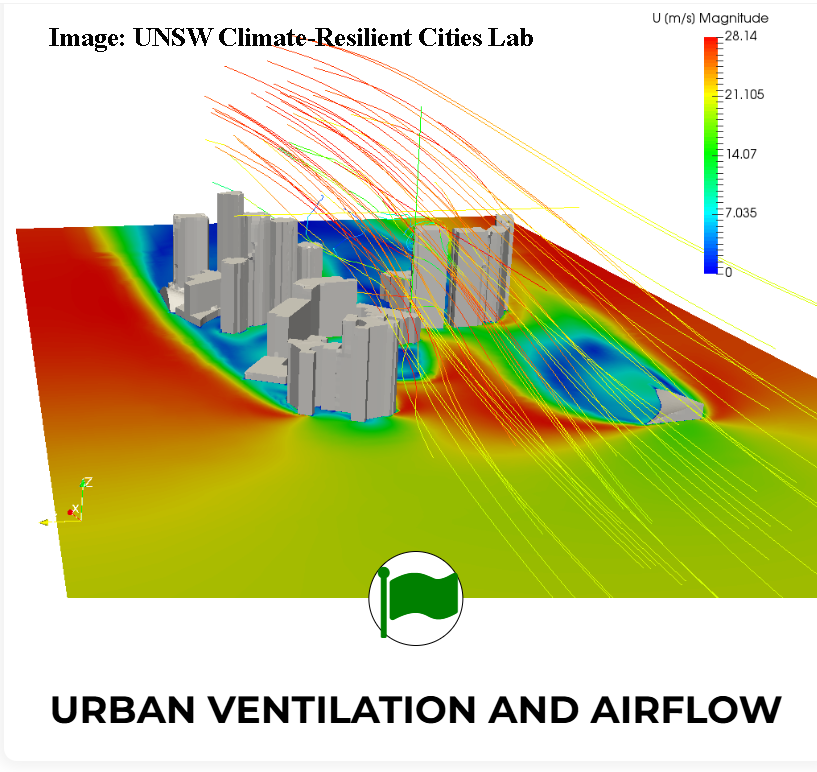
So this is actually something that came out just a few days ago and it's actually a really well studied case in a series of cities in Texas, Dallas, Austin, and other smaller areas around them. they're able to show over long-term studies that the impact of the cities on the storm is different depending on the size and the cities that the this collection of cities have more impact in creating more. Localized storms than changing the larger scale storms. So imagine you're creating a lot of heat over a city. You are obstructing the wind over a city. You're adding more pollutants in the city. These are all the ingredients that would change the storm, change the rainfall. So absolutely can make a big difference not just based on the size of it or makeup of it, but also where you place it, if it's inland or it's coastal in different climate.
Where Are We At With...? (22:43)
How hard is it to model something like that, to say, well, if we put these this many tall buildings at this height with this amount of space between them, this is what'll do? I imagine it's a lot easier to look at it with the data in retrospect and go, look, that seems to be causing more local storms, than to actually be able to say this is what we believe would change in the future if you did this.
Negin (23:03)
So how hard is it if you ask climate or urban climate scientists like me would tell you, no, it's not hard at all, but of course a different answer if you want to ask a designer or a planner with different background. Interestingly though, the hardest thing isn't modeling, the hardest is to get good observations for cities. This is one of the biggest challenges we have. That for the longest period, in fact, the observation sites we had, they actively avoided cities.
Where Are We At With...? (23:09)
Ha ha.
Negin (23:30)
Whatever was happening over a city was a contamination. So that means, like, you know, this is the city is creating noise that I'm not interested in. I'm interested in understanding the atmosphere, right? So I'm gonna put my sensor somewhere where I don't get this noise. So that means we are actually we don't have really good data in many cities, including cities in like really resource rich areas and a lot of Australian cities too. So modeling is easy for me, a little bit harder for others. But hard what is really hard across the board is actually getting high quality data over cities and especially when it comes to things like rain and storms and obviously it gets a lot harder. Yeah.
Where Are We At With...? (24:10)
Yeah, absolutely. Easy for you to say, of course. ⁓ when you think about it just even on a little micro level, you if you imagine the, the Stevenson box, which is the the measurement that you use for climate conditions, the Bureau of Meteorology, for instance, which has to have shade, it has to have and ventilation allowed but not directly hit by the wind, in a sense trying to get pure data, but as you say, that doesn't tell me exactly how cold it is that day when the wind's blowing hard and it's sunny it doesn't
Negin (24:24)
I guess it doesn't tell you what you experience in the city, right? So you have a very different reality of the heat, of the moisture, of the wind, all of that compared to what the sensor from the Bureau of Meteorology is telling us, right? But what is actually really interesting is that a lot of citizens have taken this upon themselves to buy sensors that you can go and there are relatively low cost. I acknowledge that like you know, low cost is a relative definition, but let's say for a couple hundred dollars compared to thousands of dollars that we invest in scientific grade. sensors, you can just go, you know, to a store close by JB Hi Fi Officeworks and then buy a $200 sensor, and you just put one in your house and one in your balcony in your backyard. And that has created over a thousand sensors in each Australian cities for us on average. So these are people who want to know what's actually happening close to to them and it also helps us understand what's happening in our cities a lot better than the sensor that comes from the Bureau of Meteorology.
Where Are We At With...? (25:41)
As someone who's a bit of a weather nerd, I have enjoyed having my own little rain gauge and the winds and all that sort of thing in the past. I didn't realise yet that some of those are connected in a way that they can also provide data to someone like you. Is it done automatically ?
Negin (25:54)
Absolutely. We are very grateful. For all the nerds out there, very grateful that that they are actually contributing. So just to g tell you some give you some perspective, like when we started with this method, maybe like you know, you could find hundred sensors over a city like Sydney. now, like I said, there are over a thousand sensors in Sydney and maybe a little bit less in other capital cities. There's cities around the world like Paris or Berlin that have like three to five thousand sensors. This is incredible.
Where Are We At With...? (26:01)
Yeah.
Negin (26:25)
Like you know, it's really helping us understand all of these microclimate patterns in ways that it's just simply not feasible. Like we can't blame the Bureau of Meteorology for not having thousands of sensors. Who's gonna be able to manage that, right? so this is really incredible that people actually contribute to our science without them realizing, and it's so important for us, otherwise, we won't be able to understand. Of course, we have modelings, but we understanding from the sensors are completely different.
Where Are We At With...? (26:51)
Negin Nazarian is our guest on where are we at with we're looking at urban microclimates. The fact that it could well be your backyard rain gauge that can help decide city planning, house design, all that sort of thing in the future, it's it's great to think. You mentioned a little earlier about the idea of looking at vegetation mapping and hard surfaces, whether something's porous or not, whether it's reflective, whether the albedo is high. What sort of information is kept on cities about some of these things. I do know some of your research has looked at things like urban density or population density in cities that hadn't done it before. What information is out there?
Negin (27:29)
Actually, a lot of information out there, but not from sources or official sources that you may think of. Something like albedo of the city is not a parameter that we keep. it's not in a part of our planning, but it's something that we can get from satellites. There are a lot of satellites that are orbiting the earth, or some of them are actually stationary, and they give us really important information about things like albedo, or things like not just the coverage of the like a tree coverage, but also the greenness of them or the density of the leaves. These are the kind of stuff we can get from satellites again, better than official sources. Of course, there are official sources, like there's some councils in Australia that would know exactly where each tree is, how tall it is, how old it is, all of that stuff. But in my experience, they have been few and far between. There are very few of them in Australia, they have it. There's no national data set that would give us this information. City of Sydney has the most extensive data set that we've come across. They have had, they've flown LIDAR in the past that will give them information at the 3D level, but also they have a database that is based on their surveys and assessments. And this is incredible, but it can be limited. Can you imagine if we had that for every council in Australia?
Where Are We At With...? (28:27)
Which ones do I immediately I want to know which ones would do that?
Negin (28:51)
It will be completely game-changing, but it also requires massive investment in things that are not necessarily regulated, right? So if a council like City of Sydney says, I have very clear guidelines around tree coverage, I have very clear clear guidelines around like how much of your development can actually be built versus non-built or non-processed areas, then they they are investing that time and effort into creating date those data sets to meet their regulation needs. But again, we're lacking both in data and regulations across the boards. There is no integrated framework right now. So that's why we rely on things like satellites, which can give us information at the global level. They can be limited in some aspects, but they can be really good, like I said, in global aspects.
Where Are We At With...? (29:40)
I understand you were involved in in some of the mapping of the urban density and and that sort of thing in in Sydney. Tell me a little bit about that project.
Negin (29:48)
So in a city like Sydney, it's very common that you have places that are like Victoria City, C D, and then there are other areas that are maybe industrial and then you'll have also residential places that can really range from some that are like compact mid-rise, let's say Zetland or like Waterloo area all the way to places where there are more like they're low rise, they're open neighbourhoods. So all of these they have very different reality when it comes to urban climate.
But they're also placed in different places in the city, right? The ones that are closer to the water might be a little bit denser because that's where the you know property is more soft after, so you get more density there. And then when you go further away, there are maybe more open, low-rise, like separated housing that is more common. So you the question here is what is really the impact of urban climate? And is it more about Our geography, or is it more about the the way that we design? So the way that we've been looking at that, for instance, has been let's come and think of it with sensors that are there, or maybe we can look at it with modeling. So you can do both of the ways. One is this is a reality what we're facing. If you put a sensor, we know exactly what's happening. But that's also very expensive and you know it takes quite a lot of effort. Normally it's organized by you know, official. Let's say Bureau of Meteorology or different research institutes. So that's the one path we can go down on. It would mean limited sensors and they're not really covering everywhere. And the other path is that we can do modeling where we can come and say like, okay, I'm gonna create a model, a climate model, where I know exactly where my city is, I know where, like what are the characteristics of it, and I maybe look at different heat waves or different scenarios, and they both really tell us very interesting patterns. One thing that has recently come up is that not only the actual official weather sessions, but we can in fact rely on the sensors that you might decide to buy from Amazon or Officeworks or JB HiFi and you say, you know what, I really want to know what's the situation in my house because I have really nice wine around or because it's where my child sleeps. like you know all this stuff. And then we're actually able to access some of those information. One of the examples is a is sensor that gives you actually two little sensors, one you put inside and the other one ask you do put outside. And that means this time instead of having 10 or 12 official weather stations from the Bureau of Metrology, we can have over a thousand stations over Sydney. And now we have like quite a few in every neighbourhood. So we've mapped this over a few years. We were able to show, for example, how when you're in a coastal city, like if you look at the land surface temperature, what the satellite shows, like satellite can tell us very beautiful picture of like temperature and and a lot of people rely on that. We are actually about to show that you know air temperature, what we experience is is not the same as land surface temperature. Like we are seeing from satellite all these hot spots, really red. Like, and you might have seen them being included in our news cycles, the same, like, look, like Sydney is getting 60 degrees based on the satellite. But then we're looking at air temperature, we're like, well, actually, what the surface of this that the satellite is seeing might be the roof.
David Curnow (32:50)
Hmm.
Negin (33:03)
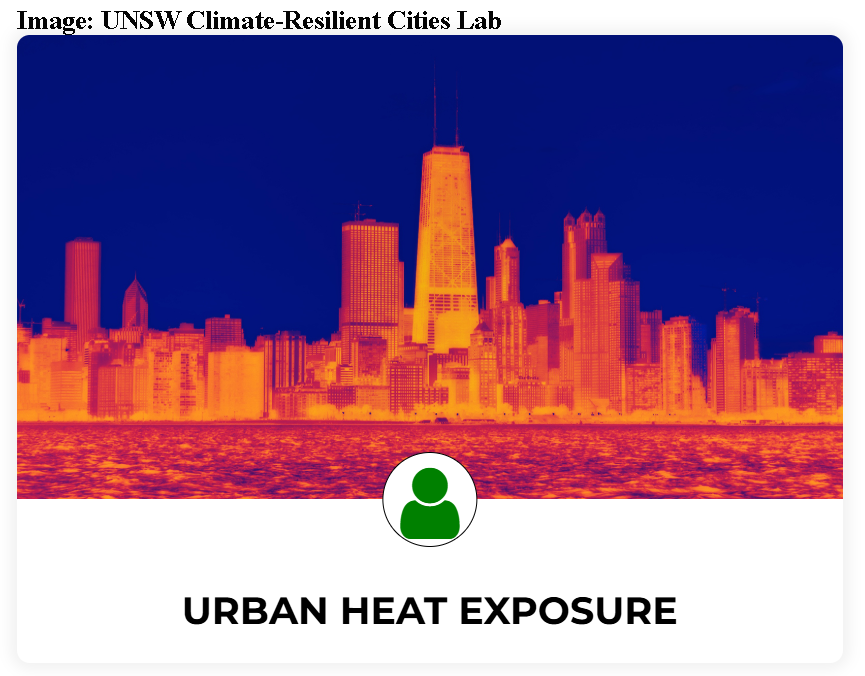
It might be the top of the canopy. it's just really not the air temperature that we're experiencing. So that was a like really interesting learning for us, but we are also able to see what matters most. Is it the form of a city, like all the buildings that we have that are obstructing the wind? Is it the fabric, like things like materials we use, the vegetation? Is it about all the energy we produce, like which is a function of a city? Or is it the geography? A lot of our coastal cities, already the geography of them like they're already deciding a lot about our climate and then we add of course the impact of urban design to that. And one I would say the most interesting finding is that one of the factors that has the most impact is something we call the imperviousness. So how much the city is like basically how much of it did you really cover with the concrete and built materials where there's really no way of absorbing the moisture and water. So the more you're actually impervious, the more you would experience heat, for instance. So this is like another factor that's really important in our design.
David Curnow (34:03)
Mm. So effectively as we're building the city we're spraying waterproofing over the ground by putting all these buildings and concrete in there to to stop it being able to get in.
Negin (34:14)
Exactly. So that means that really changes the land surface. Like imagine if you're like in a park or a forest, like the land, like the the humidity that you experience, the temperature you experience, right, is affected by having a natural land surface. And then you come to a city and you're walking over an asphalt or walking over concrete, there is a wall next to you that it's dark and like emitting a lot of heat. And it's also they tend to be a little bit cities tend to be a bit drier and the surface changes and that means the energy of the surface changes and the ability to cool down it changes. And also means like, you know, you're gonna have problems with flooding and surface runoff and all of that as well.
David Curnow (34:54)
Yeah, absolutely. And a lot of us, I think, forget the fact that like well, like people, like trees, the earth also breathes and in its own fashion. And to to effectively choke it off makes that process not work anymore. You mentioned materials there, which was really interesting because of course as we record this, places in the world are going through incredible temperature spikes. So Europe's seeing record temperatures, including places where traditionally they had zinc roofs, and that's having an effect.
Negin (35:19)
Yeah.
David Curnow (35:19)
on how the on how the heat is being absorbed and reflected within those cities. How important are materials themselves?
Negin (35:27)
Yeah, incredibly important. You know why? Because also very often when we talk about the impact on people, that's really about not just what happens outside, but it also what happens inside of your house, right? Or in inside of the place you're in. So let's take places like UK or Northern Europe. Traditionally they've been designing with materials that was actually meant to retain all the heat, right? Because they want to make sure that when it's like really cold seasons they don't have to heat up as much that the the material already this is the time before even there's air conditioning or heating as a major part of our design it's like we wanted to make sure that design can actually cope with that climate and now we're seeing that these same places they're dealing with heat and the buildings are meant to retain that heat. And what does that mean for indoors? So this is one of the biggest challenges with material. Not only changes the land surface and all, but also it really changed what happens inside to a lot of people who are vulnerable and like how much of that heat actually can really skip from the house so that it give you some respite during a heat wave.
David Curnow (36:30)
And I guess that brings up a couple of things that we've already spoken about ⁓ during this interview, one of which is the fact that a lot of city design is about place, is about locality, in that Canberra would not work in Launceston and Hobart would not work in Darwin and, and things like that. And in that sense, Paris wouldn't work where it's really hot or London, for instance but as climate change starts to affect us, we are going to see that. How hard is that to plan for when the cities themselves just aren't built for that?
Negin (36:45)
Absolutely. In some ways you could say that we do have the knowledge to plan for that. So I know that it's a complex problem, but I don't want it to be portrayed as if it's a problem where we don't have solutions for. Because when it comes to, for example, climate modeling or climate projection, which will tell us what is really what are the range of realities or what are the possibilities we'll have in the future. So we we know that already, that there are certain realities that we're going to deal with in the future. There's data about like, you know, what do they mean in different relationships? And there's also a lot of knowledge about the impact of cities, like from materials we talked about to their like energy consumption and all of that. So let's make it clear that this is a complex problem, but there's already a lot of knowledge in terms of like how the impact has happened and what needs to happen next. The problem very often isn't in in our knowledge space, but is in the implementation space. Right. Because like for instance, retrofitting buildings, it's a really, really hard and costly challenge. And not only the cost of it, but who is responsible for it? Like this is another question of like, am I supposed to be always retrofitting my house against climate change? Or is it now my government responsible for putting certain regulations around how we build so that it's more resilient to climate and what's coming? So these it's a matter of first understanding how our climate and also our urban needs are changing and the people who are living in there, but also like thinking about all of those implementation challenges who make it like who what we need to do, who needs to do that, what are the barriers for it, what's the cost of it, who can finance it, right? Can we have like financing schemes to finance the covers?
David Curnow (38:43)
Exactly. And and you're not working in a bubble here and nor are, say, developers or urban town planners, what's the conversation like there? Is it a constant two way street, them calling you saying, "What do we need to do with this?". Or you sending through papers saying, "Look what we found about this". How does that work?
Negin (39:00)
Yeah, so it really depends. Like there are some who are genuinely interested. There are different actors right? There are like, you know, we have different states, federal or local councils that we work with, but then we also have our like different industries, anywhere from insurance to development, all that. And then the the like residents themselves. So you can say like they're actually quite a lot of different actors. And some are in their policies or even legally mandates, they need to be looking at. Let's say think about something like a mandatory climate disclosure, right? That we we have that and that means like we're that there are certain companies or even assets that are out there ma there it's mandated that they look at their like climate reality in the future. But and that that it really is a big factor. But very often this comes out of like, you know, genuine interest and concern. I'm a property developer. I'm going to develop in the Western Sydney or parts of Melbourne where we already know that there's a problem with heat. At the same time, I want to make sure that the property value is not affected, right? I need to make financial decisions as well. And how can I actually build in harmony with climate? So then we get engaged in doing that. So in some ways, I would say like it can like be both way, both we we are trying to put the information out there and then like people engaging us. Does this happen all the time and across all the scrays(?) with all planning? No, that's only a small fraction. There's a very small fraction of planning decisions that actually go through this process. So in some ways you could say that many things are considered a planning decision and only a planning decision. They're not considered a climate decision, but we know that this is not the case. If you decide to develop three times the size of Sydney's CBD, in Western Sydney, and you go from greenfields, you go from community gardens, all of these spaces that existed now to housing developments or commercial developments, that's not just a planning decision. That is a climate decision, but we're not really looking at that. So when you think about like, yes, the conversation can go both ways, we can put put it out there what's happening, and and different actors can engage us. but it's really not happening over a whole spectrum of projects and decisions that have the full impact.
David Curnow (41:22)
We certainly hope a number do take notice, at least of the research that's done in some of the fields, if not all of it. One of the interesting parts is that we sometimes talk about this as a as a big city idea, the idea of big buildings, the idea of lots of houses, but it's even something as small as playgrounds. I understand some of your research looked at the the effect of little microclimates on kids' playgrounds. Tell me about that.
Negin (41:46)
It's one of those topics that I think it's it's really easy for a lot of us to understand because we have no matter where you were raised or like, you know, what age you are, you might still even like go on that swing every once in a while. It's something that we can all relate to.
David Curnow (42:00)
No it makes me feel sick I can't do it.
Negin (42:02)
I know, I unfortunately I'm getting to an age too that like, you know, it gets I get motion sickness from it. But still I remember it being fun. so it's one of the things like we can we have some memory of a playground regardless of our age, or we actually maybe go because we're parents of children or grandparents of children, right? And now I want us to think about like different times of the year.
David Curnow (42:07)
Yeah.
Negin (42:25)
or different times of the day when we're going to that playground and how sometimes we had to actually change our decision or maybe even go to a playground and realize, no, this is really hot. Or like, wow, like if I touch the surface, like this really feels like it could burn me. So it's such a small scale. Very often playgrounds could be really a small area, but they have they have made choices about materials. They have made choices of like, do I use a synthetic turf? Do I use different like very targeted materials made for playgrounds. Am I using if you recall how the swings and the slopes were in the past that were like like metal that would get completely like hot during the
David Curnow (43:04)
Yeah. I think all of us can remember the almost sound of sizzle as we tried to slide down a metal slide. I I swear I heard it sizzle at least once or twice.
Negin (43:11)
Exactly, right? So and then on top of that, is there shading? Like, is there any shade provided here? what about a sitting place? If my grandma is the one who's taking, picking me up from childcare? Like my mum picks up my niece and nephew, right? Like, and is she going to have a place where she can sit in the shade while the kids are running around? But wait, kids are actually running around, so they're gonna get even hotter, and they're kids, they're not gonna know if they're hot or cold. So you see all of these things they come into play in this tiny little place where it's supposed to be where we allow the children and also like you know parents those that are young at heart all of them like you know to come and have a play but then all of a sudden it could be a place that give them heat exposure heat stress
David Curnow (44:02)
Makes it worse, you shouldn't be there. You I think was it you mentioned to me that one of the studies you did, particularly looking at things like synthetic turf or AstroTurf, which was certainly popular in some playgrounds, as well as some of the recycled softfall as it were, but the temperatures can actually change at different heights.
Negin (44:20)
Absolutely. So first of all is a surface temperature. So different materials that would have different surface temperature, right? And sometimes like synthetic turf in during a heat wave, we've shown it goes 60-70 degrees. So this is really, really hot. That sizzling sound you were talking about, like this is what happens. But the second thing is that now imagine the people who are in a playground, they're children who are often very like closer to the ground. Right, so their centre of mass is closer. Very often they're even like, you know, playing with something on the ground, so they're crouching or like sitting on the ground. So they're already really close to this hot surface. There's a contact with the synthetic turf. And what we've seen is that if we go from like a natural grass versus synthetic turf, the, the that height really matters. When you are like oOver a synthetic turf, if you're a child where it's an adult, there can be a two-degree difference in the temperature you experience. This is just one metre difference between like, you know, you're holding your child's hand, and he or she, them, they're like really experiencing very different thermal environments that you are, either because of surface or because of the air that is around them. And of course, there's even less wind, they have smaller body mass, so it's quite a lot of interesting. So certain materials matter the most and shading. I cannot stress how important shading it is. And it's so interesting because if you ask another expert when it comes to safety or other things, they might say, no, no, we don't want trees around playgrounds, because what if they fall down? Or like who would deal with all of the trees or or all the f leaves that are falling? So which one do we pay attention to the most? I mean, if you ask me, I would argue if there are a few leaves, that's okay as long as people don't get me stressed.
David Curnow (46:02)
Yeah, no, absolutely. Perhaps the leaves will block the heat from the AstroTurf as they as they come. We talk about places like playgrounds, we talk about big buildings. Another thing that people experience in cities, and I know pretty much all of us have had this, is where effectively the the buildings themselves create a bit of a wind tunnel. You've looked at studying effectively both where it occurs and how to predict it, is that right?
Negin (46:24)
Absolutely. So there are times where they try try to create this wind corridor throughout the city. So cities like Singapore, Hong Kong, and some that that have really looked at this they call it breathable density, like you know, that we can still have the density to accommodate all the housing, but they they make it in a way that there are these wind corridors existing going around so that it's a like the your c city is breathable. So it's still able to ventilate itself. It's able to get rid of the the air pollution problem. It's able to maybe even dissipate the heat. So the whole concept is that imagine if you're especially in a coastal city. Very often you are taking advantage of the sea breeze that is coming in. That's your natural cooling, right? And at the same time, we said those coastal properties are really high in demand, right? So we want to make sure we maximize on all those beautiful views from our balconies. So we put all these big towers on the coast and they're gonna block the sea breeze. So now a neighbourhood that it's like further inland also have less breeze coming in because we created these natural barriers from the wind. So that the contrast to that is that we create these almost like ⁓ wind tunnels or wind corridors into the city where we say, Okay, what if I can actually channel the wind in a way that it would go further into my city, go further into there's n there's always a way for that high wind from the sea or from like wherever is prevailing wind, can still go into the city so that I can get all the benefits from. Of course, that sometimes means that there are places we may end up with very high winds that are hard to manage. So it's a balance.
David Curnow (48:14)
Yeah. And of course that's the problem, isn't it? It's it's the the concept of look, there are times when you want that breeze to be coming through, but anyone who's stood near the balls in the mall in Adelaide or some of Melbourne C B D or something like that and felt some of the winter westerlies, I don't want that wind coming through, thank you very much, because it cuts me in half.
Negin (48:28)
Exactly. This is one of the biggest dilemmas, right? That like when it comes to how we should design the city for urban climate, there is no silver bullet. All of that depends what climate. Like you said, the same city would not work in a different climate, different geography, all of that. So sometimes you absolutely need the wind if you're like, you know, already the case of Singapore that I mentioned already is very low wind city. Right. So you definitely don't want to like have a situation where there is absolutely no wind in your county. It could can be so uncomfortable, problematic for air quality, all of that stuff. And then you have other cities where you're like in a natural bay. So you have a lot of wind. And sometimes if you're also again channeling all of that wind between two buildings, then that can be even a problem for our assets, let's say for power top like you know poles or things that we have along the way so it's exactly
David Curnow (49:23)
Or the shading that's been provided for the people walking along to reduce the heat. Yeah. Okay. We've talked about some of the very small impacts. I suppose it's almost like a butterfly effect, isn't it, in many cases, where you you have one small decision made over here, it seems relatively minor, but as it cascades or creates other problems further down the line, it can have a bigger effect than that. Are there some of those that you see? Some some small, simple decisions that can create bigger problems?
Negin (49:53)
We could put it in the context of what we've already discussed, which is you could make a decision about how to develop Western Sydney. And that means that you are changing the land, you're changing like how that land is then able is heating up, how it absorbing moisture, all of that, then that means that you're gonna have more of what we call updraft, which is like heat going up into the atmosphere, and it's going to make the atmosphere more unstable. Maybe it will change the clouds as well. And then that change of the cloud is going to change the rain and where the rain is going to fall. And then that is going to again like cascade into what it means in terms of storms and and a lot of larger atmospheric conditions or weather conditions that we have. But sometimes these changes that we're proposing is also not as small as just like a design, but we also know of examples like when in Saudi, The Line that was proposed.
David Curnow (50:46)
That's the opposite of of small changes. I mean, that's one of the most extreme and ambitious sort of architectural design, urban climate concepts in the world. What are your reactions to something like that?
Negin (50:47)
That's the opposite of a small effect, but it would I mean, I just explained small scale projects going cascading into all these butterfly effect of like it would be hotter, it would be more heat in the atmosphere, cloud, rain, storm, everything could get affected. Now let's think of it. What if it wasn't a small development? What if it was 170 kilometres long, 500 metres tall, and is very much clad in mirrors like you know completely reflected mirrors there's no way for the wind to to go through or penetrate through this and it's it's in the Saudi desert so it's right so it's unlike anything that is built and it's very much like we've put the biggest...
David Curnow (51:32)
One of the world's better places to live.
Negin (51:40)
...tallest mirror wall that we could put into the desert. And it's almost like you could think about like, you know, our our weather is very much affected, like I said, by our geography and the mountains and topography and everything. It's as if they've created a new mountain all of a sudden in the middle of the desert. And that mountain happens to be mirror as well. Like so it's it is really a major impact. So anything from the air temperature around it with change because you have these mirror glasses now to how much like I said the desert wind already we have like high desert winds like what would that do to the block that would happen? it would change the cloud formation absolutely would change the rainfall and storm and so on so forth in ways that we have not really even understood. So something like that without a doubt is going to have an impact on not just local but also regional weather.
David Curnow (52:32)
On on the plus side, I suppose we could say it's going to give people like you a lot more data to work with where you can point to and go, Look, see, that's what happens.
Negin (52:40)
Yeah, there will be like a r a lot of interesting scenarios to look into the models that previously it sounded like imaginations, but now it's actually a real proposal for a city.
David Curnow (52:50)
I'd like to finish off I mentioned earlier at the start of our conversation about some cities perhaps that have done things poorly. and you have named a few cities that have done some things well. What are some of your favourites from a urban climate design perspective around the world?
Negin (53:04)
the ones that are trying to look at very local solutions that are tailored to people's lifestyle while also having a more integrated either city or regional strategy. So what what do I mean? Like let's say pr something like a wind corridor or like a network of parks. You might think that it's just it's just like, you know, having parks. Is that enough? But it's it's not really about that. It's about having a strategy where at the very local scale. Let's say I'm in the densest part of the city in in Hong Kong, in Guangzhou, in whatever, in like you know, Berlin, whatever I am, I still know that people living here need a place where it needs to be cool needs to be suitable for their lifestyle so that they can come out have their lunch go for the run like you know enjoy the time in the playground so some of my favourites are really projects where they're able to capture some of those small scale interactions with people's lifestyle and health and everything in mind while not leaving it only at that scale but really not understanding what does that mean if we scale it up for the entire city. How many of those little parks do I need to have before it actually have an impact? Like what is really percentage of my urban areas I need to and it's able to look at it integrated across different places. So I would say these are ⁓ favorite from in my opinion, not because like, look, this looks really nice, but I think because it's able to serve that both both end of the spectrum. Things that make impact at the small scale, but also things that are enough for actually like helping us, you know, push the the problem into something that actually we have the solution for.
David Curnow (54:50)
And are there some cities we can name without being too rude to those who don't?
Negin (54:54)
I've already mentioned Singapore and Hong Kong. Yeah. as part of, for example, the Paris Olympics, there was a lot of effort that got put into like creating some of these local cool spots for people, or at least mapping like what's happening. They did the first mapping of marathon routes so that they can model how how you experience heat in different places as you're going through a marathon. so there these are really, really this is what I mean, like small scale interactions that like that are really important. So I think there are cities that are doing quite well finding what is needed at this at that small scale whether or not it always comes at the larger scale that's a different question.
David Curnow (55:35)
Yeah. I do love the thought though that the Olympic marathon can guide urban microclimate decisions when it comes to town planning. I think that's fantastic. I'd like to finish by asking over the next couple of years, not so much where are we at with now, where would we like to be? Five, ten years, what are some of the questions that you would love to see and hope to see answered within that time frame?
Negin (55:55)
really in the next five years. We need to have very clear understanding of how like our Australian cities are in fact interacting with all of these hazards that we're dealing with from extreme rainfall. Like is Sydney new development it is it in the next three decades going to change the patterns of extreme rainfall? Is it going to change the hail? Is it going to change like you know all of these like flooding and different hazards and risks that we're saying? So this is one of the main things that we need to have that very clearly quantified and then have answers to can we design in the way that would reduce our risks? And the my answer would be absolutely, we can design in ways that and this is where we need to come up with not just the science of quantifying all of that, but then working with everything from the finance aspects of it to the governance and implementation, all of that to make it happen.
David Curnow (56:48)
Dr Negin Nazarian, Thank you so much for your time today.
Negin (56:51)
Thanks again for having me.
David Curnow (59:53)
And you may never look at a skyscraper or children's playground the same way again. Dr. Negin Nazarian from the University of New South Wales there. And can I say, a big thank you to her for her patience. We did have a few technical issues during our conversation that meant it was recorded over three separate interviews, but she battled through wonderfully. If you like this episode or any of her others, great. We'd love to know. Even better, tell somebody else. The only way we can keep making them and speaking to such wonderfully diverse and passionate people is if we have an audience worthy of them. You can find more information about the work Dr. Nazarian is doing and her various professional contributions on our website, as well as a transcript of this episode. Music for our show is by Michael Willimot We've had great assistance from Claire McMillan, Annie Pappalardo as well as advice from Matt Kirkegaard and Julie Newton. I'm David Curnow. Thanks for listening.

Urban Climatologist
Dr. Negin Nazarian, Scientia Associate Professor at the University of New South Wales (UNSW Sydney), is a recognised leader in urban climate, advancing knowledge on city-climate interactions. She is Deputy Director (Science Partnership) at the ARC Centre of Excellence for the Weather of the 21st Century, chairs the Board on Urban Environment at the American Meteorological Society, and is a Lead Author of the IPCC Special Report on Climate Change and Cities in the 7th Assessment Report (AR7).
Negin’s expertise as an urban climatologist focuses on understanding the complex interactions between the built environment and climate, with a keen interest in how these dynamics impact people. Her notable accolades include the prestigious 2023 Timothy Oke Award for Original Research in urban overheating, the 2024 NSW Young Tall Poppy award, and the 2025 AGU Global Environmental Change award, highlighting her pioneering contributions to the field.
Negin leads the Climate-Resilient Cities (CRC) research lab at UNSW, a multidisciplinary team dedicated to addressing pressing challenges of urban climate, particularly focusing on urban heat exposure and wind hazards. The CRC’s mission is dedicated to advancing high-resolution urban climate modelling, refining urban canopy parameterisations (through physical or AI modelling), and employing urban climate informatics to enhance our understanding of human exposure to urban climate challenges. Prior to her tenure at UNSW, Dr. Nazarian served as the SMART Scholar at the Singapore-MIT Alliance following her graduation from the … Read More